Schiaparelli: ‘I Like to Amuse Myself Through Some of my Creations. If I Didn’t, I Should Die’
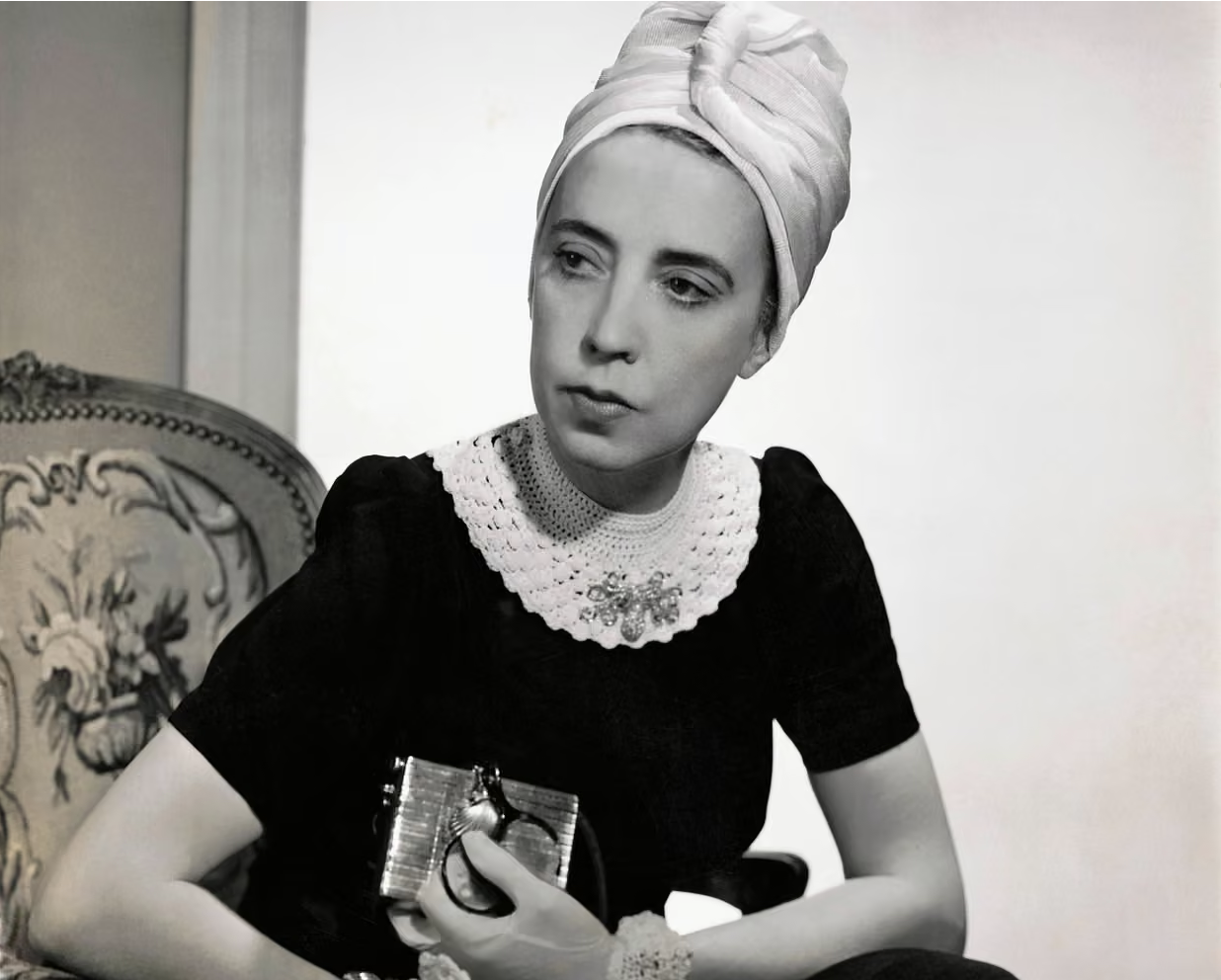
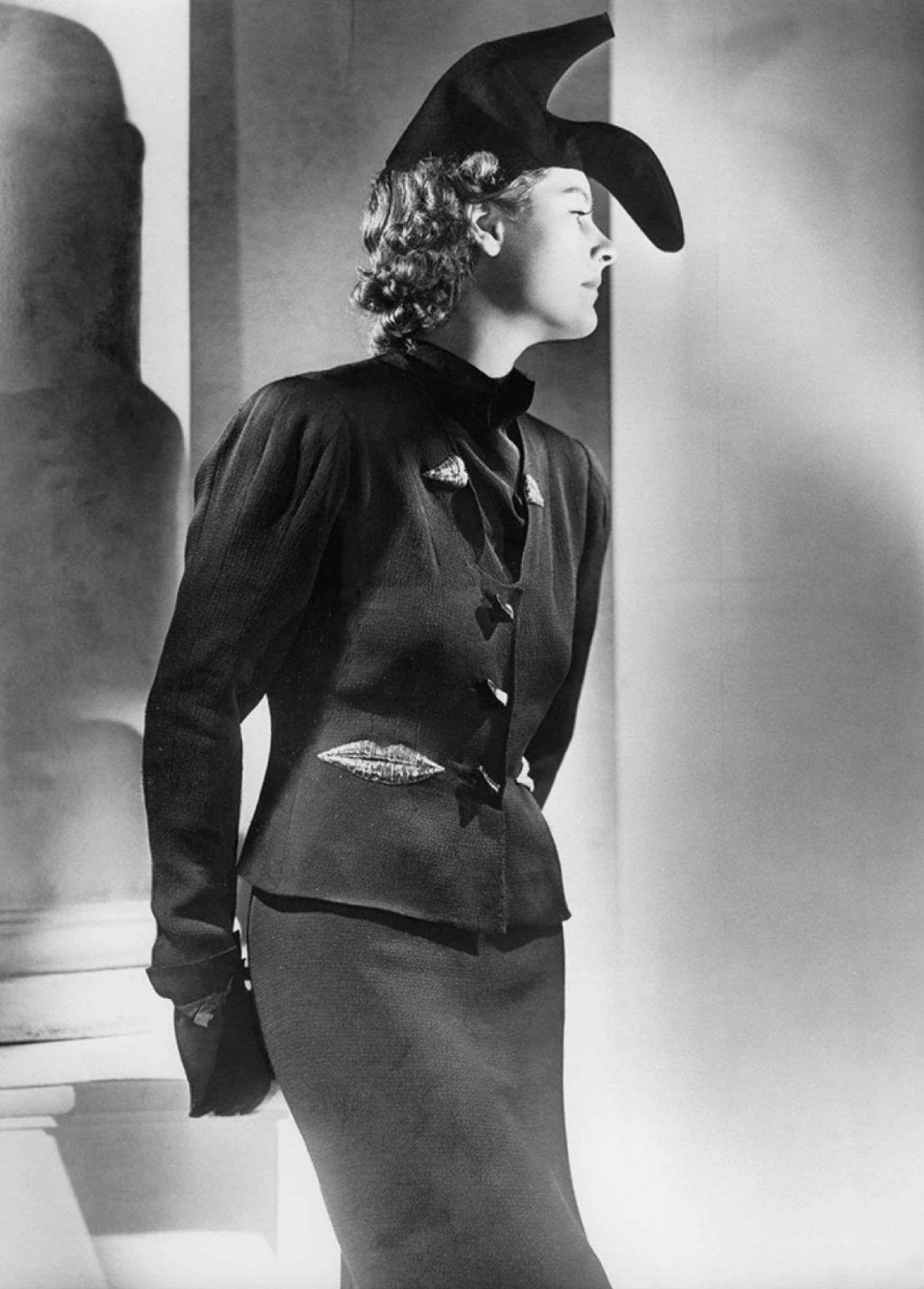
Elsa Schiaparelli in 1940. Photograph: Fredrich Baker/Conde Nast/Getty Images
Elsa Schiaparelli redefined fashion in the 1930s. She created sensuous clothes that caught the eye, that embraced new techniques and materials, that shocked and amused. Above all, she articulated the artistic spirit of her day. (‘Schiaparelli: Fashion Becomes Art’ is at the V&A, London until 8 November.)
‘For me, dress designing is not a profession, but an art.’
Elsa Schiaparelli
Born in Rome in 1890, into an aristocratic family, Schiaparelli was educated at a strict Swiss convent school. Breaking free from her conservative upbringing, she spent time in Paris, London and New York, marrying a charismatic conman with whom she had a daughter. Following the breakdown of this relationship, she fell in with the Surrealist set, including the writer Gabrielle Buffet‑Picabia and the artist Man Ray.
'Belief is as necessary to the soul as pleasures are necessary to the body.'
In 1922 Schiaparelli moved with her child to Paris, where she took a role as designer at a small fashion house. Although she had had no formal training, in 1927 she presented her first solo collection of hand‑knitted sweaters with geometric patterns. The piece that made her name was a black-and-white jumper with a trompe l'oeil bow‑knot.
‘I wore it at a smart lunch and created a furore… Soon the restaurant of the Paris Ritz was filled with women from all over the world in black-and-white sweaters.’
Schiaparelli opened her first shop in 1928 on rue de la Paix. Branded ‘Schiaparelli Pour le Sport,’ it sold knitted pullovers, simple tops and skirts, as well as beachwear and ski attire. She subsequently added stylish, practical daywear, ‘Pour la Ville,’ and glamorous eveningwear, ‘Pour le Soir.’
‘Simple suits, mandated apparel.’
Schiaparelli’s day-suits featured unusual fabrics with unexpected fastenings and prominent pockets. There were lively novelty prints, depicting Parisian landmarks, disembodied hands, floating red hearts and newspaper cuttings about herself. Trousers were to the fore, at a time when most women wore them just for sport or informally at home.
‘In the building of a basic wardrobe, we cannot go wrong if we strive for simplicity and perfect fitting.’
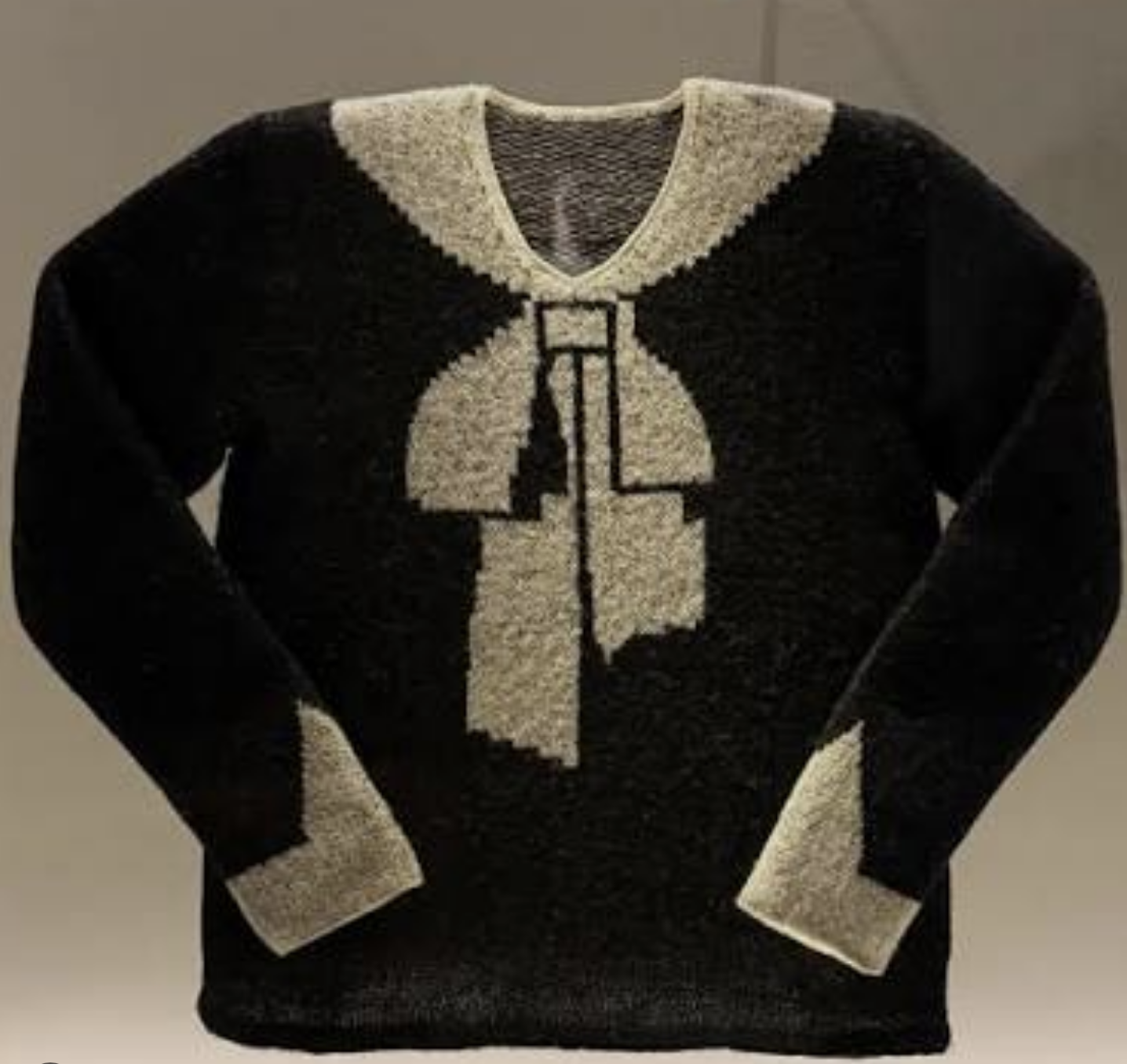
Elsa Schiaparelli - Black-and-white jumper with a trompe l'oeil bow‑knot
Schiaparelli’s evening gowns were dramatic, sinuous and shimmering. With distinctive epaulettes, folded sleeves and daringly‑deep back décolletage, they boasted form‑hugging silhouettes and took inspiration from disparate sources: classical architecture, Harlequin costumes and the circus; military uniforms and Russian parachutists. She experimented with bustles, velvet capes, head scarves and hoods; with prominent zips and asymmetric drapery; with apron‑style over‑tunics and camouflage. And she worked with textile manufacturers to explore innovative materials - crinkly textures, cellophane, metallic threads and woven glass. Her designs consistently came in strong colours - sleeping blue and pirate red; ocean green and her signature shocking pink - with unexpected juxtapositions, like beetroot and salmon.
‘Before me, everything was black or navy blue or grey or brown or beige, things like that, for daytime. I began using shocking pink and ice blue and all kinds of bright colours.’
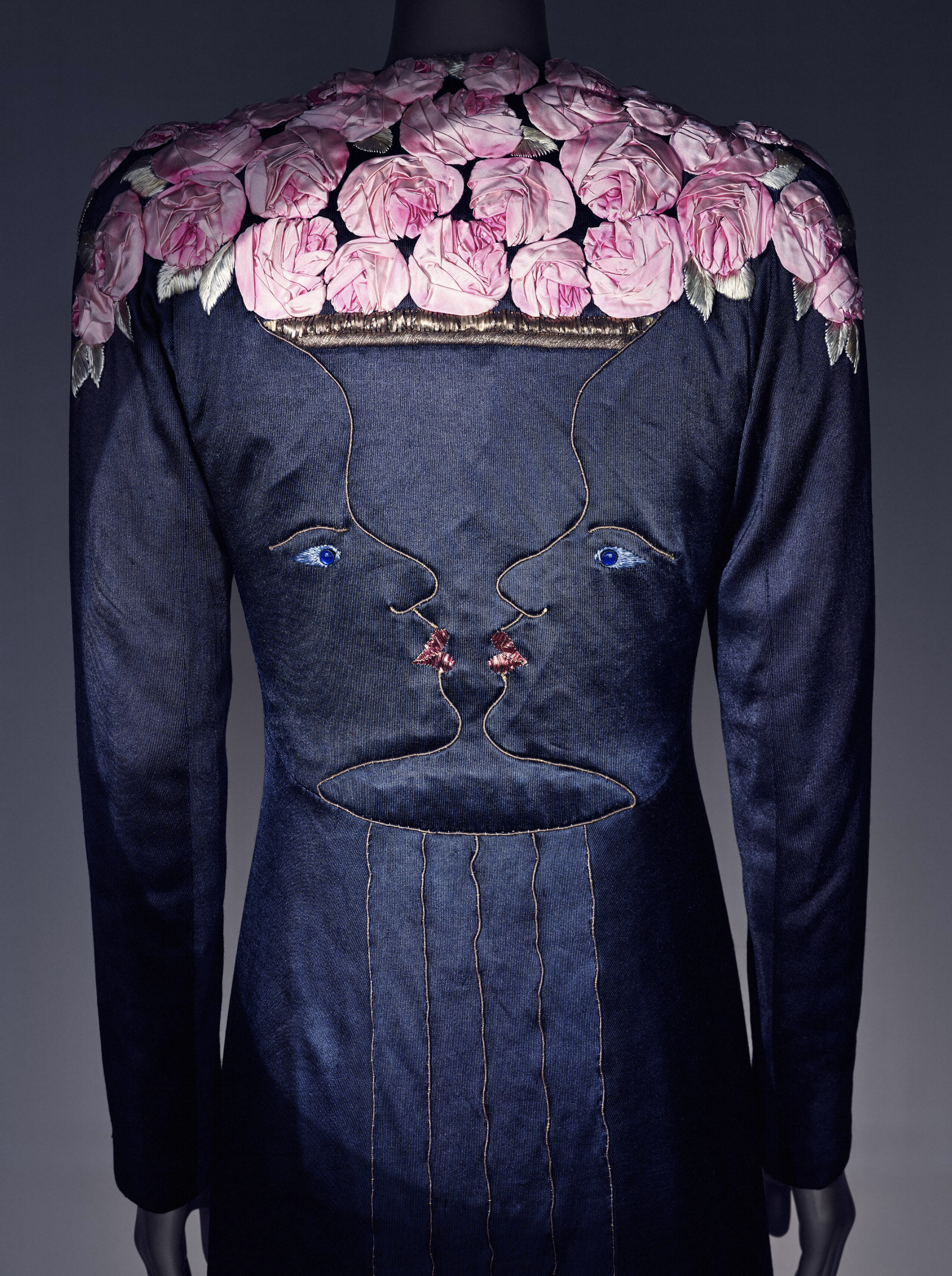
Evening coat, designed by Elsa Schiaparelli and Jean Cocteau, 1937, London, England
Schiaparelli’s smartly tailored jackets completed her evening suits. Made from sumptuous textiles, with oversized pockets, they were graced with characterful buttons - ships and mirrors, playing cards, candlesticks and crowns – and embellished with exquisite embroidery by Maison Lesage – designs featuring flowers, starbursts and musical instruments.
‘Fortunately, or unfortunately for me, I am always at my best when I am unhampered: when I can let myself go and have a little fun.’
Within five years, Maison Schiaparelli was employing 400 staff and manufacturing over 7000 garments per annum. In 1935, Schiaparelli moved her couture business to 21 Place Vendôme, one of the most elegant addresses in Paris. Its window displays starred two articulated wooden figures, Pascal and Pascaline, performing in witty theatrical scenes. Inside there were screens painted by her artist friends, and light fixtures designed by Alberto Giacometti.
‘There are times to be casual and times to be correct. It's alright to wear a sweater and slacks on a picnic, but they don't belong in the theatre or the drawing room.’
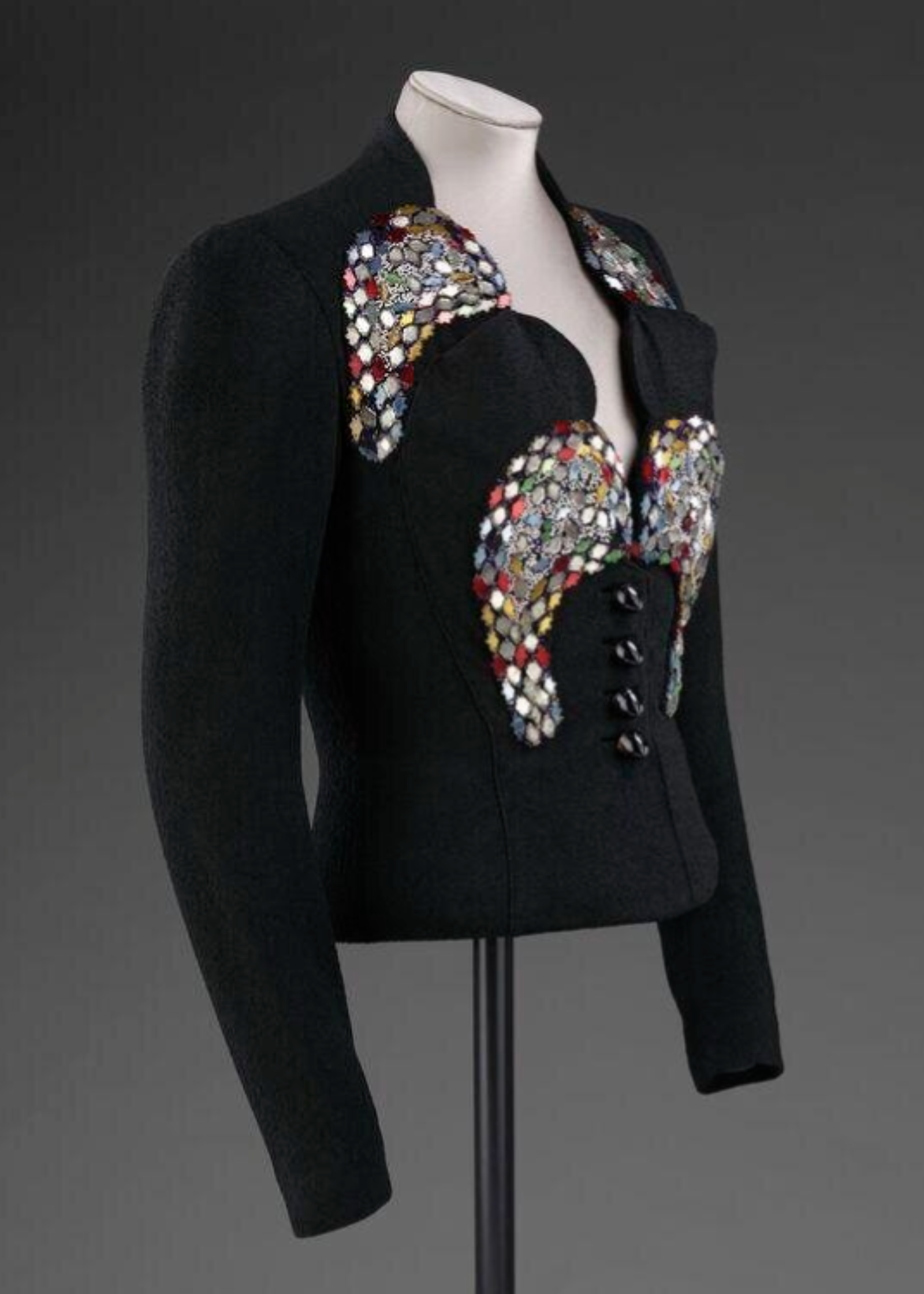
Elsa Schiaparelli - Circus Evening Jacket. February 1938 (made)
The larger space at Place Vendôme enabled Schiaparelli to sell accessories, perfumes and cosmetics. Her first fragrance, S, was unisex. She went on to create Snuff, a scent for men in packaging shaped like a pipe (a reference to René Magritte’s ‘This is not a pipe’ painting). Night-time perfume Sleeping came in a vessel formed like a lit candle, and best-seller Shocking had a bottle based on Mae West’s hourglass figure. One journalist wrote of her Salut scent:
‘This is what Salut does for a girl… A drop behind each ear and you feel you’ve had good news. A spray around your neck and Marlene Dietrich had better look out.’
Schiaparelli developed a following of confident, wealthy women who wanted to make a mark. Her clients included Wallis Simpson and Nancy Cunard; Mae West and Josephine Baker; Dietrich, Garbo and Hepburn. Bettina Ballard, the Paris correspondent for American Vogue, observed of the typical Schiaparelli customer:
‘Wherever she went [she was] protected by an armour of amusing conversation‑making smartness.’
A striking playfulness ran through Schiaparelli’s work. She designed shoes in stripes, gloves with faux fingernails. And at a time when hats were required daytime wear for women, her creations – in plant fibre, felt or fur - included a birdcage, a lambchop and an upside-down shoe.
‘The spirit of infectious good humour can be created even through women’s hats. I like to amuse myself through some of my creations. If I didn’t, I should die.’
Elsa Schiaparelli and Salvador Dali - The shoe-hat
Schiaparelli Haute Couture Winter 1937-38 collection.
Inspired by a photograph that Gala, (Dali's wife) had taken of her husband wearing a woman's shoe.
Schiaparelli’s wit, her love of the absurd, erotic and subversive, derived from her enduring association with the Surrealists. She commissioned contemporary artists to co-create designs for garments and accessories; for her advertising and boutiques. Indeed, such was her affection for the avant garde that her rival ‘Coco’ Chanel dismissed her as ‘that Italian artist who’s making clothes.’
‘Women dress alike all over the world: they dress to be annoying to other women.’
Schiaparelli worked particularly closely with Salvador Dalí and Jean Cocteau. One coat at the exhibition is embroidered on the back with a Cocteau drawing of mirrored, kissing faces which, in profile, trace an urn of roses. Inspired by Dali, Schiaparelli created a gown with a dramatic lobster print, and a frock that gives the impression of torn fabric. Her Skeleton Dress, co-designed with Dali, has quilting resembling a rib cage, vertebrae, hip and leg bones.
‘A successful designer must be a gambler.’
Schiaparelli teaches people working in commercial creativity to approach their craft with vigour and courage; to integrate humour, however serious the endeavour; to embrace the ideas and influence of contemporary art.
‘More than life I cherish freedom.’
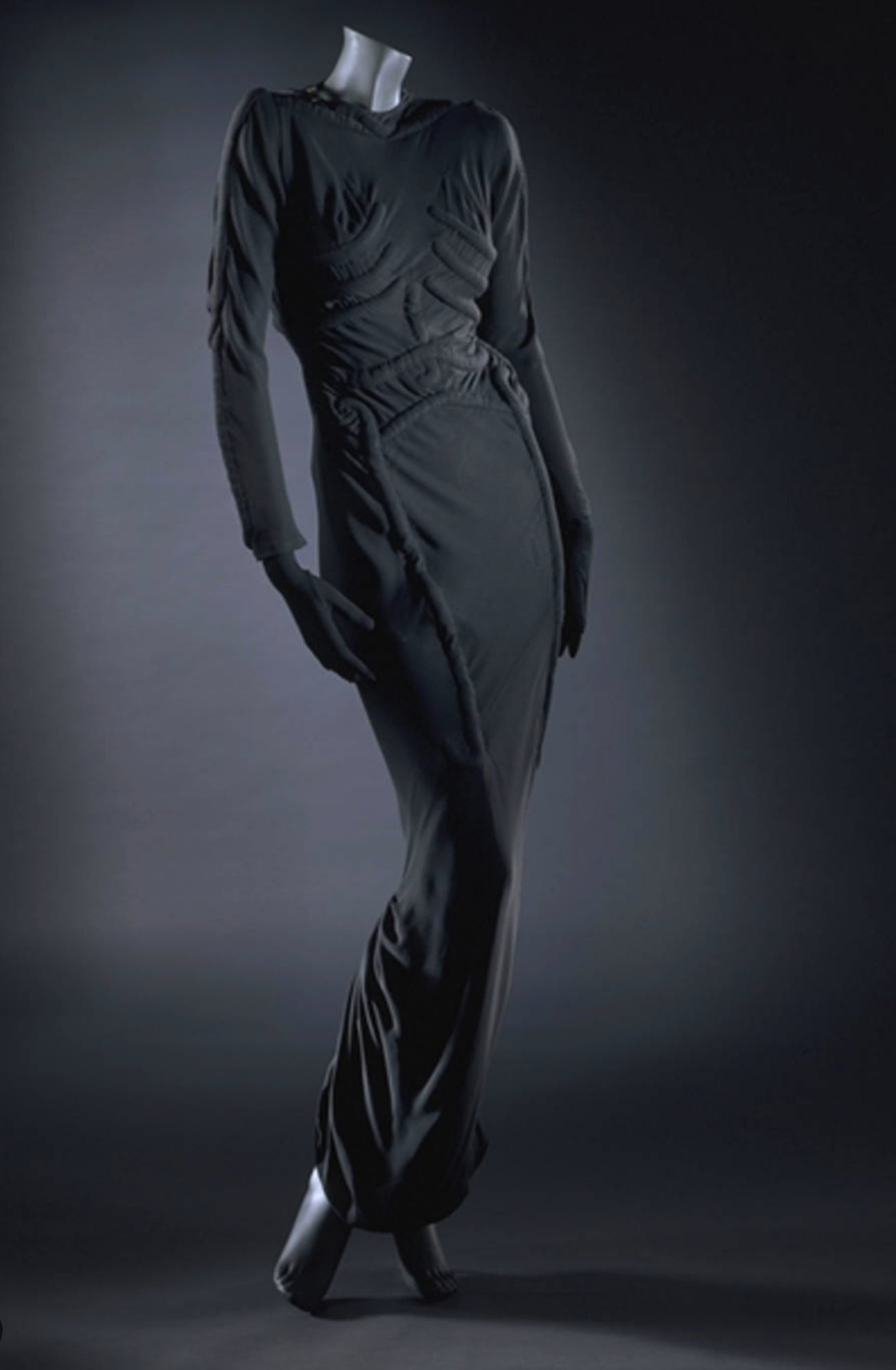
The Skeleton Dress - Elsa Schiaparelli and Salvador Dali
Evening Dress, 1938 (made)
Schiaparelli spent most of the Second World War in New York. Having returned to Paris in July 1945, she continued to design collections. But post-war austerity and Christian Dior's ‘New Look’ combined to create challenging trading conditions. She terminated her couture business in 1951, and in 1954 she closed the doors of her salon. She lived out a comfortable retirement between her Paris apartment and her house in Tunisia, and died in 1973, at the age of 83.
‘Nobody has been able to pronounce [my name] properly… but everybody knows what it means.’
'I am a lonely painter,
I live in a box of paints.
I'm frightened by the devil,
And I'm drawn to those ones that ain't afraid.
I remember that time you told me, you said
"Love is touching souls."
Surely you touched mine.
'Cause part of you pours out of me,
In these lines from time to time.’
Joni Mitchell, ‘A Case of You'
No. 588