Schiaparelli: ‘I Like to Amuse Myself Through Some of my Creations. If I Didn’t, I Should Die’
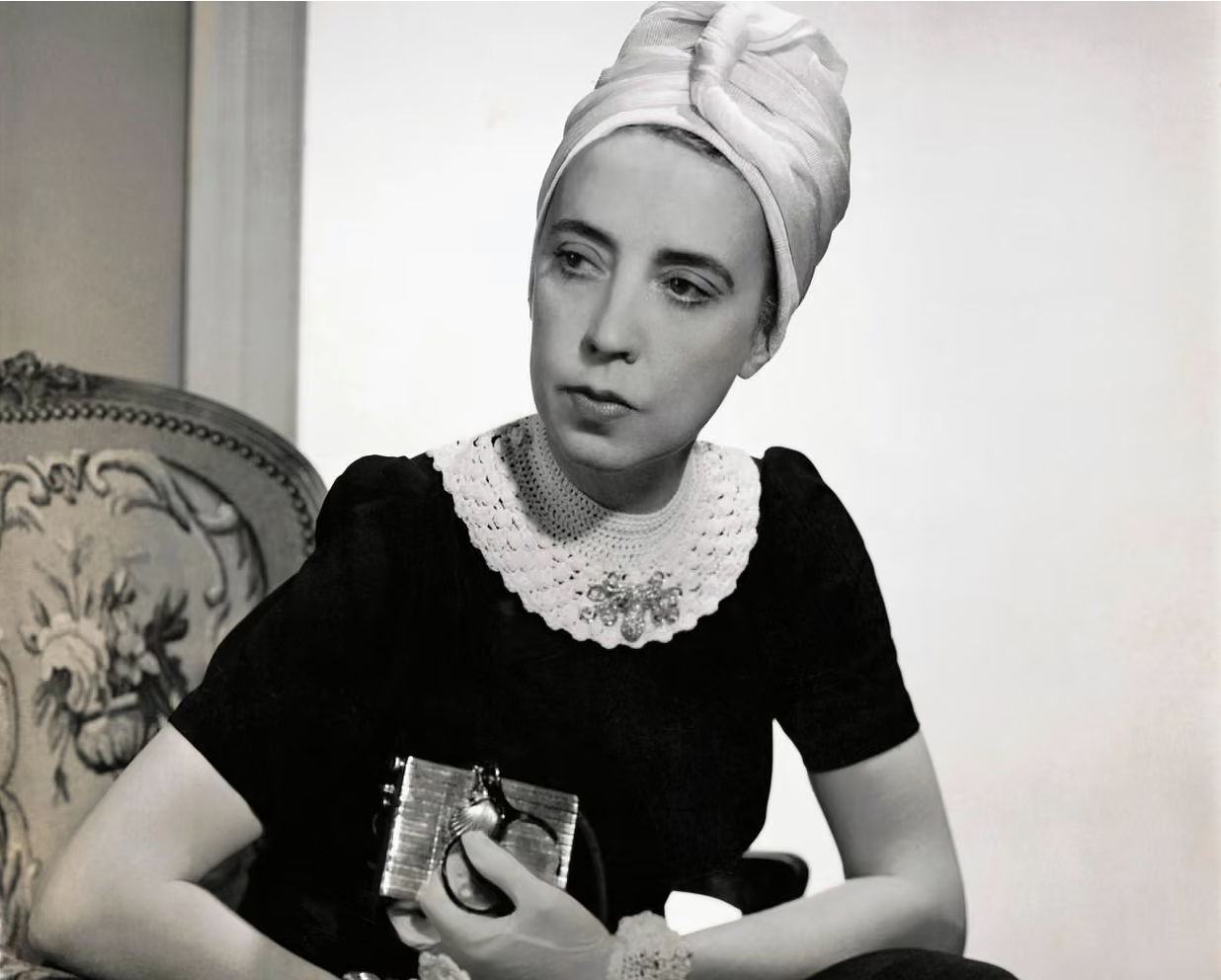
Elsa Schiaparelli in 1940. Photograph: Fredrich Baker/Conde Nast/Getty Images

Elsa Schiaparelli redefined fashion in the 1930s. She created sensuous clothes that caught the eye, that embraced new techniques and materials, that shocked and amused. Above all, she articulated the artistic spirit of her day. (‘Schiaparelli: Fashion Becomes Art’ is at the V&A, London until 8 November.)
 
‘For me, dress designing is not a profession, but an art.’
Elsa Schiaparelli

Born in Rome in 1890, into an aristocratic family, Schiaparelli was educated at a strict Swiss convent school. Breaking free from her conservative upbringing, she spent time in Paris, London and New York, marrying a charismatic conman with whom she had a daughter. Following the breakdown of this relationship, she fell in with the Surrealist set, including the writer Gabrielle Buffet‑Picabia and the artist Man Ray.

'Belief is as necessary to the soul as pleasures are necessary to the body.'
 
In 1922 Schiaparelli moved with her child to Paris, where she took a role as designer at a small fashion house. Although she had had no formal training, in 1927 she presented her first solo collection of hand‑knitted sweaters with geometric patterns. The piece that made her name was a black-and-white jumper with a trompe l'oeil bow‑knot. 
 
‘I wore it at a smart lunch and created a furore… Soon the restaurant of the Paris Ritz was filled with women from all over the world in black-and-white sweaters.’

Schiaparelli opened her first shop in 1928 on rue de la Paix. Branded ‘Schiaparelli Pour le Sport,’ it sold knitted pullovers, simple tops and skirts, as well as beachwear and ski attire. She subsequently added stylish, practical daywear, ‘Pour la Ville,’ and glamorous eveningwear, ‘Pour le Soir.’
 
‘Simple suits, mandated apparel.’
 
Schiaparelli’s day-suits featured unusual fabrics with unexpected fastenings and prominent pockets. There were lively novelty prints, depicting Parisian landmarks, disembodied hands, floating red hearts and newspaper cuttings about herself. Trousers were to the fore, at a time when most women wore them just for sport or informally at home. 
 
‘In the building of a basic wardrobe, we cannot go wrong if we strive for simplicity and perfect fitting.’
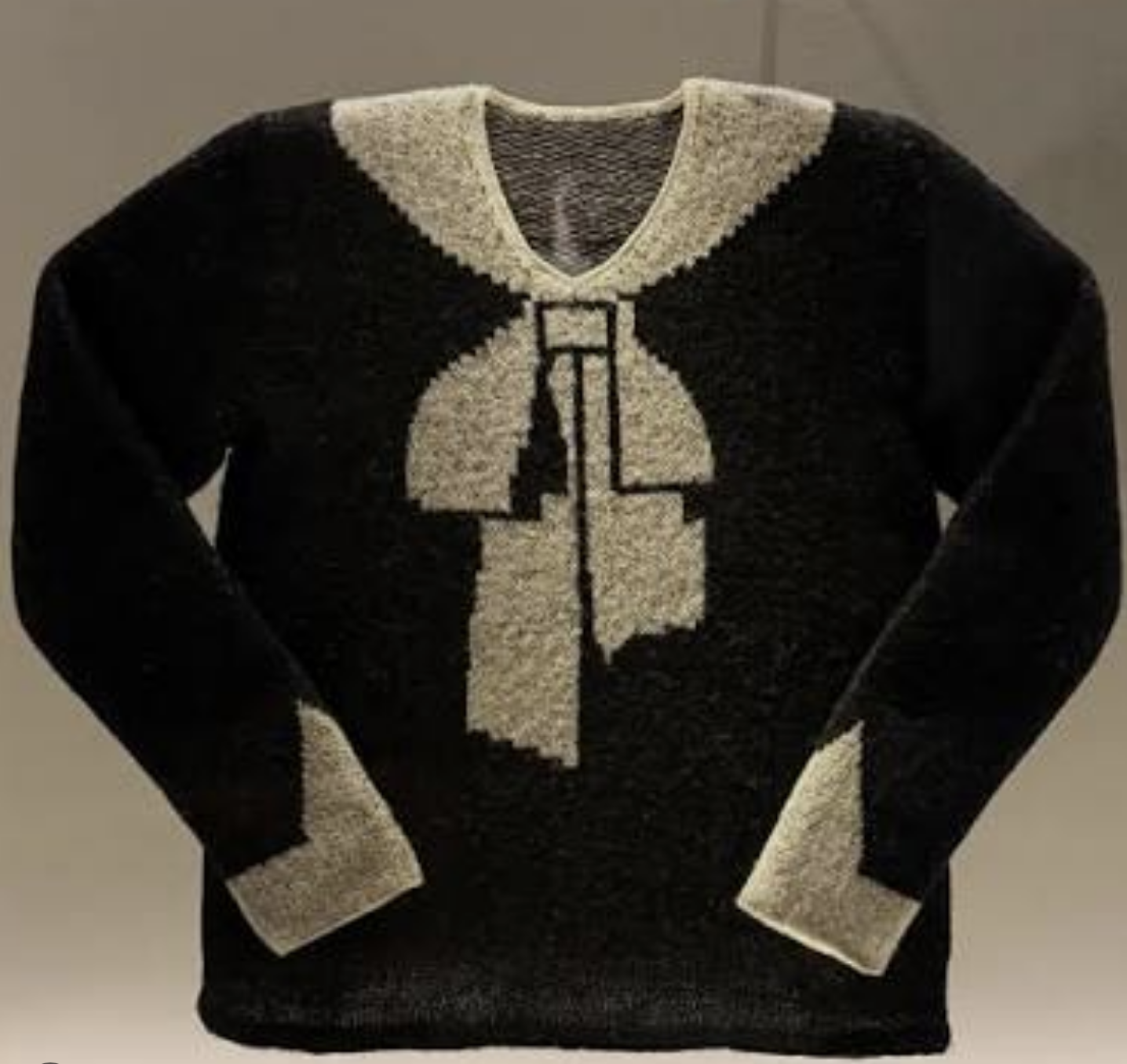
Elsa Schiaparelli - Black-and-white jumper with a trompe l'oeil bow‑knot

Schiaparelli’s evening gowns were dramatic, sinuous and shimmering. With distinctive epaulettes, folded sleeves and daringly‑deep back décolletage, they boasted form‑hugging silhouettes and took inspiration from disparate sources: classical architecture, Harlequin costumes and the circus; military uniforms and Russian parachutists. She experimented with bustles, velvet capes, head scarves and hoods; with prominent zips and asymmetric drapery; with apron‑style over‑tunics and camouflage. And she worked with textile manufacturers to explore innovative materials - crinkly textures, cellophane, metallic threads and woven glass. Her designs consistently came in strong colours - sleeping blue and pirate red; ocean green and her signature shocking pink - with unexpected juxtapositions, like beetroot and salmon.
 
‘Before me, everything was black or navy blue or grey or brown or beige, things like that, for daytime. I began using shocking pink and ice blue and all kinds of bright colours.’
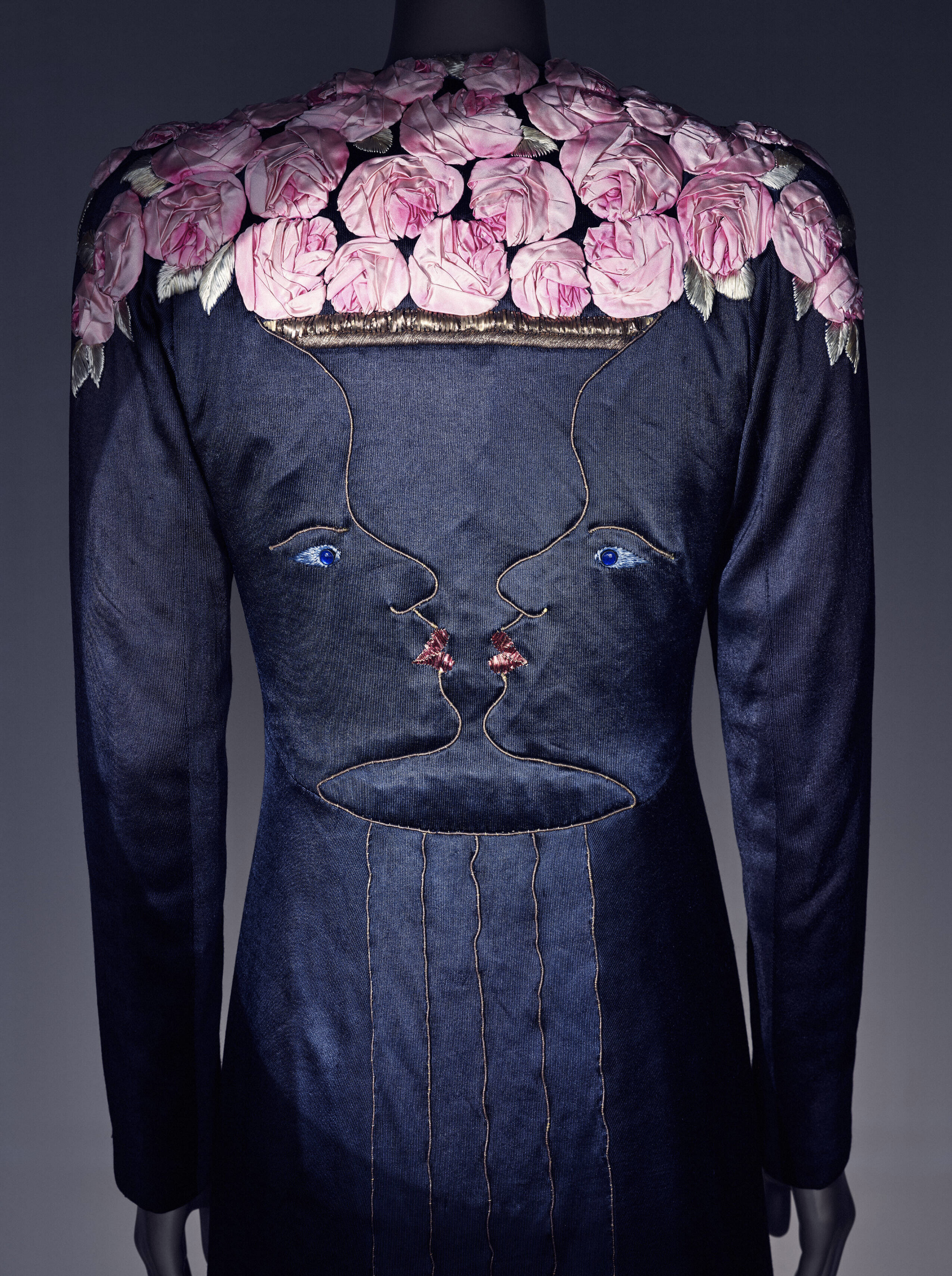
Evening coat, designed by Elsa Schiaparelli and Jean Cocteau, 1937, London, England

Schiaparelli’s smartly tailored jackets completed her evening suits. Made from sumptuous textiles, with oversized pockets, they were graced with characterful buttons - ships and mirrors, playing cards, candlesticks and crowns – and embellished with exquisite embroidery by Maison Lesage – designs featuring flowers, starbursts and musical instruments.
 
‘Fortunately, or unfortunately for me, I am always at my best when I am unhampered: when I can let myself go and have a little fun.’
 
Within five years, Maison Schiaparelli was employing 400 staff and manufacturing over 7000 garments per annum. In 1935, Schiaparelli moved her couture business to 21 Place Vendôme, one of the most elegant addresses in Paris. Its window displays starred two articulated wooden figures, Pascal and Pascaline, performing in witty theatrical scenes. Inside there were screens painted by her artist friends, and light fixtures designed by Alberto Giacometti. 
 
‘There are times to be casual and times to be correct. It's alright to wear a sweater and slacks on a picnic, but they don't belong in the theatre or the drawing room.’
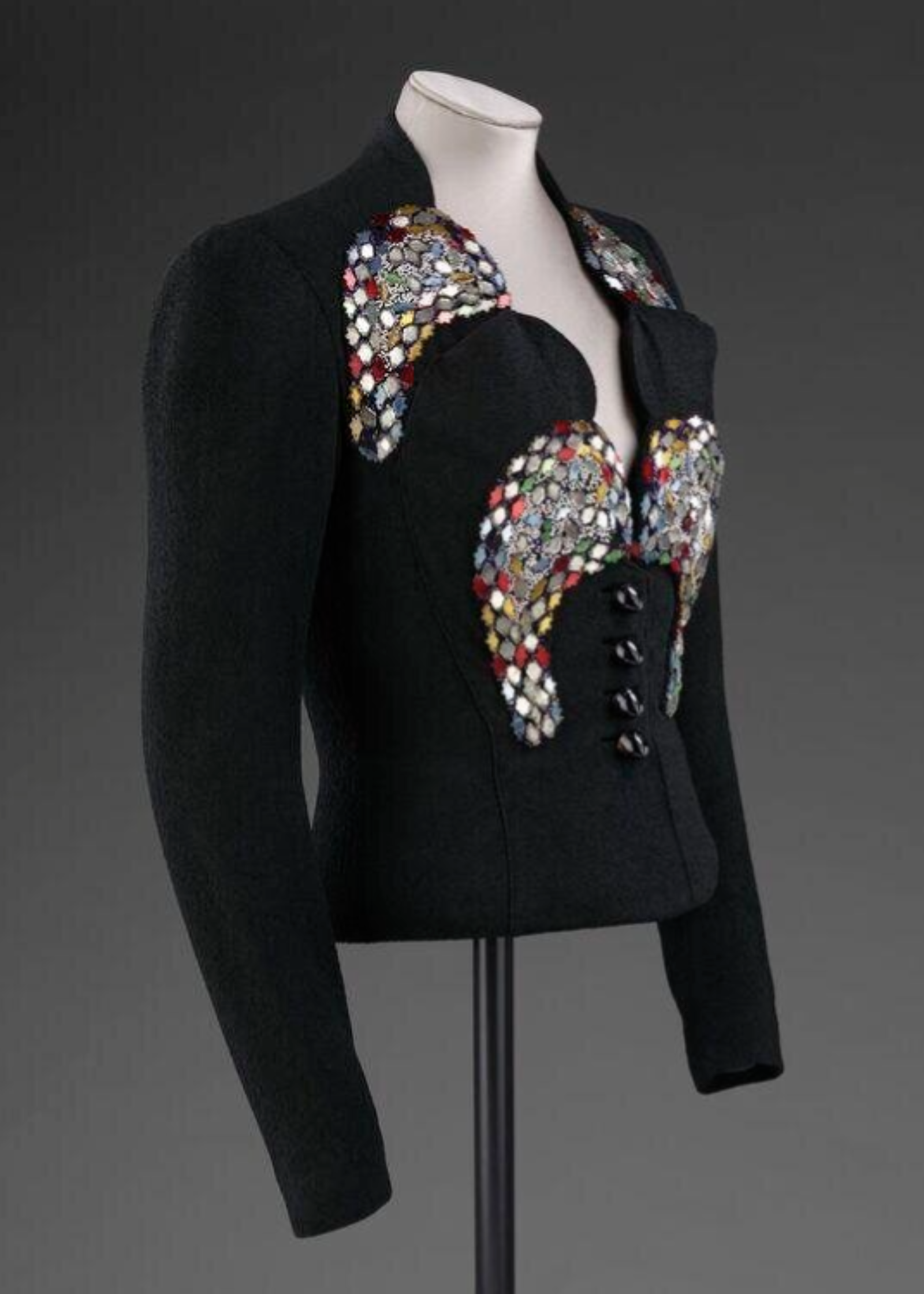
Elsa Schiaparelli - Circus Evening Jacket. February 1938 (made)

The larger space at Place Vendôme enabled Schiaparelli to sell accessories, perfumes and cosmetics. Her first fragrance, S, was unisex. She went on to create Snuff, a scent for men in packaging shaped like a pipe (a reference to René Magritte’s ‘This is not a pipe’ painting). Night-time perfume Sleeping came in a vessel formed like a lit candle, and best-seller Shocking had a bottle based on Mae West’s hourglass figure. One journalist wrote of her Salut scent:
 
‘This is what Salut does for a girl… A drop behind each ear and you feel you’ve had good news. A spray around your neck and Marlene Dietrich had better look out.’
 
Schiaparelli developed a following of confident, wealthy women who wanted to make a mark. Her clients included Wallis Simpson and Nancy Cunard; Mae West and Josephine Baker; Dietrich, Garbo and Hepburn. Bettina Ballard, the Paris correspondent for American Vogue, observed of the typical Schiaparelli customer:
 
‘Wherever she went [she was] protected by an armour of amusing conversation‑making smartness.’
 
A striking playfulness ran through Schiaparelli’s work. She designed shoes in stripes, gloves with faux fingernails. And at a time when hats were required daytime wear for women, her creations – in plant fibre, felt or fur - included a birdcage, a lambchop and an upside-down shoe. 
 
‘The spirit of infectious good humour can be created even through women’s hats. I like to amuse myself through some of my creations. If I didn’t, I should die.’
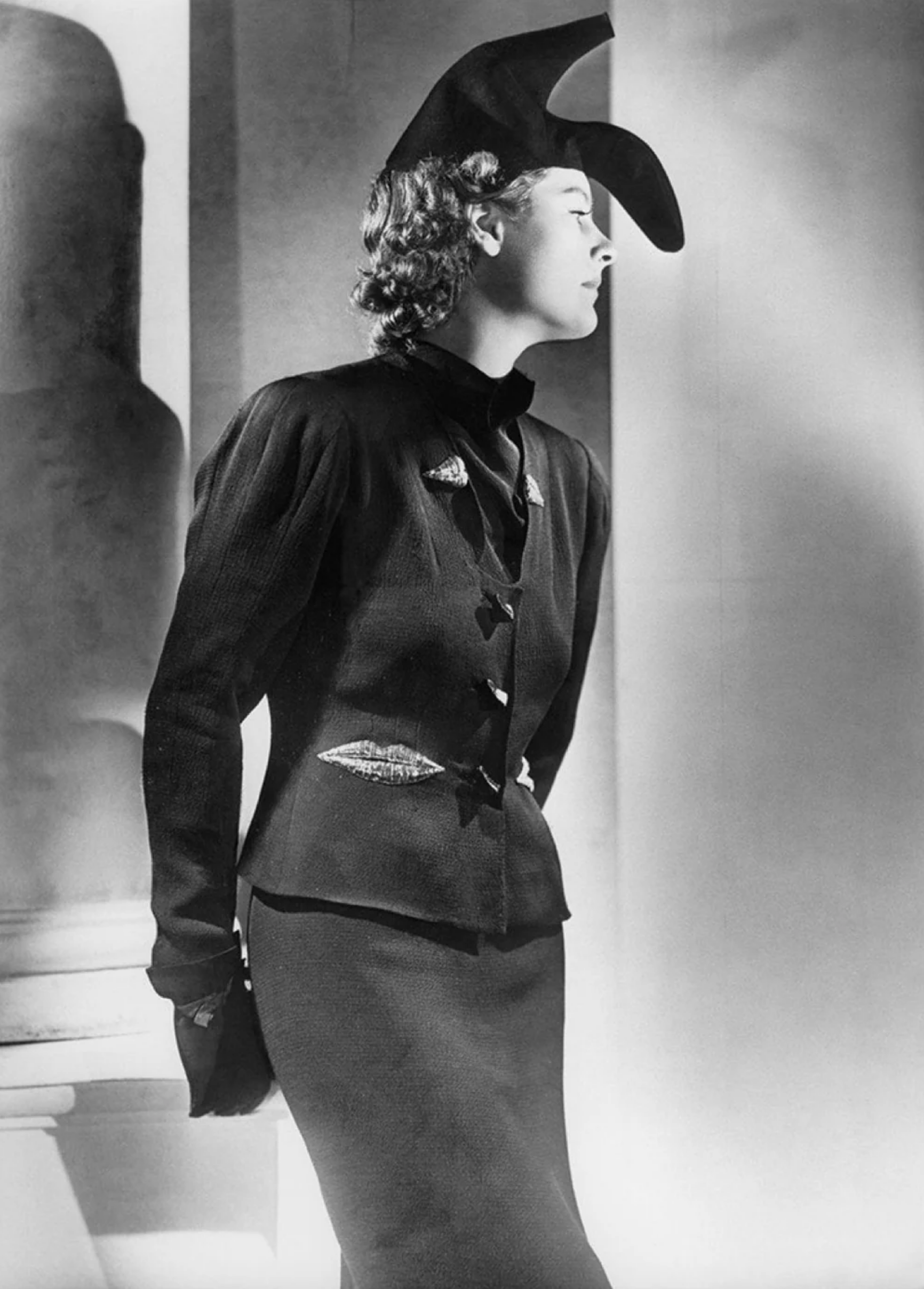
Elsa Schiaparelli and Salvador Dali - The shoe-hat
Schiaparelli Haute Couture Winter 1937-38 collection.
Inspired by a photograph that Gala, (Dali's wife) had taken of her husband wearing a woman's shoe.

Schiaparelli’s wit, her love of the absurd, erotic and subversive, derived from her enduring association with the Surrealists. She commissioned contemporary artists to co-create designs for garments and accessories; for her advertising and boutiques. Indeed, such was her affection for the avant garde that her rival ‘Coco’ Chanel dismissed her as ‘that Italian artist who’s making clothes.’
 
‘Women dress alike all over the world: they dress to be annoying to other women.’
 
Schiaparelli worked particularly closely with Salvador Dalí and Jean Cocteau. One coat at the exhibition is embroidered on the back with a Cocteau drawing of mirrored, kissing faces which, in profile, trace an urn of roses. Inspired by Dali, Schiaparelli created a gown with a dramatic lobster print, and a frock that gives the impression of torn fabric. Her Skeleton Dress, co-designed with Dali, has quilting resembling a rib cage, vertebrae, hip and leg bones.
 
‘A successful designer must be a gambler.’
 
Schiaparelli teaches people working in commercial creativity to approach their craft with vigour and courage; to integrate humour, however serious the endeavour; to embrace the ideas and influence of contemporary art. 
 
‘More than life I cherish freedom.’
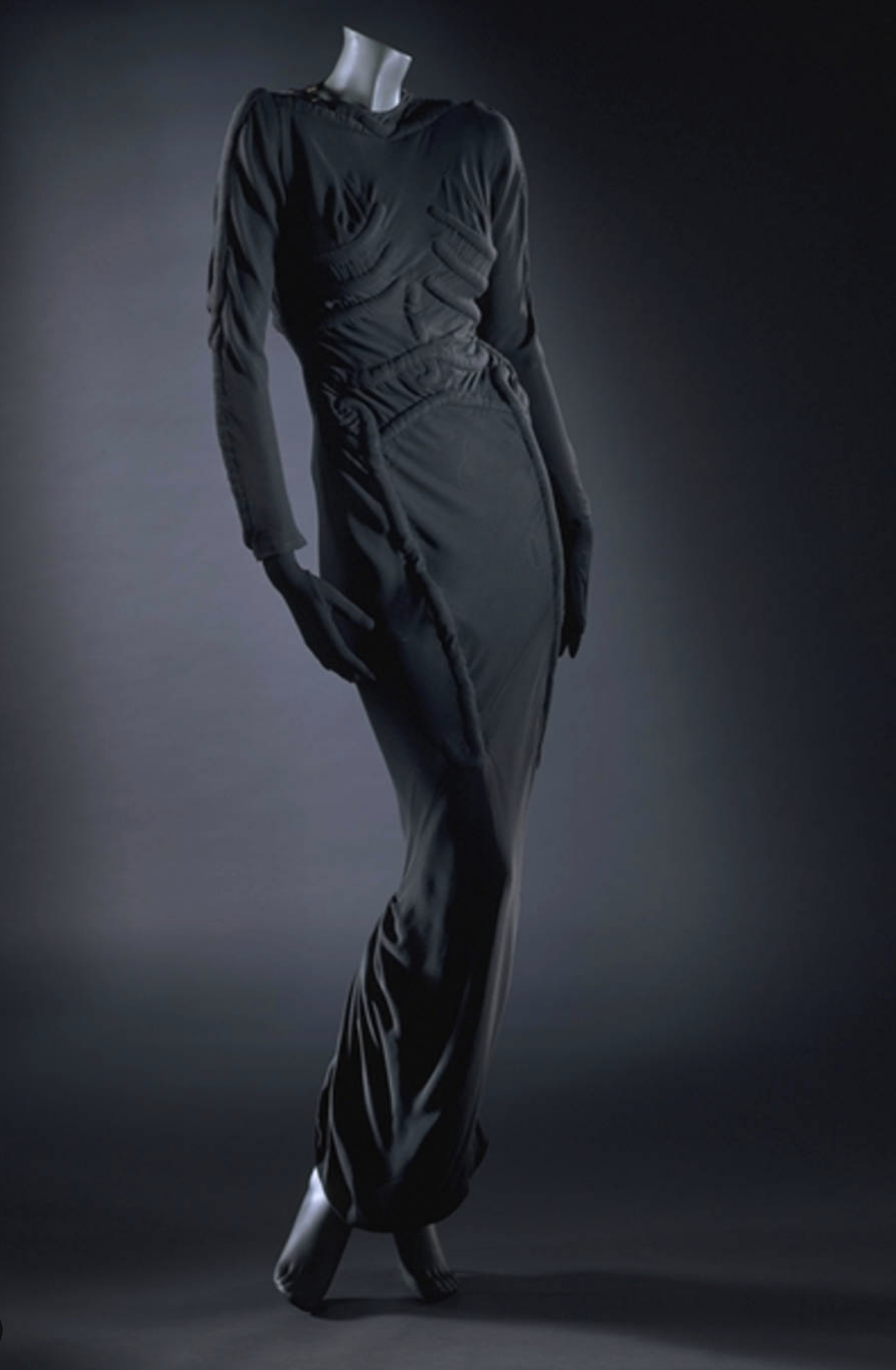
The Skeleton Dress - Elsa Schiaparelli and Salvador Dali
Evening Dress, 1938 (made)

Schiaparelli spent most of the Second World War in New York. Having returned to Paris in July 1945, she continued to design collections. But post-war austerity and Christian Dior's ‘New Look’ combined to create challenging trading conditions. She terminated her couture business in 1951, and in 1954 she closed the doors of her salon. She lived out a comfortable retirement between her Paris apartment and her house in Tunisia, and died in 1973, at the age of 83.
 
‘Nobody has been able to pronounce [my name] properly… but everybody knows what it means.’
 

'I am a lonely painter,

I live in a box of paints.
I'm frightened by the devil,
And I'm drawn to those ones that ain't afraid.
I remember that time you told me, you said
"Love is touching souls."
Surely you touched mine.
'Cause part of you pours out of me,
In these lines from time to time.’
Joni Mitchell, ‘A Case of You'

No. 588

Billy Wilder: ‘Nobody Can Portray What the Audience Can Imagine’

Billy Wilder

'If there's anything I hate more than not being taken seriously, it's being taken too seriously.'
Billy Wilder

I recently watched a couple of extended interviews with the legendary film-maker Billy Wilder. (‘Billy, How Did You Do It?’ (1992), Volker Schlondorff; ‘The Writer Speaks: Billy Wilder’ (1995), The Writers Guild Foundation)

'I have ten commandments. The first nine are, thou shalt not bore. The tenth is, thou shalt have right of final cut.'

Born into a Jewish family in a small town in Poland in 1906, Wilder was raised in Vienna and found work as a journalist and screenwriter in Berlin. After the Nazis’ rise to power, he moved briefly to Paris, before relocating to Hollywood in 1934. His mother, grandmother and stepfather were all victims of the Holocaust. 

‘Anyone who doesn't believe in miracles isn't a realist.’

Having learned English from scratch, Wilder co-wrote ‘Ninotchka’ (1939), the film where Garbo laughed, and ‘Ball of Fire’(1941), one of the great screwball comedies. He then took to directing, so that he could better control his vision.

‘People ask me if directors should also be able to write. I say to them: ‘What is important is that he is able to read.’’

Wilder went on to co-write and direct ‘Double Indemnity’ (1944), the prototype film noir; ‘The Lost Weekend’ (1945), the first movie to take alcoholism seriously; and ‘Sunset Boulevard’(1950), the definitive Hollywood expose. He filmed ‘Stalag 17’ (1953), the archetypal prisoner-of-war movie, and ‘Witness for the Prosecution’ (1957), the classic courtroom drama. He shone a spotlight on the cynicism of the press in ‘Ace in the Hole’ (1951). And he made us laugh like drains with ‘Some Like It Hot’ (1959) and ‘The Apartment’ (1960). Over six decades he created more than fifty films and won seven Academy Awards.

'An audience is never wrong. An individual member of it may be an imbecile, but a thousand imbeciles together in the dark - that is critical genius.’

In the interviews the elderly film-maker, still with an Austrian accent, looks back on his extraordinary career with authority, insight and a twinkle in his eye. Let us consider some of the lessons he imparts.

'Shoot a few scenes out of focus. I want to win the foreign film award.’

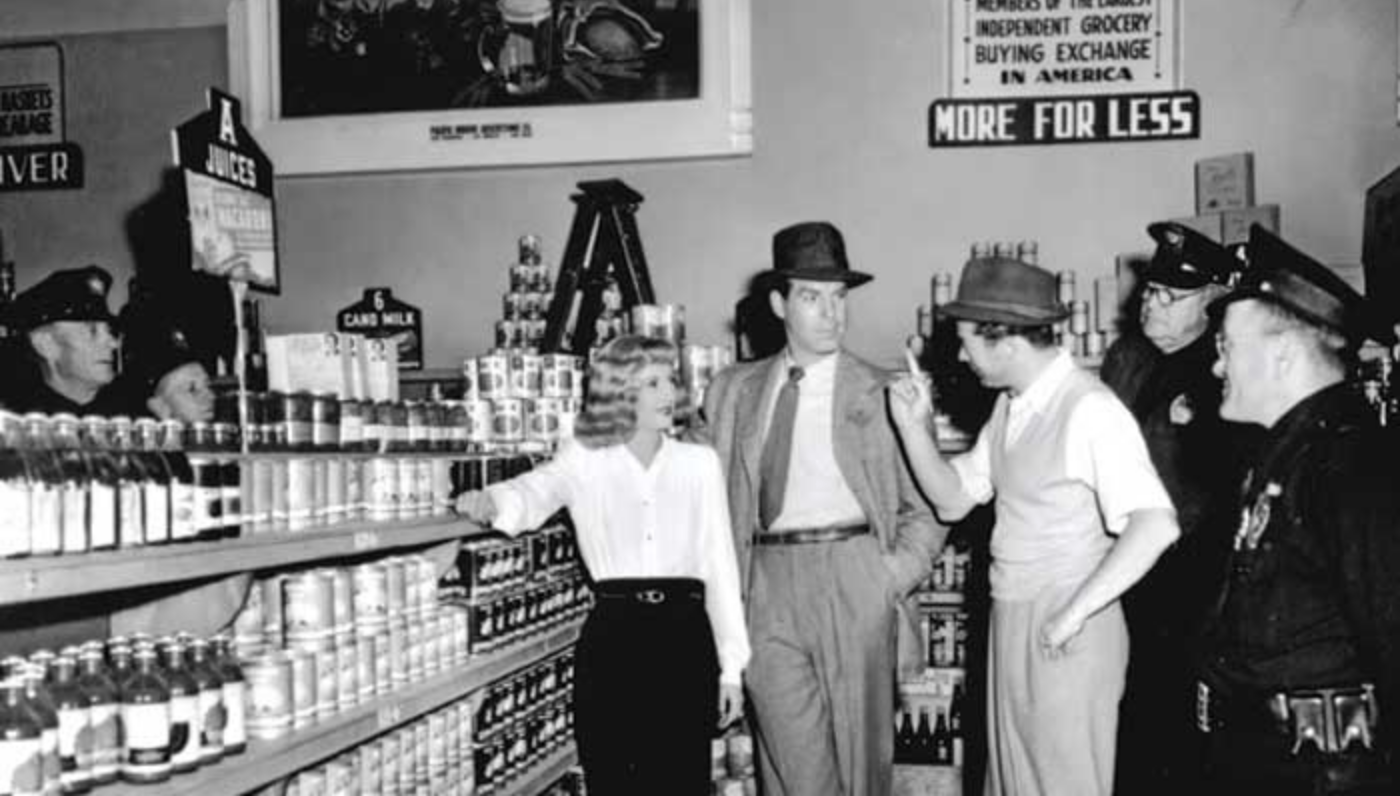
Wilder on the set of Double Indemnity (1944)

 1. Don’t Bore People

Wilder was at heart a popular entertainer. He wasn’t interested in arthouse credibility.

'Some pictures play wonderfully to a room of eight people. I don't go for that. I go for the masses. I go for the end effect.’

For Wilder the greatest crime was to be tedious.

'The Wilder message is don't bore - don't bore people.’

2. Start with the Architecture

Wilder’s films crossed many genres. They were characterised by tightly woven, intricate plots and dramatic reversals; by sharp dialogue and simple, elegant direction.  

‘Writing a movie is a mixture of architecture and poetry.’

Every twist and turn in the plot is carefully choreographed. Every scene is engineered like a Swiss timepiece.

‘The film has to be very precisely constructed, but the construction must not show.’

In ‘Double Indemnity’ (1944) a perfectly planned crime is undone by a car that fails to start. Expecting a rendezvous with his lover, the murderer is surprised by a visit from his boss. Counter to convention, a door opens onto a corridor, just so as to give Barbara Stanwyck somewhere to hide.
 
‘We have to find the mechanics and then write the scenes hiding the mechanics.’

Wilder was prepared to sacrifice great material if it didn’t serve the overall narrative. ‘Sunset Boulevard’(1950) was originally shot with an opening scene in the city morgue. In previews the audience burst out laughing when an identity tag was attached to a dead William Holden’s toe. Though Wilder loved the sequence, he cut it because it was setting the wrong mood.

3. Create Great Moments that Shake the House

Wilder was always thinking about audience attention.

‘Once you have the audience captured – once they are playing that game with the people on the screen – this is like you’ve got them by the throat, you can’t let it go. You squeeze a little more and more and more. Don’t let them escape. Don’t wake them up. Don’t let them realise this is only a movie that they’re seeing.’

And so he peppered his films with climactic moments. 

‘The strength of a film comes from those great moments that shake the house.’

As illustration of these mini-climaxes, he cites the rotten meat scene in Eisenstein’s ‘Battleship Potemkin’ (1925); the hitchhiker sequence in Capra’s ‘It Happened One Night’ (1934); the four-fingers reveal in Hitchcock’s ’The 39 Steps’ (1935).

'An actor entering through the door, you've got nothing. But if he enters through the window, you've got a situation.'

Wilder on the set of The Apartment (1960) with Shirley MacLaine and Jack Lemmon

4. Laughter Snowballs

Wilder was particularly attuned to the rhythm required for comedy.

‘In order to get laughs, you first have to create an atmosphere…One sporadic laugh and then nothing for 5 minutes is worse than no laughter at all. [Laughter] snowballs.’

For the final scene between Tony Curtis and Jack Lemmon in ‘Some Like It Hot’ (1959), Wilder gave Lemmon a pair of maracas and got him to shake them after each gag. He did this to create space for audience laughter before Curtis delivered his next straight line.

The movie ends with Lemmon revealing his secret to his wealthy suitor.

Jerry: But you don't understand, Osgood! [pulls off his wig]… I'm a man!
Osgood: [shrugs] Well, nobody's perfect!

5. The Public Has to Add It Up

Wilder's first significant success in Hollywood came when he collaborated with Ernst Lubitsch on ‘Ninotchka’ (1939). The great German director taught him to let the audience work some things out for themselves.

‘Lubitsch was not afraid that people won’t understand him. Unlike people that say 2 + 2 makes 4, 1 + 3 also makes 4, 1+1+1+1 also makes 4. But Lubitsch says 2+2…That’s it. The public has to add it up.’

And so Wilder relates his stories with subtlety and a light touch. He advises, for instance, never to show a character having an idea.

'It’s too difficult to act and it’s very difficult to believe.’

Similarly, the murder in ‘Double Indemnity’ (1944) is not shown on screen. Rather, it is conveyed by a slight move of Barbara Stanwyck’s head as she drives the car in which it takes place.

'Emotions that are of startling strength, or vehement reactions, are best shot and acted by an actor with the back to the camera. Nobody can portray what the audience can imagine.’

Wilder on set

6. The Best Director Is the One You Don’t See

Wilder was first and foremost a writer, and his filmic style always served the script. 

'How do you make sure they understand what you want to tell them? How do you direct their eyes to that thing? How do you make them remember? The subtler you are, the more elegantly you do it, the better a director you are.’

His complex narratives required simple direction.

‘There are only two kinds of film for the public. The simple story padded out, furnished in rococo. The simple plot allows visual embellishment. Then the complex story filmed simply, in order to make it comprehensible. But if it’s complicated and you also make arabesques, then the audience won’t understand.’

Wilder was no fan of technical tricks and imaginative camera angles.

‘I shot fast with as few camera positions as possible. Good positions, interesting positions. But nothing…tricky. If they notice the camera you’re lost…The best director is the one you don't see… Shoot the son-of-a-bitch and let’s go home’

7. It’s Much Easier to Say ‘Do Less’ than ‘Do Something’

Wilder had a particular talent for getting great performances from his actors. Fourteen of the stars he directed were Oscar-nominated, including Barbara Stanwyck, Audrey Hepburn and Charles Laughton; Jack Lemmon, Shirley MacLaine and Walter Matthau. 

‘A director must be a policeman, a midwife, a psychoanalyst, a sycophant and a bastard.’

He often cast against type, enlisting tough guy James Cagney for a comedy role, and Disney hero William Holden to play a villain. He worked with Marilyn Monroe on two of her best pictures.

'An endless puzzle without any solution.’
 
In ‘Sunset Boulevard’ (1950) Wilder cast Gloria Swanson as a silent era film idol desperate for a return to the spotlight. Swanson, a silent star herself, had virtually given up cinema, and some warned him that her traditional acting style was too expressive. But that’s what Wilder wanted from the role.
 
‘It’s much easier to say ‘do less’ than ‘do something.’’

8. Keep Some Ideas in the Bottom Drawer 

Watching David Lean’s romance ‘Brief Encounter’ (1945), in which a couple conduct a tryst in a friend’s flat, Wilder was prompted to ponder:

‘What about the man who has to crawl back into his warm bed?’

He wrote a 5-page outline and popped it in a drawer filled with assorted first acts, characters and scenes.

Some years later Wilder was so enjoying working with Jack Lemmon on ‘Some Like It Hot’ (1959) that he determined he had to collaborate with him again. But on what? He went to his bottom drawer and pulled out the 5-page outline that would eventually become ‘The Apartment’ (1960).

Wilder with IAL Diamond

9. Approach Creative Collaboration Like Bank Tellers

Wilder’s writing career was marked by two significant partnerships: with Charles Brackett from 1936 to 1950; and with IAL Diamond from 1957 to 1981. 

Here Wilder describes his working routine with Diamond.

‘When you think of two guys writing a screenplay, what comes to mind? You visualise two crazies screaming at each other, or dancing on the furniture when they have come up with what they think is a doozy. Iz and I, we’re more like bank tellers. We open the shop at 9-30. There was a quick exchange of ‘morning’, ‘morning.’ I would sit behind my desk and he would slouch in the black Eames chair, his feet on the ottoman. He would be chewing gum or sucking on a toothpick - anything not to smoke too much. Sometimes the muses would come and whip our brow and we would whip up 10 or 12 pages a day, his on the typewriter and me with the yellow pad. There was no arm twisting, no pulling rank, no shouting, no screams of ecstasy because one came up with an idea that was maybe not too bad. The highest accolade you could get out of Iz was: ‘Why not?’’

10. Don’t Delude Yourself

Wilder was happy to acknowledge that even a talented film-maker gets it wrong sometimes. The key is to make an honest mistake, and to follow it with a hit.

‘Having been at it for a long time, I don’t delude myself. Usually when a picture doesn’t work, you go round and you say it was ahead of its time, the release was too close to Christmas, the release of the picture was too close after Christmas because people had spent their money on presents. The picture was a failure because there was so much sun and people wanted to go to the beach. And then it was a failure because it rained and nobody’s on the streets. All kind of excuses…’
 
Wilder gained his final Academy Award nomination for the screenplay of 'The Fortune Cookie' (1966), the first film pairing Jack Lemmon with Walter Matthau. But as the ‘60s turned into the ‘70s, he felt increasingly uncomfortable with the fashion for technical wizardry and special effects; with the spiralling cost of film production and the consequential conservatism. Most of his movies were made on budgets of between $800 and 900k.

'Most of the pictures they make nowadays are loaded down with special effects. I couldn't do that. I quit smoking because I couldn't reload my Zippo… They don't want to see a picture unless Peter Fonda is running over a dozen people, or unless Clint Eastwood has got a machine gun bigger than 140 penises. It gets bigger all the time, you know. It started out as a pistol, and now it's a machine gun. Something which is warm and funny and gentle and urbane and civilized hasn't got a chance today. There is a lack of patience which is sweeping the nation - or the world, for that matter.’

Wilder’s later films failed to impress critics or the public. In 1976 he remarked:

'They say Wilder is out of touch with his times. Frankly, I regard it as a compliment. Who the hell wants to be in touch with these times?’

He died aged 95 in 2002, leaving a legacy of some of the most entertaining films in Hollywood history. His gravestone reads:

‘I’m a writer. But then nobody’s perfect.’


'Isn't it romantic?
Music in the night, a dream that can be heard.
Isn't it romantic?
Moving shadows write the oldest magic word.
I hear the breezes playing in the trees above,
While all the world is saying you were meant for love.
Isn't it romantic?
Merely to be young on such a night as this?
Isn't it romantic?
Every note that's sung is like a lover's kiss.
Sweet symbols in the moonlight.
Do you mean that I will fall in love perchance?
Isn't it romance?
Sweet symbols in the moonlight.
Do you mean that I will fall in love perchance?
Isn't it romantic?
Isn't it romance?’

Mel Torme,
'Isn’t it Romantic?' (R Rodgers, L Hart)

No. 477