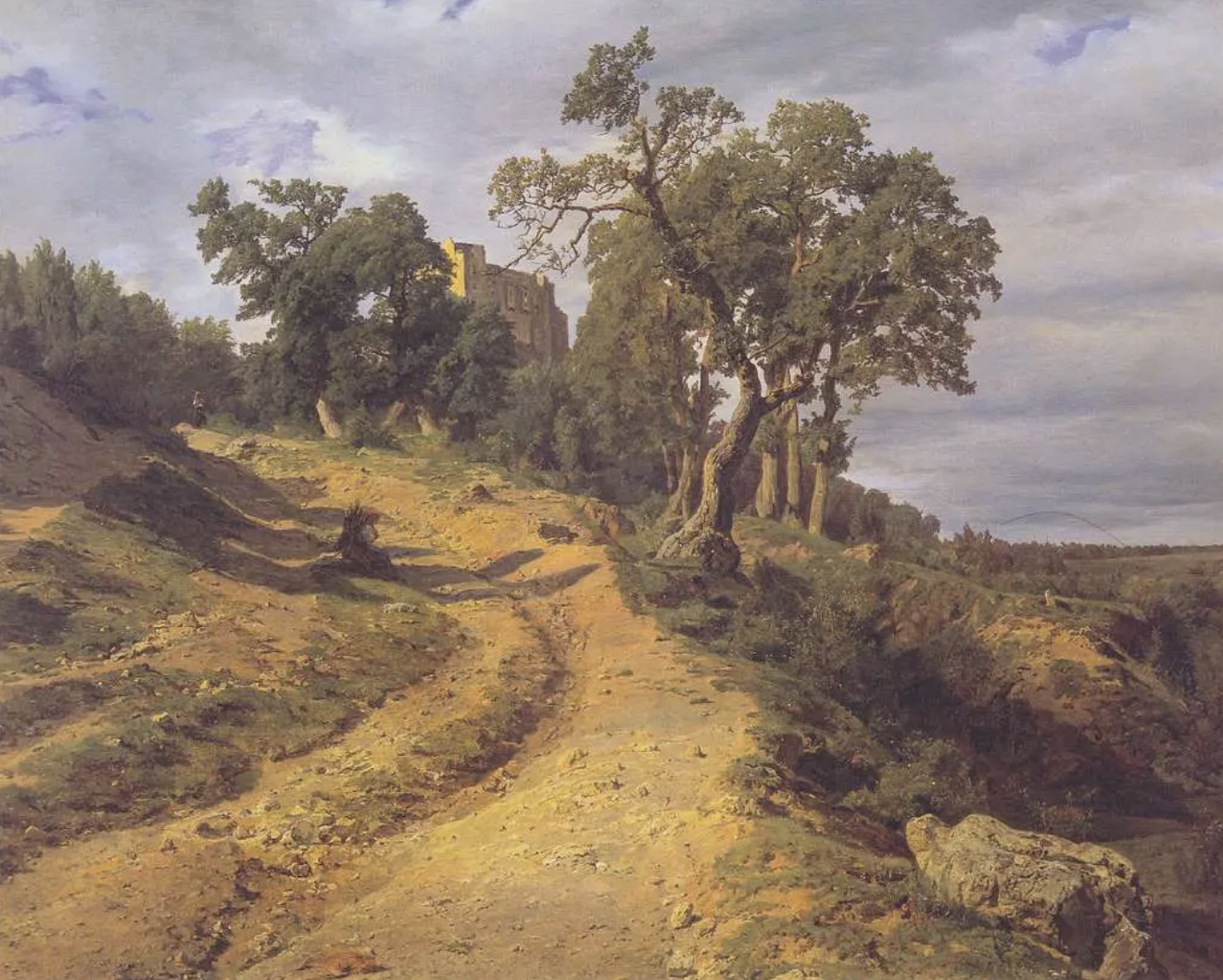
Winston Churchill and the Consolation of Art: ‘If It Weren’t for Painting, I Couldn’t Live. I Couldn’t Bear the Strain of Things.’
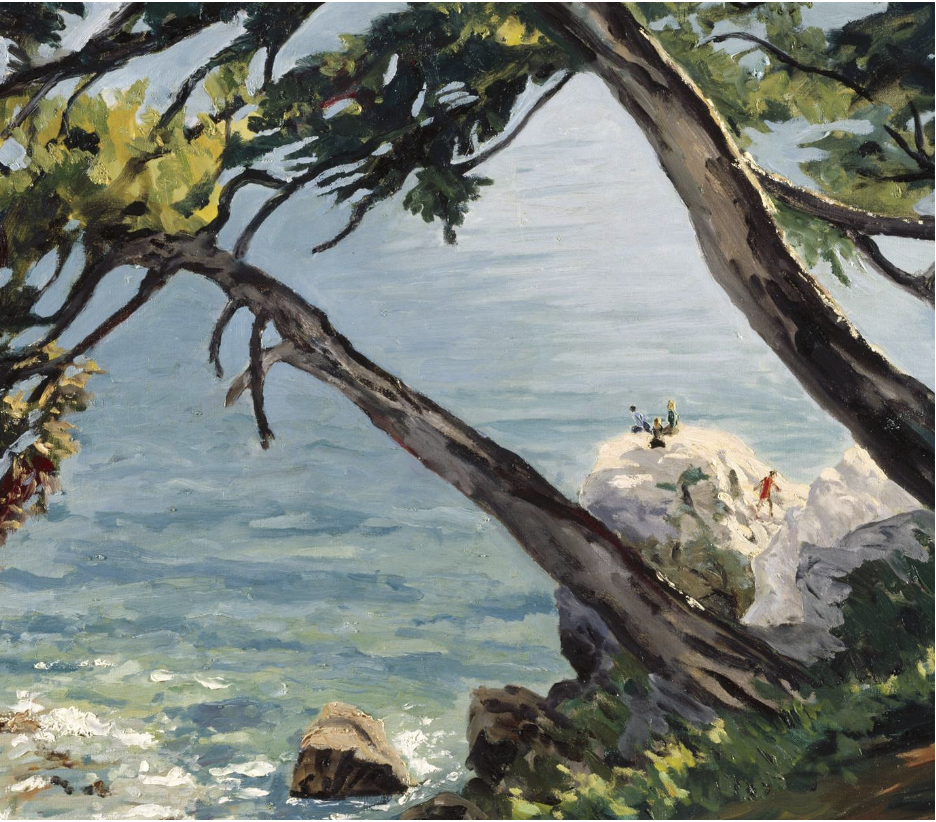
Winston Churchill - Cap d'Ail, Alpes-Maritimes, from La Capponcina
I recently enjoyed an exhibition of the paintings of Winston Churchill. (The Wallace Collection, London until 29 November)
In May 1915, less than a year into World War 1, blamed for the failure of the Dardanelles campaign, Churchill lost his position as First Lord of the Admiralty. Depressed and with time on his hands, the forty-year-old took up painting. It became a lifelong passion.
‘When he left the Admiralty, he thought he was finished… I thought he would never get over the Dardanelles; I thought he would die of grief.’
Clementine Churchill, Churchill’s wife
Churchill had the advantage of being trained by the best: John Lavery, William Nicholson, and later Walter Sickert. He developed a post-impressionist style that nodded towards Van Gogh and Cezanne. Employing bright, vibrant colours - cerulean blue, acid greens and warm reds - his art was spontaneous, fresh, alive.
With no government position, Churchill determined to contribute to the war effort by joining the Royal Scots Fusiliers. His early artistic work included a 1916 image of his shell-damaged battalion headquarters in Belgium; and a haunting self-portrait.
‘I think that [painting] will be a g[rea]t pleasure & resource to me – if I come through all right.’
Winston Churchill, in a letter to Clementine
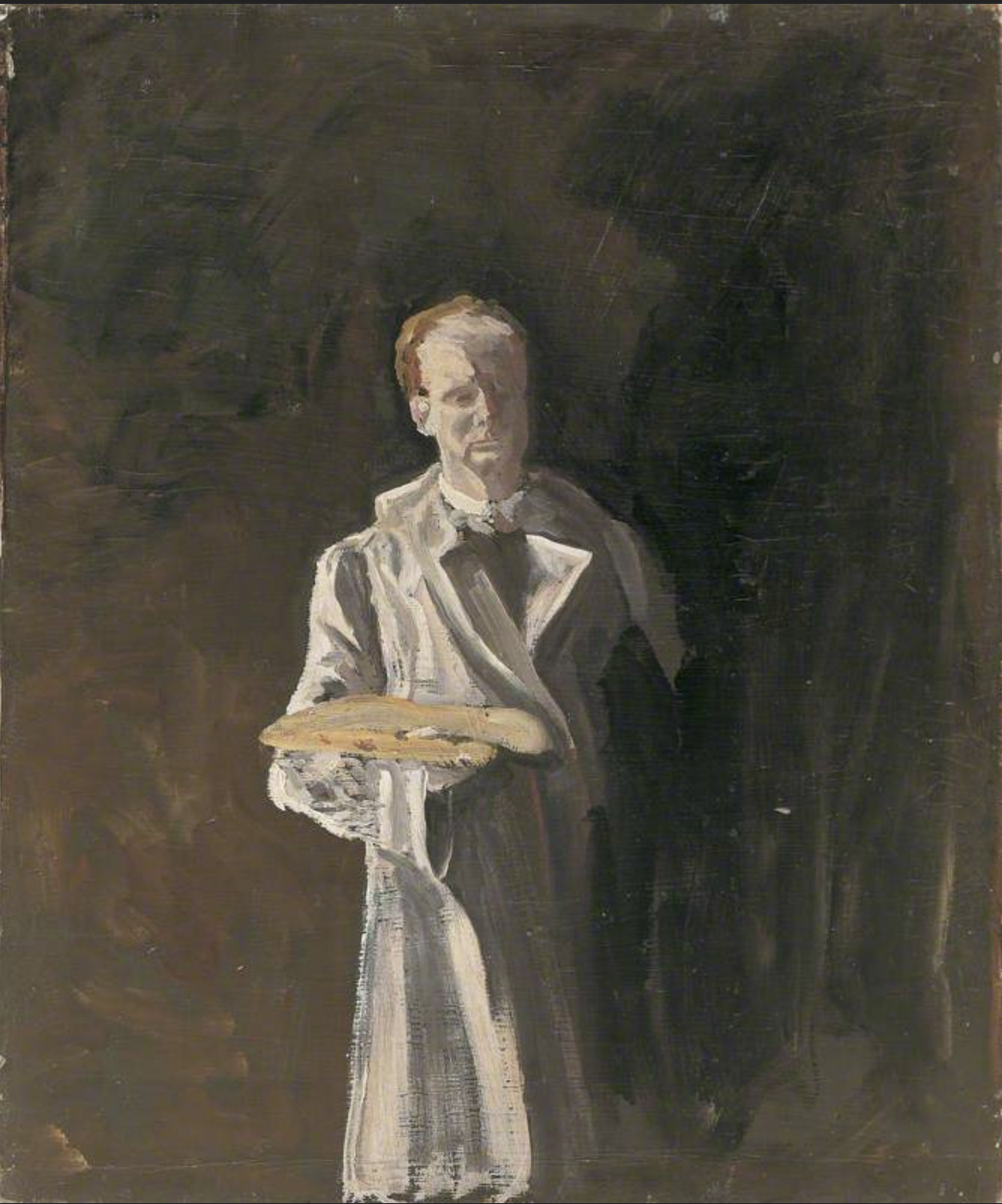
Winston Spencer Churchill (1874–1965) - Self Portrait. National Trust, Chartwell
Out of political office in the 1920s and ‘30s, Churchill built a studio at his beloved country house at Chartwell, Kent. When the weather was fine, he painted outdoors – the walled kitchen garden, the orchard and fishpond – and when it rained, he painted still lifes. Here’s a magnolia in a silver vessel; some summer flowers in a cut glass vase; a ‘bottlescape’ of his favourite tipples, including Pol Roger and Johnny Walker.
Churchill also painted the great country houses of England: his birthplace Blenheim Palace, the Palladian Bridge at Wilton House, the Italian Garden at Sutton Place, Branksome Dene, the scene of a near fatal accident in his youth.
‘We do not have much sunshine in our island, but the English people in every walk of life delight in flowers and gardens, and greet our grey skies with more flowers than any other people grow.’
Winston Churchill
Churchill loved to escape to the French Riviera. Drawn to atmosphere and reflections, he depicted the small, sleepy harbour at Saint-Jean-Cap-Ferrat, the dappled light from a canopy of olive trees in Cap Martin, a shimmering villa pool. At the chateau at Saint-Georges-Motel, gardeners and a friend were enlisted to row across the moat to create ripples.
‘The fleeting light imposes a rigid time-limit. The same light never returns. One cannot go back day after day without the picture getting stale.’
Churchill began his paintings on location and completed them later in the studio, often using photos as an aide memoire. Sometimes he employed a projector to transfer an image onto a squared-up canvas or board.
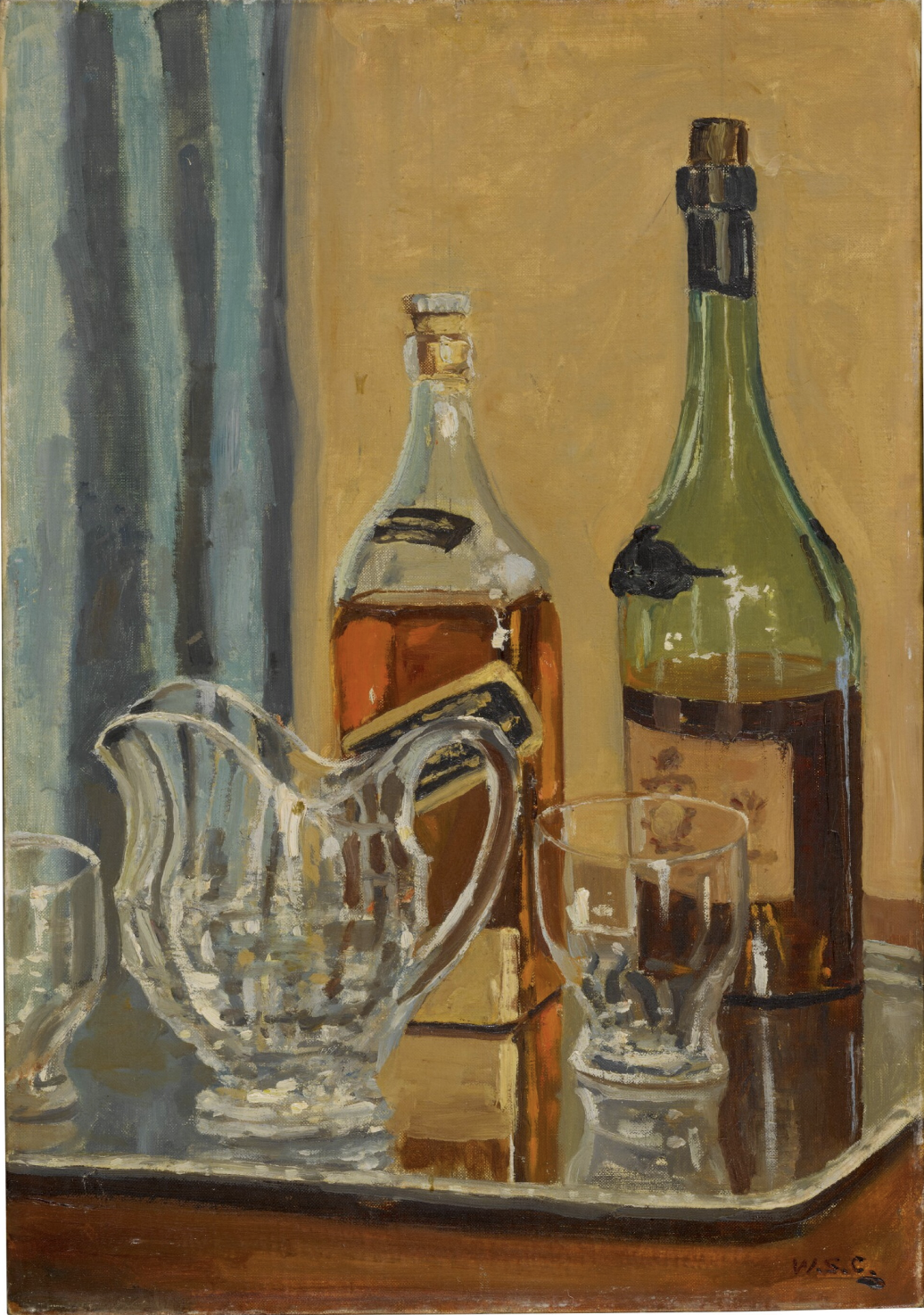
Winston Churchill - Jug With Bottles - 1930’s
Churchill largely gave up painting during World War 2. In the wake of victory, when he lost the 1945 general election, he returned to art for solace and relaxation. A favourite location was Marrakech, ‘the red city,’ which he liked to visit between Christmas and New Year. Enchanted by the bright sunlight and rich colours, he captured the market stalls at the city gate; the verdant trees peering above the rooftops; the snow-capped peaks of the Atlas Mountains; the palms in the garden at the Mamounia Hotel.
Sometimes Churchill gave away his paintings to staff, family and friends. Sometimes he submitted them, under a pseudonym (such as Charles Morin) to competitions.
Of course, Churchill was an amateur. Nonetheless, I found his pictures of historic houses, well-tended gardens and tranquil harbours; of mosques, mountains and olive groves, rather touching. His devotion to his hobby was clearly sincere.
Often in the world of work, we find ourselves embattled by competition, besieged by stress. Churchill teaches us to reflect on the consolation of art; to consider it an escape from the turmoil, an opportunity to refresh our energies and restore our appetites.
John Rothenstein, the Director of the Tate Gallery (1928-64), recalled a remark made by Churchill when he visited him in his studio in 1955:
‘If it weren’t for painting, I couldn’t live. I couldn’t bear the strain of things.’
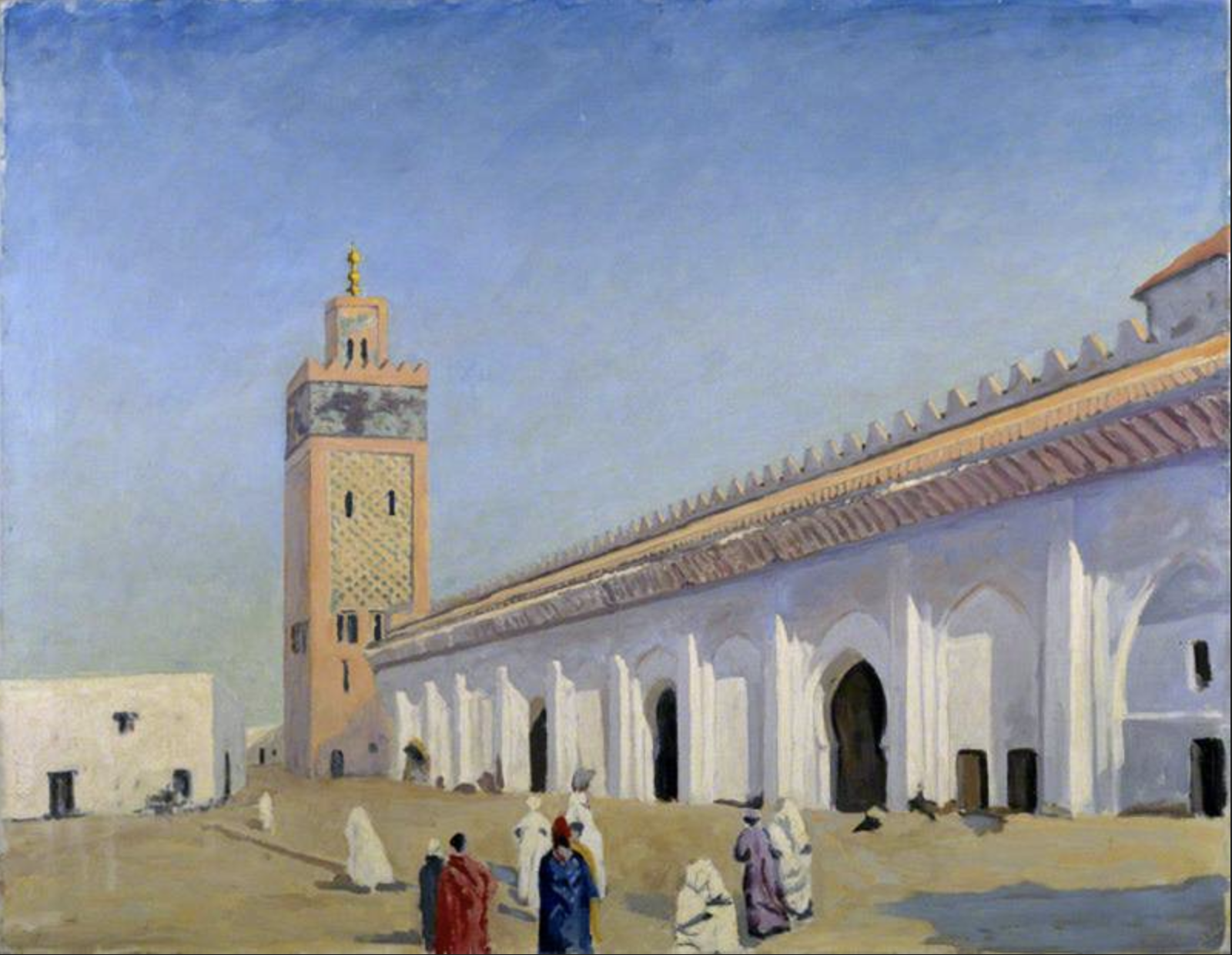
Winston Spencer Churchill - The Mosque at Marrakech. National Trust, Chartwell
Churchill continued to paint until shortly before his death, aged ninety, in 1965. Over a period of fifty years, he produced well over 500 paintings. At the exhibition you can see his oils, brushes and palette cup; his travel easel with its wooden case. And there’s a quarter bottle of Pol Roger, his last, enjoyed a week before he died
'Sweep away the broken glass,
Some things were never meant to last.
Don't cut your skin on things that linger in the past,
Be sure to clear away the shards.
Lest a piece should pierce your heart,
Taking splinters with your fingers is an art.
And it's so late to finally learn,
That perhaps you missed a turn.
And all the signs that showed you where you could have gone,
You let them go,
And so they flew,
And never once looked back to you.
Thought opportunity was endless,
You were wrong.’
Matt Elliott, 'Song of Consolation'
No. 591