Schiaparelli: ‘I Like to Amuse Myself Through Some of my Creations. If I Didn’t, I Should Die’
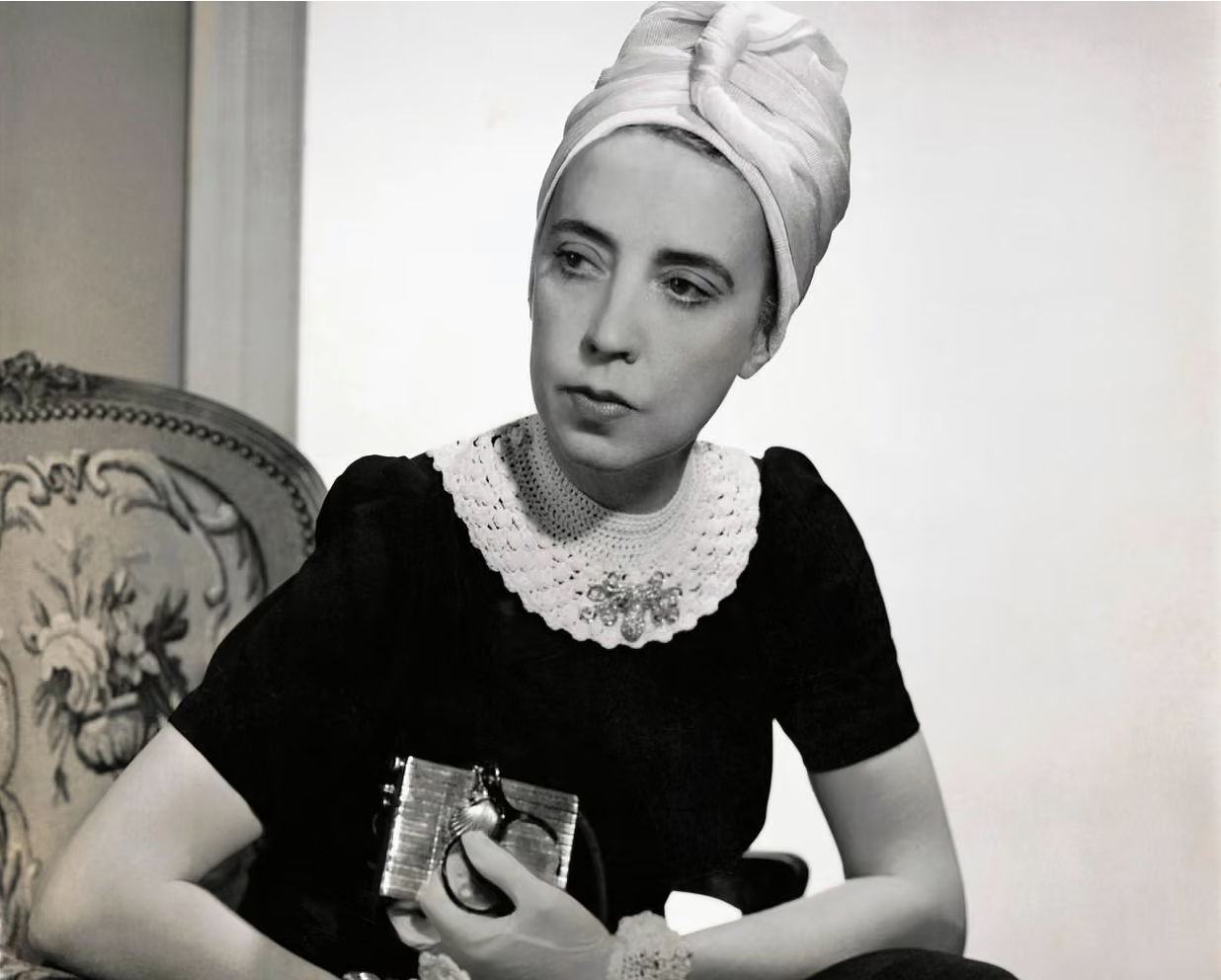
Elsa Schiaparelli in 1940. Photograph: Fredrich Baker/Conde Nast/Getty Images

Elsa Schiaparelli redefined fashion in the 1930s. She created sensuous clothes that caught the eye, that embraced new techniques and materials, that shocked and amused. Above all, she articulated the artistic spirit of her day. (‘Schiaparelli: Fashion Becomes Art’ is at the V&A, London until 8 November.)
 
‘For me, dress designing is not a profession, but an art.’
Elsa Schiaparelli

Born in Rome in 1890, into an aristocratic family, Schiaparelli was educated at a strict Swiss convent school. Breaking free from her conservative upbringing, she spent time in Paris, London and New York, marrying a charismatic conman with whom she had a daughter. Following the breakdown of this relationship, she fell in with the Surrealist set, including the writer Gabrielle Buffet‑Picabia and the artist Man Ray.

'Belief is as necessary to the soul as pleasures are necessary to the body.'
 
In 1922 Schiaparelli moved with her child to Paris, where she took a role as designer at a small fashion house. Although she had had no formal training, in 1927 she presented her first solo collection of hand‑knitted sweaters with geometric patterns. The piece that made her name was a black-and-white jumper with a trompe l'oeil bow‑knot. 
 
‘I wore it at a smart lunch and created a furore… Soon the restaurant of the Paris Ritz was filled with women from all over the world in black-and-white sweaters.’

Schiaparelli opened her first shop in 1928 on rue de la Paix. Branded ‘Schiaparelli Pour le Sport,’ it sold knitted pullovers, simple tops and skirts, as well as beachwear and ski attire. She subsequently added stylish, practical daywear, ‘Pour la Ville,’ and glamorous eveningwear, ‘Pour le Soir.’
 
‘Simple suits, mandated apparel.’
 
Schiaparelli’s day-suits featured unusual fabrics with unexpected fastenings and prominent pockets. There were lively novelty prints, depicting Parisian landmarks, disembodied hands, floating red hearts and newspaper cuttings about herself. Trousers were to the fore, at a time when most women wore them just for sport or informally at home. 
 
‘In the building of a basic wardrobe, we cannot go wrong if we strive for simplicity and perfect fitting.’
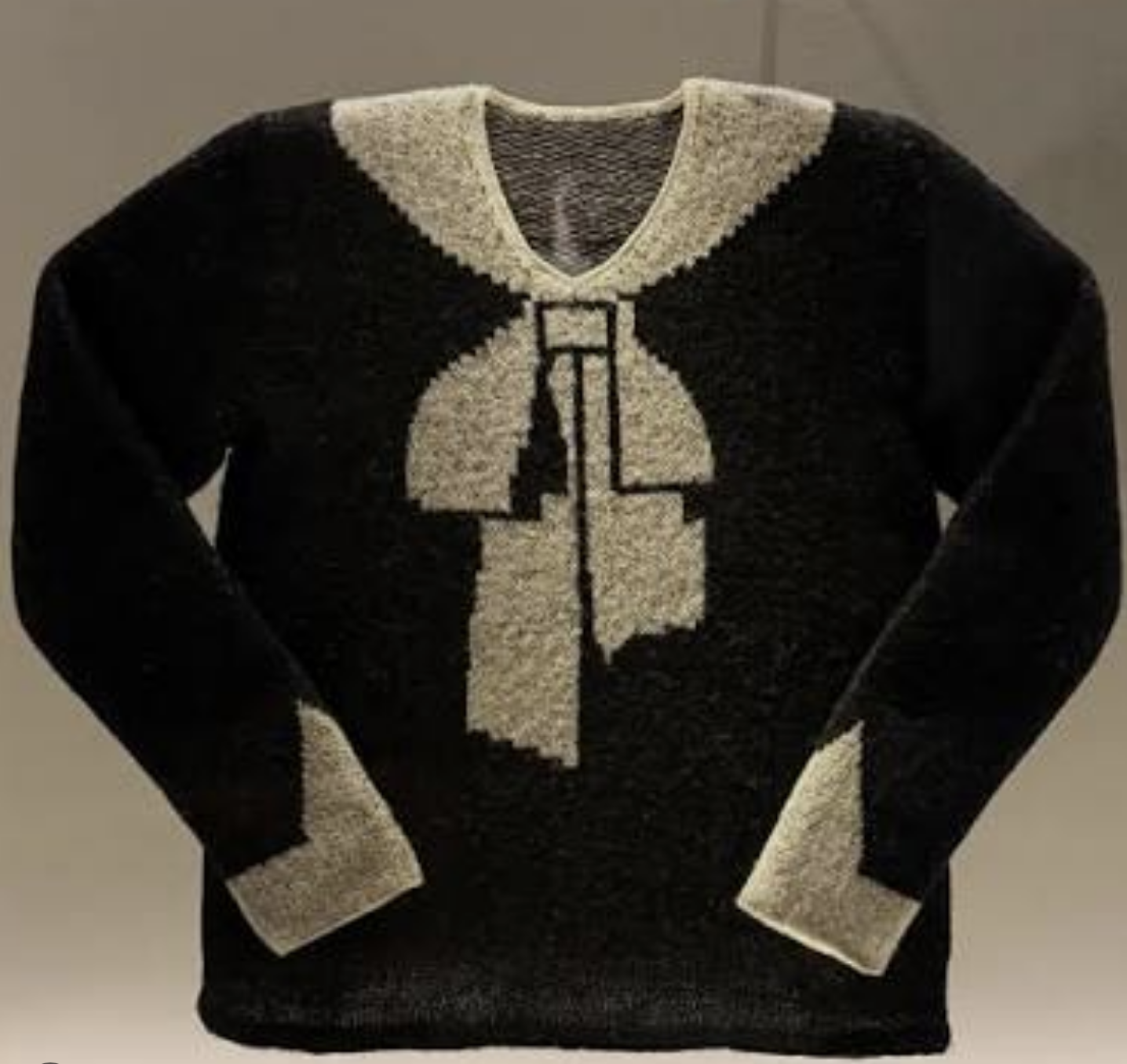
Elsa Schiaparelli - Black-and-white jumper with a trompe l'oeil bow‑knot

Schiaparelli’s evening gowns were dramatic, sinuous and shimmering. With distinctive epaulettes, folded sleeves and daringly‑deep back décolletage, they boasted form‑hugging silhouettes and took inspiration from disparate sources: classical architecture, Harlequin costumes and the circus; military uniforms and Russian parachutists. She experimented with bustles, velvet capes, head scarves and hoods; with prominent zips and asymmetric drapery; with apron‑style over‑tunics and camouflage. And she worked with textile manufacturers to explore innovative materials - crinkly textures, cellophane, metallic threads and woven glass. Her designs consistently came in strong colours - sleeping blue and pirate red; ocean green and her signature shocking pink - with unexpected juxtapositions, like beetroot and salmon.
 
‘Before me, everything was black or navy blue or grey or brown or beige, things like that, for daytime. I began using shocking pink and ice blue and all kinds of bright colours.’
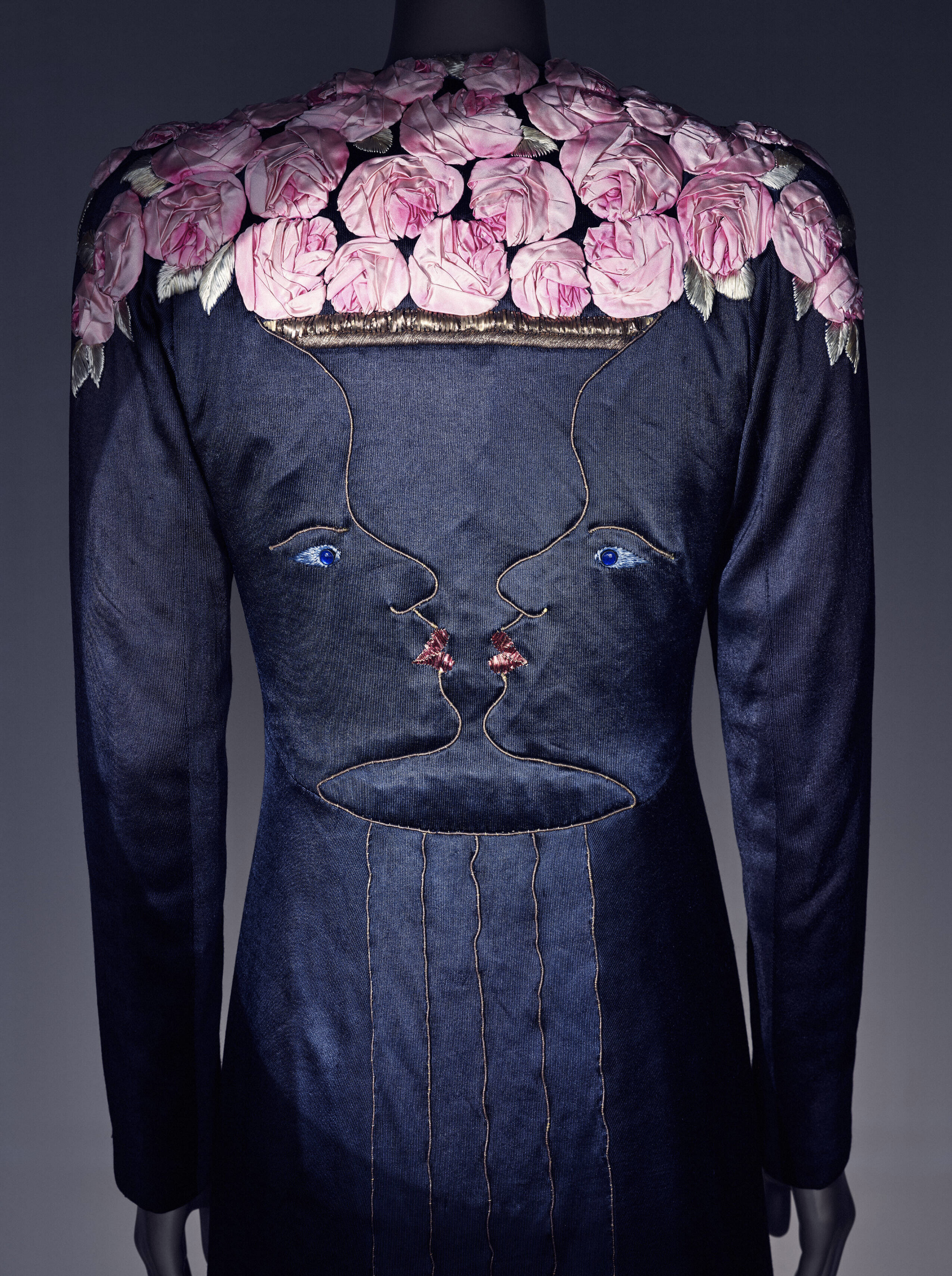
Evening coat, designed by Elsa Schiaparelli and Jean Cocteau, 1937, London, England

Schiaparelli’s smartly tailored jackets completed her evening suits. Made from sumptuous textiles, with oversized pockets, they were graced with characterful buttons - ships and mirrors, playing cards, candlesticks and crowns – and embellished with exquisite embroidery by Maison Lesage – designs featuring flowers, starbursts and musical instruments.
 
‘Fortunately, or unfortunately for me, I am always at my best when I am unhampered: when I can let myself go and have a little fun.’
 
Within five years, Maison Schiaparelli was employing 400 staff and manufacturing over 7000 garments per annum. In 1935, Schiaparelli moved her couture business to 21 Place Vendôme, one of the most elegant addresses in Paris. Its window displays starred two articulated wooden figures, Pascal and Pascaline, performing in witty theatrical scenes. Inside there were screens painted by her artist friends, and light fixtures designed by Alberto Giacometti. 
 
‘There are times to be casual and times to be correct. It's alright to wear a sweater and slacks on a picnic, but they don't belong in the theatre or the drawing room.’
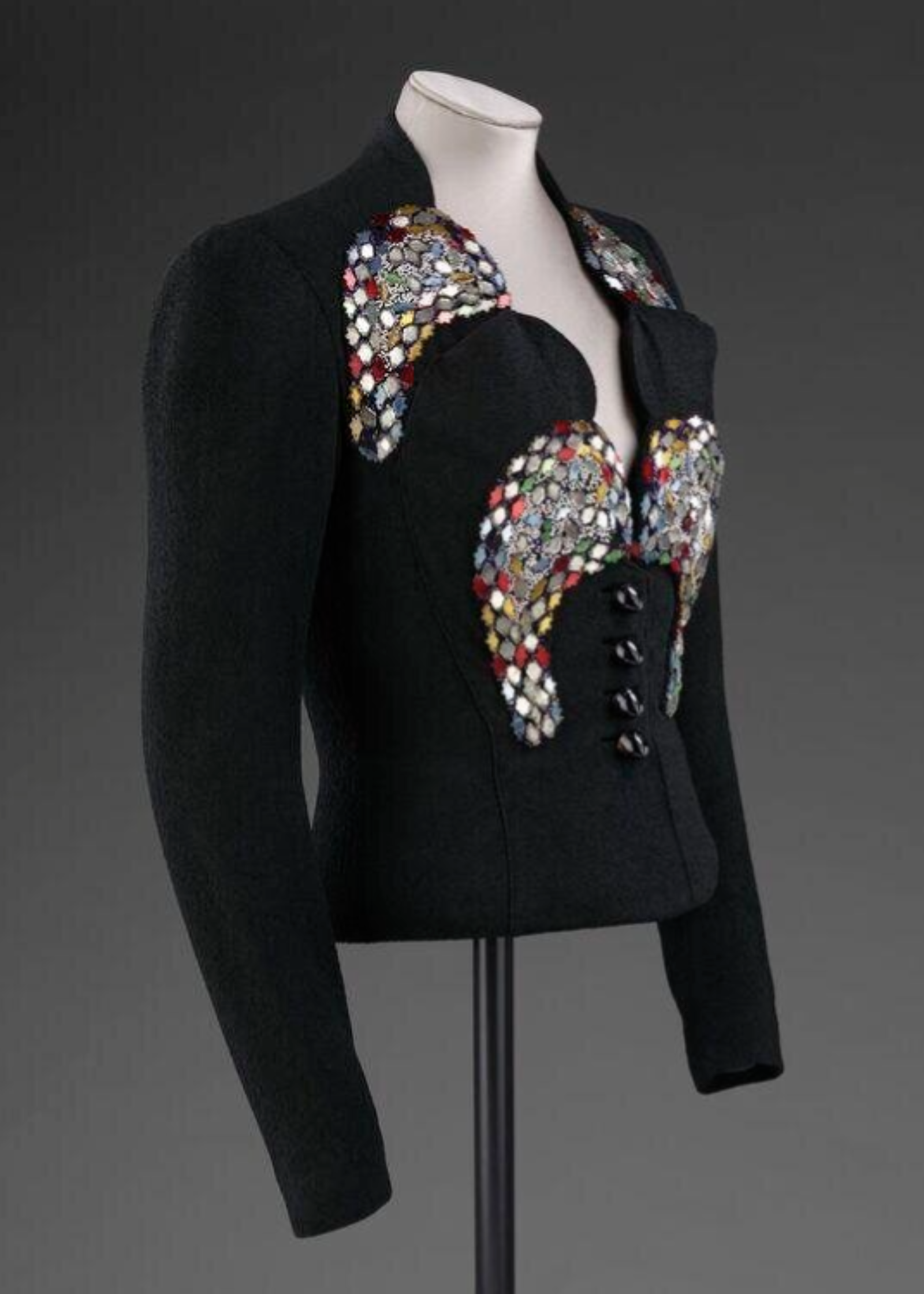
Elsa Schiaparelli - Circus Evening Jacket. February 1938 (made)

The larger space at Place Vendôme enabled Schiaparelli to sell accessories, perfumes and cosmetics. Her first fragrance, S, was unisex. She went on to create Snuff, a scent for men in packaging shaped like a pipe (a reference to René Magritte’s ‘This is not a pipe’ painting). Night-time perfume Sleeping came in a vessel formed like a lit candle, and best-seller Shocking had a bottle based on Mae West’s hourglass figure. One journalist wrote of her Salut scent:
 
‘This is what Salut does for a girl… A drop behind each ear and you feel you’ve had good news. A spray around your neck and Marlene Dietrich had better look out.’
 
Schiaparelli developed a following of confident, wealthy women who wanted to make a mark. Her clients included Wallis Simpson and Nancy Cunard; Mae West and Josephine Baker; Dietrich, Garbo and Hepburn. Bettina Ballard, the Paris correspondent for American Vogue, observed of the typical Schiaparelli customer:
 
‘Wherever she went [she was] protected by an armour of amusing conversation‑making smartness.’
 
A striking playfulness ran through Schiaparelli’s work. She designed shoes in stripes, gloves with faux fingernails. And at a time when hats were required daytime wear for women, her creations – in plant fibre, felt or fur - included a birdcage, a lambchop and an upside-down shoe. 
 
‘The spirit of infectious good humour can be created even through women’s hats. I like to amuse myself through some of my creations. If I didn’t, I should die.’
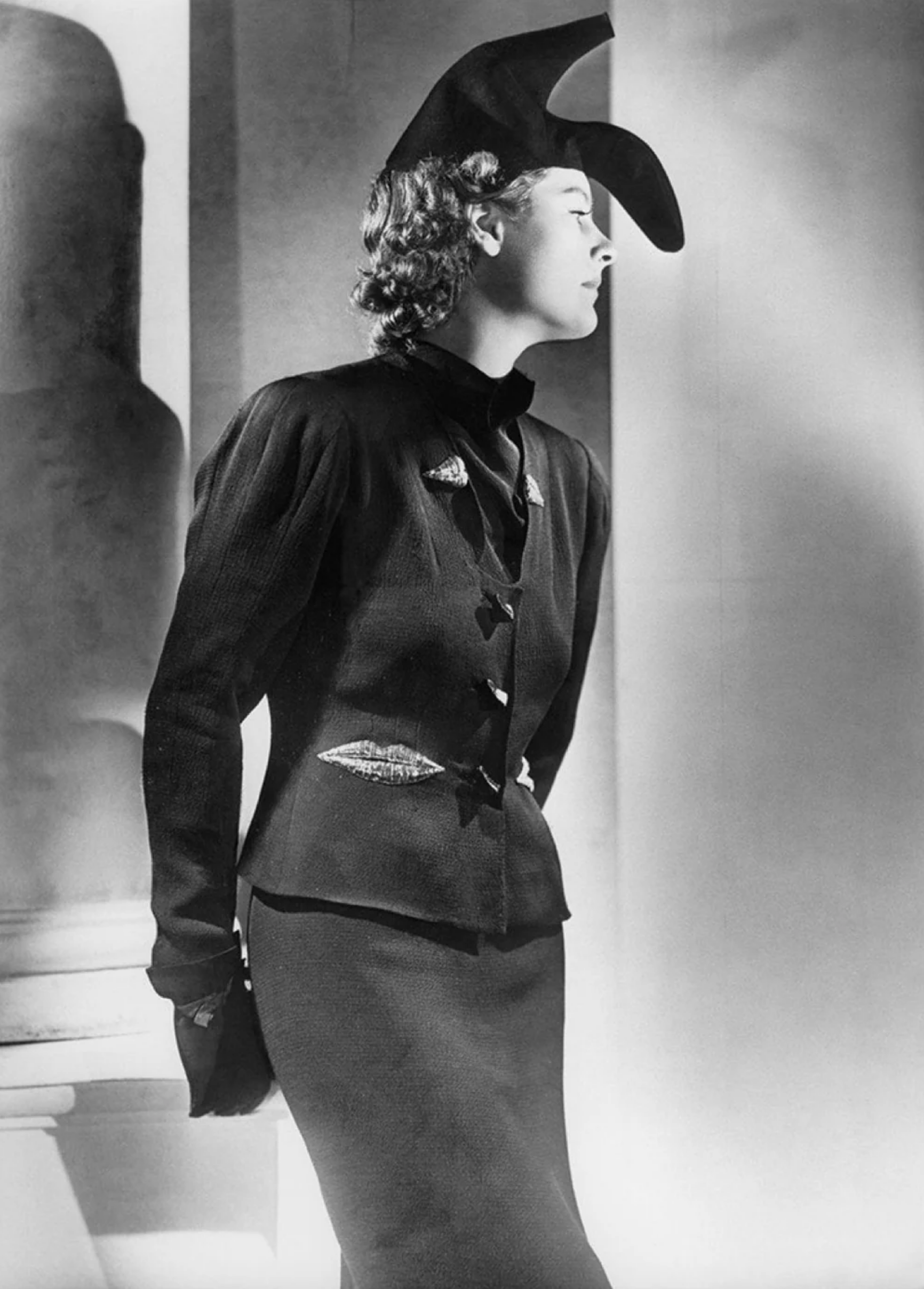
Elsa Schiaparelli and Salvador Dali - The shoe-hat
Schiaparelli Haute Couture Winter 1937-38 collection.
Inspired by a photograph that Gala, (Dali's wife) had taken of her husband wearing a woman's shoe.

Schiaparelli’s wit, her love of the absurd, erotic and subversive, derived from her enduring association with the Surrealists. She commissioned contemporary artists to co-create designs for garments and accessories; for her advertising and boutiques. Indeed, such was her affection for the avant garde that her rival ‘Coco’ Chanel dismissed her as ‘that Italian artist who’s making clothes.’
 
‘Women dress alike all over the world: they dress to be annoying to other women.’
 
Schiaparelli worked particularly closely with Salvador Dalí and Jean Cocteau. One coat at the exhibition is embroidered on the back with a Cocteau drawing of mirrored, kissing faces which, in profile, trace an urn of roses. Inspired by Dali, Schiaparelli created a gown with a dramatic lobster print, and a frock that gives the impression of torn fabric. Her Skeleton Dress, co-designed with Dali, has quilting resembling a rib cage, vertebrae, hip and leg bones.
 
‘A successful designer must be a gambler.’
 
Schiaparelli teaches people working in commercial creativity to approach their craft with vigour and courage; to integrate humour, however serious the endeavour; to embrace the ideas and influence of contemporary art. 
 
‘More than life I cherish freedom.’
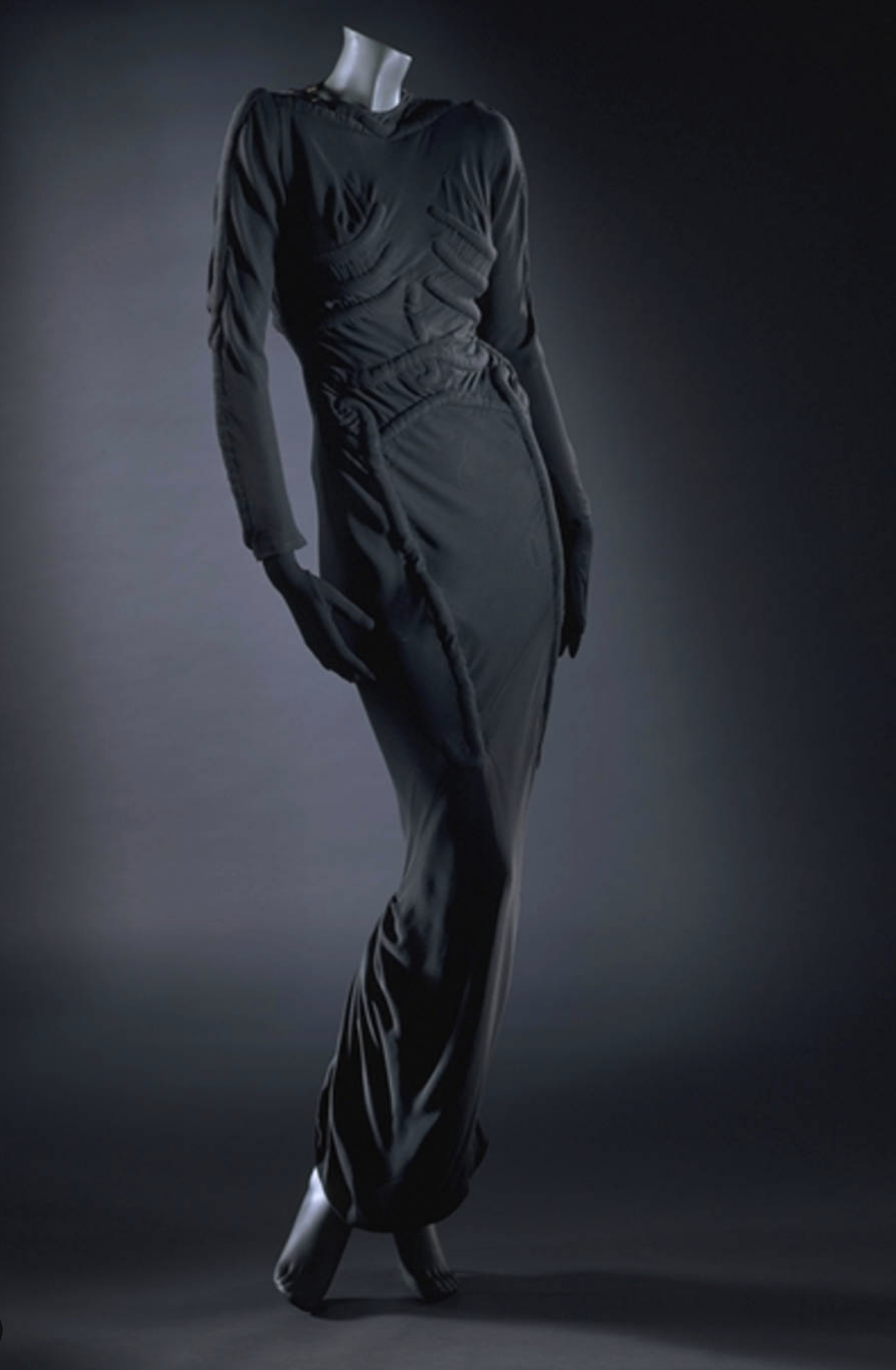
The Skeleton Dress - Elsa Schiaparelli and Salvador Dali
Evening Dress, 1938 (made)

Schiaparelli spent most of the Second World War in New York. Having returned to Paris in July 1945, she continued to design collections. But post-war austerity and Christian Dior's ‘New Look’ combined to create challenging trading conditions. She terminated her couture business in 1951, and in 1954 she closed the doors of her salon. She lived out a comfortable retirement between her Paris apartment and her house in Tunisia, and died in 1973, at the age of 83.
 
‘Nobody has been able to pronounce [my name] properly… but everybody knows what it means.’
 

'I am a lonely painter,

I live in a box of paints.
I'm frightened by the devil,
And I'm drawn to those ones that ain't afraid.
I remember that time you told me, you said
"Love is touching souls."
Surely you touched mine.
'Cause part of you pours out of me,
In these lines from time to time.’
Joni Mitchell, ‘A Case of You'

No. 588
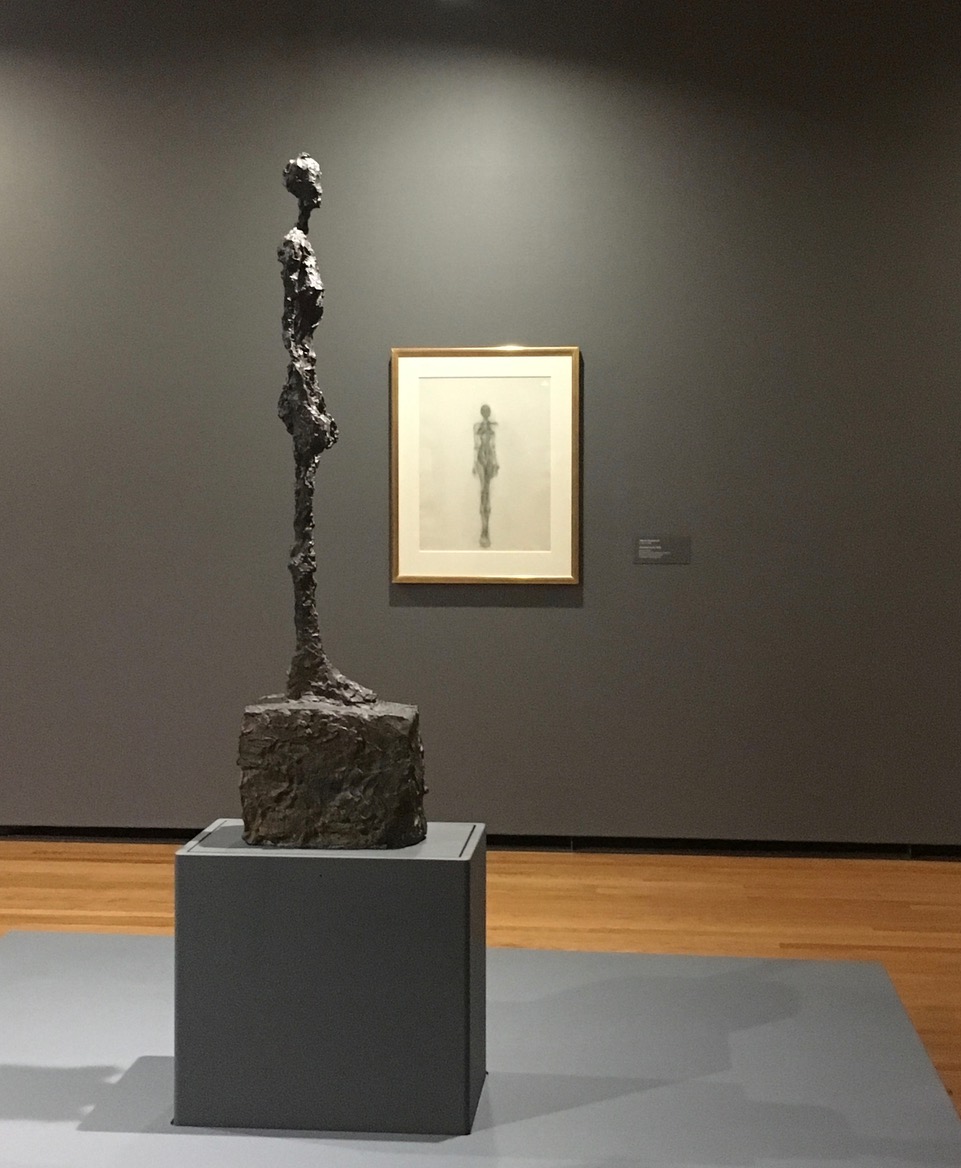
Not Just Reality, But Truth: Giacometti and the Virtues of Style


Giacometti - Figure

Giacometti - Figure

'The object of art is not to reproduce reality, but to create a reality of the same intensity.'
Alberto Giacometti

On a recent trip to Vancouver I visited an exhibition of the work of Alberto Giacometti (Vancouver Art Gallery until 29 September). The show originates from the collection of Robert and Lisa Sainsbury held by the Sainsbury Centre for Visual Arts at the University of East Anglia, Norwich.

Inevitably I was drawn to Giacometti’s tall, slender bronze figures. Big feet, small heads, rough hewn and long limbed. Standing somber, pacing purposefully, stripped bare, isolated and alone. They seem to suggest the very essence of humanity - and after the Second World War they were taken to represent society’s existential crisis.

'When I make my drawings... the path traced by my pencil on the sheet of paper is, to some extent, analogous to the gesture of a man groping his way in the darkness.’

I was also struck by Giacometti’s portraits. They sit square on, staring us straight in the eye. We can see how the artist has restlessly worked and reworked the image: the scratching and scraping; the narrowing focus on posture, frame, face and eyes; the struggle to capture an essence, an identity, a soul.

‘One day when I was trying to draw a girl, something struck me: suddenly I saw that the only thing that stayed alive was her gaze. The rest, the head which was turning into a skull, became more or less the skull of a dead person. The only difference between the dead and living is the gaze.’

Giacometti was notorious for refusing to accept that his portraits were ever finished. On one occasion the Sainsburys needed to get a work signed. But they were warned not to let the artist get his hands on the piece, as he’d never give it back.

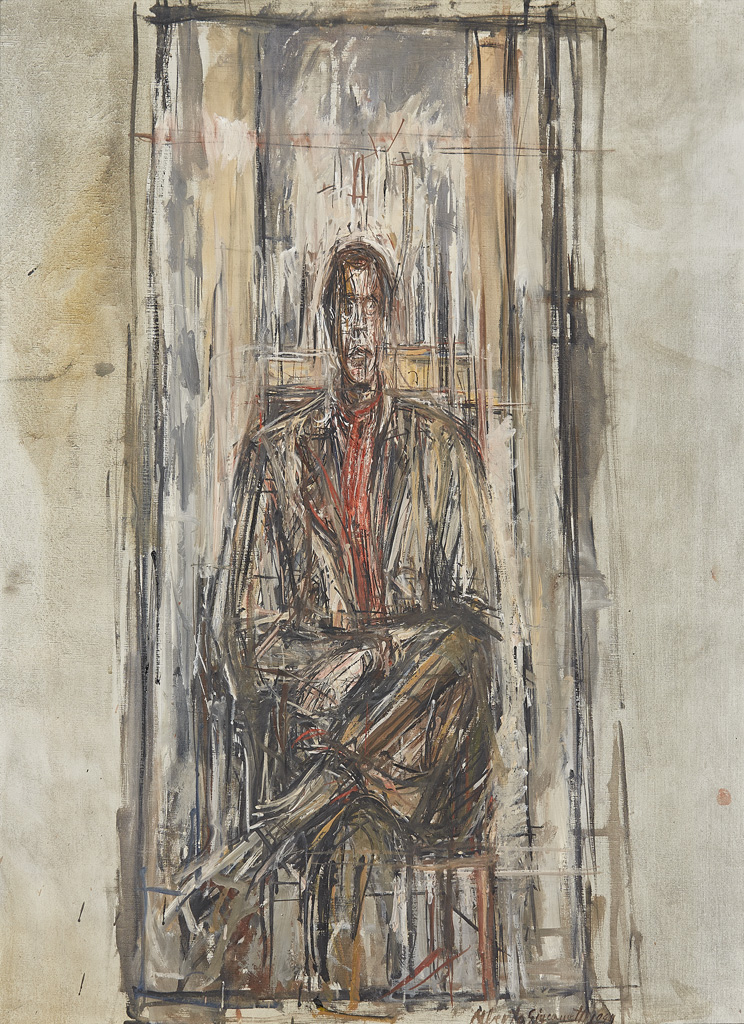
Alberto Giacometti - Diego Seated, 1948,  oil on canvas

Alberto Giacometti - Diego Seated, 1948,
oil on canvas

'That's the terrible thing: the more one works on a picture, the more impossible it becomes to finish it.'

Perhaps there is something we can all learn here. We live in an era of pragmatism and practicality; of discipline around deadlines. We’re taught that ‘done is better than perfect’ and ‘perfect is the enemy of good’. But in the digital age a task is never complete, a goal never reached. Endings represent a submission, a letting go, a kind of complacency. Nowadays we must constantly improve, endlessly evolve. We shouldn’t be afraid to keep on, to persist in the quest for perfection.

'Failure is my best friend. If I succeeded, it would be like dying. Maybe worse.’

One section of the exhibition considers Giacometti’s sources and influences. In the 1920s he studied classical sculpture in Paris, and he spent days in the city’s museums sketching and making notes. He was clearly inspired by Egyptian, Greek, Roman and West African art.

‘Have you ever noticed that the truer a work is the more stylized it is? That seems strange, because style certainly does not conform to the reality of appearances, and yet the heads that come closest to resembling people I see on the street are those that are the least naturalistic – the sculptures of the Egyptians, the Chinese, the archaic Greeks and the Sumerians.’

Many years ago, on a visit to Athens, I came across the Museum of Cycladic Art. I was bowled over by the elegantly reduced female figures, highly stylised in smooth white marble. Arms folded, flat faced and sharp nosed, they reach out to us across the centuries, cool and aloof, silent and knowing. Originating from a small group of Aegean islands in the second and third millennia BC, Cycladic figures are consistently cited as an inspiration for modern sculptors.

UEA_342-fill.png

And here they are again at a Giacometti exhibition on the other side of the world. The artist explained why he found them so compelling.

‘If I didn’t know that your skull had a certain depth, I couldn’t guess it. Therefore, if I made a sculpture of you absolutely as I perceive you, I would make a rather flat, scarcely modulated, sculpture that would be much closer to a Cycladic sculpture, which has a stylised look, than to a Rodin or Houdon, which has a realistic look.’

Giacometti regarded art as 'the residue of vision.’ It’s what’s left behind after flawed perception and fading memory have decayed and distorted the lived experience. Beyond reality there is truth.

Perhaps sometimes in the world of brands, communication and entertainment we strive too hard to reproduce reality, to reflect the world as it actually is. Giacometti suggests that we should set aside our crude attempts at naturalism; that rather we should reduce, condense and distil - and then embrace style, abstraction and individual interpretation.

All we have to do is take a leap.

'The more I work, the more I see things differently - that is, everything gains in grandeur every day, becomes more and more unknown, more and more beautiful. The closer I come, the grander it is, the more remote it is.'


'So true, funny how it seems.
Always in time, but never in line for dreams.
Head over heels when toe to toe,
This is the sound of my soul.
This is the sound.
I bought a ticket to the world,
But now I've come back again.
Why do I find it hard to write the next line?
Oh, I want the truth to be said.
I know this much is true.
I know this much is true.’

Spandau Ballet, ‘True’ (G Kemp)

No. 248

Are You a Cowboy or a Farmer? Managing the Tension Between the Pioneering Spirit and the Need to Cultivate The Land

Frederic Remington 'A Cold Morning on the Range'

Frederic Remington 'A Cold Morning on the Range'

Rodgers and Hammerstein’s Oklahoma! features a song called ‘The Farmer and the Cowman.’ This jaunty number explores the musical’s central tension between the farmers, who have an instinct to settle and cultivate the land, and the cowmen, who naturally want to move on and pioneer new territories. Brian Eno, the master musician, producer and artist, has observed that this tension, between cultivating and pioneering, is fundamental to our understanding of creativity.

‘I often think that art is divided between the farmer and the cowboy: the farmer is the guy who finds a piece of territory, stakes it up, digs it and cultivates it – grows the land. The cowboy is the one who goes out and finds new territories.’

It’s a thought provoking distinction. And perhaps all of us in the field of commercial creativity should ask ourselves: What kind of creative am I? Am I more adept at pioneering or cultivating? Am I a cowboy or a farmer?

I suspect most of us would like to imagine ourselves as cowboys or cowgirls; as experts in reframing, redefining, reinventing; as intrepid adventurers intent on discovering new frontiers. It’s the more romantic choice. Indeed this is Eno’s own understanding of himself.

‘I would rather think of myself as the cowboy, really, than the farmer. I like the thrill of being somewhere where I know no one else has been.’

But let’s not be too hasty.

Many of the world’s great artists could perhaps be described as more farmer than cowboy. Think Mondrian, Giacometti, Rothko or Pollock. They worked within a coherent conceptual space, repeatedly revisiting a relatively narrow terrain; making it their own through variety and depth of expression. They ‘grew the land.’

Grant Wood 'American Gothic'

Grant Wood 'American Gothic'

Moreover, in the world of commercial creativity ongoing brand success requires high levels of consistency and coherence: campaigns that build a positioning; initiatives that sustain and evolve a theme; executions that nurture an idea with imagination and freshness.

My former boss Sir Nigel Bogle would often talk of a brand needing to ‘move it on without moving it off.’ This task can be just as critical and just as challenging as complete reinvention. It requires the calibrated embrace of context, a more nuanced understanding of past success, a respect for ideas that were not invented here. But do we properly appreciate, celebrate and reward the ability to evolve, nurture and cultivate? Do we really acknowledge the worth of the creative farmer? Or will we always prefer our creative cowboys and cowgirls and their mastery of the blank piece of paper?

Perhaps a little predictably, I’m inclined to say that a healthy creative business needs both cowboys and farmers. We need to be able to pioneer as well as to cultivate; to reinvent as well as to refine. And critically we need to know when to adopt each of these two modes; when to stick and when to twist.

As Rodgers and Hammerstein put it, ‘the farmer and the cowman should be friends.’

‘Oh, the farmer and the cowman should be friends.
One man likes to push a plough, the other likes to chase a
cow,
But that's no reason why they cain't be friends.’ 

The Farmer and the Cowman, Rodgers and Hammerstein

No.115

NOTES FROM THE HINTERLAND 13

Truth Amplified: Is Now the Time for Verismo Advertising?


‘Now then you will see men love
As in real life they love, and you will see
True hatred and its bitter fruit. And you will hear
Shouts both of rage, and cynical laughter.’

Tonio, Prologue, Pagliacci

In December I attended a magnificent performance of Ruggero Leoncavello’s Pagliacci at the Royal Opera House.

Pagliacci was first performed in 1892 and it is regarded as one of the definitive verismo operas. The term ‘verismo’ derives from the Italian word ‘vero,’ meaning ‘true’. In verismo composers sought to break with the operatic tradition demanding stories of deities and mythical figures, nobles and royalty. Verismo concerned itself with the lives and relationships of ordinary folk.

Over its brief seventy-five minute running time Pagliacci tells the tale of a touring theatre company beset by plots and rivalries. Among the company is Canio, the clown, who rails against a life in which he must play the fool while his heart is breaking (‘Vesti la giubba’). It is one of the most moving arias in opera.

Pagliacci is not a mere everyday soap opera. It deals in extremes of passion and emotion. It is a tale of lust and jealousy, of intrigue and infidelity. It conveys a heightened reality. It is truth amplified.

I think the world of brand marketing could learn something from verismo. Firstly, of course, the most effective communication tends to feature regular everyday people, rather than the wooden marionettes of advertising cliché. But, secondly, the best work often puts those average people in exceptional circumstances.

Because of its brevity advertising must always distil; but, in order to create impact, it must also intensify. It amplifies truth.

Moreover, Pagliacci illustrates how to manage a dramatic ending. The story culminates in two tragic stage deaths. At the last the actor, Tonio, addresses the audience: ‘La commedia e finita!’ (‘The play is over!’) Perfect.

‘The Most Difficult Thing To Do Is What’s Most Familiar’ (A Giacometti)

I recently visited an exhibition of Alberto Giacometti’s portraiture at The National Portrait Gallery.
Giacometti grew up in a small Swiss village and his early paintings of his family are colourful, sunny and seemingly effortless.

Photograph: Tate London 2015

However, over time, and as his unique personal style developed, his portraits became more intense. He subjects his sitters to scrutiny. He locates them in the centre of the canvas, facing straight out at us, almost confrontational. He labours to capture their essence in the stillness; to distil the truth of their identity. He repeatedly scratches and scrapes at the paint until he is satisfied. The works are often small-headed and hollow-eyed. The sitters seem alone and remote. Staring out at us in grey, black and brown, they haunt the space.

Reflecting on Giacometti’s relentless pursuit of his subjects’ vital presence, the exhibition notes quote Samuel Beckett:

‘Ever tried. Ever failed. No matter. Try again. Fail again. Fail better.’

In the world of brands and marketing we deal in the everyday and familiar. But this doesn’t make our jobs easier. If anything it makes them harder. Stripping away the clichéd, extraneous and redundant; isolating the human essence, the genuine insight, the cultural nuance. These are genuine challenges. Only the truly great practitioners can make the ordinary proclaim its vital truth.

The Benefit of the Doubt

1965 looms large on the London stage at the moment. The Trafalgar Studios are hosting an excellent production of Harold Pinter’s The Homecoming (until 13 February). This great play was first performed in 1965. Meanwhile the Wyndham Theatre is staging Martin McDonagh’s darkly comic Hangmen (until 5 March), a work largely set in 1965.

In 1965 the Beatles played Shea Stadium, Bob Dylan went electric, Ali beat Sonny Liston and West Ham won the European Cup Winners’ Cup. But these two plays consider more sinister themes.

The Homecoming tells the story of a long-lost son returning with his wife to his robustly working class North London family home. It’s a place of masculine threat and inarticulate regret. The past haunts; violence is just around the corner. Speeches are coded, veiled, misleading. There seems to be so much left unsaid.

“The speech we hear is an indication of that which we don't hear… One way of looking at speech is to say that it is a constant stratagem to cover nakedness.” 
Harold Pinter

McDonagh’s work considers the plight of Britain’s last hangman at the time when capital punishment was abolished. He doesn’t let us settle. Is he condemning hanging and the culture that accompanied it? Or is he criticising the sixties liberalism that swept it away? His characters are difficult to pin down. Again there is menace, mistrust, misgiving. Sometimes the audience laughs when it should be disturbed. Perhaps comedy and fear are more adjacent sentiments than we might imagine.

One walks away from both plays with a sense of unease and uncertainty; with more questions asked than answered. It’s actually quite a satisfying sensation because, of course, life itself is marked by doubt, mystery, ambiguity.

“There are no hard distinctions between what is real and what is unreal, nor between what is true and what is false. A thing is not necessarily either true or false; it can be both true and false.” 
Harold Pinter

For the most part we consider modern commerce a field for certainty. We strive to deliver openness and transparency. We earnestly endeavour to make brands comprehensible and credible. We convey approachability, accessibility, familiarity. We explain ourselves.

But I wonder would some brands not benefit from embracing a little more mystique, an aura of expertise, a suggestion of secrecy? Imagine a brand that asks more questions than it answers; a brand with hidden depths, not manifest shallows.

Should we not give ourselves the benefit of the doubt?

No. 64