Zurbarán: The Serene Drama
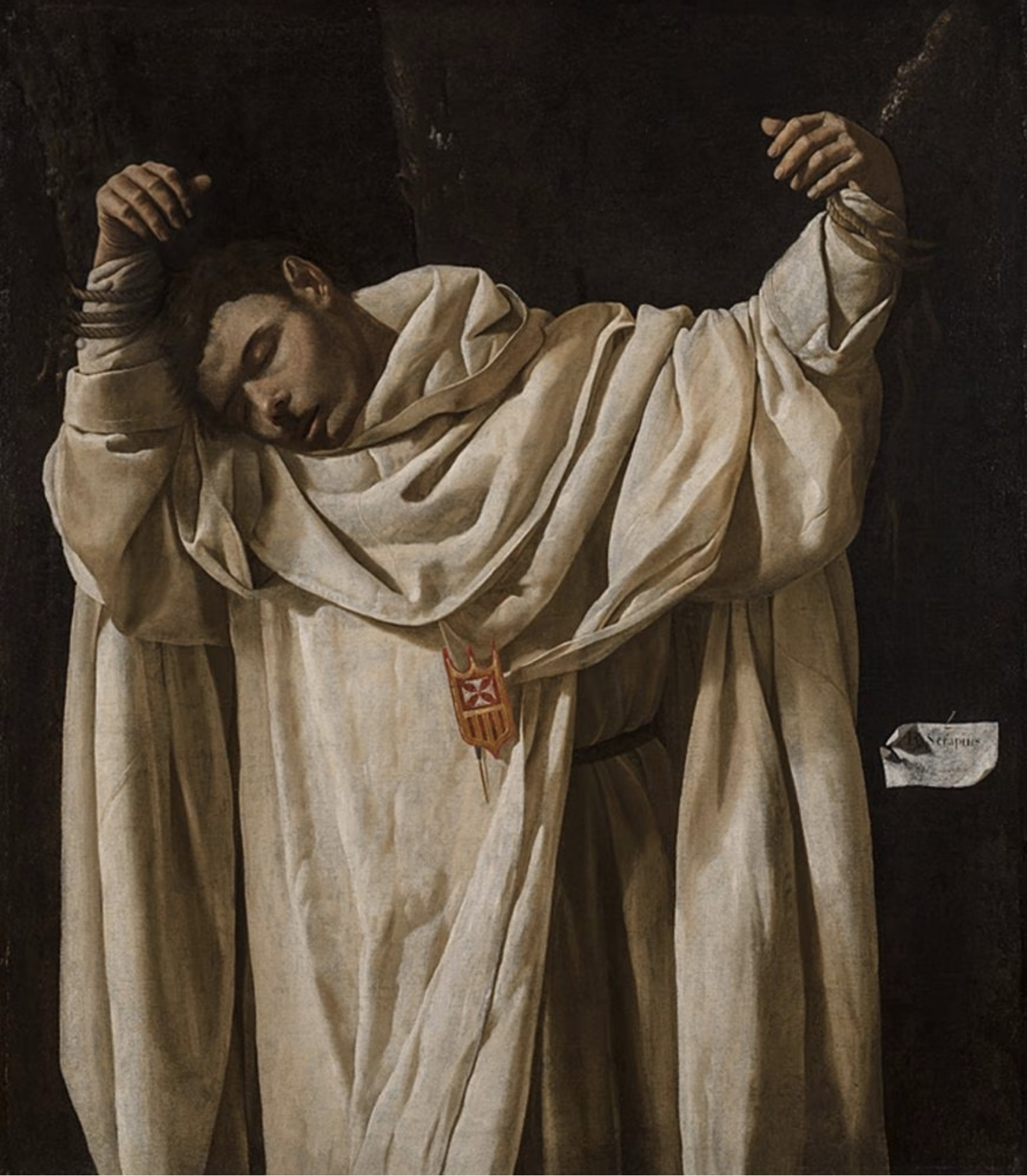
Francisco de Zurbarán - Saint Serapion. 1628. Oil on canvas, 120.7 × 104.1 cm Wadsworth Atheneum Museum of Art, Hartford, CT

I recently visited a splendid exhibition of the work of Francisco de Zurbarán. (The National Gallery, London until 23 August)

With dramatic lighting, vivid storytelling and an eye for sumptuous fabrics, this 17th century Spanish Master articulated the mysteries of his faith. Today he provides lessons in emotional intensity, in simplicity, clarity and calm.

Born in remote Extremadura in 1598, at 15 Zurbarán travelled to Seville, which was then a prosperous port city, with strong links to Spain’s American colonies. Having learned painting, carving and gilding, he received commissions from the many religious orders in the town; and subsequently from the royal court in Madrid, and from wealthy private patrons.

The Catholic church was encouraging art as a vehicle for devotion: ‘a bridge between heaven and earth.’ And so Zurbarán painted saints, monks and martyrs; the immaculate conception and the crucified Christ; monumental altarpieces of religious scenes, and small, exquisite still lifes that prompted reflection on the fundamental magnificence of nature.

Zurbarán introduces us to a procession of obscure saints who have suffered for their faith.
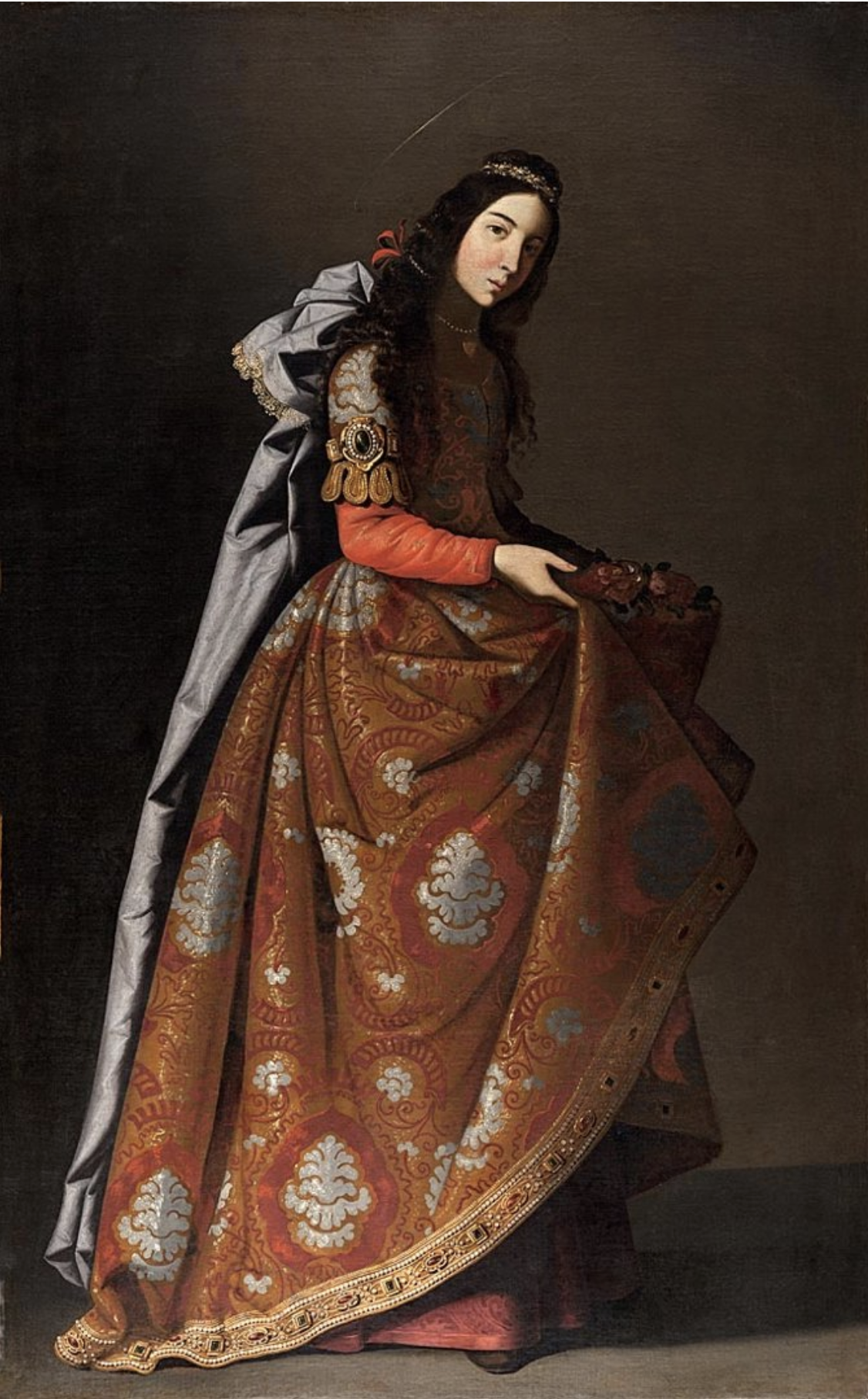
Francisco de Zurbarán - 'Saint Casilda', about 1635, Museo Nacional Thyssen-Bornemisza, Madrid © Museo Nacional Thyssen-Bornemisza

Saint Margaret of Antioch, having been swallowed by a dragon, has emerged unscathed. We find her in pristine shepherd’s costume, a saddlebag slung over one arm. (The monster skulks in the background, somewhat crestfallen.) The Muslim princess Saint Casilda of Toledo has been smuggling food to Christian prisoners. When she is confronted, the bread rolls hidden in her richly embroidered frock, have miraculously transformed into roses. Saint Apollonia, her teeth wrenched out by her Roman torturers, has thrown herself into a fire. However, we meet her dressed in a fabulous pink and yellow silk gown, her emerald-green cape fastened at the neck with a jewelled brooch, and holding a pair of pliers - she is the patron saint of dentistry. 

These martyrs have triumphed over death. Elegantly attired, peaceful and poised, they regard us with benign looks of encouragement.

Zurbarán, whose merchant father sometimes dealt in cloth, is a superb painter of textiles. We marvel at the ornate floral bodices and flowing cloaks; the shimmering silk and heavy gold brocade; the opulent pleats and folds.  

Though he has suffered a violent end, Saint Serapion is depicted with a tranquil expression on his face, in a spotless white robe. Even the homespun wool of Saint Francis of Assisi’s habit is rendered with painstaking precision. We encounter him in his tomb, looking up to heaven. As witnessed by Pope Nicholas V, he has remained standing, his body uncorrupted. 
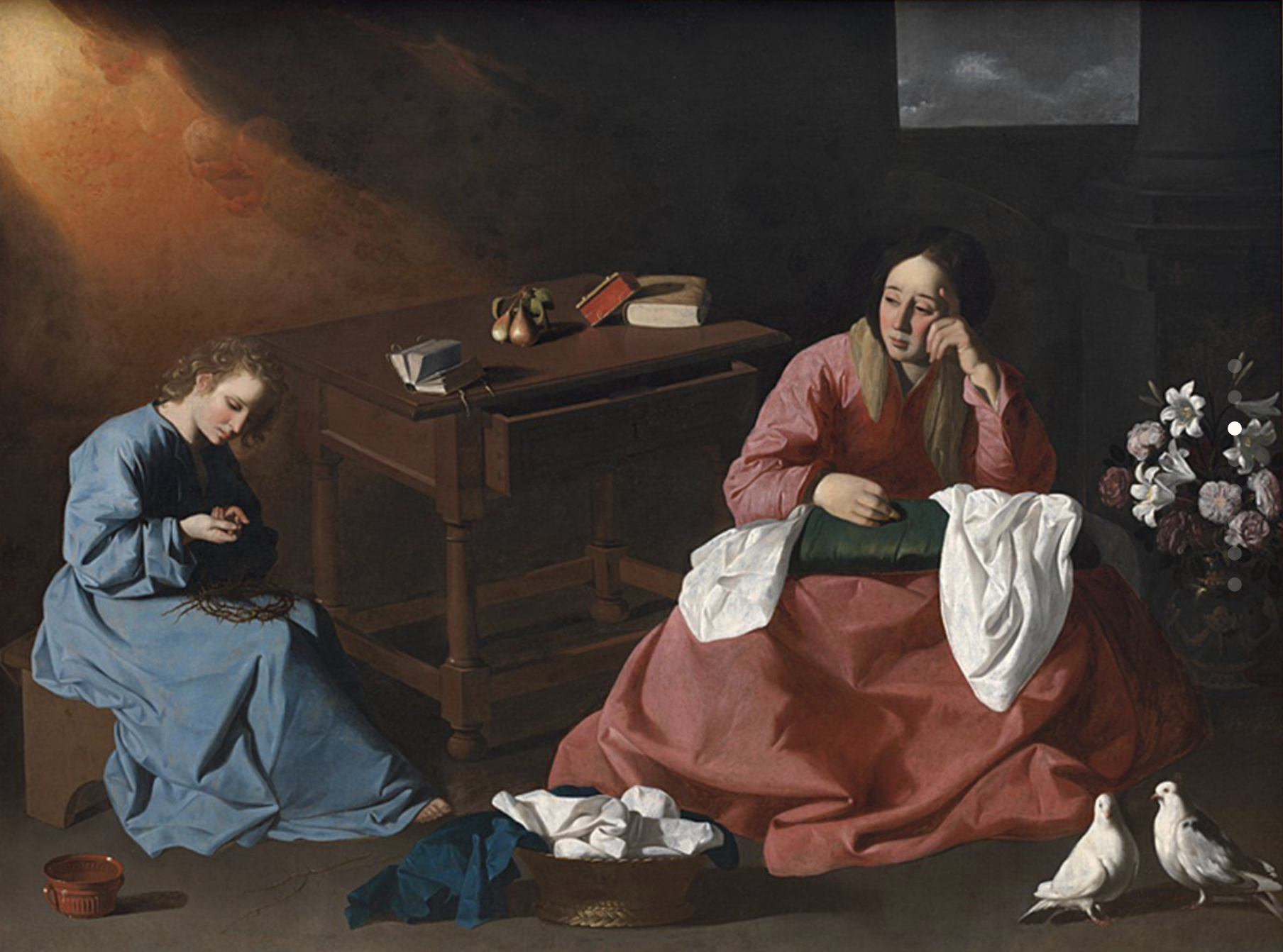
Francisco de Zurbarán - Christ and the Virgin in the House at Nazareth. Circa 1640. Oil on canvas, 165 x 218.2 cm The Cleveland Museum of Art, Cleveland, Ohio © The Cleveland Museum of Art, Cleveland, Oh

Zurbarán’s work, contrasting bright light and dark shadow, displays an intense naturalism and deep emotional power. Nowadays we most often think of drama as something fast and furious. We imagine noise and action; quick cuts and excitement. Zurbarán sets narrative turmoil to one side, and makes time stand still. He presents us with characters that have a silent stillness, a self-assured tranquillity. He offers us serene drama.

Clearly Zurbarán’s faith was a major engine of his creativity. Though the infant Christ is untroubled when he pricks his finger while weaving a crown of thorns, his mother, pondering his fate, rests her head on one hand, weeping. An innocent white lamb, its legs tied in preparation for sacrifice, represents the body of Christ. So realistic. So poignant.

Even Zurbarán’s still lifes invite quiet contemplation of the spiritual. A white ceramic cup sits next to a pink rose on a silver tray - the water in the cup suggesting the purity of the Virgin Mary, the thornless roses calling to mind the immaculate conception. 

The artist’s devotion is most evident in his crucifixion scenes. Christ, naked but for a luminous white loin cloth, is open mouthed, a few rivulets of blood trickling from his wounds. He shines out in the darkness with a sculptural beauty. 

The last image we encounter at the exhibition shows St Luke as a painter, with palette in hand, standing at the foot of the cross. It is the nearest thing to a Zurbarán self-portrait.
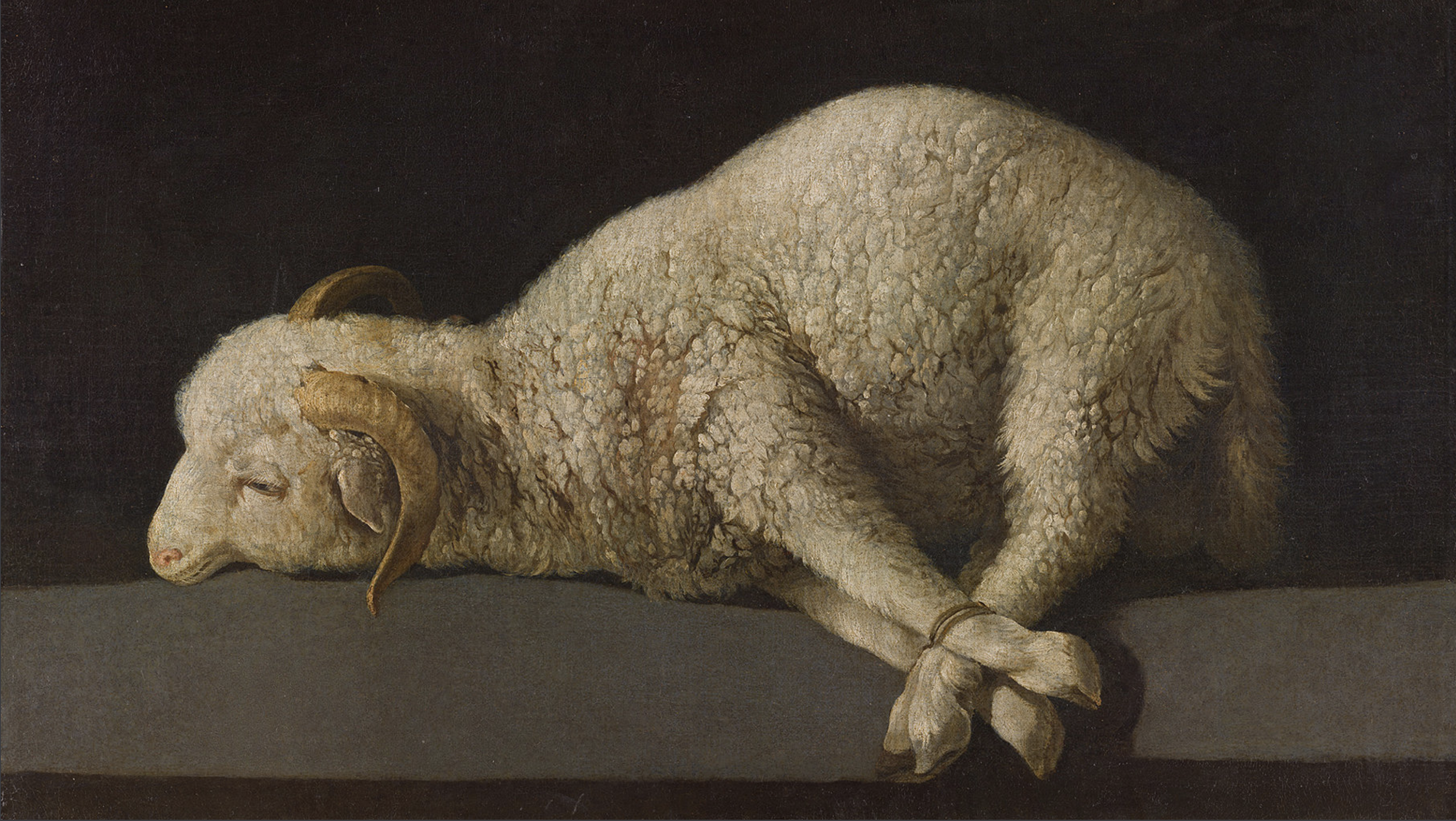
Francisco de Zurbarán - 'Agnus Dei', 1635–40 Museo Nacional del Prado, Madrid © Photographic Archive Museo Nacional del Prado


‘There was a woman in the Bible days,
She had been sick, sick so very long.
But she heard that Jesus was passing by,
So she joined the gathering throng.
And while she was pushing her way through,
Someone asked her, 'What are you trying to do?'
She said, 'If I could just touch the hem of His garment,
I know I'll be made whole.’'
Sam Cooke & The Soul Stirrers, 'Touch the Hem of His Garment’ (S Cooke)

No. 574
Dionne Warwick: Driving in Style Down the Middle of the Road

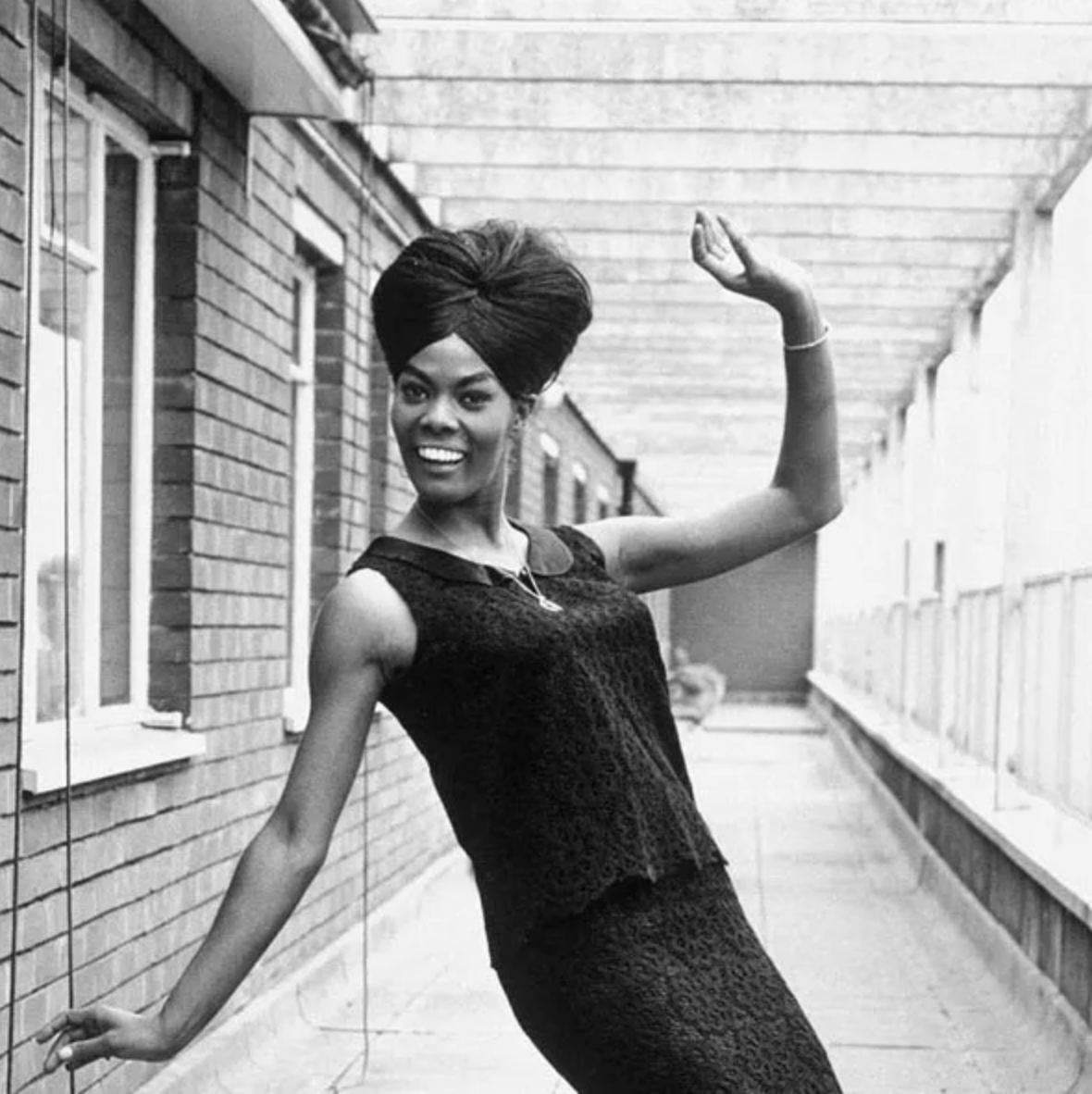
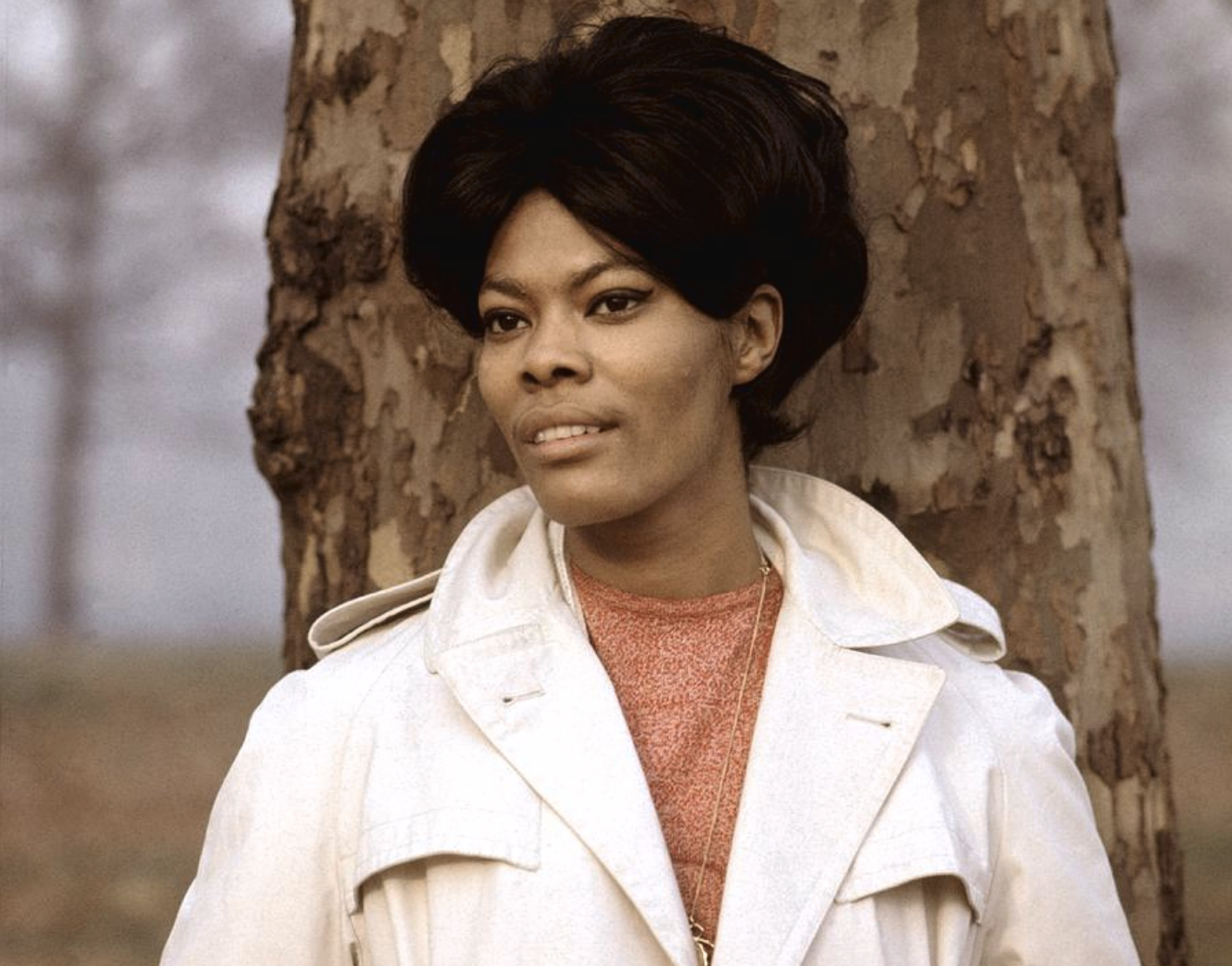
Dionne Warwick posed in Hyde Park, London in 1965. Photo : David Redfern/Redferns

‘You cannot separate the voice from the heart. Dionne’s music inspired people to see and look forward to the best part of themselves.’
Stevie Wonder

I recently watched an entertaining documentary about the career of sublime singer Dionne Warwick. (‘Don’t Make Me Over’, directed by Dave Wooley and David Heilbroner, 2021)

'Years ago I learned to be totally responsible for Dionne Warwick. I will not wait for opportunities. I will create them.’

Through the ‘60s and ‘70s Warwick performed peerless versions of Bacharach & David songs - classics likeDon't Make Me Over’, ‘Anyone Who Had a Heart’ and ’Walk On By’; ‘Alfie’, ‘A House Is Not a Home’ and ‘Do You Know the Way to San Jose.’ In the ‘80s she successfully re-launched her career, scoring more hits and winning countless awards. And she went on to be an effective activist and campaigner.

‘They’re not gonna tell me what to do.’

Warwick was the mistress of a particular form of American popular song. Achieving sustained mainstream success is deceptively difficult. She teaches us how it can be done with style and grace.

'Anyone who ever loved
Could look at me
And know that I love you.
Anyone who ever dreamed
Could look at me
And know I dream of you,
Knowing I love you so.
Anyone who had a heart
Would take me in his arms and love me too.
You couldn't really have a heart
And hurt me like you hurt me,
And be so untrue.
What am I to do?’
Anyone Who Had a Heart’ (B Bacharach / H David)

Born in 1940, Marie Dionne Warrick was raised in a middle-class neighbourhood in East Orange, New Jersey. Her mother worked in an electrical factory and her father was a Pullman porter.

'My parents gave me stability and a belief in myself and in all the possibilities life has to offer. I was told the only limitations I would ever face were those I placed upon myself.’

Music was central to Warrick’s life from the start. Her mother, Lee Drinkard, managed a gospel group. Accomplished vocalist Cissy Houston (mother of Whitney) was her aunt and lived in the same family home. Legendary opera singer Leontyne Price was a cousin.

'I come from a singing family, and, as is said, 'the apple does not fall far from the tree.'’

Warrick sang in church where her grandfather was a minister. At the age of 6, when she was invited to stand on some books to perform ‘Jesus Loves Me,’ she received her first standing ovation. At the age of 17 she took the stage at the famously challenging Amateur Night at the Apollo Theater Harlem.

‘If you think it, you can do it.’

Dionne Warwick and Burt Bacharach at Pye studios in London. 29th November 1964. (Photo by Bela Zola/Daily Mirror/Mirrorpix via Getty Images)

After finishing High School in 1959, Warrick studied at the Hartt College of Music in West Hartford, Connecticut. There she learned to read, play and write music, a technical education that would sustain her throughout her career. At the same time she found work singing backing vocals for recording sessions in New York City.

In 1962 Warrick was spotted at one of these sessions by songwriter Burt Bacharach, and hired to record demos of songs he had written with lyricist Hal David.

‘As long as it doesn’t interfere with my education – because my mother would kill you, and me too.’

Warrick hoped that one of the demos, ‘Make It Easy on Yourself,’ would become her first single release. When she discovered Bacharach & David had given the song to another artist, Jerry Butler, she was not happy.

‘That didn’t sit too well with me. So when I got to New York I kind of let them know: ‘Ahah. You don’t do that to me. One thing I want you both to understand is there’s something you can never do to Dionne – that’s try to make her over. So don’t even think it.’’

Bacharach & David apologised and were inspired by Warrick’s rebuke to write her first hit, 1962’s ‘Don't Make Me Over.’ Warrick's name was misspelled Warwick on the record label and she adopted the new construction thereafter.

'Don't make me over
Now that I'd do anything for you.
Don't make me over
Now that you know how I adore you.
Don't pick on the things I say, the things I do,
Just love me with all my faults
The way that I love you.
I'm begging you.’
Don’t Make Me Over’ (B Bacharach / H David)

Touring on the Chitlin’ Circuit in the American South, Warwick experienced the indignities of racism – only being allowed to use Black hotels, restaurants and toilets; not feeling safe to stay in certain towns; performing to segregated audiences.

At one such gig Sam Cooke advised her before she went on stage: ‘Do not turn your back on the white folk.’

Young Warwick wasn’t willing to comply.

‘First thing I did when I went out there, I walked straight to the band and turned my back and played to the ones that looked like me.’

On another occasion Warwick made a point of adapting the lyrics to Ray Charles’ ‘What I Say’.

'Tell your mama, tell your pa, we're gonna integrate Arkansas.'

She was warned by the police that she had minutes to get out of town.

'I refuse to allow prejudice to defeat me.’

Bigotry couldn’t stop Warwick’s progress. She scored hit after hit in the US and abroad, touring Europe to great acclaim. Marlene Dietrich announced her on stage at the Paris Olympia and introduced her to the world of couture.

‘She took me shopping, much to the chagrin of my accountants.’

Warwick was not a raw-voiced R&B or gospel artist in the traditional sense. Rather her singing was light and elegant. Her voice floated above and around the instrumentation. It could be delicate, soft, and then startlingly robust. It was always under complete control.

Warwick’s technical skills enabled her to navigate Bacharach’s complex compositions. Indeed she inspired him to write more challenging tunes.

‘To sing Bacharach’s melodies you almost had to have a music education, just to read what he wrote – different registers, time signatures. The man marched to his own drummer. If you wanted to be part of that, you had to march with him.’

With her high cheekbones and elegantly arched eyebrows; with her immaculate hair and chic wardrobe, Warwick was a class act. Her success took her to places that few Black performers had been before – to Vegas and prime time TV shows, hosted by the likes of Ed Sullivan, Perry Como and Danny Kaye. Some critics responded to her sweet voice, clear articulation and pop material by labelling her crossover or middle-of-the-road. Some underestimated her talent.

What strikes me about the Warwick story is that, while it’s relatively easy to stay niche and narrow in your appeal, it is incredibly hard to succeed in the mainstream. She demonstrates that to drive in the middle of the road, you need a rare combination of talent, technique and tenacity. Yes, she sang with poise and grace. But she was precise and meticulous in her delivery, strong and resolute in her engagement with the industry.

'I am an outspoken person. I believe in what I say.’

The mental toughness that helped get Warwick to the top was also very much evident in her later career.

With the chart dominance of disco in the late ‘70s, Warwick considered retirement. She was persuaded back to the recording studio by Clive Davis at Arista.

'You may be ready to give the business up, but the business is not ready to give you up.'
Clive Davis

There followed another string of hits, including ‘I’ll Never Love This Way Again’ and ‘Heartbreaker.’

‘I’m a messenger and I’m carrying messages of love and hope.’

Warwick was one of the first voices in the music business to speak out about the AIDS crisis, recording the benefit single 'That's What Friends Are For' for the American Foundation for AIDS Research (AmFAR) (alongside Gladys Knight, Elton John and Stevie Wonder). Appointed a health ambassador by Ronald Reagan, she prompted him to say the word AIDS in public for the first time.

‘My guide is the bible. Everybody is your brother’s keeper. Everybody. I don’t care who you are – white, black, green, orange and different. You can be striped and you’re still my sister or brother – by the rules of god. And I’ve got to do what is right to help you.’

Warwick subsequently addressed the issue of misogynist lyrics in gangster rap, taking to task the likes of Snoop Dogg, Tupac and Death Row Records’ Suge Knight.

‘You don’t call me out of my name. You don’t know me that well.’

In a 60-year career Dionne Warwick has sold over 100 million records, she has had 56 chart hits and won 6 Grammy Awards. She has been a model of mainstream success – tender, technical and tough. No one dared make her over.

'If you see me walking down the street
And I start to cry each time we meet,
Walk on by, walk on by.
Make believe
That you don't see the tears,
Just let me grieve
In private, because each time I see you
I break down and cry,
And walk on by.’
Walk On By’ (B Bacharach / H David)

No. 416