Zurbarán: The Serene Drama
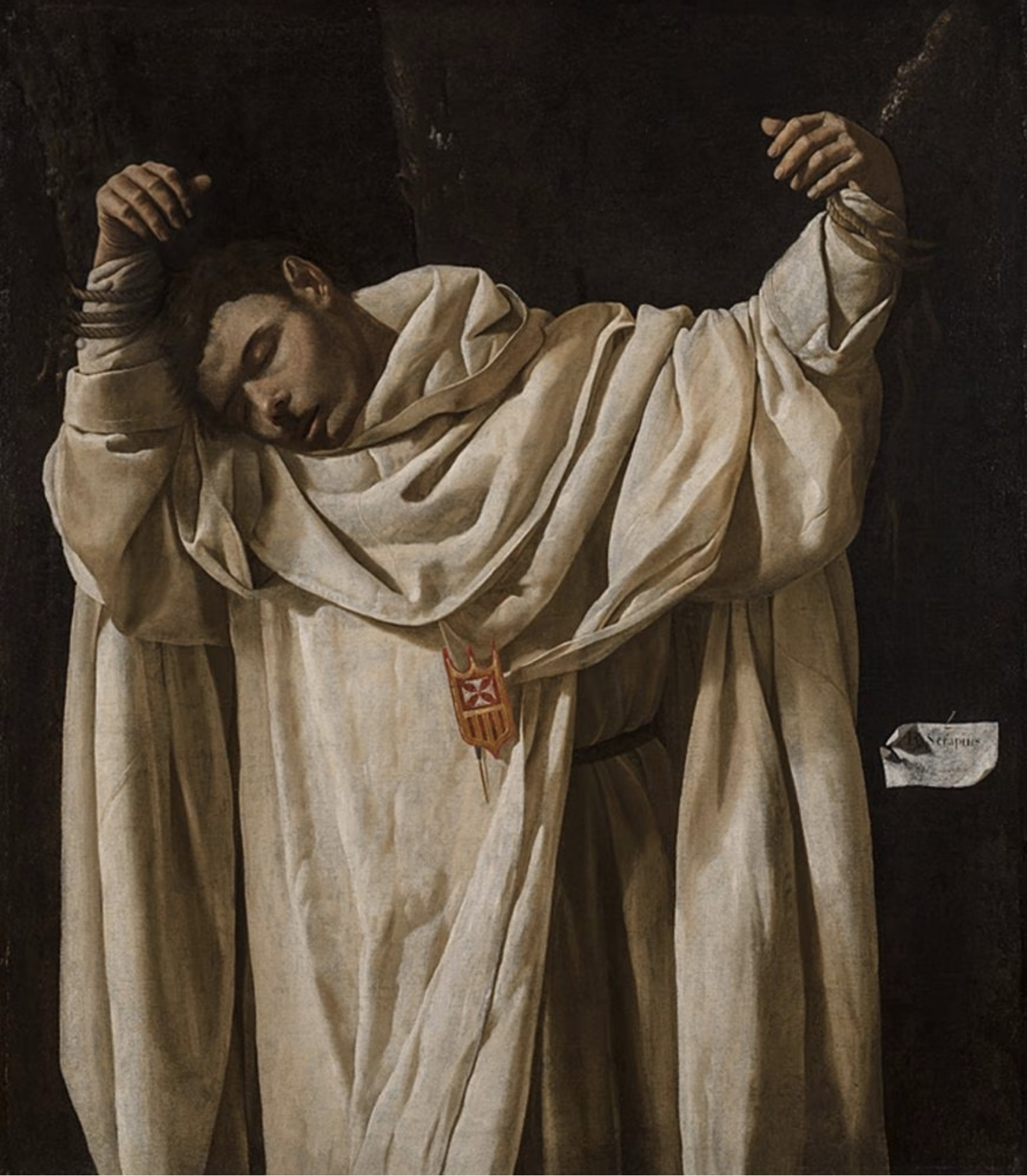
Francisco de Zurbarán - Saint Serapion. 1628. Oil on canvas, 120.7 × 104.1 cm Wadsworth Atheneum Museum of Art, Hartford, CT
I recently visited a splendid exhibition of the work of Francisco de Zurbarán. (The National Gallery, London until 23 August)
With dramatic lighting, vivid storytelling and an eye for sumptuous fabrics, this 17th century Spanish Master articulated the mysteries of his faith. Today he provides lessons in emotional intensity, in simplicity, clarity and calm.
Born in remote Extremadura in 1598, at 15 Zurbarán travelled to Seville, which was then a prosperous port city, with strong links to Spain’s American colonies. Having learned painting, carving and gilding, he received commissions from the many religious orders in the town; and subsequently from the royal court in Madrid, and from wealthy private patrons.
The Catholic church was encouraging art as a vehicle for devotion: ‘a bridge between heaven and earth.’ And so Zurbarán painted saints, monks and martyrs; the immaculate conception and the crucified Christ; monumental altarpieces of religious scenes, and small, exquisite still lifes that prompted reflection on the fundamental magnificence of nature.
Zurbarán introduces us to a procession of obscure saints who have suffered for their faith.
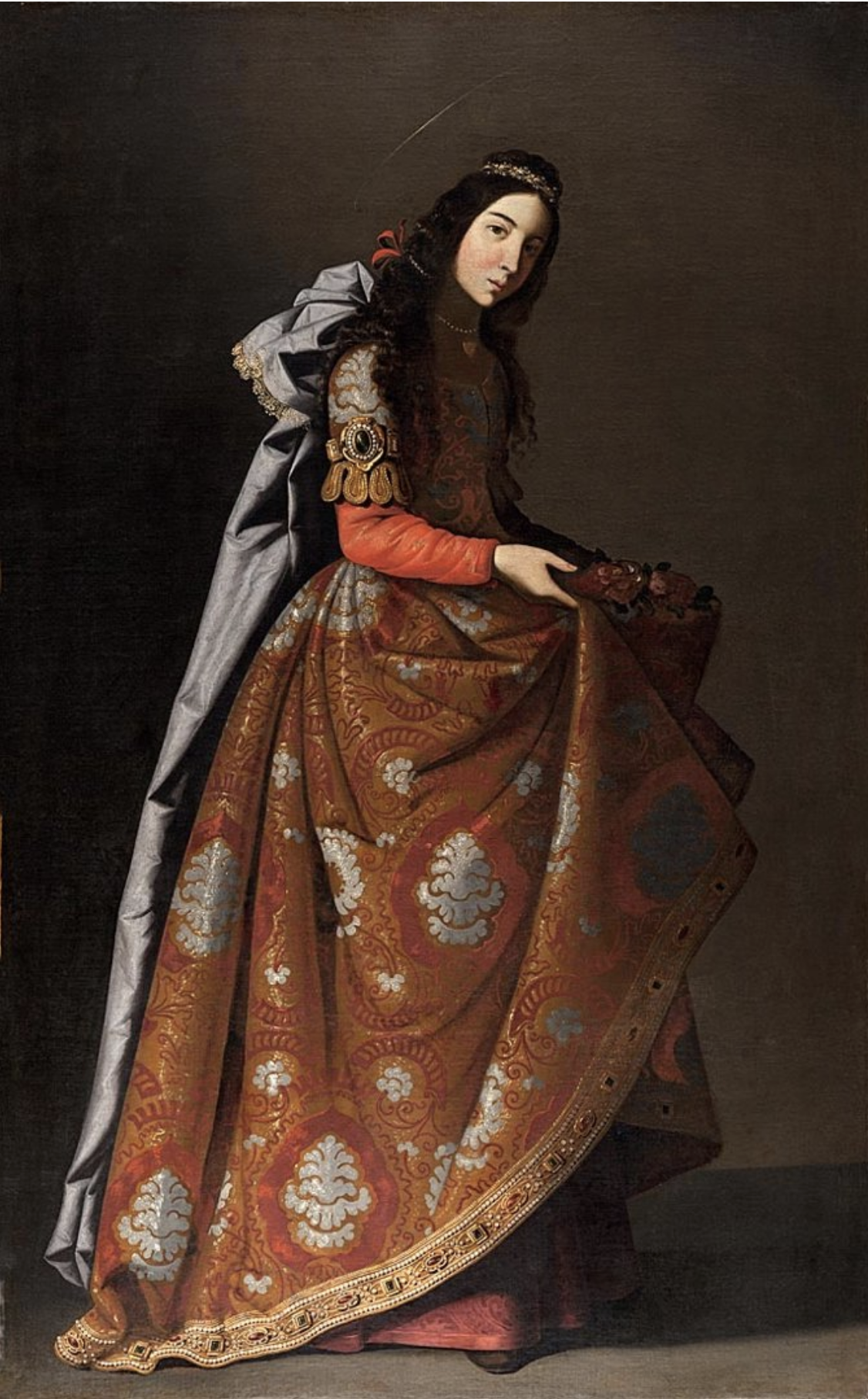
Francisco de Zurbarán - 'Saint Casilda', about 1635, Museo Nacional Thyssen-Bornemisza, Madrid © Museo Nacional Thyssen-Bornemisza
Saint Margaret of Antioch, having been swallowed by a dragon, has emerged unscathed. We find her in pristine shepherd’s costume, a saddlebag slung over one arm. (The monster skulks in the background, somewhat crestfallen.) The Muslim princess Saint Casilda of Toledo has been smuggling food to Christian prisoners. When she is confronted, the bread rolls hidden in her richly embroidered frock, have miraculously transformed into roses. Saint Apollonia, her teeth wrenched out by her Roman torturers, has thrown herself into a fire. However, we meet her dressed in a fabulous pink and yellow silk gown, her emerald-green cape fastened at the neck with a jewelled brooch, and holding a pair of pliers - she is the patron saint of dentistry.
These martyrs have triumphed over death. Elegantly attired, peaceful and poised, they regard us with benign looks of encouragement.
Zurbarán, whose merchant father sometimes dealt in cloth, is a superb painter of textiles. We marvel at the ornate floral bodices and flowing cloaks; the shimmering silk and heavy gold brocade; the opulent pleats and folds.
Though he has suffered a violent end, Saint Serapion is depicted with a tranquil expression on his face, in a spotless white robe. Even the homespun wool of Saint Francis of Assisi’s habit is rendered with painstaking precision. We encounter him in his tomb, looking up to heaven. As witnessed by Pope Nicholas V, he has remained standing, his body uncorrupted.
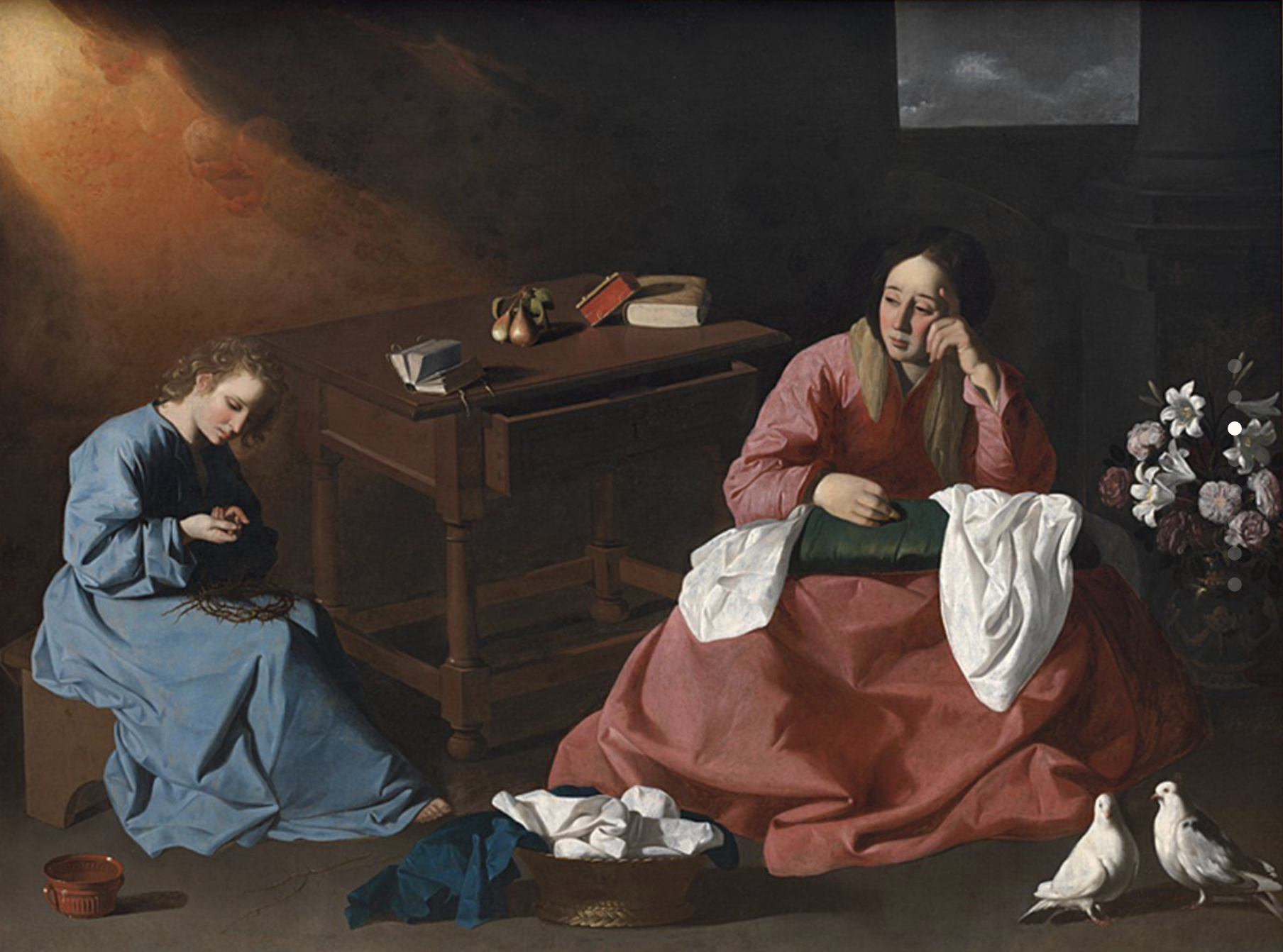
Francisco de Zurbarán - Christ and the Virgin in the House at Nazareth. Circa 1640. Oil on canvas, 165 x 218.2 cm The Cleveland Museum of Art, Cleveland, Ohio © The Cleveland Museum of Art, Cleveland, Oh
Zurbarán’s work, contrasting bright light and dark shadow, displays an intense naturalism and deep emotional power. Nowadays we most often think of drama as something fast and furious. We imagine noise and action; quick cuts and excitement. Zurbarán sets narrative turmoil to one side, and makes time stand still. He presents us with characters that have a silent stillness, a self-assured tranquillity. He offers us serene drama.
Clearly Zurbarán’s faith was a major engine of his creativity. Though the infant Christ is untroubled when he pricks his finger while weaving a crown of thorns, his mother, pondering his fate, rests her head on one hand, weeping. An innocent white lamb, its legs tied in preparation for sacrifice, represents the body of Christ. So realistic. So poignant.
Even Zurbarán’s still lifes invite quiet contemplation of the spiritual. A white ceramic cup sits next to a pink rose on a silver tray - the water in the cup suggesting the purity of the Virgin Mary, the thornless roses calling to mind the immaculate conception.
The artist’s devotion is most evident in his crucifixion scenes. Christ, naked but for a luminous white loin cloth, is open mouthed, a few rivulets of blood trickling from his wounds. He shines out in the darkness with a sculptural beauty.
The last image we encounter at the exhibition shows St Luke as a painter, with palette in hand, standing at the foot of the cross. It is the nearest thing to a Zurbarán self-portrait.
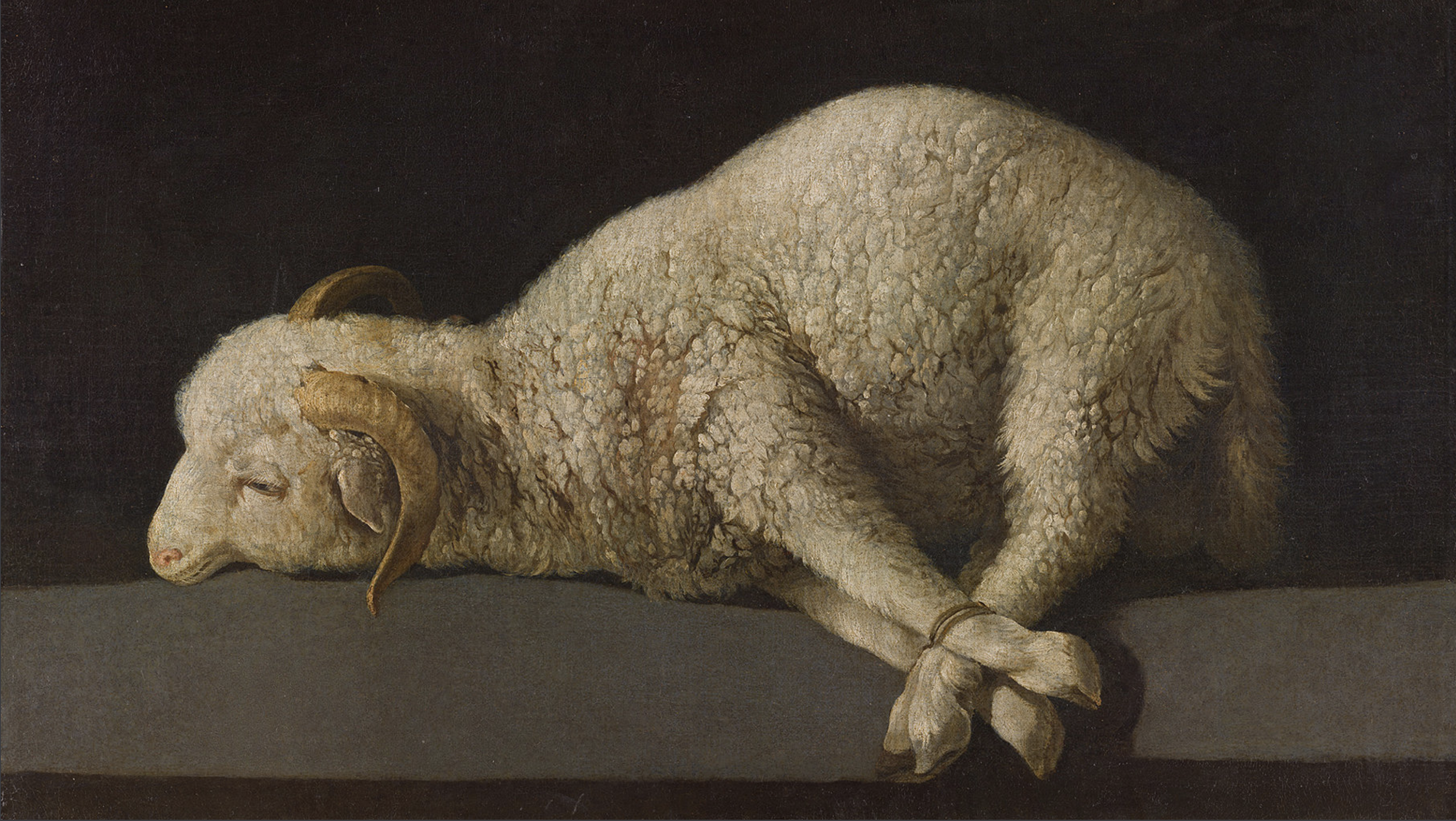
Francisco de Zurbarán - 'Agnus Dei', 1635–40 Museo Nacional del Prado, Madrid © Photographic Archive Museo Nacional del Prado
‘There was a woman in the Bible days,
She had been sick, sick so very long.
But she heard that Jesus was passing by,
So she joined the gathering throng.
And while she was pushing her way through,
Someone asked her, 'What are you trying to do?'
She said, 'If I could just touch the hem of His garment,
I know I'll be made whole.’'
Sam Cooke & The Soul Stirrers, 'Touch the Hem of His Garment’ (S Cooke)
No. 574