Winston Churchill and the Consolation of Art: ‘If It Weren’t for Painting, I Couldn’t Live. I Couldn’t Bear the Strain of Things.’
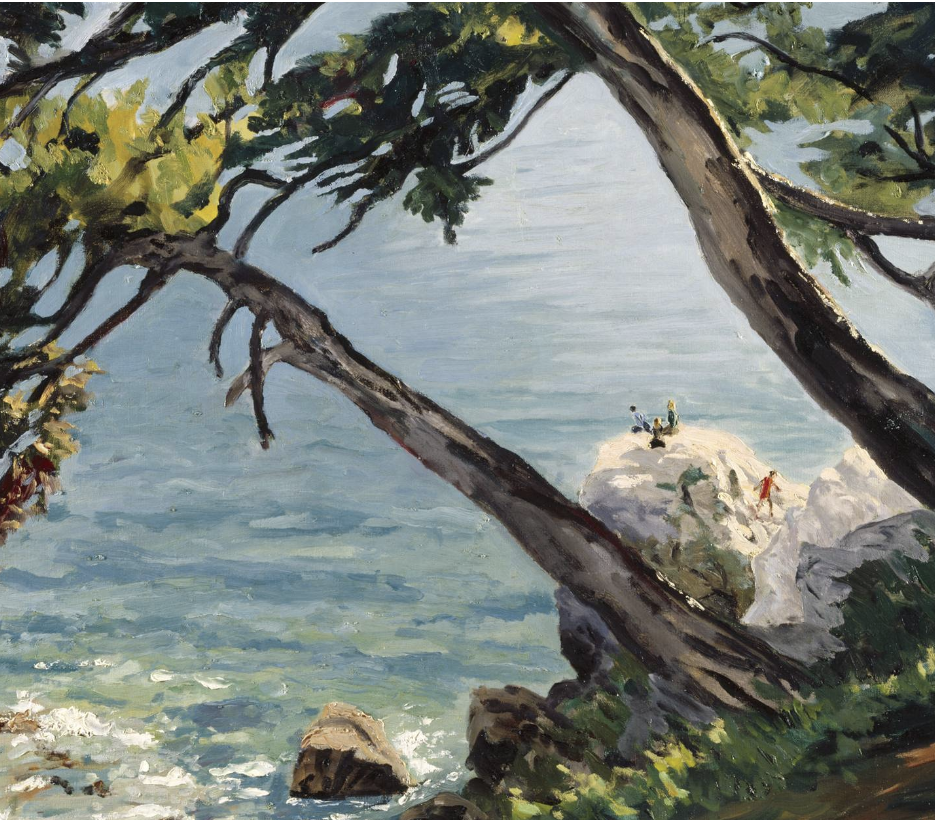
Winston Churchill - Cap d'Ail, Alpes-Maritimes, from La Capponcina

I recently enjoyed an exhibition of the paintings of Winston Churchill. (The Wallace Collection, London until 29 November)

In May 1915, less than a year into World War 1, blamed for the failure of the Dardanelles campaign, Churchill lost his position as First Lord of the Admiralty. Depressed and with time on his hands, the forty-year-old took up painting. It became a lifelong passion.

‘When he left the Admiralty, he thought he was finished… I thought he would never get over the Dardanelles; I thought he would die of grief.’
Clementine Churchill, Churchill’s wife

Churchill had the advantage of being trained by the best: John Lavery, William Nicholson, and later Walter Sickert. He developed a post-impressionist style that nodded towards Van Gogh and Cezanne. Employing bright, vibrant colours - cerulean blue, acid greens and warm reds - his art was spontaneous, fresh, alive. 

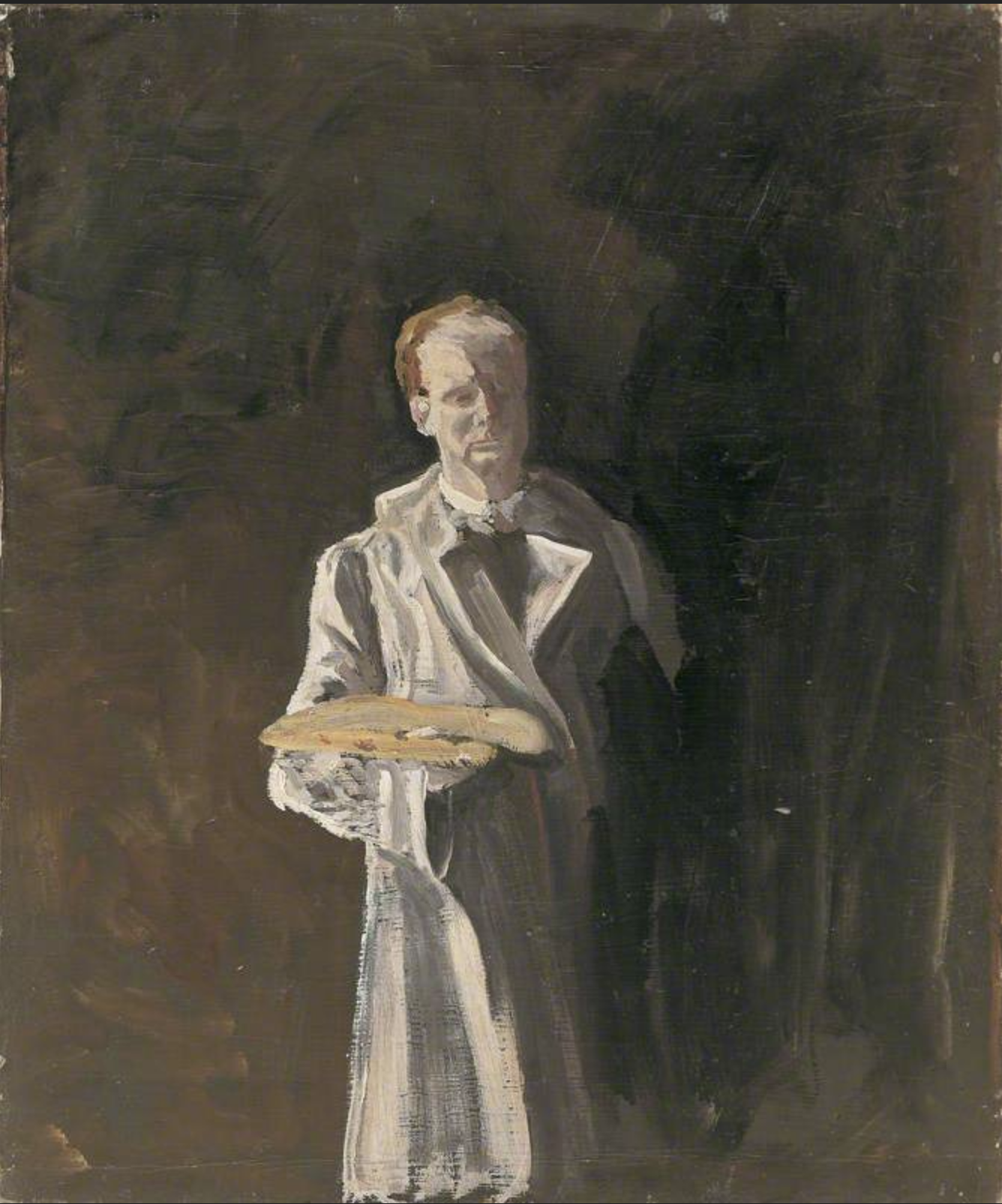
With no government position, Churchill determined to contribute to the war effort by joining the Royal Scots Fusiliers. His early artistic work included a 1916 image of his shell-damaged battalion headquarters in Belgium; and a haunting self-portrait.

‘I think that [painting] will be a g[rea]t pleasure & resource to me – if I come through all right.’
Winston Churchill, in a letter to Clementine
Out of political office in the 1920s and ‘30s, Churchill built a studio at his beloved country house at Chartwell, Kent. When the weather was fine, he painted outdoors – the walled kitchen garden, the orchard and fishpond – and when it rained, he painted still lifes. Here’s a magnolia in a silver vessel; some summer flowers in a cut glass vase; a ‘bottlescape’ of his favourite tipples, including Pol Roger and Johnny Walker.

Churchill also painted the great country houses of England: his birthplace Blenheim Palace, the Palladian Bridge at Wilton House, the Italian Garden at Sutton Place, Branksome Dene, the scene of a near fatal accident in his youth. 

‘We do not have much sunshine in our island, but the English people in every walk of life delight in flowers and gardens, and greet our grey skies with more flowers than any other people grow.’
Winston Churchill

Churchill loved to escape to the French Riviera. Drawn to atmosphere and reflections, he depicted the small, sleepy harbour at Saint-Jean-Cap-Ferrat, the dappled light from a canopy of olive trees in Cap Martin, a shimmering villa pool. At the chateau at Saint-Georges-Motel, gardeners and a friend were enlisted to row across the moat to create ripples.

‘The fleeting light imposes a rigid time-limit. The same light never returns. One cannot go back day after day without the picture getting stale.’

Churchill began his paintings on location and completed them later in the studio, often using photos as an aide memoire. Sometimes he employed a projector to transfer an image onto a squared-up canvas or board.
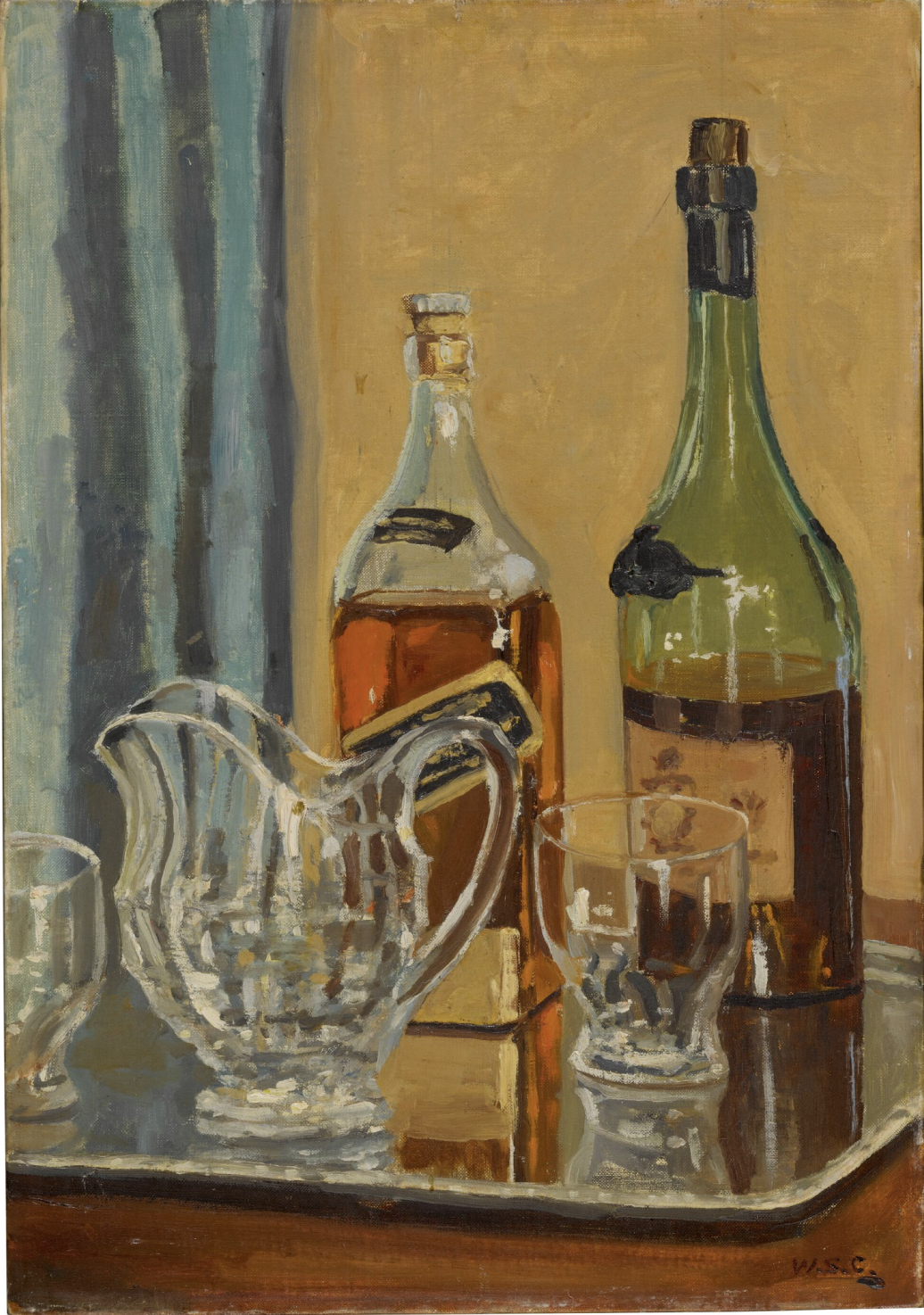
Winston Churchill - Jug With Bottles - 1930’s

Churchill largely gave up painting during World War 2. In the wake of victory, when he lost the 1945 general election, he returned to art for solace and relaxation. A favourite location was Marrakech, ‘the red city,’ which he liked to visit between Christmas and New Year. Enchanted by the bright sunlight and rich colours, he captured the market stalls at the city gate; the verdant trees peering above the rooftops; the snow-capped peaks of the Atlas Mountains; the palms in the garden at the Mamounia Hotel.
 
Sometimes Churchill gave away his paintings to staff, family and friends. Sometimes he submitted them, under a pseudonym (such as Charles Morin) to competitions. 

Of course, Churchill was an amateur. Nonetheless, I found his pictures of historic houses, well-tended gardens and tranquil harbours; of mosques, mountains and olive groves, rather touching. His devotion to his hobby was clearly sincere. 

Often in the world of work, we find ourselves embattled by competition, besieged by stress. Churchill teaches us to reflect on the consolation of art; to consider it an escape from the turmoil, an opportunity to refresh our energies and restore our appetites. 

John Rothenstein, the Director of the Tate Gallery (1928-64), recalled a remark made by Churchill when he visited him in his studio in 1955:

‘If it weren’t for painting, I couldn’t live. I couldn’t bear the strain of things.’
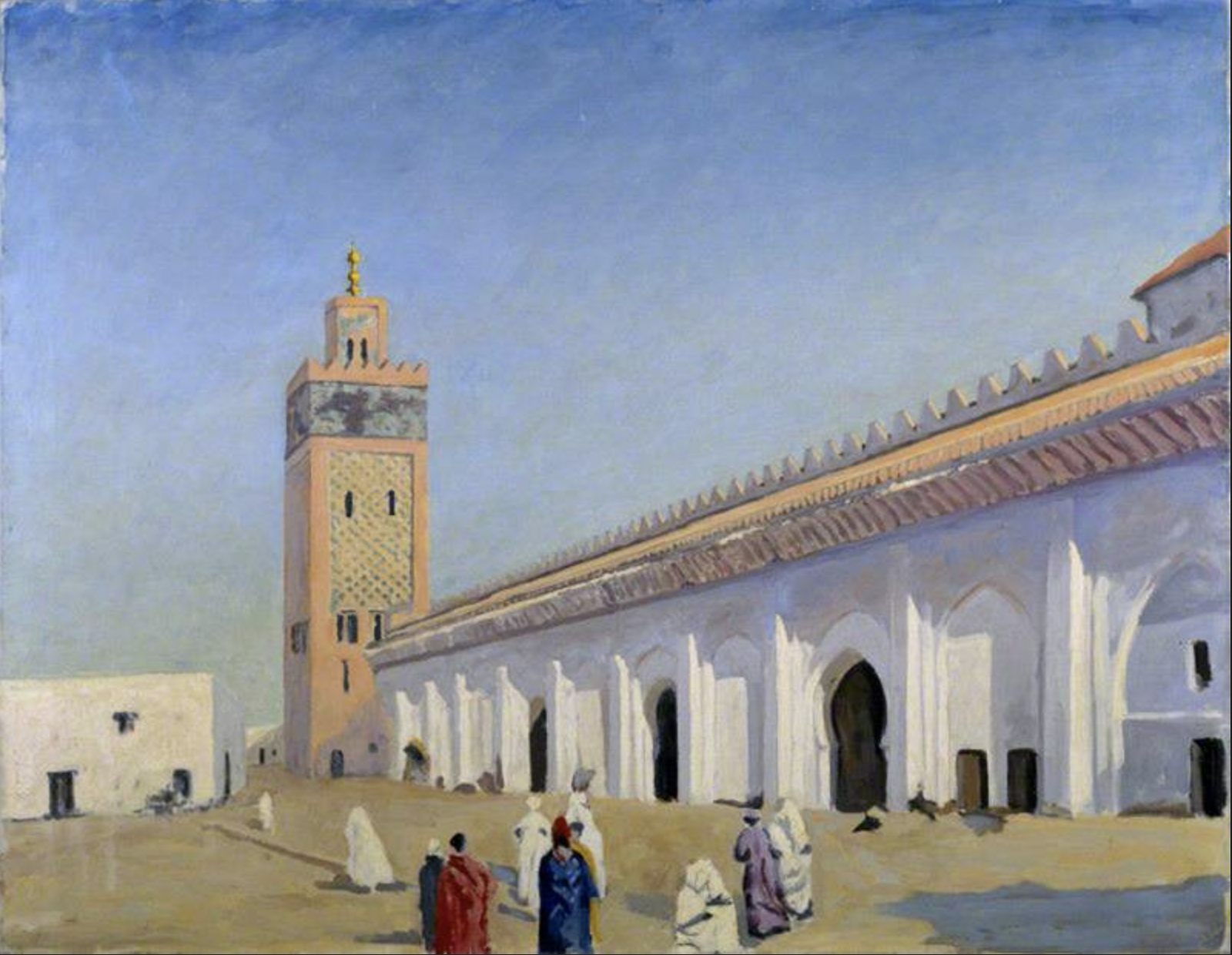
Churchill continued to paint until shortly before his death, aged ninety, in 1965. Over a period of fifty years, he produced well over 500 paintings. At the exhibition you can see his oils, brushes and palette cup; his travel easel with its wooden case. And there’s a quarter bottle of Pol Roger, his last, enjoyed a week before he died

'Sweep away the broken glass,
Some things were never meant to last.
Don't cut your skin on things that linger in the past,
Be sure to clear away the shards.
Lest a piece should pierce your heart,
Taking splinters with your fingers is an art.
And it's so late to finally learn,
That perhaps you missed a turn.
And all the signs that showed you where you could have gone,
You let them go,
And so they flew,
And never once looked back to you.
Thought opportunity was endless,
You were wrong.’
Matt Elliott, '
Song of Consolation'

No. 591

After Impressionism: ‘Where Do We Come From? What Are We? Where Are We Going?’

Edouard Vuillard Portrait of Lugne-Poe 1891
Memorial Art Gallery of the University of Rochester (New York)

I recently attended ‘After Impressionism,’ an excellent show tracing the development of modern art between the last Impressionist Exhibition of 1886 and the outbreak of the First World War. (The National Gallery, London until 13 August)

The exhibition considers how artists at the dawn of the twentieth century were inspired by the Impressionist spirit of revolution and renewal; and how innovative creative thinking subsequently blossomed across Europe in new cultural hotspots - Barcelona, Berlin, Brussels and Vienna.

Impressionism was characterised by the quest to capture the fleeting moment; the reality of the world around us - with swift strokes of the brush and colours true to the artist’s experience. 

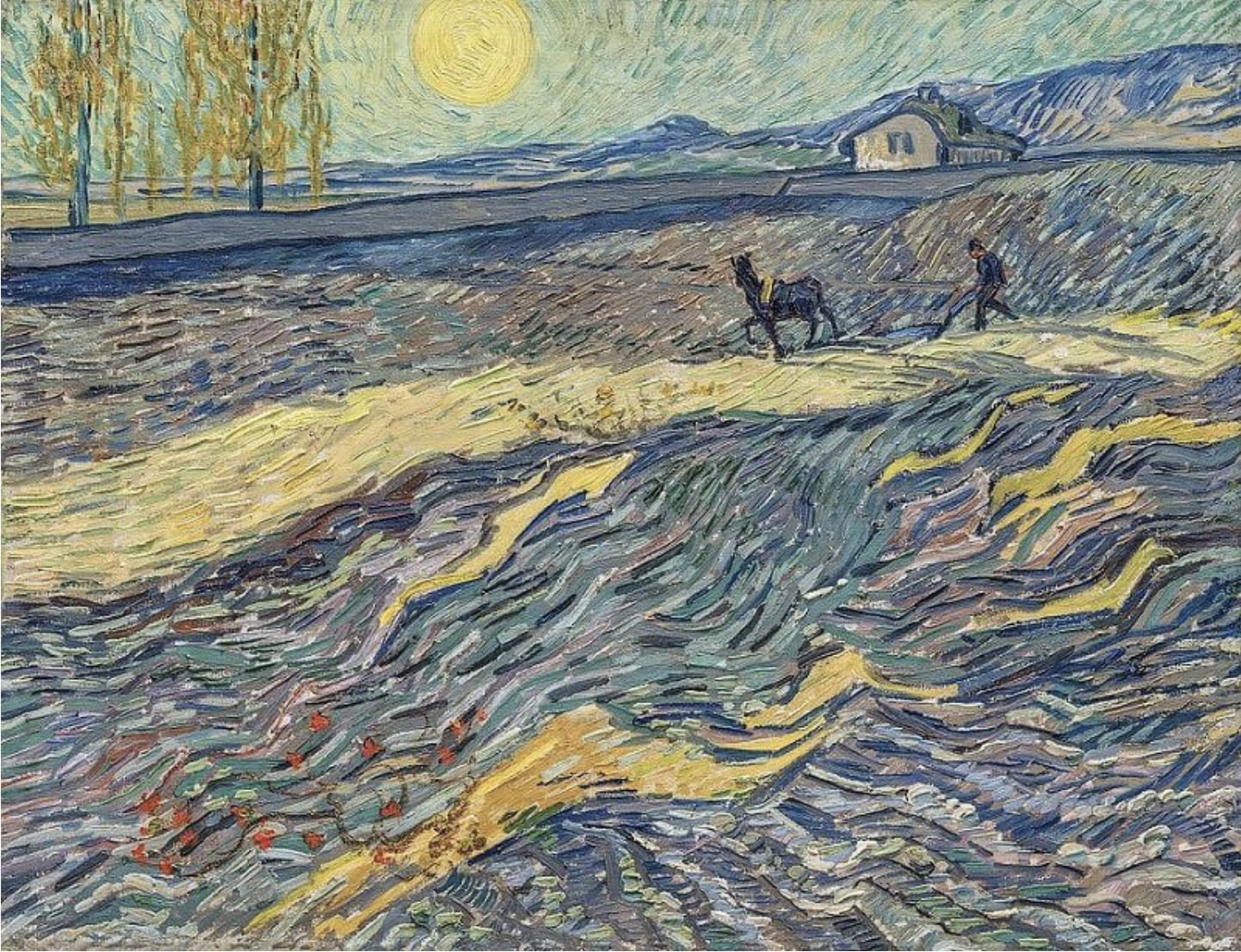
In the wake of this radical movement, Cezanne explored the underlying structures in nature - in landscape, portrait and still life – applying planes of colour that laid the foundations of Cubism. Gaugin went beyond representation of the natural world, using symbolism to convey personal memories and mystical experience. Van Gogh employed bold outlines and ever more intense hues that were charged with emotion. Seurat turned to science to translate light into colour through small dots of complimentary tones. Bonnard and Vuillard flattened their images, giving tranquil domestic scenes a decorative quality.

Vincent Van Gogh - Enclosed Field with Ploughman, 1889

During this period artists looked beyond Europe for inspiration, drawing on Japanese woodblock prints, Polynesian carved objects and African masks.

The creative community thought deeply and debated avidly about the direction they should take with their work. Artists conferred with like-minded modernist writers and formed groups with cool names like the Twenty, the Prophets, the Wild Animals and the Secession. They wrote essays and published journals; held dissident exhibitions and launched radical manifestos.

‘We are tired of the everyday, the near-at-hand, the contemporaneous: we wish to be able to place the symbol in any period, even in dreams.’
Gustave Kahn ‘La Response des Symbolistes’

Hilaire-Germain-Edgar Degas - Combing the Hair ('La Coiffure'). National Gallery, London

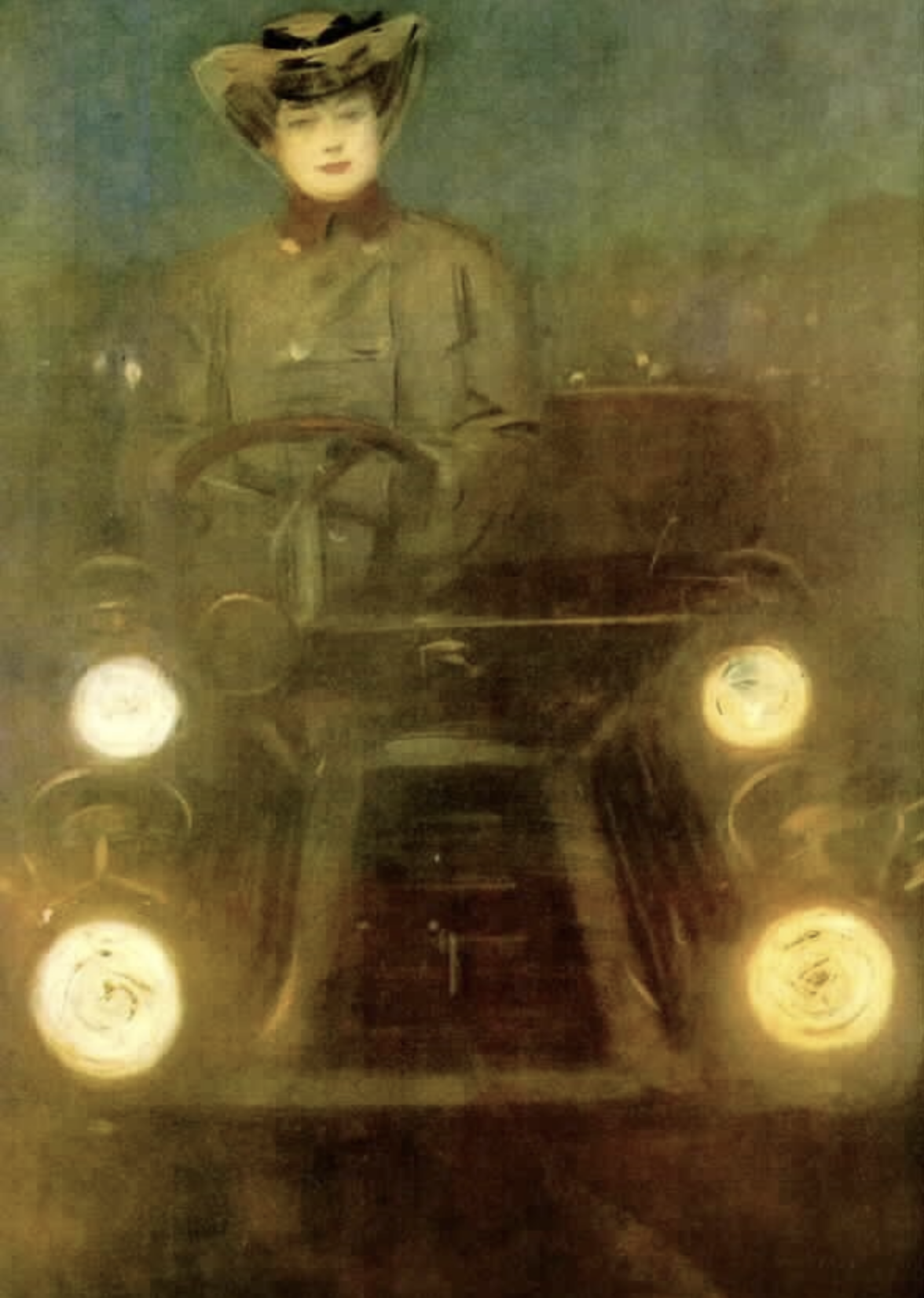
The result of all this upheaval and questioning was a period of stunning creative output, diverse in style and approach. At the exhibition you can see Cezanne’s ‘Mont Sainte-Victoire’, a majestic landscape reduced to geometric shapes; Klimt’s ‘Hermine Gallia’, a society lady shimmering in white chiffon; Degas’ ‘Combing the Hair’, an intimate moment all aglow with intoxicating orange. Gaugin presents us with the patriarch Jacob wrestling with an angel, observed by bonneted Breton women. It’s a woozy, dreamlike image. Munch’s ‘Death Bed’ reveals grief in the raw. Mondrian races towards Abstraction before our eyes. And in Ramon Casas’ ‘The Automobile’ an elegant woman drives a car directly at us, headlamps blazing. It is as if she is hurtling towards the future.

‘With faith in growth and in a new generation of creators and those who enjoy art, we call all young people together, and as the young that bear the future within it we shall create for ourselves elbowroom and freedom of life as opposed to the well-entrenched older forces. Everyone who renders directly and honestly whatever drives him to create is one of us.’
German Expressionist Manifesto

The exhibition suggests that people working in the creative industries should be arguing, discussing and debating ideas. We should be pioneering new perspectives and practices; experimenting with new partners and inputs.

It prompts us to reflect on our craft: Can we describe what makes our work different? What defines our generation’s outlook and output, in contrast to what has gone before? 

One of Gaugin’s paintings of 1897-8 was entitled ‘Where do we come from? What are we? Where are we going?’ Perhaps we should be asking the same questions.


'If you could read my mind, love,
What a tale my thoughts could tell.
Just like an old time movie
About a ghost from a wishing well,
In a castle dark or a fortress strong,
With chains upon my feet.
You know that ghost is me
And I will never be set free.
As long as I'm a ghost, you can't see.’

Gordon Lightfoot, ‘If You Could Read My Mind'

No. 423

NOTES FROM THE HINTERLAND 14

Garden and Woodland Special


Learning from Lilies: Strip Away the Context

I recently attended Painting the Modern Garden, an excellent exhibition examining the garden in art between the 1860s and 1920s. (It runs at the Royal Academy in London until 20 April.)

In the late nineteenth century there was a horticultural revolution. Bourgeois Europeans and middle class Americans had affluence and leisure time, and a yearning to preserve something natural against the march of industrialisation. Gardening became an obsession. They studied, imported, cultivated and collected. One contemporary writer proclaimed, ‘I love compost like one loves a woman.’

Artists seem to have been in the front ranks of this revolution. Gardens provided a subject to express their thoughts about nature, beauty, colour and light. Gardens could suggest interior as well as exterior truths. Pissaro, Renoir and Bonnard; Sargent, Van Gogh and Matisse. The great painters of the day repeatedly set their easels up outside, in the garden.

Painting the Modern Garden is an exhibition of intoxicating colour: radiant, ravishing yellows, pinks and purples; intense sensory explosions. One feels the heat and languor of a long Summer’s afternoon. White linen, lace and crinolines. Let’s play croquet on the lawn, take tea on the terrace, reel around the fountain. Sunflowers, dahlias, peonies and poppies. Come consider the chrysanthemums, tend the rhododendrons with me.

And then, of course, there was Monet and his wondrous water-lilies.

At Giverney Monet painted water-lilies over and over again. He studied them, scrutinized them, isolated them in their stillness, floating in the reflective water and changing light. He removed them from their context. They became abstract contemplations of colour, tone, atmosphere and silence.

One critic observed: ‘No more earth, no more sky, no limits now.’

I was struck by this comment and found myself thinking about the role of context in brand marketing and communication.

Context is central to good marketing. If we can understand a brand’s place in the world, we can promote its relevance more effectively. And the broader the cultural context considered, the deeper the understanding. But whilst context is critical to comprehension, effective communication requires compression, distillation and focus. So ultimately we must strip context away.

Too often we fail in this respect. We try to cram our messaging with visual, verbal and conceptual cues. Show the user, signal the occasion, reference the tradition, give the reason-to-believe, bash out the benefit. Communication becomes loud, cluttered, busy and bewildering. Context can be constricting.

Imagine if you could express your brand as an abstract truth, not an observed reality; an intense distillation, not an actual depiction. Imagine if you could strip away the context, narrow the frame, focus on the essence itself.

What would you say? What would we see? How would we feel?


Why We Go on Awaydays: A Reminder from Shakespeare

‘Good servant, tell this youth what ‘tis to love…
It is to be all made of sighs and tears.
It is to be all made of faith and service.
It is to be all made of fantasy,
All made of passion and all made of wishes,
All adoration, duty and observance.
All humbleness, all patience and impatience.
All purity, all trial, all observance.’

As You Like It, V, ii

Last week I saw a marvellous production of Shakespeare’s As You Like It at the National Theatre in London (running until 29 February).

As the programme notes point out, As You Like It is a ‘green world’ comedy. Its characters escape the oppressive regime of the city for the Forest of Arden. They’re leaving behind convention, hierarchies and the pressure of the present. In the forest they can be more contemplative, philosophical, romantic. They can express themselves freely; they can imagine possibilities; they can explore new roles and identities. They undergo transformations, revelations.

In recent years we’ve perhaps become a little sceptical about Awaydays. The heart sinks at the awkwardness of seeing our senior staff in their weekend casuals. We shun the flip-charts and Post-Its, gummy bears and energiser drinks; the bumptious facilitator and the embarrassing ice-breakers. We balk at the expense in time and money. And so generally we end up just taking a couple of hours in a conference room over at the Media Agency. The future can wait…

But I’m inclined to say that genuine Awaydays justify the cost. Increasingly we have our heads down, dealing with today’s pressing challenges; we rarely look up to talk about tomorrow’s. Awaydays provide an opportunity to draw a line in the sand, to consider broader themes and more distant horizons, to dream new possibilities and imagine the unthought.

And Awaydays do indeed gain something from being away.

‘There’s no clock in the forest.’

Orlando, As You Like It


‘Let’s Play Crusaders’: The Price of Difference

Martin and I shared a bedroom overlooking the back gardens of Heath Park Road. In the summer you could see all the other kids in the street - the Richards, the Chergwins et al - playing Cowboys and Indians in their own little domains. 

‘Let’s play Crusaders,’ we determined. (The ‘70s were more innocent times, somewhat lacking a proper historical context…)

Mum made us white smocks from old sheets and we imprinted bold crimson crosses on their fronts. We completed the outfits with blue balaclava helmets and woollen tights borrowed from our younger sisters. 

And as we skipped around the garden, taking on Saladin and his scimitared hordes, it struck me that it’s not easy being different.

‘We are stardust.
We are golden.
And we’ve got to get ourselves
Back to the garden’

Joni Mitchell/ Woodstock

Woodstock (audio)
Joni Mitchel

No. 68