‘It’s Better. It’s More French’: The Imperative of Social Connection
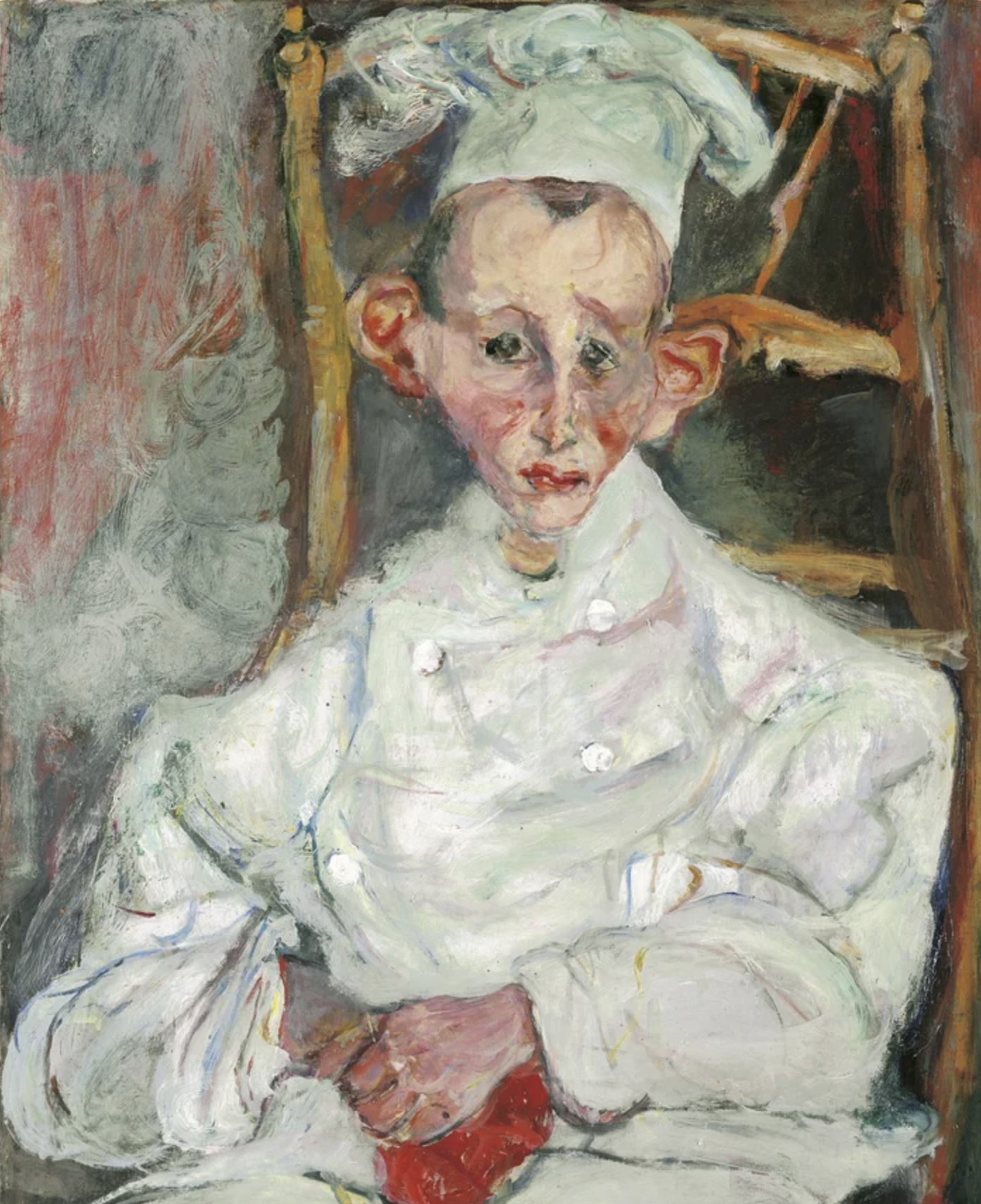
Chaïm Soutine - Pastry Cook from Cagnes
A French bakery has opened nearby, and I have taken to buying my bread there.
Their wholemeal loaf is excellent. But I have also been charmed by the staff’s consistently cheery manner. They’re always on for a conversation, asking where I’ve been and what I’ve been up to. One day recently, the woman assistant greeted me with a bright smile and a Gallic accent.
‘Hello Monsieur. Are you going to the theatre again?’
‘Well, yes actually. I’m off with friends to see a play in Stratford. Not the Stratford in east London. But Stratford-upon-Avon. It’s a couple of hours away by train.’
I was expecting the assistant to be unaware of the small West Midlands town, but she knew exactly where I was talking about.
‘Of course, Monsieur. I have been to this Stratford.’
‘Oh, excellent. Yes, the home of Shakespeare.’
At this point our conversation faltered.
‘I do not know this person. But I have visited the house of Hamnet. In the film. It was very interesting.’
I read recently about some research carried out into the frequency of social connection. (Melissa Twigg, ‘Why Our Lips Are Sealed’, The Telegraph Magazine, 12 September 2026)
Over a 15-year period, thousands of adults across Europe and the United States were fitted with Electronically Activated Recorders. These devices logged soundbites of the wearers’ speech through the course of the day.
The study, published in the journal Perspectives on Psychological Science, established that in 2005 each participant spoke, on average, 16,632 words. By 2019 that number had dropped to 11,900, a 28% decrease. In short, we’re losing 338 words per day every year.
Inevitably the causes of this conversational decline are smart phones, screen addiction, and working from home; online shopping, the demise of the High Street, self-check-outs and so forth. As we strive to create a more efficient, individually empowered, frictionless future, we are eroding the ties that bind us together, the glue of social connection.
One of the lead researchers commented:
‘It is the incidental conversations with people, including strangers, that we happen to encounter as we go about our days, the ones we have here and there, that can still provide micro-opportunities for belonging.’
Matthias Mehl, University of Arizona
Such data may prompt us to make a special effort to chat to people more often - for the sake of our mental health and our sense of community. I have certainly found that my conversations with Doriano the Coffee Guy, Nathan the Trainer, and Marty and Carly the Flower Ladies, are some of the more rewarding engagements in my week.
But I would also suggest that Strategists make a particular commitment to these random encounters. If we do not interact with consumers, with ordinary people as they go about their daily lives, how can we assert any expertise in their behaviour and beliefs? How can we claim to be their champions?
I wouldn’t want to imply that my conversational gambits at the boulangerie are especially compelling. Sometimes I just talk to the staff about mundane stuff.
‘I prefer the weather like this, a little cooler. This week has been much more bearable than the last few months.’
‘Yes, yes, I know, Monsieur. It’s better. It’s more French.’
'Pas de deux, cordon bleu,
Quel dommage, à la plage.
Laisser faire, tête-à-tête,
Mal de mer, vinaigrette,
Sans souci,
Ma chérie.
Mélange et blanc mange,
Raison d'être, et kilomètre,
Savoir faire, négligée,
Au contraire, consommée,
Vis-à-vis,
Ma chérie.’
The Monochrome Set,’RSVP’ (A Warren / G Seshadri / T W Hardy)
No. 592