‘It’s Better. It’s More French’: The Imperative of Social Connection 
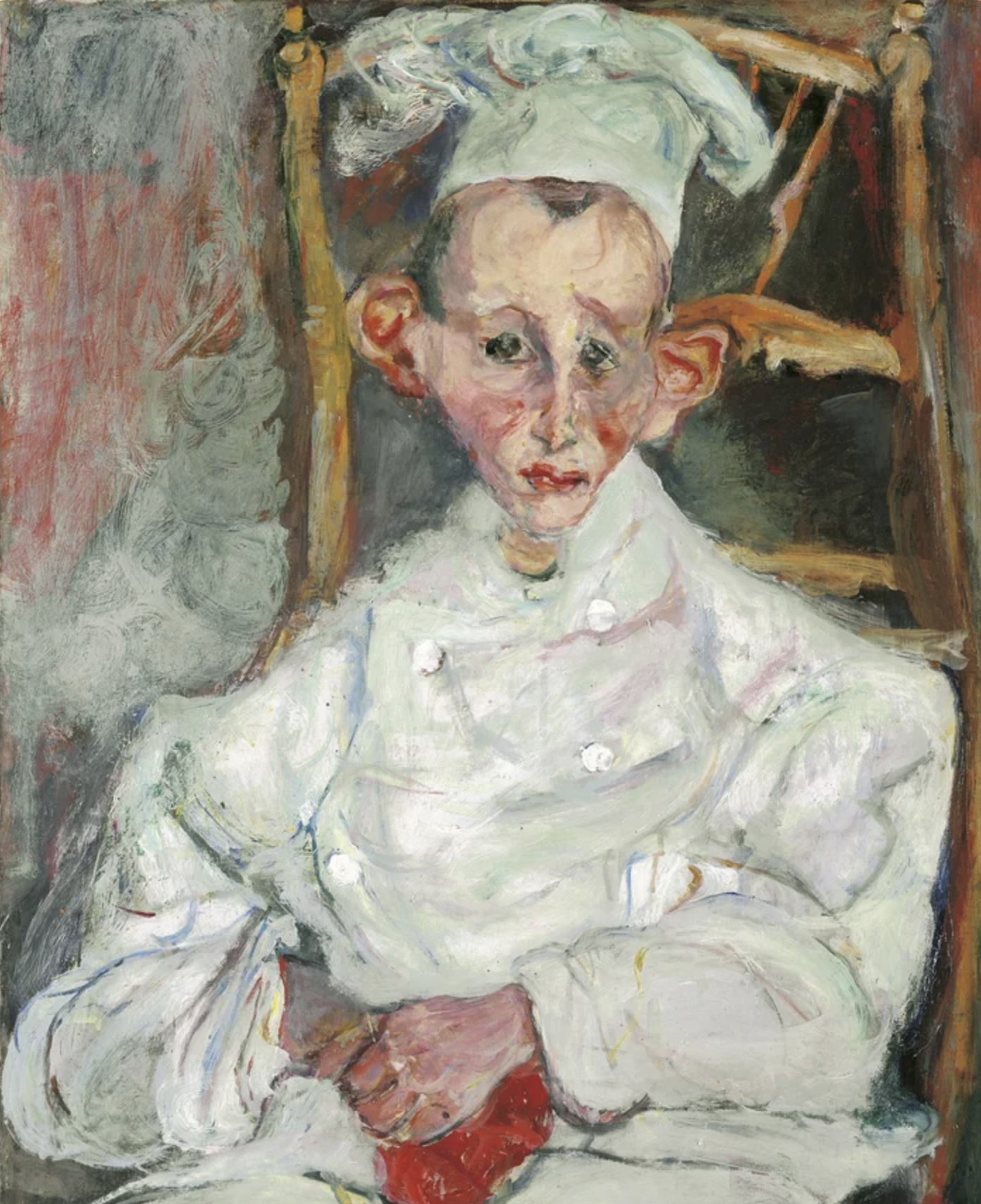
Chaïm Soutine - Pastry Cook from Cagnes

A French bakery has opened nearby, and I have taken to buying my bread there.

Their wholemeal loaf is excellent. But I have also been charmed by the staff’s consistently cheery manner. They’re always on for a conversation, asking where I’ve been and what I’ve been up to. One day recently, the woman assistant greeted me with a bright smile and a Gallic accent. 

‘Hello Monsieur. Are you going to the theatre again?’

‘Well, yes actually. I’m off with friends to see a play in Stratford. Not the Stratford in east London. But Stratford-upon-Avon. It’s a couple of hours away by train.’

I was expecting the assistant to be unaware of the small West Midlands town, but she knew exactly where I was talking about.

‘Of course, Monsieur. I have been to this Stratford.’

‘Oh, excellent. Yes, the home of Shakespeare.’

At this point our conversation faltered.

‘I do not know this person. But I have visited the house of Hamnet. In the film. It was very interesting.’

I read recently about some research carried out into the frequency of social connection. (Melissa Twigg, ‘Why Our Lips Are Sealed’, The Telegraph Magazine, 12 September 2026) 

Over a 15-year period, thousands of adults across Europe and the United States were fitted with Electronically Activated Recorders. These devices logged soundbites of the wearers’ speech through the course of the day.

The study, published in the journal Perspectives on Psychological Science, established that in 2005 each participant spoke, on average, 16,632 words. By 2019 that number had dropped to 11,900, a 28% decrease. In short, we’re losing 338 words per day every year. 

Inevitably the causes of this conversational decline are smart phones, screen addiction, and working from home; online shopping, the demise of the High Street, self-check-outs and so forth. As we strive to create a more efficient, individually empowered, frictionless future, we are eroding the ties that bind us together, the glue of social connection.

One of the lead researchers commented:

‘It is the incidental conversations with people, including strangers, that we happen to encounter as we go about our days, the ones we have here and there, that can still provide micro-opportunities for belonging.’
Matthias Mehl, University of Arizona

Such data may prompt us to make a special effort to chat to people more often - for the sake of our mental health and our sense of community. I have certainly found that my conversations with Doriano the Coffee Guy, Nathan the Trainer, and Marty and Carly the Flower Ladies, are some of the more rewarding engagements in my week. 

But I would also suggest that Strategists make a particular commitment to these random encounters. If we do not interact with consumers, with ordinary people as they go about their daily lives, how can we assert any expertise in their behaviour and beliefs? How can we claim to be their champions?

I wouldn’t want to imply that my conversational gambits at the boulangerie are especially compelling. Sometimes I just talk to the staff about mundane stuff.

‘I prefer the weather like this, a little cooler. This week has been much more bearable than the last few months.’

‘Yes, yes, I know, Monsieur. It’s better. It’s more French.’

'Pas de deux, cordon bleu,
Quel dommage, à la plage.
Laisser faire, tête-à-tête,
Mal de mer, vinaigrette,
Sans souci,
Ma chérie.
Mélange et blanc mange,
Raison d'être, et kilomètre,
Savoir faire, négligée,
Au contraire, consommée,
Vis-à-vis,
Ma chérie.’
The Monochrome Set,’
RSVP’ (A Warren / G Seshadri / T W Hardy)

No. 592
The Mystery of the Missing Doormat: Don’t Underestimate the Dispiriting Effect of Petty Bureaucracy

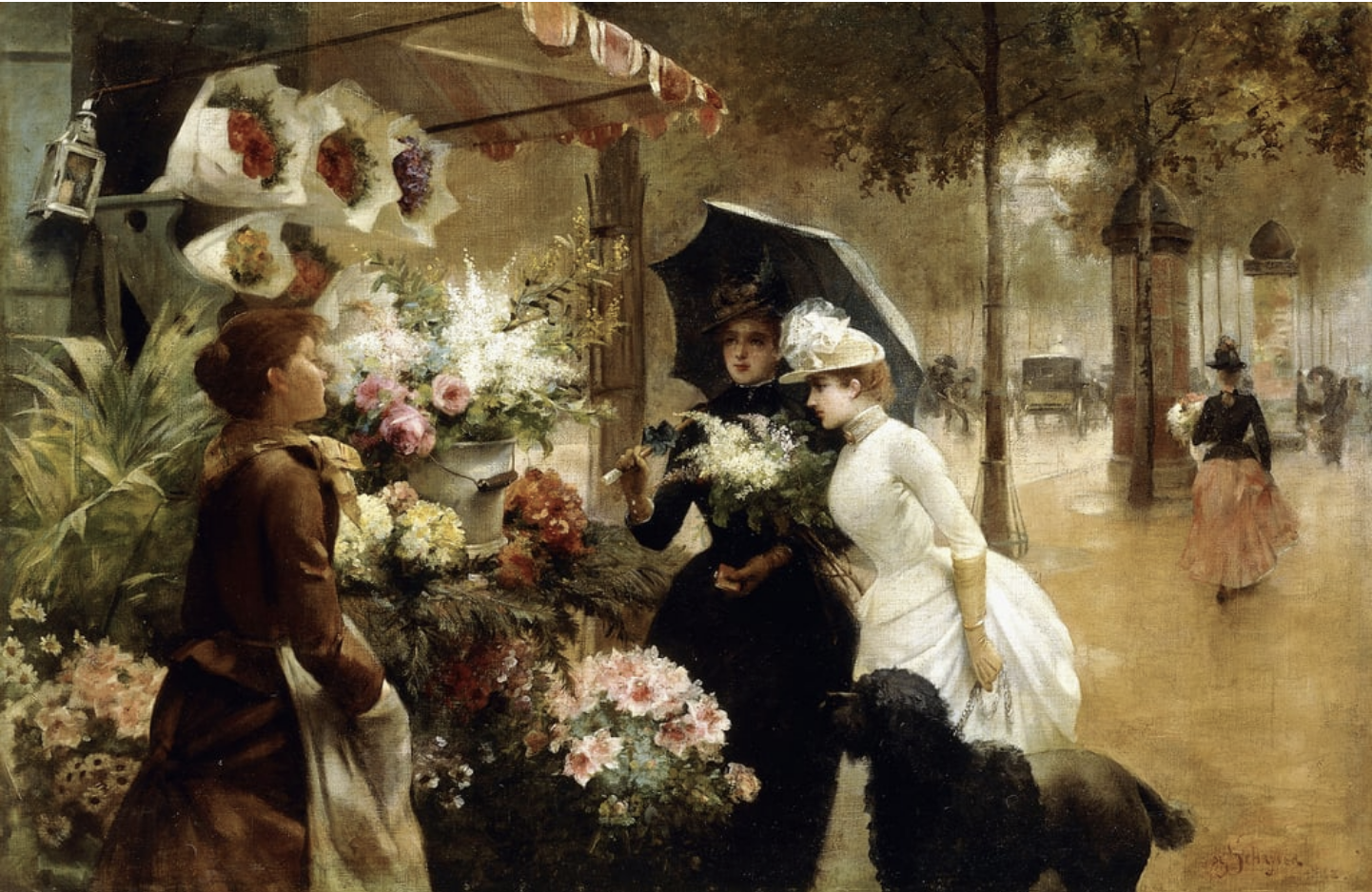
Louis de Schryver, Summer Flowers

‘I came out of my flat the other day, Jim, and somebody had pinched the doormat off my front step. What a cheek!’

I’d just bought my morning coffee from Doriano and was chatting to Carly the Florist who has a stall nearby. She revealed the crime with a look of disappointment and dismay.

‘And then I thought: I know who did this. And so I popped upstairs to the next level of the flats.’

Carly took on the aspect of an expert detective. Her bright eyes became focused and intense.

‘But she didn’t have my doormat either. And you know what, when I looked down the corridor, none of the flats had doormats.’ 

‘That’s a proper mystery, Carly. So what did you do?’

‘Well, I thought about it for a little while and then I phoned the Council…. You wouldn’t believe it, Jim... It was them that took all the doormats.’

‘But, Carly, why would Islington Council remove everyone’s doormats?’

‘Heath and safety... I was livid!’

I never did get to the bottom of what precisely lay behind the Council’s curious decision. Were they worried about fire risk or trip hazards? Were they trying to facilitate cleaning?

In any case I was struck by how organisations often underestimate the dispiriting effect that petty bureaucracy can have on people’s lives.

This goes for the world of work too.

Many a time in various leadership roles I was visited by a disgruntled employee who took particular exception to the new policy on timesheets or expenses; to the change in the breakfast offering at the coffee bar; to the gaudy redesign of the office bathrooms.

One chap resigned because we’d moved his desk and he was no longer sitting next to his mate.

‘Bureaucracy is a giant mechanism operated by pygmies.’
Honore de Balzac

It’s easy to dismiss these concerns as trivial and insignificant. But small changes can make big differences to people’s outlooks. We often reason with our emotions. And behind a minor, frustrating event we perceive a bigger, more sinister plot or strategic shift.

That timesheet policy may imply oppressive corporate control. That reduction in the breakfast menu may indicate a broader financial malaise. The bathroom makeover may suggest a loss of creative identity.   

'Bureaucracies are designed to perform public business. But as soon as a bureaucracy is established, it develops an autonomous spiritual life and comes to regard the public as its enemy.’
Brooks Atkinson

When you sit in management meetings and sign off on policies, you shouldn’t just apply rational, top-down logic. It’s always essential to retain a human perspective. How will this be construed on the shop floor? What could this imply about your overall strategy? How will people feel about it?

'There is something about a bureaucrat that does not like a poem.’
Gore Vidal

I must confess that the person most upset with the bathroom renovation was me. Overnight the fixtures and fittings became all neon and slick - like something from a Thames Valley gastropub. It prompted me to worry a good deal about the company’s cultural and aesthetic direction.

Time for a festive break.
Have a restful Christmas. 
My next post will be on Thursday 4 January 2024.
See you on the other side, I hope.

'The snow's coming down,
I'm watching it fall.
Lots of people around,
Baby, please come home.
The church bells in town,
All ringing in song,
Full of happy sounds.
Baby, please come home.

If there was a way,
I'd hold back this tear.
But it's Christmas day.
Please, please,
Please, please,
Baby, please come home.’

Darlene Love, 'Christmas (Baby Please Come Home)’ (E Greenwich / J Barry / P Spector) 

No. 449