V&A East Storehouse: Everything Everywhere All at Once
V&A Storehouse
V&A East Storehouse is the open-access depository for the Victoria & Albert Museum’s collection of art, design, fashion and performance. With a total floorspace of 16,000 square meters (over 30 basketball courts) and spanning four levels, it is based in Hackney Wick, London, on a site originally used as the media centre for the 2012 Olympic Games. It is free to enter.
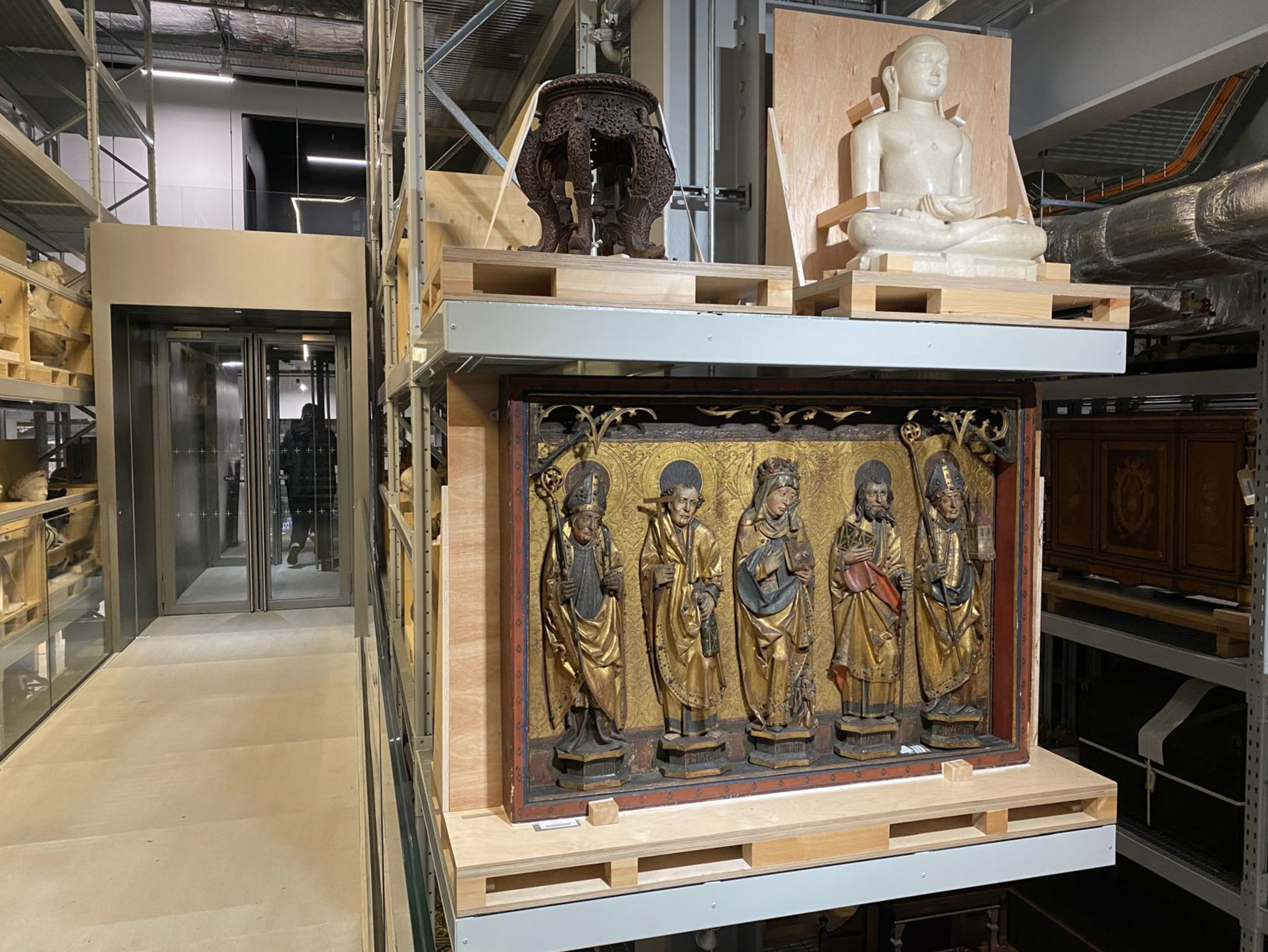
Walking up the stairs, through an airlock, I found myself in a world of steel, glass and gantries; of spacious aisles, long shelves and open crates – all artificially lit from above to protect the exhibits.
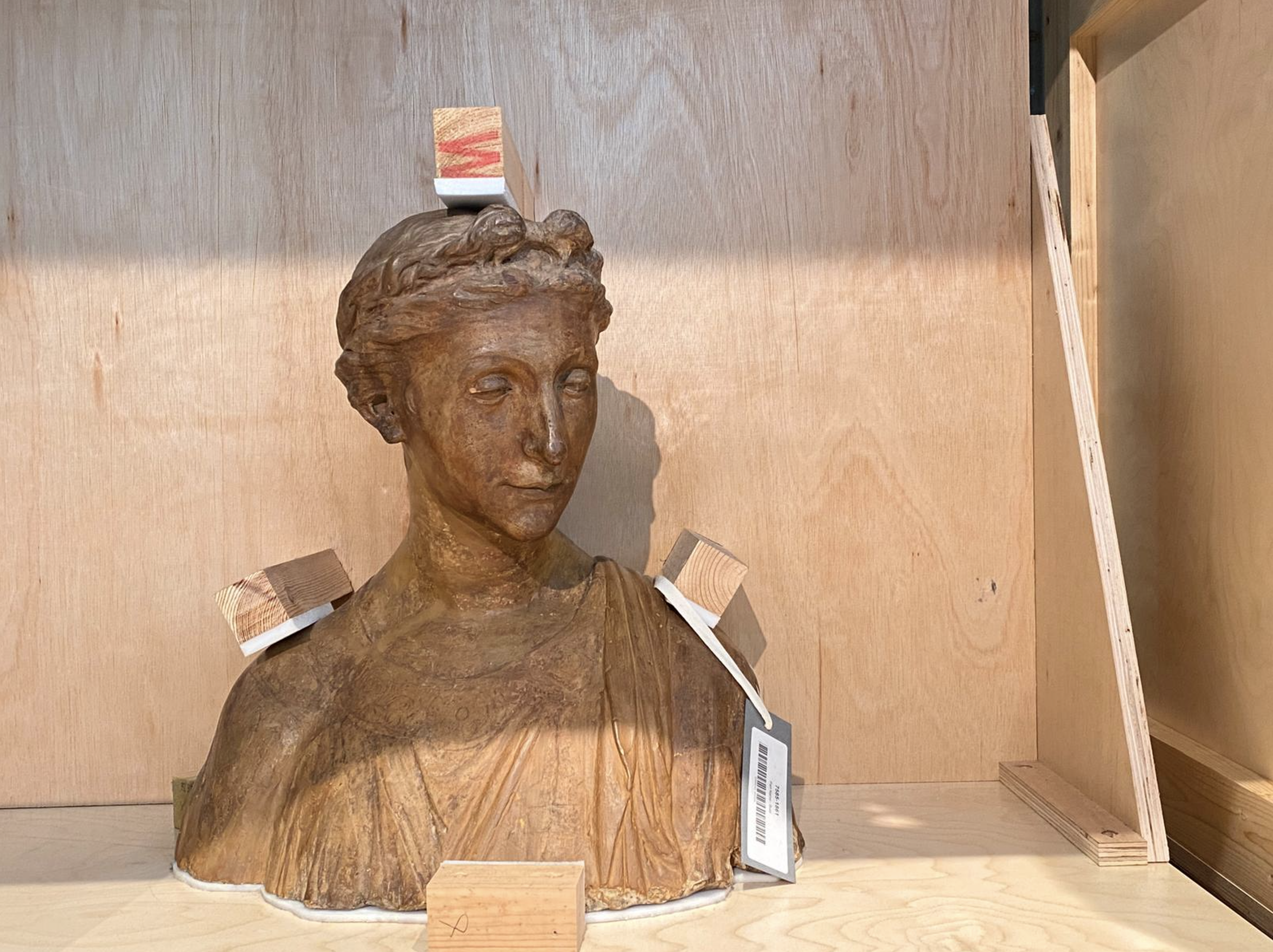
I passed marble heads, ornate furniture and colourful vases; cherubs, chessboards and chimney pots. Here was an example of Palestinian embroidery, a collection of Yemeni funerary stelae. Over there, costumes and cannons; street signs, an abacus, a wireless and some grandfather clocks. Through the glass floor-window, a carved colonnade from Agra.
Everything was carefully catalogued and bar coded – but, at the same time, the collection was completely jumbled up.
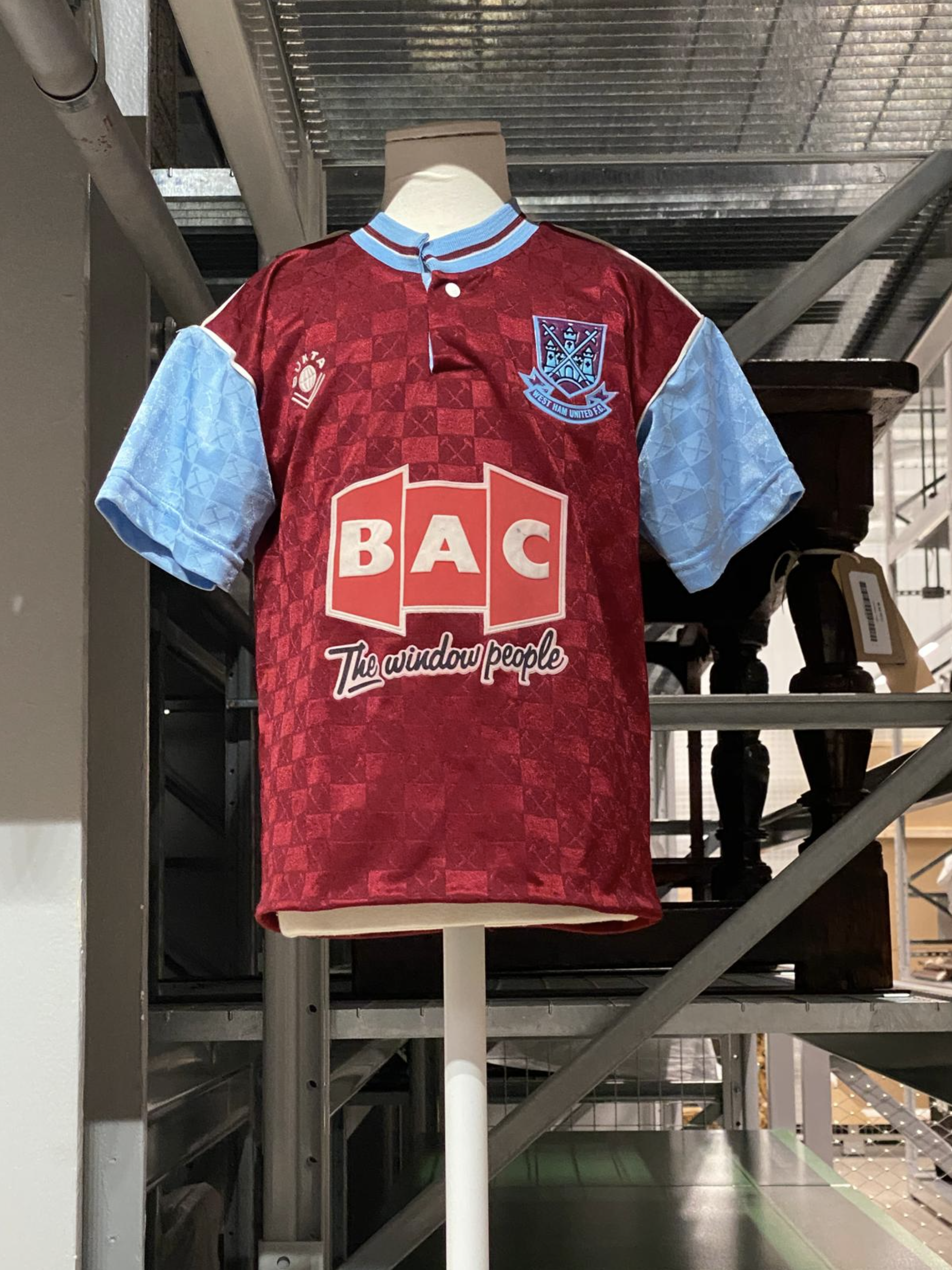
Arms and armour, rococo mirrors, a gleaming motorbike and a ‘70s mug collection. A Minitel 1 computer terminal. A small child’s West Ham top, sponsored by ‘BAC, the window people.’
A middle-aged woman walked past, observing to her husband:
‘They seem to have had a lot of boxes in the olden days.’
V&A Storehouse
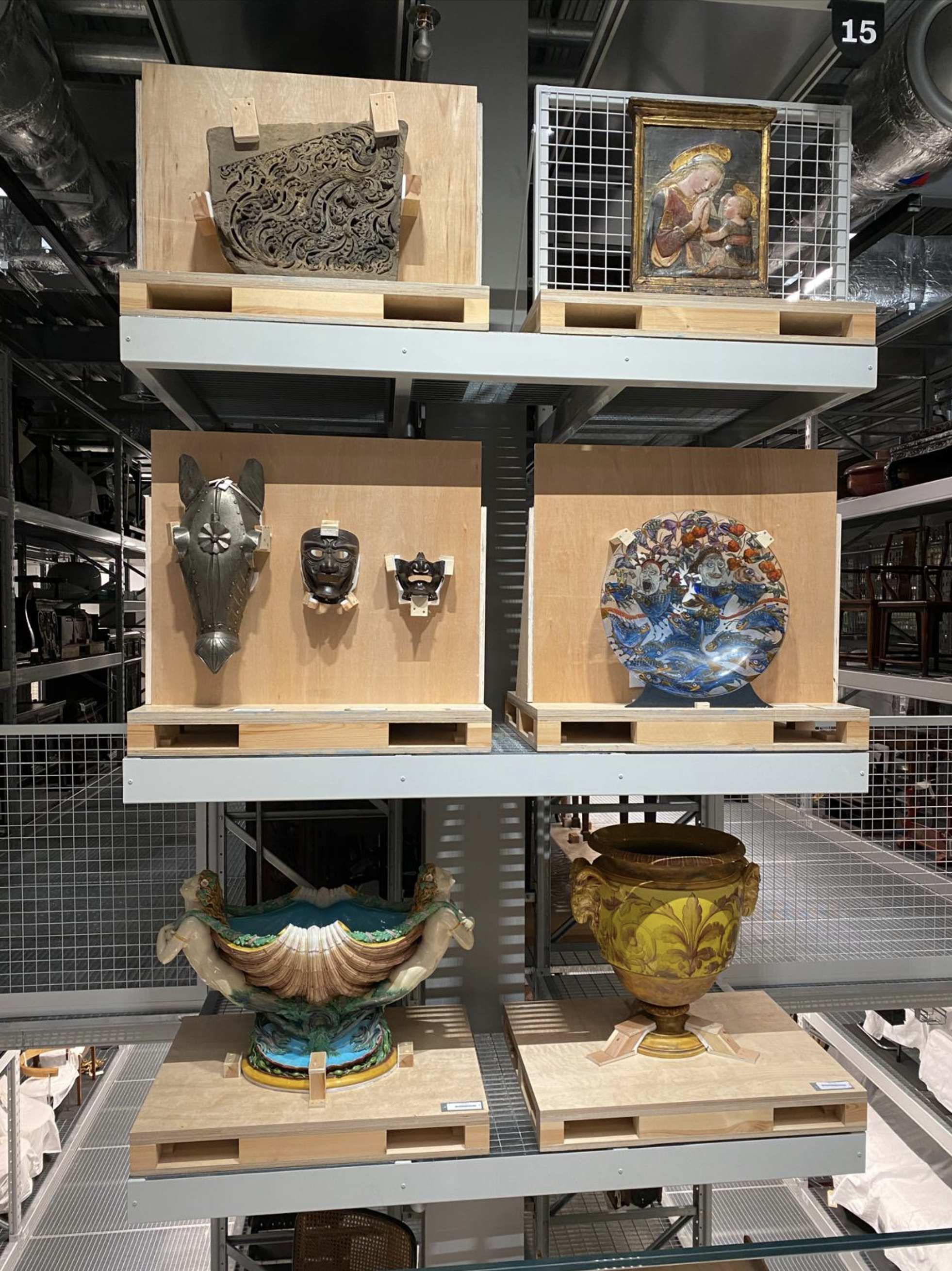
I was feeling a little disorientated. I yearned for some commentary to make sense of it all - something to aid insight and understanding; to illuminate theme and variation. However, the collection is arranged by the sizes and weights of the objects. And, with the exception of some highlight-displays at the end of each storage rack, there is no attempt at formal categorisation or neat narrative.
A sign asked for Feedback:
‘What new stories could we tell about our objects?’
Underneath, someone had complained:
‘Silence is a terrible narrator.’
To be fair, visitors are invited to scan QR codes to learn more about some of the objects. But I’m too old for that now, and it reminds me of Covid. There is also an Order an Object service, by which you can arrange an appointment to see up to 5 pieces from the collection in a private study room.
Most people were, like me, just wandering around, taking it all in, peeking at anything that caught their eye.
V&A Storehouse
Past some ceramic tiles, tribal masks and a toy truck. A gilded altarpiece, a corset and a double bass. Blue plaque, bike, Budha, Bowie setlist.
At length, I overheard a Young Person exclaim in delight:
‘Every 2 seconds I’m seeing something and thinking: Yo, that’s so cool!’
Adopting this mindset, I determined to let myself go; to give in to the infinite variety; to be curious, available for interesting juxtapositions, for serendipity.
In the accompanying literature, one of the architects described the experience as ‘an immersive cabinet of curiosities.’ I found myself grasping for other analogies. It’s like channel surfing; walking through the internet of things; a garden of culture. It’s like Charles Foster Kane’s vast collection of antiquities. It’s the multiverse. It’s everything everywhere all at once.
I came across a couple of set-piece show-stoppers: the Kaufmann Office, a complete honey-coloured interior, designed in the 1930s by Frank Lloyd Wright for a Pittsburgh retail magnate; the Frankfurt Kitchen, a pistachio exercise in minimalist functionality, created in the 1920s by Margarete Schütte-Lihotzky, and installed in 10,000 flats.
V&A Storehouse
And then there was a melancholy display of remnants from a now demolished Brutalist housing estate in nearby Polplar, Robin Hood Gardens. And some toiles that fashion students have crafted, based on original designs by Balenciaga – an imaginative exercise to better understand his technique.
Shoes, chandeliers, a painted tiger and a bus conductor. I could go on…
I’d certainly recommend a visit to the V&A East Storehouse. You just need to adopt the right mentality: set aside the Strategist’s craving for order and explanation; relax, be inquisitive, and open yourself up to stimulation and inspiration.
Finally, back to the Visitor Feedback:
‘What new stories could we tell about our objects?’
In a flamboyant scribble, a Young Person had requested:
‘Haunted, demonic and possessed, puhlease!!!’
Exactly.
'A police car and a screaming siren.
A pneumatic drill and ripped up concrete,
A baby wailing and stray dog howling,
The screech of brakes and lamp light blinking,
That's entertainment.
That's entertainment.
A smash of glass and a rumble of boots,
An electric train and a ripped up phone booth,
Paint splattered walls and the cry of a tomcat,
Lights going out and a kick in the balls.
I say, that's entertainment.
That's entertainment.
Days of speed and slow time Mondays,
Pissing down with rain on a boring Wednesday,
Watching the news and not eating your tea,
A freezing cold flat and damp on the walls.
I say that's entertainment.
That's entertainment.’
The Jam, ’That’s Entertainment’ (P Weller)
No. 577

