The Wistful Barmaid and the Johnny Cash To-Do List
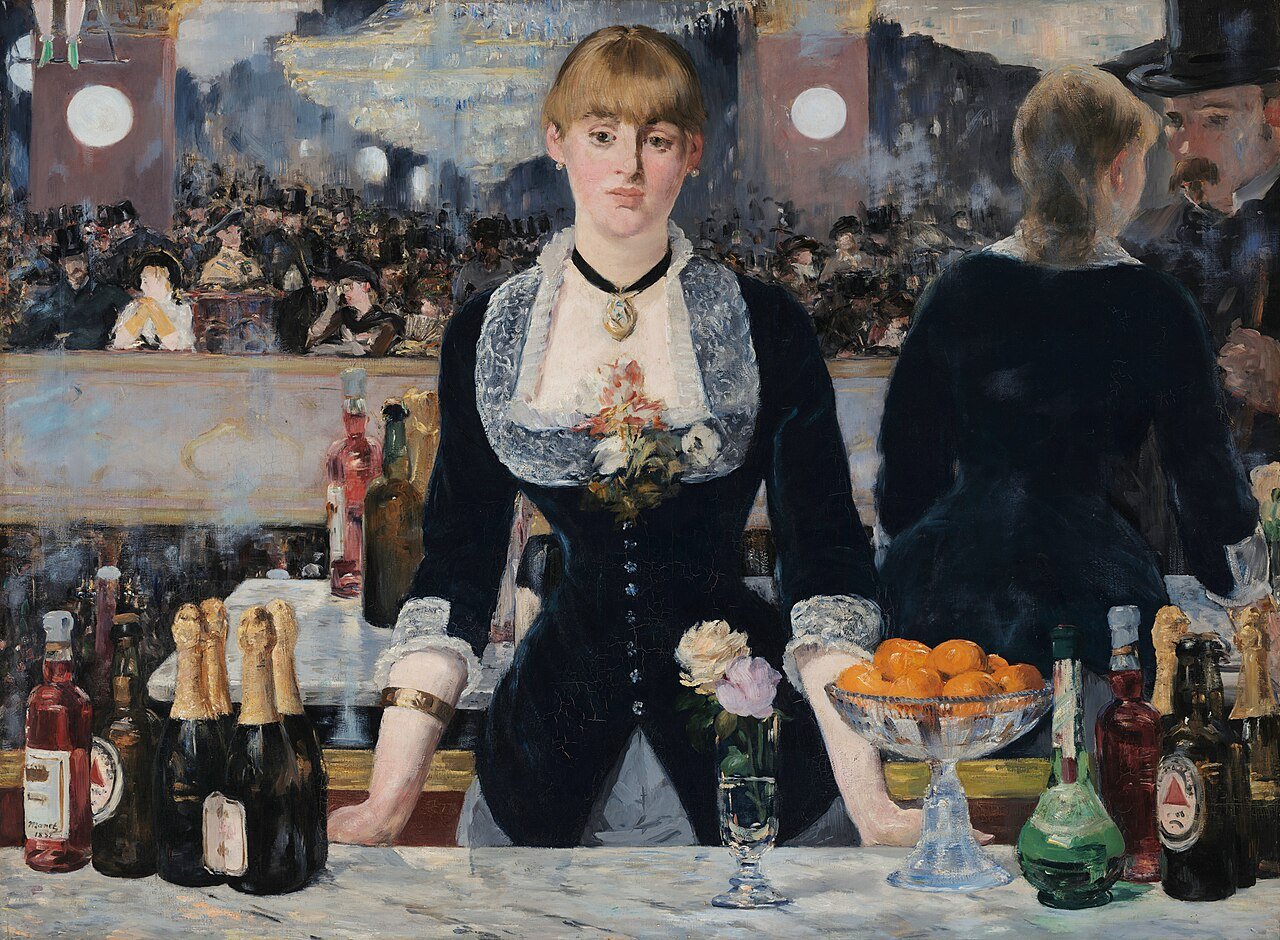
Manet - Un bar aux Folies Bergère

There’s quite a choice of local pubs available to me. I have a particular soft spot for the Old Red Lion, a big, slightly tatty, Islington boozer with a theatre upstairs. I like the friendly, easy-going staff, the mix of old drinkers and young thespians, the etched glass and intricate plasterwork. And I like its storied history: Thomas Paine wrote ‘The Rights of Man’ here; the pub featured in a Hogarth painting; and it was until recently the London home of Norwich City football fans.
 
I approached the bar and ordered a large house white. The raven-haired barmaid took a glass and placed it under some beer taps. She then returned with a bottle of Picpoul and found that she couldn’t quite pour it - the taps were in the way.
 
‘You’ve made it difficult for yourself there,’ I said helpfully.
 
She reflected for a brief moment. Then, looking straight through me, she murmured:
 
‘That’s the story of my life.’
 
Though I don’t know what disappointments lay behind the woman’s wistful reply, I’m sure we can all relate to her sentiment. So often, in and out of work, we compromise, complicate and confuse. We muddle and mess up. We make poor assessments and bad choices. We make things difficult for ourselves.
 
‘Getting faster is almost always about what you take away rather than what you add.’
Michael Johnson
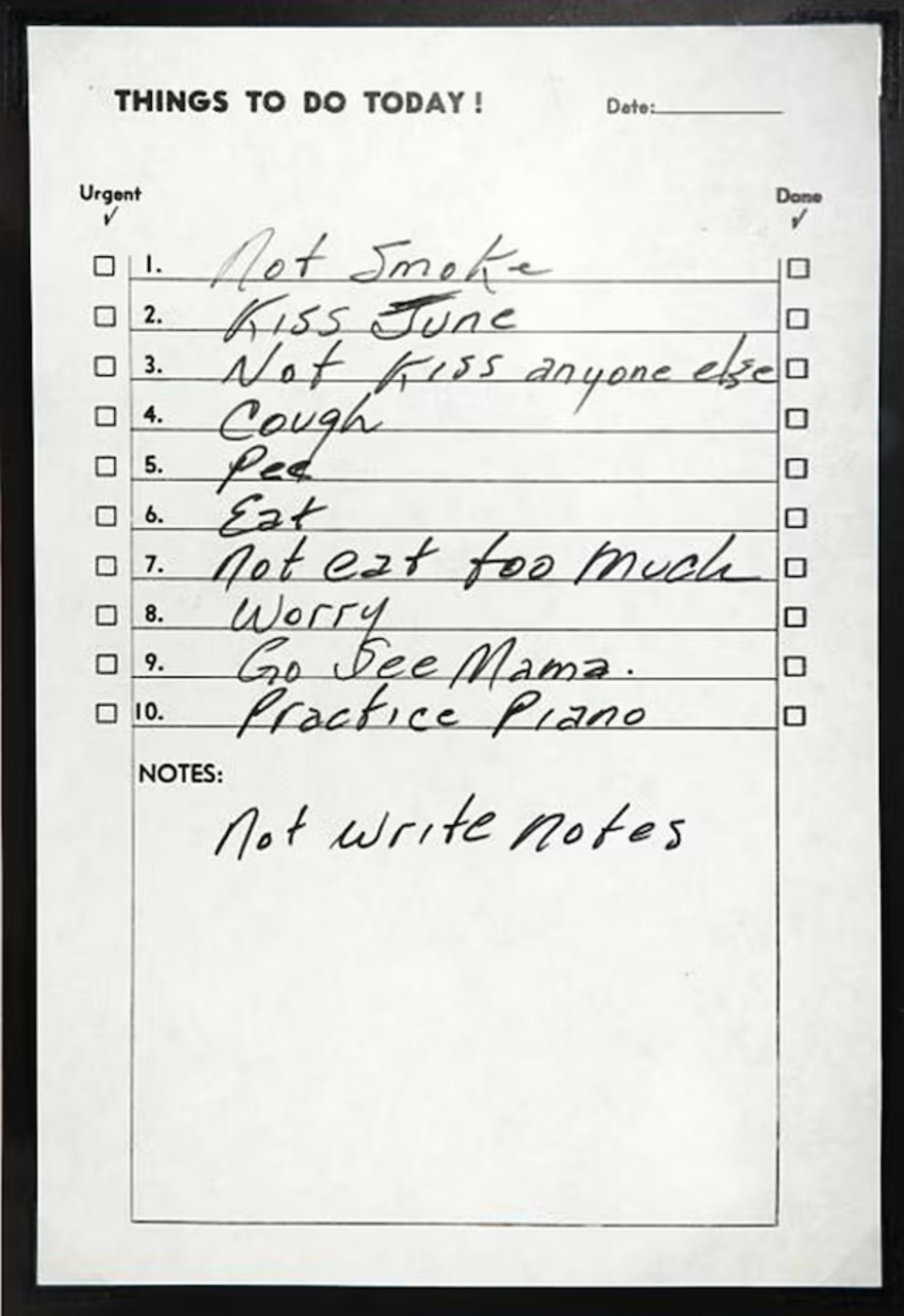
Some years ago, I came across a to-do list written (on an unrecorded date) by Johnny Cash.  

As instructed by the pre-printed sheet, the Man in Black prioritises his 10 ‘things to do today!’ He is clearly concerned with some pretty mundane tasks. He aims to avoid smoking; to cough, pee and eat (‘but not too much’). He also has some sentimental objectives, resolving to ‘go see mama’; to ‘kiss June’ (Carter, his beloved wife), and ‘not kiss anyone else.’ There’s work to be done: he must ‘practice piano.’ And, finally, he commits to ‘worry.’ A strange determination perhaps, but one with which I can sympathise. I have always found a certain degree of anxiety to be healthy – making one more considered, alert, focused.

'Complexity means distracted effort. Simplicity means focused effort.’ 
Edward de Bono
 
Overall, I rather approve of Cash’s goals for the day. When we are confronted with a troubling excess of options, a paralysing variety of dilemmas, it’s sensible to start with a to-do list - distilling and prioritising the tasks ahead. Even focusing on the commonplace helps. It gets the wheels turning, sets us in motion.
 
'A journey of a thousand miles begins with a single step.'
Lao Tzu
 
It’s refreshing too to see Cash’s last remark on his list. Underneath the printed section entitled Notes, he has written ‘not write notes.’ A sense of humour also gets you a long way in life. 
 
 
'I hurt myself today,
To see if I still feel.
I focus on the pain,
The only thing that's real.
What have I become,
My sweetest friend?
Everyone I know goes away
In the end.
And you could have it all,
My empire of dirt.
I will let you down.
I will make you hurt.'
Johnny Cash, ’Hurt’ (T Reznor)

No. 566

Unfinished Sympathy: Should Communication Lose its Gloss?

I own an unfinished painting. It’s a portrait of a young blond-haired man staring rather dreamily into the middle distance. The dealer suggested that the artist wasn’t of the highest order and, when he saw how well he’d done at this intermediate stage, he decided it was best to stop there. Perhaps this story ought to have put me off purchasing, but actually it charmed me.

I recently attended a small exhibition of ‘unfinished’ art. The show at the Courtauld Gallery in London (which runs until 20 September) features unfinished paintings, sculpture, drawings and prints from the Renaissance to the early twentieth century. Why were these works unfinished?

In a few instances the artist died before completing a piece. Sometimes the painter was simply not satisfied with how things had turned out. Monet revisited his Vase of Flowers repeatedly over forty years, and experts have detected areas where he has painted over dried paint.

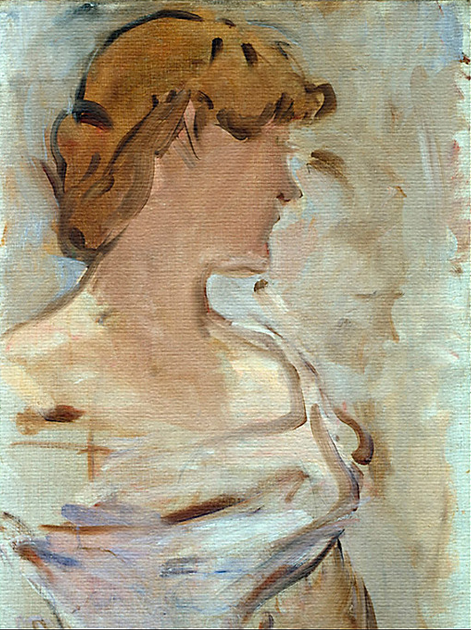
Sometimes the moment has passed. Manet’s Au Bal seems to have caught a woman turning away to leave the room. And there’s a small Turner watercolour where drops of rainwater have been detected on the paper. He obviously had to make a run for it.

Unfinished artworks have been treasured by teaching academies over the years as they shed light on technique. But more than this. In the first century AD the Roman author Pliny the Elder wrote that incomplete work was particularly precious because it lets us see into the artist’s mind.

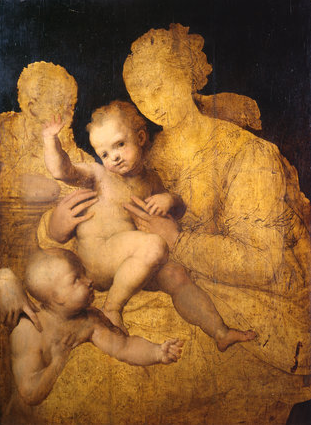
There’s certainly something beguiling about the unfinished. It has an immediacy, a freshness and transience that elude finished work. We feel closer to the artist; to the act of creation. Unfinished art seems somehow particularly fragile, physical and human. Perhaps because we are ourselves merely works in progress. We are all unfinished. In Perino del Vaga’s Holy Family with Saint John the Baptist, the Virgin Mary is only present in outline. It is rather haunting as a result. It suggested to me the tragic inevitability of death within the family.

The Courtauld exhibition also highlights how sometimes we just don’t know whether a painting is finished or not.  Does a signature indicate completion? The Impressionists attracted a lot of criticism for displaying work that looked incomplete. Degas’ Woman at a Window seems unfinished in many respects, but Degas ‘signed it off.’ For the artist Sickert, who bought the painting, this was his finest work.

 ‘There is a great difference between a work that is complete and one that is finished. The complete work is one that conveys the vision of the artist, the finished one is often glossed.’
Charles Baudelaire

I wonder does too much of our output in the communications industry appear glossed? Does it lose some of its humanity in endless post-production? Are our images air-brushed out of all recognition?

What would happen if we stopped short of the impeccably polished? What if we adopted a looser, more informal style?

What if we exposed the process of creation, the workings in the margin?

There’s something stale and artificial about much modern brand communication. Endless hours of analysis and over-thought have wrung the intimacy and spontaneity out of ideas. They’ve created a distance, an absence, an insincerity.

We’re all enamoured of authenticity nowadays, but there’s nothing authentic about perfection.


No. 47