The Wistful Barmaid and the Johnny Cash To-Do List
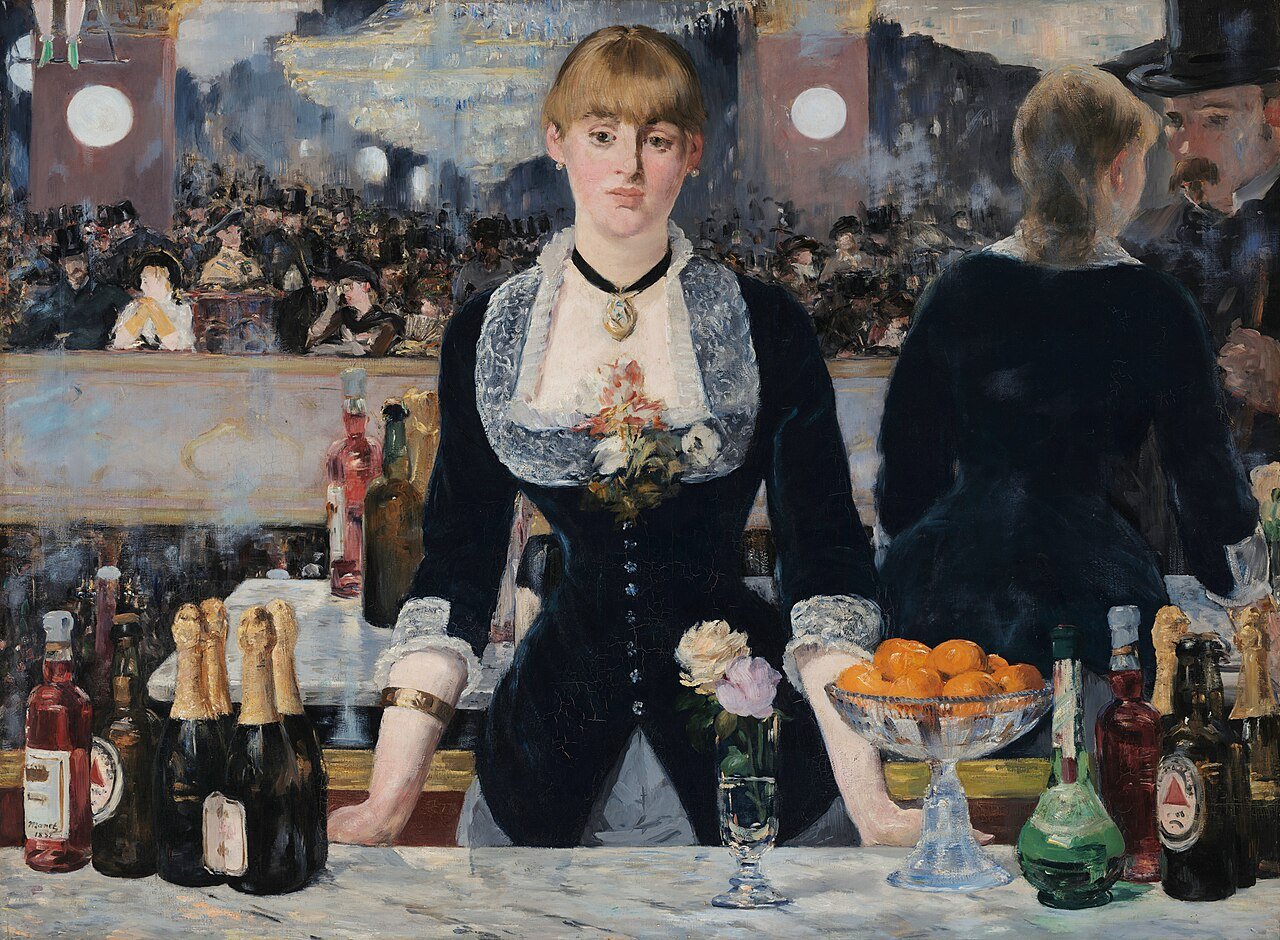
Manet - Un bar aux Folies Bergère

There’s quite a choice of local pubs available to me. I have a particular soft spot for the Old Red Lion, a big, slightly tatty, Islington boozer with a theatre upstairs. I like the friendly, easy-going staff, the mix of old drinkers and young thespians, the etched glass and intricate plasterwork. And I like its storied history: Thomas Paine wrote ‘The Rights of Man’ here; the pub featured in a Hogarth painting; and it was until recently the London home of Norwich City football fans.
 
I approached the bar and ordered a large house white. The raven-haired barmaid took a glass and placed it under some beer taps. She then returned with a bottle of Picpoul and found that she couldn’t quite pour it - the taps were in the way.
 
‘You’ve made it difficult for yourself there,’ I said helpfully.
 
She reflected for a brief moment. Then, looking straight through me, she murmured:
 
‘That’s the story of my life.’
 
Though I don’t know what disappointments lay behind the woman’s wistful reply, I’m sure we can all relate to her sentiment. So often, in and out of work, we compromise, complicate and confuse. We muddle and mess up. We make poor assessments and bad choices. We make things difficult for ourselves.
 
‘Getting faster is almost always about what you take away rather than what you add.’
Michael Johnson
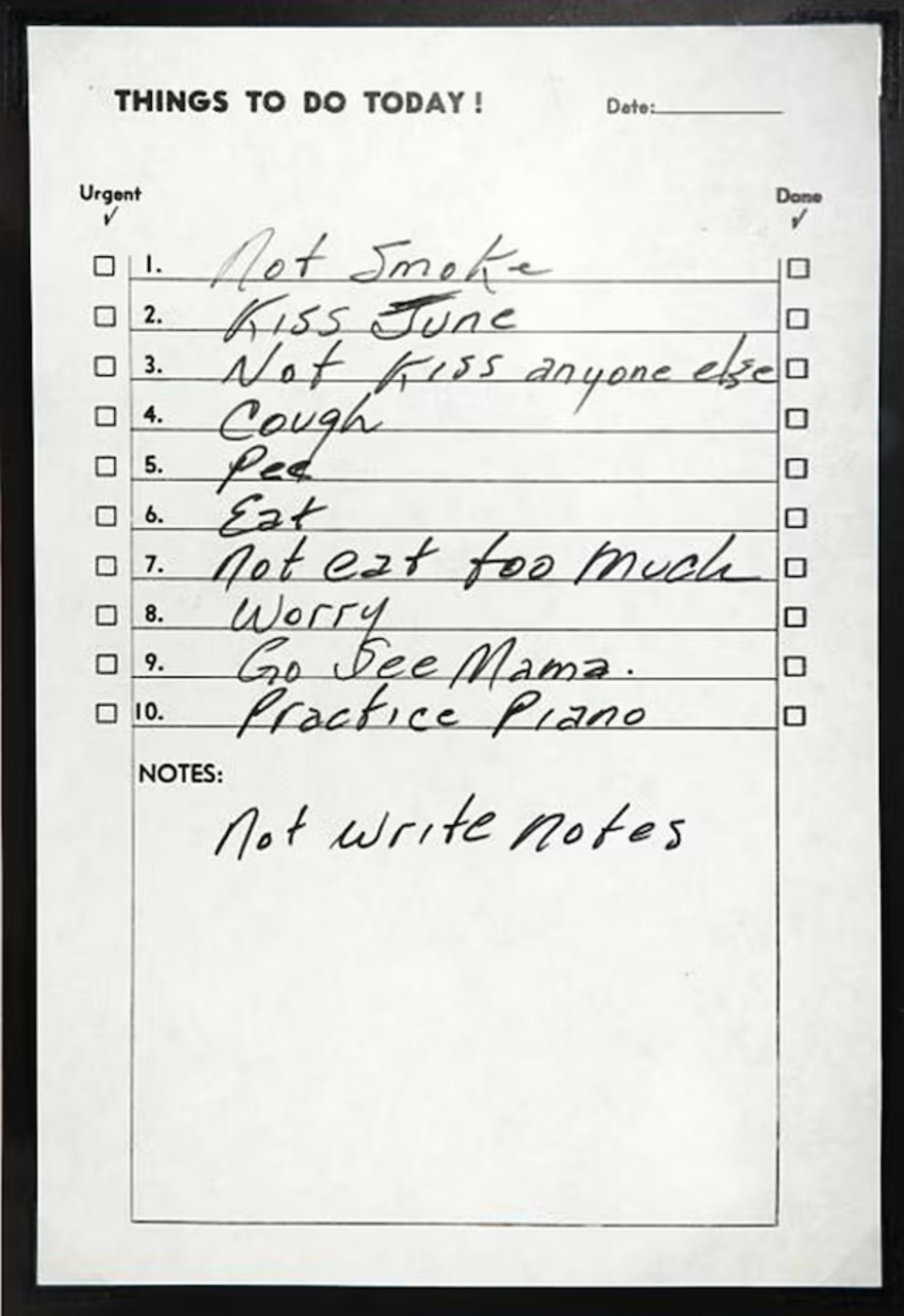
Some years ago, I came across a to-do list written (on an unrecorded date) by Johnny Cash.  

As instructed by the pre-printed sheet, the Man in Black prioritises his 10 ‘things to do today!’ He is clearly concerned with some pretty mundane tasks. He aims to avoid smoking; to cough, pee and eat (‘but not too much’). He also has some sentimental objectives, resolving to ‘go see mama’; to ‘kiss June’ (Carter, his beloved wife), and ‘not kiss anyone else.’ There’s work to be done: he must ‘practice piano.’ And, finally, he commits to ‘worry.’ A strange determination perhaps, but one with which I can sympathise. I have always found a certain degree of anxiety to be healthy – making one more considered, alert, focused.

'Complexity means distracted effort. Simplicity means focused effort.’ 
Edward de Bono
 
Overall, I rather approve of Cash’s goals for the day. When we are confronted with a troubling excess of options, a paralysing variety of dilemmas, it’s sensible to start with a to-do list - distilling and prioritising the tasks ahead. Even focusing on the commonplace helps. It gets the wheels turning, sets us in motion.
 
'A journey of a thousand miles begins with a single step.'
Lao Tzu
 
It’s refreshing too to see Cash’s last remark on his list. Underneath the printed section entitled Notes, he has written ‘not write notes.’ A sense of humour also gets you a long way in life. 
 
 
'I hurt myself today,
To see if I still feel.
I focus on the pain,
The only thing that's real.
What have I become,
My sweetest friend?
Everyone I know goes away
In the end.
And you could have it all,
My empire of dirt.
I will let you down.
I will make you hurt.'
Johnny Cash, ’Hurt’ (T Reznor)

No. 566

A Crisis with the Recycling Bins: Anxiety Expands To Fill The Time Available

I woke up in the middle of the night worrying about the recycling bins.

The council had neglected to collect our refuse the previous day. And so I had donned my Crocs and trotted down the road to review the situation. 

They’d clearly picked up everyone else’s. I wondered if they were punishing me for some crime of refuse mismanagement. Had I left the bins in the wrong location? Had I included inappropriate materials? Had I misallocated some coffee cups or bubble wrap?

Over the coming week I would have to eke out the small amount of space left in the green containers. With a little prudent packing and assiduous compression, I could perhaps make it through. But then I realised there was a public holiday approaching and I’d need to survive an extra day before the collection.

And so here I was in a cold sweat, uneasy and apprehensive, calculating in the dark.

Of course I shouldn’t be stressed at all. Since I’ve stepped back (as they say) from the front line of professional engagement, I have been fortunate to lead a relatively easygoing life. The recycling collection is really not that important.

And yet, when I think about it, the amount that I fret has remained pretty constant. In the past I was anxious about pitch strategies, client relations, budget reconciliation and redundancies. Now I’m equally troubled by desk clutter, ticket booking and sandal closure; by muesli stocks, thank you cards and name recollection.

'To be without some of the things you want is an indispensable part of happiness.’
Bertrand Russell

I read a review of the recently published book 'After Work.' Its authors Helen Hester and Nick Srnicek cite what’s known as Cowan’s Paradox. Some years ago American historian Ruth Schwartz Cowan established that the amount of time spent on domestic work did not decrease at all between the 1870s and the 1970s. The benefits of a century of labour-saving devices had been countered by behavioural and attitudinal changes in the home - such as increasing standards of hygiene, more intensive parenting and more elaborate cooking practices. 

This phenomenon calls to mind Parkinson’s Law. In an article about bureaucracy in The Economist in 1955 the naval historian C Northcote Parkinson observed that officials tend to want subordinates, not rivals; and that they like to make work for each other. Consequently ‘work expands so as to fill the time available for its completion.’

Reflecting on my recycling dilemma, perhaps, in similar vain, anxiety expands to fill the time available.

'My life has been full of terrible misfortunes, most of which never happened.’
Michel de Montaigne

Certainly it is human to worry. We naturally get upset and unsettled, whether about substantive issues or trivialities. We torment ourselves with dark thoughts and grim forebodings. We toss and turn; brood and stew. Small annoyances become massive grievances. Trifling concerns become tremendous fears.

Of course an excess of stress can be crippling. We need to do everything we can to help sufferers and limit its effects.

But that doesn’t mean we should seek to eradicate anxiety entirely. In moderation and properly directed, our worrying wards off complacency. It builds preparedness and resilience. And, more than this, it stimulates creativity; motivates change; propels action.  

'Anxiety is the hand maiden of creativity.'
T S Eliot

This prompts me to conclude that we should regard anxiety, not as an enemy to be defeated, but as a troublesome friend to be accommodated. 

And with respect to our work worries, we should endeavour to keep them in proportion. In my own experience, the most irritating incidents, the most troublesome clients, the most disturbing prospects, don’t seem so important with the passing of time.

'Worrying is paying interest on a debt you might not even owe.'
Mark Twain

Now, a few weeks on from my sleepless night, I’ve caught up with the recycling, and the refuse collection has resumed its natural rhythm.

I should relax. But of course I have other things to worry about.

'Success is having to worry about every damn thing in the world, except money.'
Johnny Cash

'Do I worry cause you're stepping out?
Do I worry cause you got me in doubt?
Though your kisses aren't right, do I give a bag of beans?
Do I stay home every night and read my magazine?
Am I frantic, cause we lost that spark?
Is there panic when it starts turning dark?
And when evening shadows creep, do I lose any sleep over you?
Do I worry? You can bet your life I do.’

Ink Spots, ‘Do I Worry?’ (B Worth / S Cowan)

No. 440