Wright of Derby: Don’t Let Me Be Misunderstood
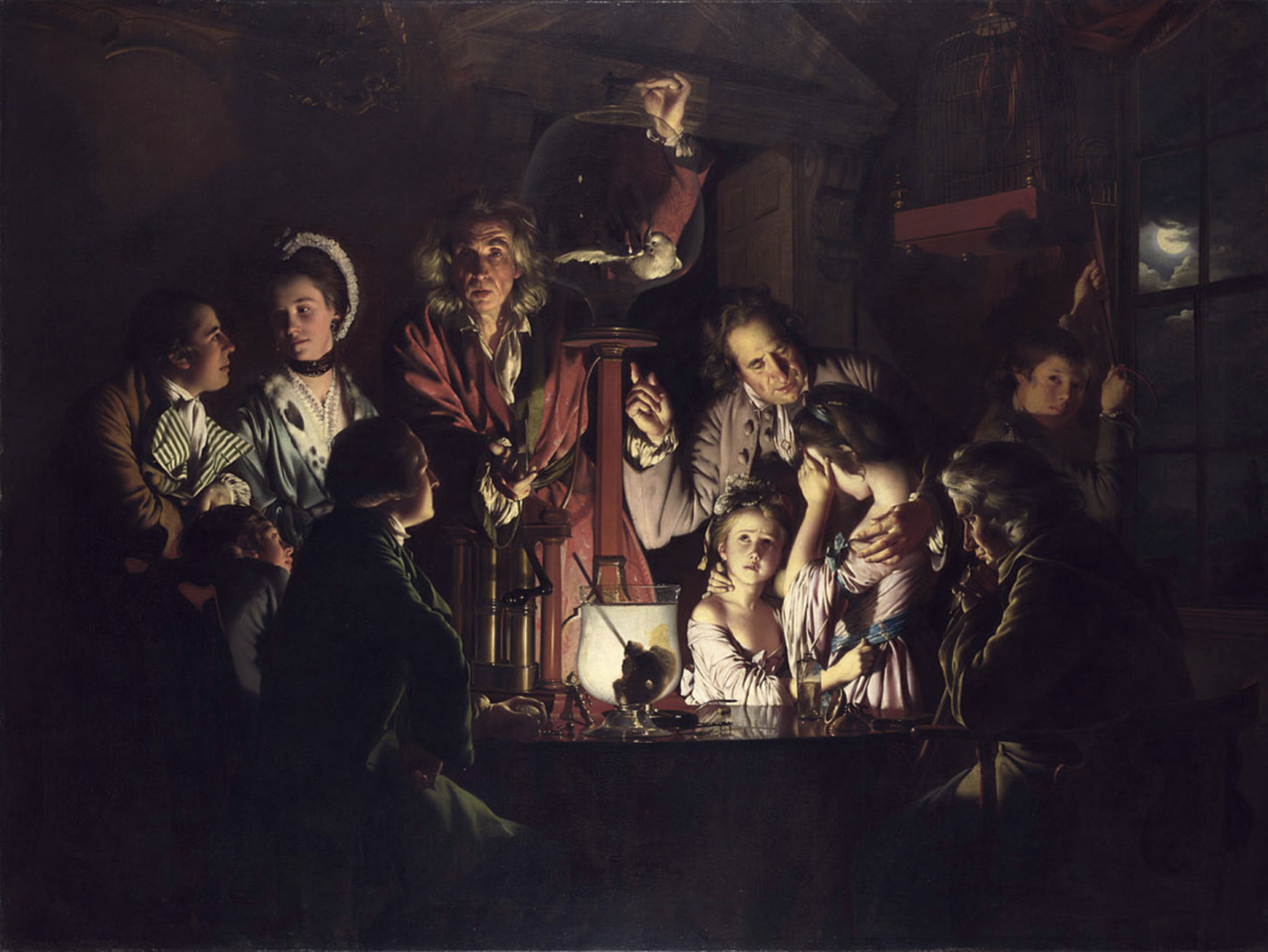
Joseph Wright 'of Derby' - An Experiment on a Bird in the Air Pump. Oil on canvas
I recently enjoyed a visit to a small exhibition of the art of Joseph Wright of Derby. (‘From the Shadows’ is at the National Gallery, London, until 10 May.)
Working at a time of extraordinary scientific breakthroughs, combining vivid realism with dramatic contrasts of light and shadow, Wright was the first painter to capture the spirit of the Industrial Revolution.
Joseph Wright was born in 1797, in Irongate, Derby, into a respectable family of lawyers. Having studied in London, he established himself as a portraitist in Liverpool, Italy and Bath, before eventually settling back in Derby. There he mixed with the pioneering industrialists and scientists of the Lunar Society, a club that met in Birmingham, during the full moon, for intellectual discussion and experimentation. His patrons included Josiah Wedgwood, the entrepreneurial potter, and Richard Arkwright, the creator of the modern factory system.
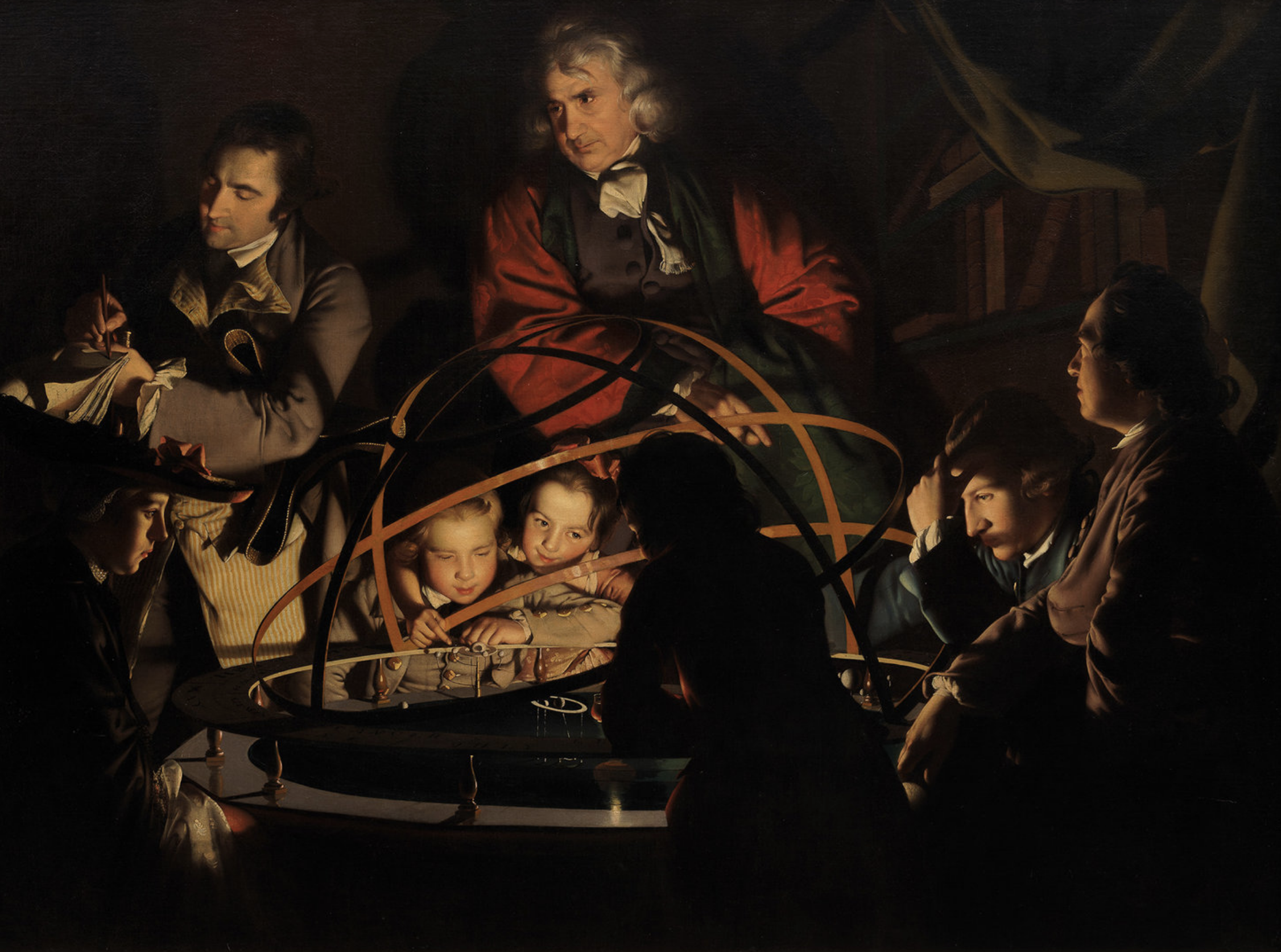
Joseph Wright 'of Derby' - 'A Philosopher giving That Lecture on the Orrery in Which a Lamp Is Put in the Place of the Sun. Oil on canvas
The show focuses on Wright’s ‘tenebrist’ works – atmospheric scenes with extreme contrasts of light and dark, in the tradition of Caravaggio - that were painted between 1765 and 1773.
Ironmongers toil in a murky forge. Late at night an alchemist takes to one knee as he discovers glowing phosphorus. By lamplight, an elderly philosopher contemplates a human skeleton. By candlelight, three academics examine a plaster cast of a gladiator. In a darkened room, a travelling teacher explains the movement of planets, using an ‘orrery’, a clockwork model of the solar system.
These paintings capture the excitement of science, the thrill of progress, the shock of the new.
Consider ‘An Experiment on a Bird in the Air Pump.’ A long-haired lecturer draws air from a glass flask to demonstrate the effect on a grey cockatoo trapped inside. It is night, and the room is lit by a single candle. Two men dispassionately examine the panicked bird, one of them timing the trial. Two girls cling to each other in distress. The older is unable to watch, but her father, placing a consoling hand on her shoulder, encourages her to pay attention. Two lovers only have eyes for each other. An elderly gentleman stares mournfully, not at the bird, but at a glass bowl containing a human skull.

Joseph Wright 'of Derby' - Three Persons Viewing the Gladiator by Candlelight. Oil on canvas
I was particularly struck by this complex web of gazes and glances. We all tend to go through life and work with one particular point of view – our own. But often it is only when we reflect on other people’s perspectives, that we can truly understand a dilemma. And it is only when we consider how others see a problem, that we are able to solve it.
Perhaps the most haunting perspective in ‘An Experiment on a Bird in the Air Pump’ is that of the lecturer. He looks directly out at us, the viewers, as if to ask: What do we make of this scene? Is it science or sadism? Is this progress or regress?
'Baby, you understand me now,
If sometimes you see that I'm mad?
Don't you know no one alive can always be an angel,
When everything goes wrong, you see some bad?
But I'm just a soul whose intentions are good,
Oh Lord, please don't let me be misunderstood.
You know sometimes, baby, I'm so carefree,
With a joy that's hard to hide.
And then sometimes again it seems that all I have is worry,
And then you're bound to see my other side.
But I'm just a soul whose intentions are good,
Oh Lord, please don't let me be misunderstood.’
Nina Simone, 'Don't Let Me Be Misunderstood’ (B Benjamin, H Ott, S Marcus)
No 558