Figures in Extinction: ‘If Separation is the Question, Then Connection is Surely the Answer’
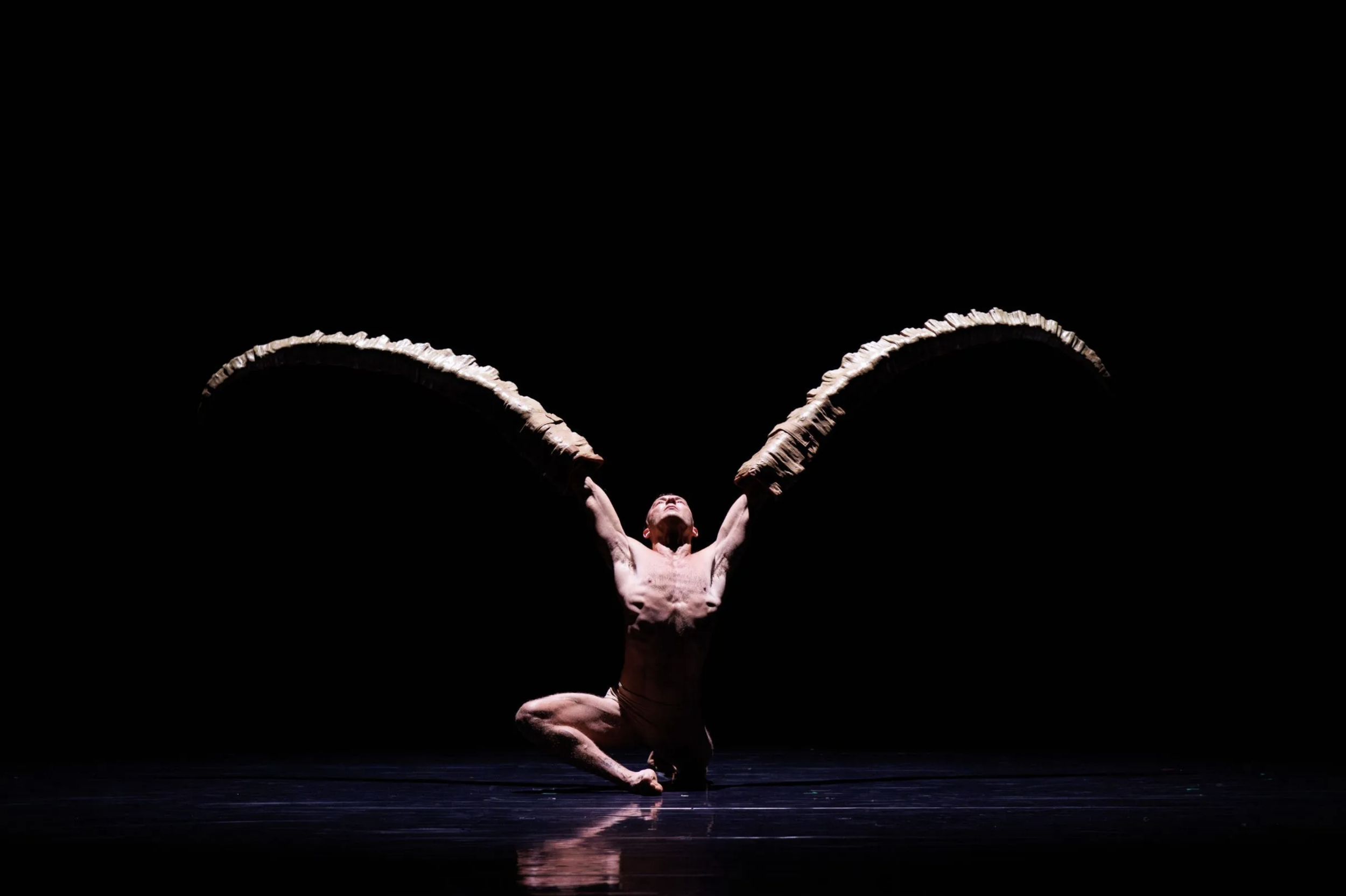
Still from Figures On Extinction © Andrew Perry
‘Figures in Extinction’ is a three-act dance work that considers the climate crisis, the segmentation of the brain, and society’s attitudes towards death. It is at the same time thought provoking and deeply moving. (Sadler’s Wells, London, 5-8 November 2025. I’m afraid it’s over now. Let’s hope it returns some time soon.)
‘The way you treat the outer world reflects what is happening in your inner world.’
Simon McBurney
The piece is a collaboration, between the choreographer Crystal Pite and the theatre-maker Simon McBurney; between Nederlands Dans Theater and Complicité. The plan was for Pite to lead the first part, for McBurney to lead the second, and for the third segment to be composed jointly. In practice, the co-creators found that sharing responsibility was more productive.
‘I choreographed all sorts of things, and Crystal wrote scenes and shaped stories. We didn’t stay on our patch because we never felt we had a patch.’
Simon McBurney
In fluid, restless motion, the dancers congregate and scatter, circle each other and separate, coil and uncoil. With sweeping gestures and sinuous lines, arms arch, bodies quiver and hands flicker. The mood is dark and sombre, as a voiceover takes us on a philosophical journey.

Figures In Extinction - Nederlands Dans Theater and Complicité
Section one catalogues the animals, plants and places that have become extinct in the last century. The dancers’ subtle movements suggest the Pyrenean ibex, the Asiatic cheetah and the passenger pigeon; a warbler and a macaw, a herd of caribou and a shoal of hand-fish; poisonous frogs, blossoming irises and melting glaciers.
‘That’s what we do, as humans: we label and list, like in a museum.’
Crystal Pite
We hear an innocent child struggling to understand the absences. Meanwhile, a suited climate change denier stalks the stage, spouting false claims and flawed logic.
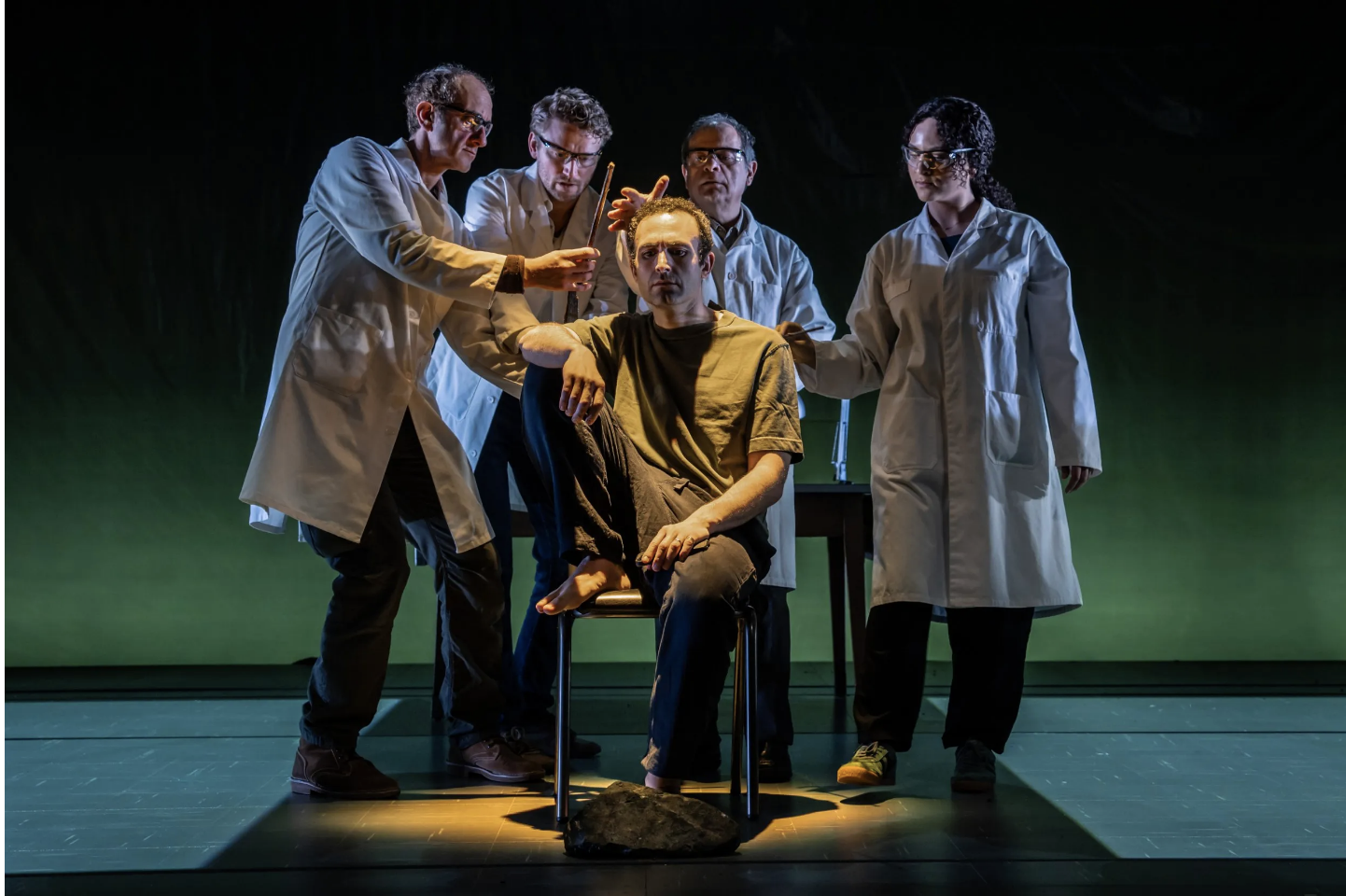
In the second part, humanity itself comes under the microscope. We listen to a lecture on brain science by psychiatrist and neuroscientist Iain McGilchrist, the words dramatized by the dancers
‘The left hemisphere yields clarity and power to manipulate things that are known, fixed, static, isolated, decontextualised, explicit, general in nature, but ultimately lifeless. The right hemisphere by contrast yields a world of individual, changing, evolving, interconnected, implicit, incarnate living beings within the context of the lived world.’
Iain McGilchrist
McGilchrist contends that, in our hyperactive contemporary culture, the left brain has become dominant, creating a tendency to rules, control, bureaucracy, and a loss of freedom.
As Albert Einstein is reputed to have said:
'The intuitive mind is a sacred gift and the rational mind is a faithful servant. We have created a society that honours the servant and has forgotten the gift.’
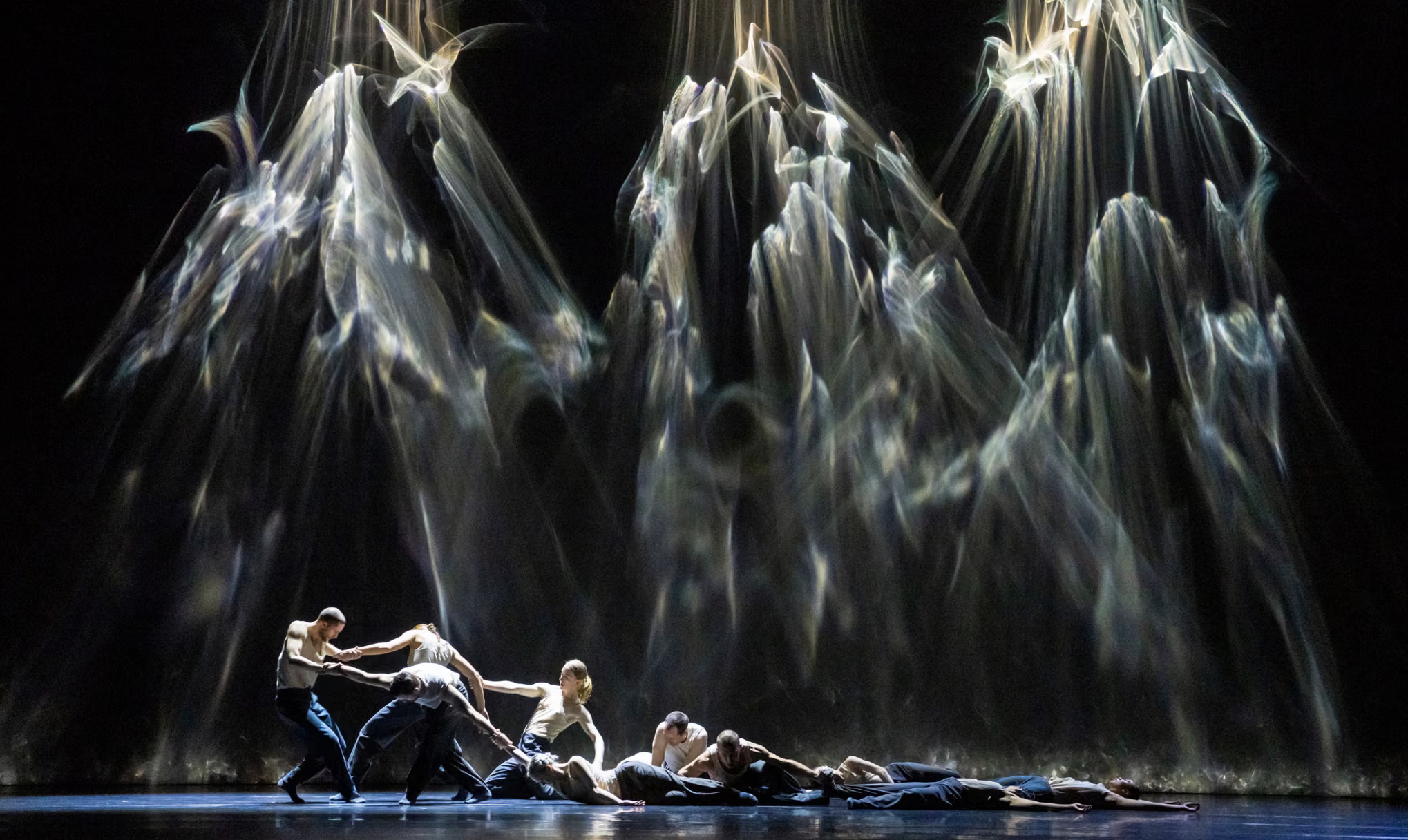
Figures In Extinction - Nederlands Dans Theater and Complicité. Photograph: Tristram Kenton/The Guardian
McGilchrist concludes that we are increasingly confined in a ‘hall of mirrors.’
‘There’s a hall of mirrors effect; the more we get trapped into this, the more we undercut and ironise things that might have led us out of it. We just get reflected back into more of what we know about what we know.’
Iain McGilchrist
The third act considers mortality. Families gather round a death bed. A body decomposes. The Doomsday Clock ticks towards midnight. And yet still we turn away from accepting these stark truths.
Whilst in awe of the choreography and touched by the grand themes, I confess I found myself struggling to understand how the three parts of ‘Figures in Extinction’ linked together. And then, in the programme notes, I read an interview with Pite and McBurney conducted by Sanjoy Roy. The work, it transpires, is fundamentally concerned with separation and connection.
‘We began with the desire to approach the climate crisis, but as we dug deeper, we felt it boiled down to separation: our perceived separation from the living world, our separation from the intuitive mind, our separation from the dead. And if separation is the question, then connection is surely the answer. You can feel a yearning for connection running like a luminous thread through the whole show.’
Crystal Pite
I found this rather a compelling thought. It’s true: as technology professes to draw us closer together, we find ourselves drifting further apart. Separated by screens, shepherded by algorithms, isolated by doomscrolling, our information is edited and moderated; our thinking is processed and packaged; our experience is filtered and abstracted. We yearn for intimacy, authenticity, real feeling. We need to re-learn connection.
'Only connect! That was the whole of her sermon. Only connect the prose and the passion, and both will be exalted, and human love will be seen at its height. Live in fragments no longer.'
EM Forster, 'Howards End'
'Hold my hand.
I am afraid.
Please pray for me,
When I am away.
Comfort the girl,
Help her understand.
No memory,
No matter how sad,
And no violence,
No matter how bad,
Can darken the heart,
Or tear it apart.
Take my hand,
When you are scared,
And I will pray,
If you go back out there.
Comfort the man.
Help him understand,
That no floating sheet,
No matter how haunting,
And no secret,
No matter how nasty,
Can poison your voice,
Or keep you from joy.'
Perfume Genius, ’Normal Song’ (Michael Hadreas)
No. 546