All My Sons: ‘It Doesn’t Excuse You That You Did It for the Family’
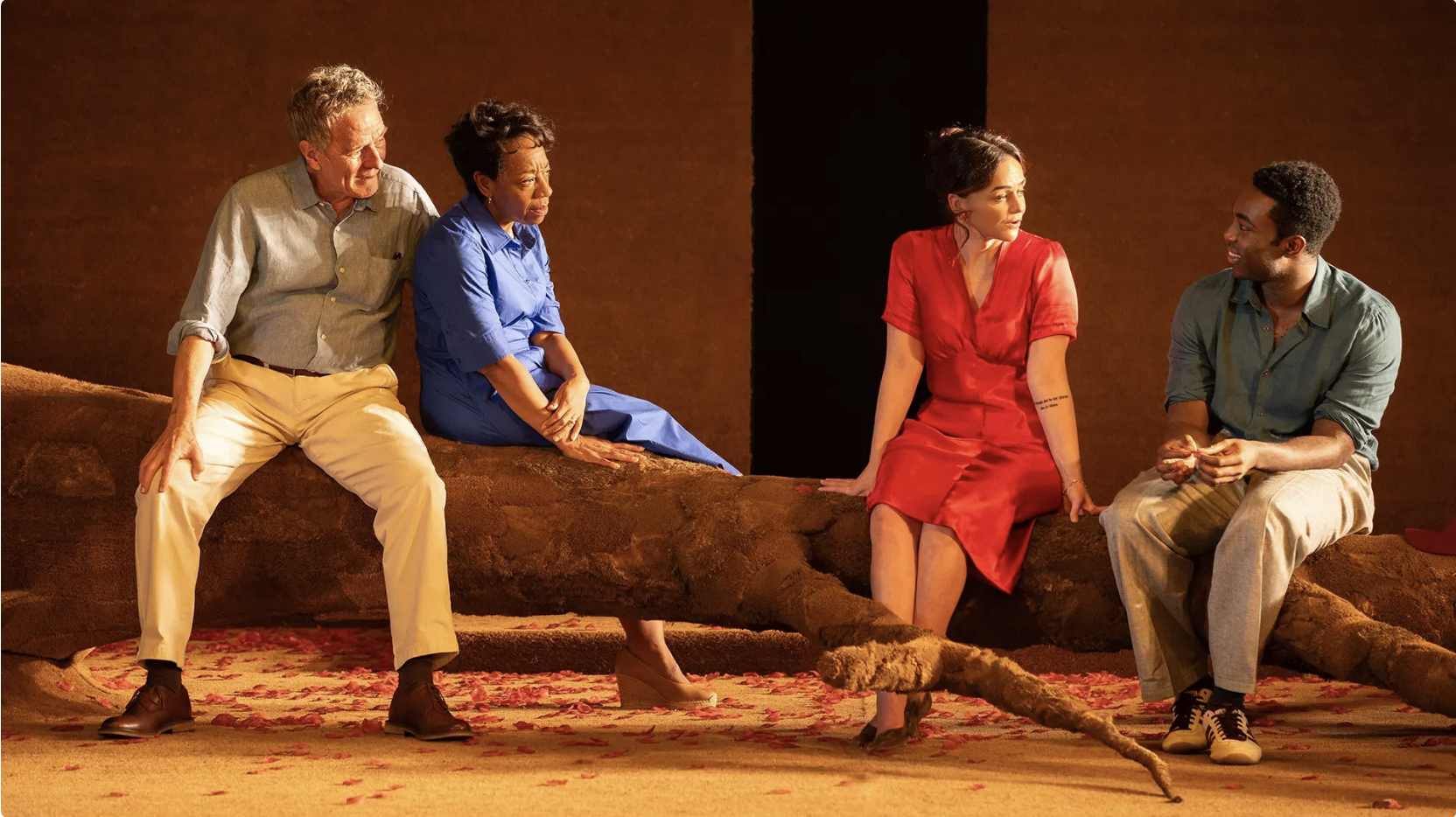
Bryan Cranston, Marianne Jean-Baptiste, Hayley Squires and Paapa Essiedu In All My Sons
Directed by Ivo Van Hove at Wyndham’s Theatre
I recently saw a fine production of Arthur Miller’s ‘All My Sons.’ (Directed by Ivo van Hove, the Wyndham’s Theatre, London until 7 March)
Jim: Every man does have a star. The star of one's honesty. And you spend your life groping for it, but once it's out it never lights again.
The play considers the divisive impact of grief on families; the secrets and lies that corrode relationships; the tension between moral responsibility and self-interest; the tarnished American Dream.
Joe (to his son, Chris): You wanted money, so I made money. What must I be forgiven?
It is 1947 and Joe Keller (Bryan Cranston), a self-made businessman nearing 60, leads an apparently happy, comfortable suburban life with his wife Kate (Marianne Jean-Baptiste), pillars of their local community. He has made his money in engineering, manufacturing parts for the US military.
However, a cloud hangs over the household. During the war Joe’s company sold a number of cracked cylinder heads to the Air Force, which resulted in the deaths of twenty-one P-40 pilots. He was exonerated, but his business partner was imprisoned for the crime. What’s more, we learn that Joe and Kate’s oldest son, Larry, a pilot, disappeared during the conflict while on a mission off the coast of China.
Larry has now been missing 3 years, and Kate still cannot believe he is dead. She keeps his clothes in the closet, his shoes shined. She suffers headaches and can’t sleep. She dreams about him at night and finds herself weeping uncontrollably in the kitchen, pacing about in the garden at 4 in the morning. A tree planted in his memory has fallen over in a storm during the month of his birth, and she has briefed her neighbour to compose his horoscope.
Kate: He’s coming back, and everybody has got to wait.
The rest of the family are convinced of Larry’s death, but Kate’s refusal to accept it puts their lives on hold. This is particularly difficult for Joe and Kate’s younger son, Chris (Paapa Essiedu ), who has fallen in love with Larry’s sweetheart.
Chris: We’re like at a railroad station waiting for a train that never comes in.

As the play progresses, we learn more about the cylinder head incident. Joe is keen to highlight the pressure they were all under at the time.
Joe: It was a madhouse. Every half hour the Major callin’ for cylinder heads, they were whippin’ us with the telephone. The trucks were hauling them away hot, damn near. I mean just try to see it human, see it human.
It gradually becomes clear that Joe knew more about the faulty parts than he has been letting on. He explains that the business could have gone under, that he behaved in his family’s best interests.
Joe: Chris, I did it for you, it was a chance and I took it for you.
Idealistic Chris won’t accept his father’s defence.
Chris: Is that as far as your mind can see, the business? What is that, the world – the business? What the hell do you mean you did it for me? Don’t you have a country? Don’t you live in the world?
Kate too challenges Joe’s narrow perspective.
Kate: Joe, Joe… it doesn’t excuse you that you did it for the family.
This theme still resonates today. Corporate executives seldom acknowledge that their behaviour is driven by self-interest. But they often justify their actions - and their misdeeds - by their ongoing responsibilities to their shareholders, their employees, their families. Leaders need to comprehend that families exist within society; companies are sustained by communities; employees cohabit on the planet. Our lives are interconnected and interdependent. Our ethical duties extend beyond the confines of our homes and offices.
Chris: You can be better! Once and for all you can know there's a universe of people outside and you're responsible to it.
At length Joe realises that Larry shared Chris’ broader view of social obligation. And we come to appreciate the meaning of the play’s title.
Joe: Sure, he was my son. But I think to him they were all my sons. And I guess they were, I guess they were.
'Girl, I stand accused
Of loving you just a little too much.
And I hope, oh Lord,
Sure enough hope it's not a crime.
Oh, guilty of loving you.
Oh, baby.
Oh, I hope that I
That I never, never, never have to testify.
But if I do, if I do, everyone's gonna cry, baby.
That boy is guilty, oh Lord,
Of loving you.’
Al Green, ‘I Stand Accused’ (B Butler, C Mayfield & J Butler)
No. 552