Surviving the Three-Day Week: We Must Accept Our Own Responsibility for the Future
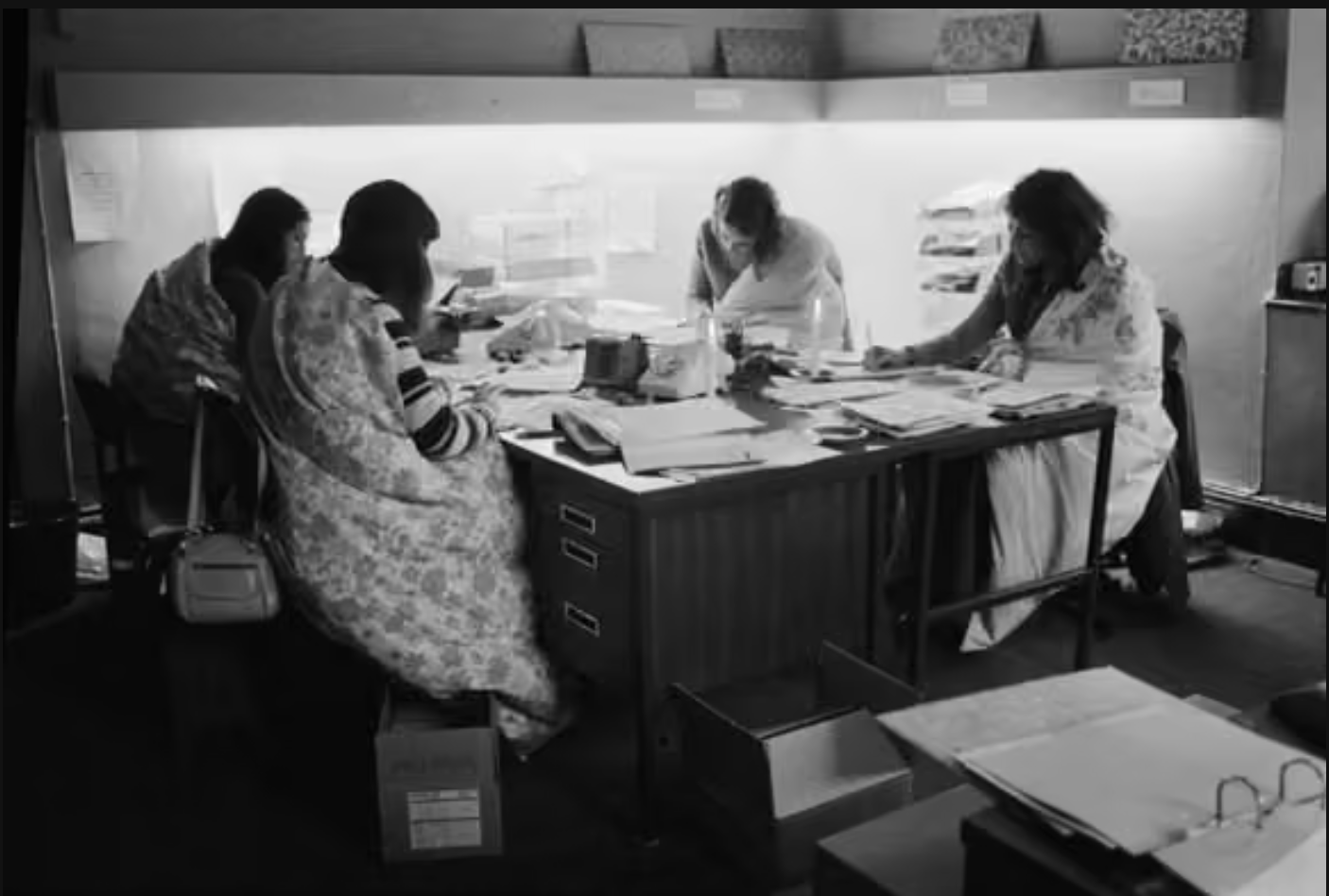
Women in the office of a duvet manufacturing firm use quilts to keep themselves warm while they workPhotograph: Evening Standard/Getty
As a child growing up in the early 1970s, I enjoyed the bold fashions and vibrant music; the flamboyant footie and fabulous TV.
But I was also aware that the United Kingdom had been laid low.
The news was filled with pay disputes and poor inflation figures; with reports about unemployment, updates on the Troubles. And, in the midst of a global oil crisis, the miners went on strike for higher wages.
In December 1973, Prime Minister Ted Heath announced that, from 1 January, commercial consumption of electricity would be limited to three days per week. Only essential services like hospitals, supermarkets and printing presses were exempt.
During the Three-Day Week, TV channels stopped broadcasting at 10-30 every night;
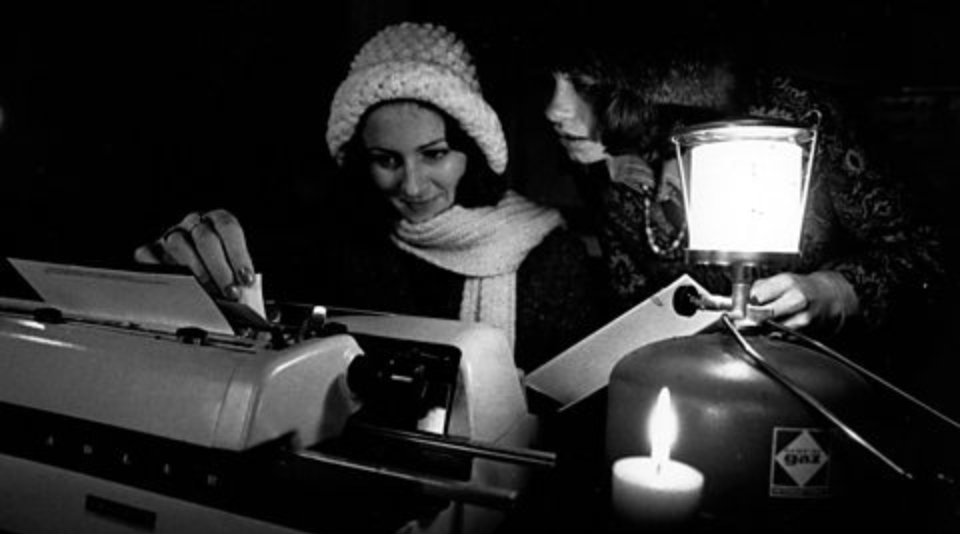
streetlights were periodically turned off; homes, shops and classrooms were plunged into darkness; people wrapped themselves in blankets and worked by paraffin lamp.
At 125 Heath Park Road, my mother determined to turn lemons into lemonade. She gathered her kids round the flickering coal fire to eat cheese-on-toast and sip milky coffee. She had us playing Cluedo and canasta by candlelight. And then we settled down to listen to Dr Finlay’s Casebook on the transistor radio.
‘Another cup of tea, Janet?’
It was all rather romantic.
'Most people do not really want freedom, because freedom involves responsibility, and most people are frightened of responsibility.'
Sigmund Freud
I read recently in The Times about a study into the impact of a belief in free will on one’s wellbeing. (Rhys Blakely, June 15 2026)
In the research, published in the journal Social Psychological and Personality Science, a thousand adults were divided into two groups. One group read material that defended the idea that we are masters of our own fate; the other read texts that challenged that notion.
Everybody was then asked, considering their own lives, to say how happy they were on a scale from one (I’m very miserable) to seven (I couldn’t be happier). Those who had been encouraged towards a belief in free will, averaged 5.2; whilst those who had not, averaged 3.3.
The authors, led by Dr Kathi Diel of Saarland University, suggested that ‘seeing oneself as a free and responsible agent’ is an important, and perhaps underappreciated, factor in everyday happiness.
We often think of ourselves as victims of circumstance, tossed on the waves of misfortune. In the world of work, buffeted by bad luck, it’s easy to slip into passivity and inertia, a slough of despond. But there’s nothing to be gained by wallowing in self-pity and allocating blame. The only way out is through. And we would be wise to embrace agency and autonomy; to concentrate on what we can control - our future.
'Let us not seek to fix the blame for the past. Let us accept our own responsibility for the future.'
John F Kennedy
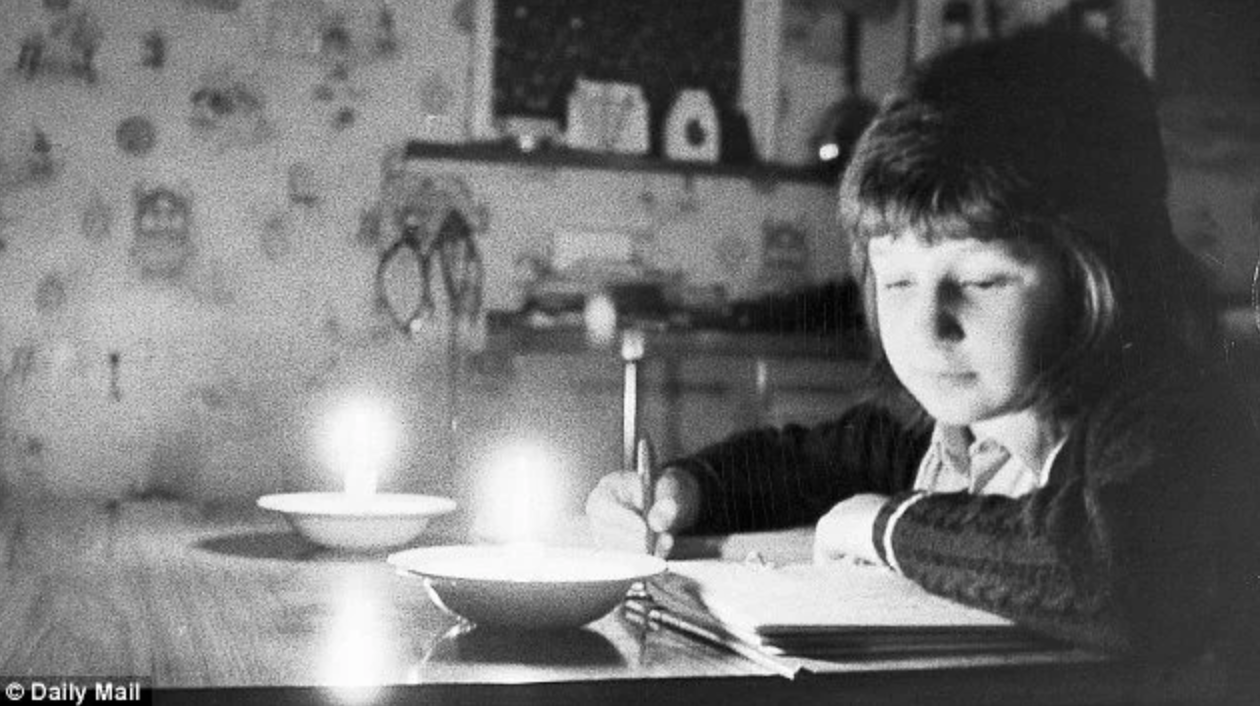
The upheaval of early 1974 precipitated a general election. The Heath government lost power, the incoming administration reached a settlement with the miners, and by March the Three-Day Week had come to an end.
Curiously, I don’t recall my father being part of the sentimental fireside scene. I think he managed to find a pub that was still serving pints in the darkness. He too had resolved to be master of his own destiny.
'Goodbye to you, my trusted friend.
We've known each other since we were nine or ten.
Together we've climbed hills and trees,
Learned of love and ABCs,
Skinned our hearts and skinned our knees.
Goodbye my friend, it's hard to die,
When all the birds are singing in the sky.
Now that the spring is in the air,
Pretty girls are everywhere,
Think of me and I'll be there.
We had joy, we had fun,
We had seasons in the sun.
But the hills that we climbed,
Were just seasons out of time.’
Terry Jacks, 'Seasons in the Sun’ (J Brel)
No. 578