Breakdown: 1975. ‘We Saw an Opening. We Ran and We Took It.’
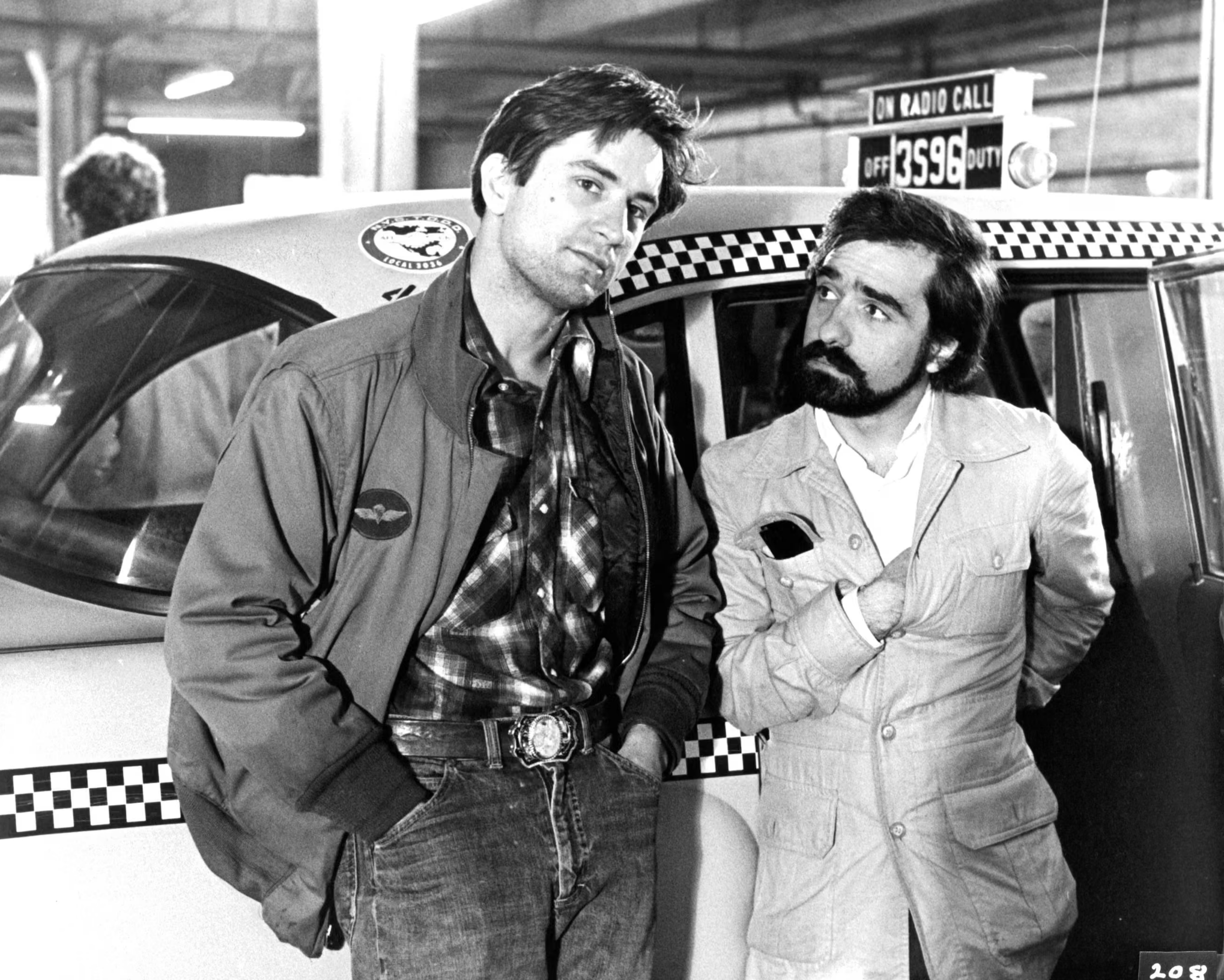
Robert De Niro and Martin Scorsese on the set of Taxi Driver. Photograph: Archive Photos/Getty Images
The enjoyable documentary ‘Breakdown: 1975’ (Netflix. Directed by Morgan Neville.) considers the conditions that contributed to one of the greatest years in American movie history. 1975 saw the production and release of some stunning films: 'One Flew Over the Cuckoo's Nest’, 'Dog Day Afternoon’, ‘Nashville’, 'Taxi Driver', 'All the President's Men', ‘Network.' And many more. Let us consider some of the lessons we can learn from this extraordinary burst of creativity. (The documentary in fact reviews a slightly broader period than one year. Just think mid-‘70s.)
‘1975. It’s the old story: you had to be there. It was so alive. Everything wiped away. All the old conventions wiped away. And we were creating a new world. It was a perfect time.’
Martin Scorsese, Director
1. Never Let a Crisis Go to Waste
The United States was in turmoil. President Nixon had resigned in 1974, and the Watergate scandal that had precipitated his departure had undermined public trust in government. The Vietnam War had left deep fractures in national pride and social cohesion. The OPEC oil embargo had led to price rises and gasoline rationing. Crime had increased. The assumption of ongoing prosperity had been challenged. The American Dream had been tarnished.
‘It is said that the greatest public happiness is induced by gradual change. Not rapid change, not a total lack of change, but gradual change. Well, in our recent time, the change has been so rapid it is upsetting. Our cosy, familiar world is turned upside down.’
TV News Report, 1975
2. Seize the Moment
The upheaval that beset the nation also led to a crisis of confidence in Hollywood. Studio heads found that a public raised on a relentless TV diet had become more demanding and more cynical. John Wayne westerns and big budget musicals didn’t cut it anymore. They had to find fresh talent and ideas.
A new generation of writers, directors and actors seized the moment.
‘Studios let go. If you were an independent film maker, that was your chance to run in and say: ’I’ve got one.’ ‘OK, make it. We don’t know what works.’ The inmates were running the asylum.’
Albert Brooks, Actor, Director, Screenwriter
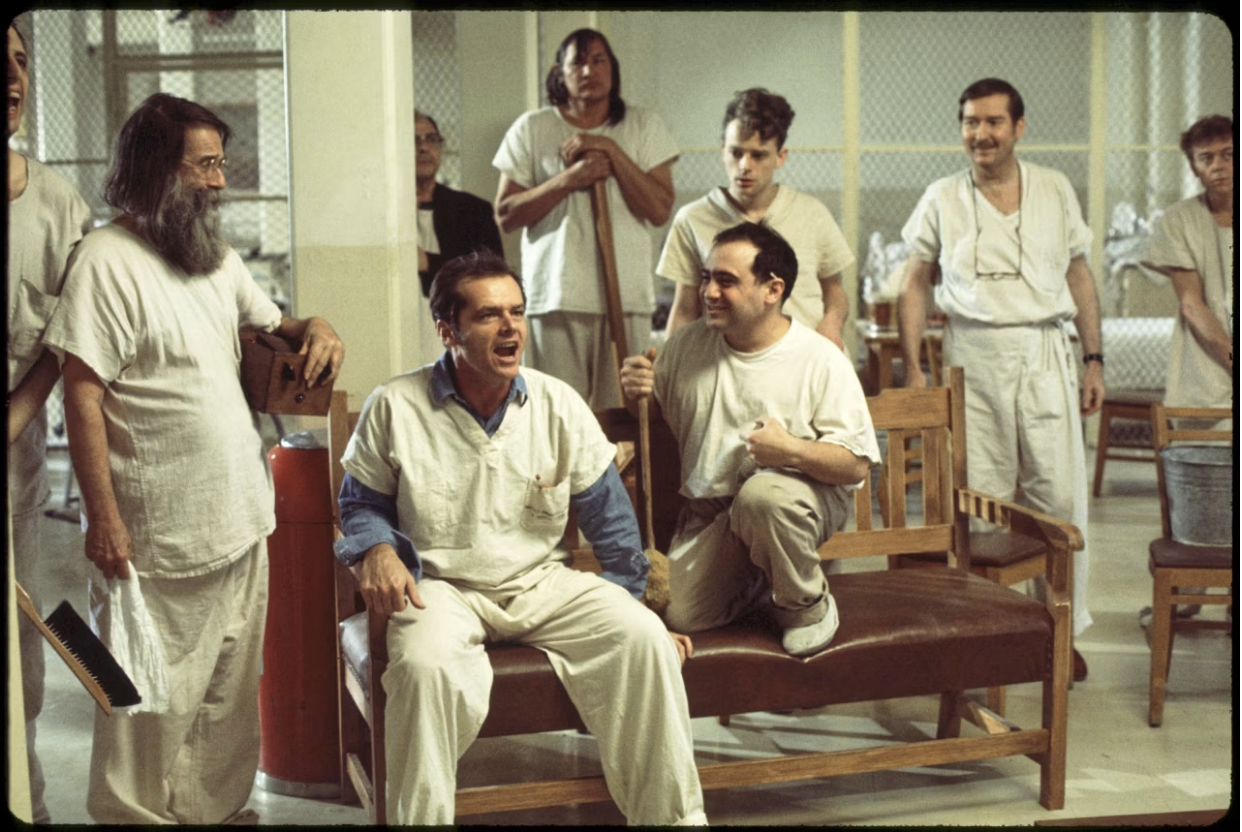
Jack Nicholson, Danny DeVito and other cast members in ‘One Flew Over the Cuckoo’s Nest.’ Associated Press
3. Read the Room
This young creative cohort was more in tune with the zeitgeist of mid-‘70s America: the paranoia and corrosion of trust; the alienation, anger and anxiety.
‘It was like the ground was in flames and tulips were coming up at the same time.’
Studio Executive
‘The Conversation’ (1974. Directed by Francis Ford Coppola) focused on ambiguities and deceptions in the world of surveillance. And ‘Chinatown’ (1974. Directed by Roman Polanski), set amid the California water wars of the 1930s, exposed systemic corruption, the inevitability of evil, the futility of seeking justice.
Jake Gittes: Why are you doing it? How much better can you eat? What could you buy that you can't already afford?
Noah Cross: The future, Mr. Gittes!
‘Chinatown’
In similar vein, ‘Three Days of the Condor’ (1975. Directed by Sydney Pollack) imagined a murderous rogue unit operating within the CIA. And ‘All the President’s Men’ (1976. Directed by Alan J Pakula) shone a light on the conspiracies and cover-ups of Watergate.
'Forget the myths the media's created about the White House. The truth is, these are not very bright guys, and things got out of hand.'
Deep Throat, ‘All the President’s Men’
These thrilling dramas were in conversation with the culture of the time. They walked in step with contemporary news events. They reflected real worries about power, corruption and lies.
‘A certain idealism, and a certain hope that we thought we had – that was extinguished.’
Warren Beatty, Actor
When in 1975 a US Senate Select Committee revealed that the CIA had in fact for many years, been plotting international assassinations and spying on US citizens – politicians, activists and journalists - there was a sense that suspicions had been confirmed.
‘If this government ever became a tyranny; if a dictator ever took charge in this country, the technological capacity that the intelligence community has given the government could enable it to impose total tyranny. And there would be no way to fight back.’
Frank Church, The Church Committee
4. Keep Up with Reality
New York was in a particularly parlous state in 1975. After years of deficit spending, the city was on the verge of bankruptcy. But President Gerald Ford, who had succeeded Nixon, refused to provide a federal bailout.
‘Ford to City: Drop Dead’
Headline in the New York Daily News
Rather than turning away, the directors of New Hollywood exposed the reality of urban decay.
Martin Scorsese’s ‘Taxi Driver’, set in a benighted New York, depicted a Vietnam veteran (Robert De Niro) whose mental state deteriorates to the point where, as Scorsese explains, ‘being cut off from people in the most populous city in the world, he explodes.’
‘Loneliness has followed me my whole life. Everywhere. In bars, in cars, sidewalks, stores, everywhere. There's no escape. I'm God's lonely man.’
Travis Bickle, ‘Taxi Driver’
‘Dog Day Afternoon’ (1975. Directed by Sidney Lumet) related the true story of a bank robbery and hostage taking. Such was the sense of frustration with authority at the time, that in the drama the crowd outside the bank cheers on the criminal (Al Pacino).
‘We’re having a tough time keeping up with reality. Maybe that’s why we’re so interested in doing movies about actual events that did happen.’
Sidney Lumet, Director
5. Just Feel It
A strong theme amongst the creative community in this era was trusting gut instinct.
‘De Niro. We didn’t even have to talk very much about what it is and what it meant. We just felt it.’
Martin Scorsese, Director
Actors were strong-minded and forthright with their opinions. Warren Beatty, for example, who starred in ‘The Parallax View’ (1974. Directed by Alan J Pakula) – the story of a secretive corporation engaged in political assassination.
‘When I make a film, I’m not interested basically in how people perceive it. I’m interested in telling the truth.’
Warren Beatty, Actor
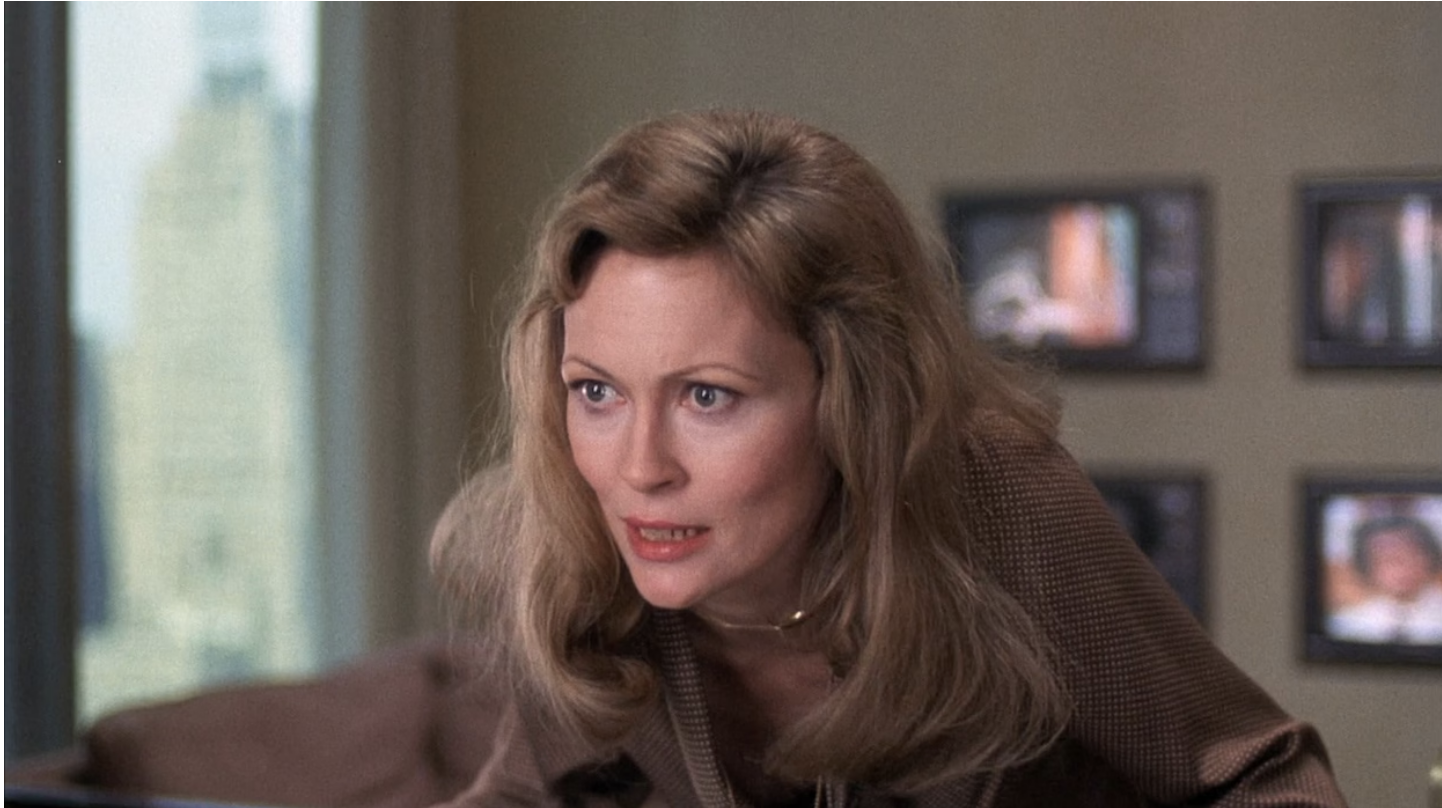
Network (1976) Film still.
6. Wake People Up
All these movies shared a commitment to confront the American public with the reality of their current condition; to shatter illusions; to rouse a response.
‘A film can put you to sleep nicely, or it can wake you up.’
Joan Tewkesbury, Writer, Director
'One Flew Over the Cuckoo's Nest' (1975. Directed by Miloš Forman) starred Jack Nicholson as a new patient at a mental institution. The film asked questions about sanity, rebellion, and institutional control. As its promotional campaign proclaimed:
'If he's crazy, what does that make you?'
‘Network’ (1976. Directed by Sidney Lumet) depicted a television network struggling with poor ratings until its longtime news anchor (Peter Finch) has a breakdown on-air, making his show a surprise hit.
'The American people are turning sullen. They've been clobbered on all sides by Vietnam, Watergate, the inflation, the depression; they've turned off, shot up, and they've f**ked themselves limp, and nothing helps...The American people want somebody to articulate their rage for them.’
Diana Christensen, ‘Network’
7. Find Inspiration in Contemporary Psychology, Sociology and Technology
The movie makers of the mid-1970s also turned for inspiration to contemporary developments in psychology, sociology and technology.
The Women’s Movement set a context for the psychological thriller 'The Stepford Wives' (1975. Directed by Bryan Forbes) and the romantic comedy 'Alice Doesn't Live Here Anymore' (1974. Directed by Martin Scorsese).
Similarly, the telekinetic powers used by Sissy Spacek, the heroine in ‘Carrie’ (1976. Directed by Brian De Palma), may have been prompted by EST and the trend towards self-actualisation – the philosophy that you can’t help anyone before you help yourself; reality is based on feelings not facts; you need to ‘control your own soap opera.’
There was also a growing concern about computers.
‘Some people feel threatened by them. Some think they tend to dehumanise. And others fear they may eventually take over their jobs.’
Ken Kashiwahara, ABC News
This technophobia found dramatic expression in ‘Rollerball' (1975. Directed by Norman Jewison), which presented a dystopian future where humanity is governed by corporations, and a supercomputer enforces social control, edits history and provides violent entertainment.
8. Every Revolution Prompts a Counter-Revolution.
One of the many artistic peaks of 1975 was ‘Nashville,’ Robert Altman’s satirical drama following 24 different characters over a five-day period leading up to a gala concert for a populist Presidential candidate (for the Replacement Party).
‘My primary job: I try to reflect what I see. It’s like a painting. It’s my vision of what it is that I’m dealing with. And that’s all. I have nothing to say. I have no comments.’
Robert Altman, Director
Though critically acclaimed, Altman's slow, sprawling cinematic mosaic was not a box office success. And it prompted criticism that it didn’t reflect the actuality of Middle America. As one Kansas moviegoer observed:
‘Somebody told me that I didn’t like Nashville because I didn’t understand it. That may well be. But there seem to be some filmmakers and critics who don’t understand America.’
The division between Middle America and its coasts was expanding. And a conservative backlash was brewing. Ronald Reagan, Governor of California, was in the ascendant. The New Right campaigned against school busing, rising crime rates and the breakdown of traditional values. The big TV hits of 1975 were ‘All in the Family’, with its bigoted anti-hero Archie Bunker, and the saccharine ‘50s nostalgia of ‘Happy Days.’
For every action, there is a reaction. Every revolution prompts a counter-revolution.
9. Remember: A Lot of People Like Buttered Popcorn
‘Jaws’ (1975. Directed by Steven Spielberg) related the chaos and confusion caused when a man-eating shark attacks beachgoers at a New England summer resort. With its innovative marketing campaign, its nerve-jangling suspense and adrenaline thrills, it became the highest grossing movie of all time (until Star Wars in 1977).
It represented a change in style and tone.
‘I like taking people into a dark theatre with a thousand strangers and giving them an experience that they’ll never forget. I certainly want to involve myself with intimate storytelling and people’s fantasies and people’s relationships. But by the same token, I like buttered popcorn. I can’t help it. I just like it.’
Steven Spielberg
A child interviewed outside an early showing of ‘Jaws’ explained his enthusiasm:
‘The villain isn’t winning any more. He’s losing.’
And so, gradually, the curtain was drawn on this extraordinary period of brave, innovative movie-making – a time when talent was given free expression, when the United States took a long hard look at itself in the mirror. In its place came the era of the mainstream blockbuster. Hollywood returned to making movies it could sell.
The nominees for Best Picture at the 49th Academy Awards, honouring films from 1976, included 'All the President's Men', ‘Network', and 'Taxi Driver.’ The prize was won by ‘Rocky.'
‘Rocky wins the Oscar. That night was the end. That was it.’
Martin Scorsese, Director
Inevitably, one can’t help watching a review of the social and political tumult of 1975 without reflecting on our current condition. We live in a world of unstable government, of culture wars and media manipulation; where technology empowers and disempowers, connects and disconnects; where truth is disputed and trust is eroded.
This may prompt pessimism and melancholy. But the story of the mid-‘70s American movie industry should also spur creative people to rage against the machine; to speak truth to power; to seize the opportunities presented by our own anxious age.
‘We saw an opening. We ran and we took it.’
Martin Scorsese, Director
'It's not my way to love you just when no one's looking.
It's not my way to take your hand if I'm not sure.
It's not my way to let you see what's going on inside of me.
When it's a love you won't be needing, you're not free.
Please stop pulling at my sleeve if you're just playing.
If you won't take the things you make me want to give.
I never cared too much for games and this one's driving me insane.
You're not half as free to wander as you claim.
But I'm easy
I'm easy
Give the word and I'll play your game.
So that's how it ought to be.
Because I'm easy.’
Keith Carradine, 'I'm Easy’ (written by Keith Carradine and performed in ‘Nashville')
No. 559