Summerfolk: ‘None of Us Seem to Have the Time. And Yet We Never Actually Get Anything Done’
Shalimov: Of course I’m disappointing. I’m a human.
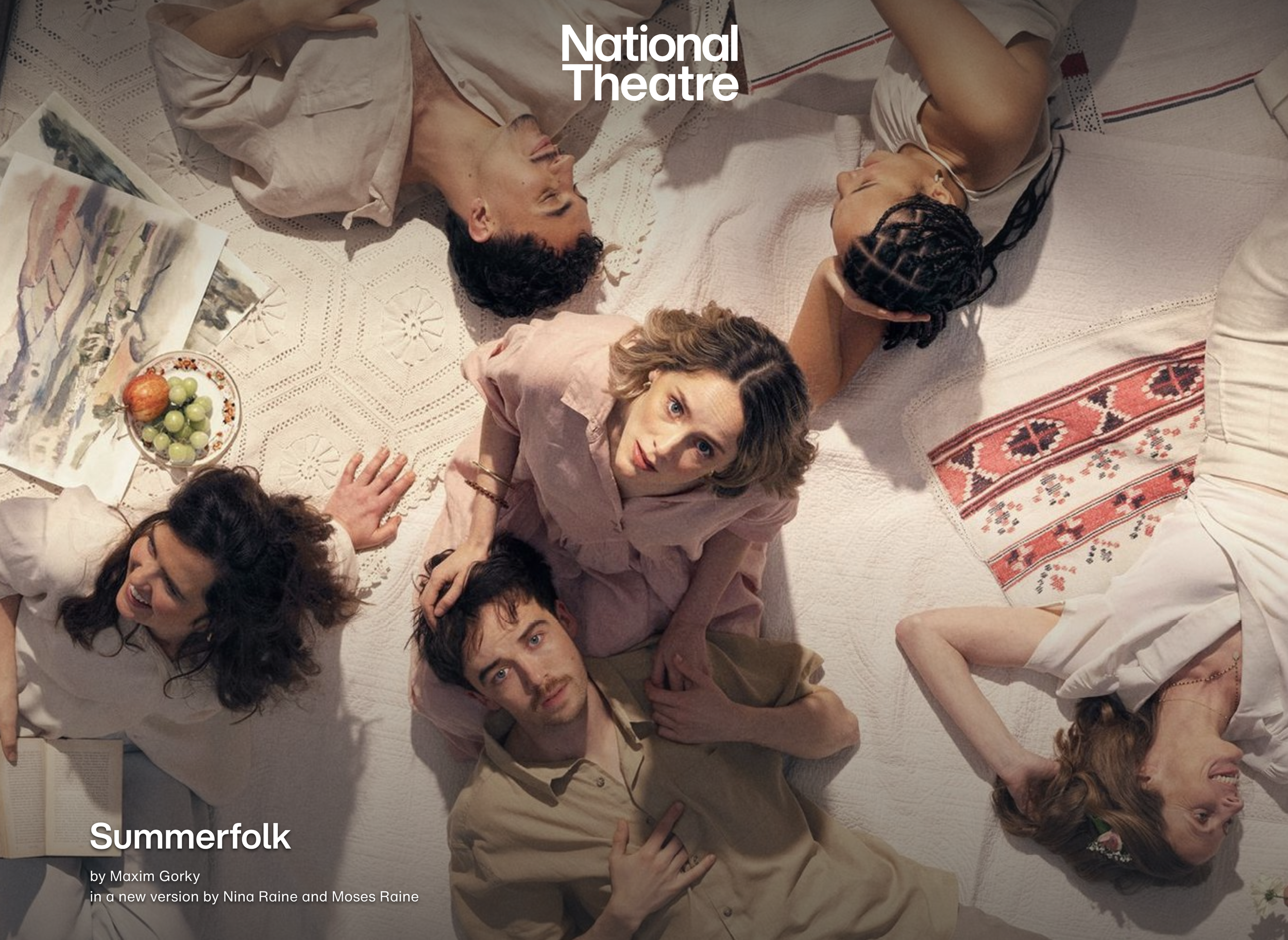
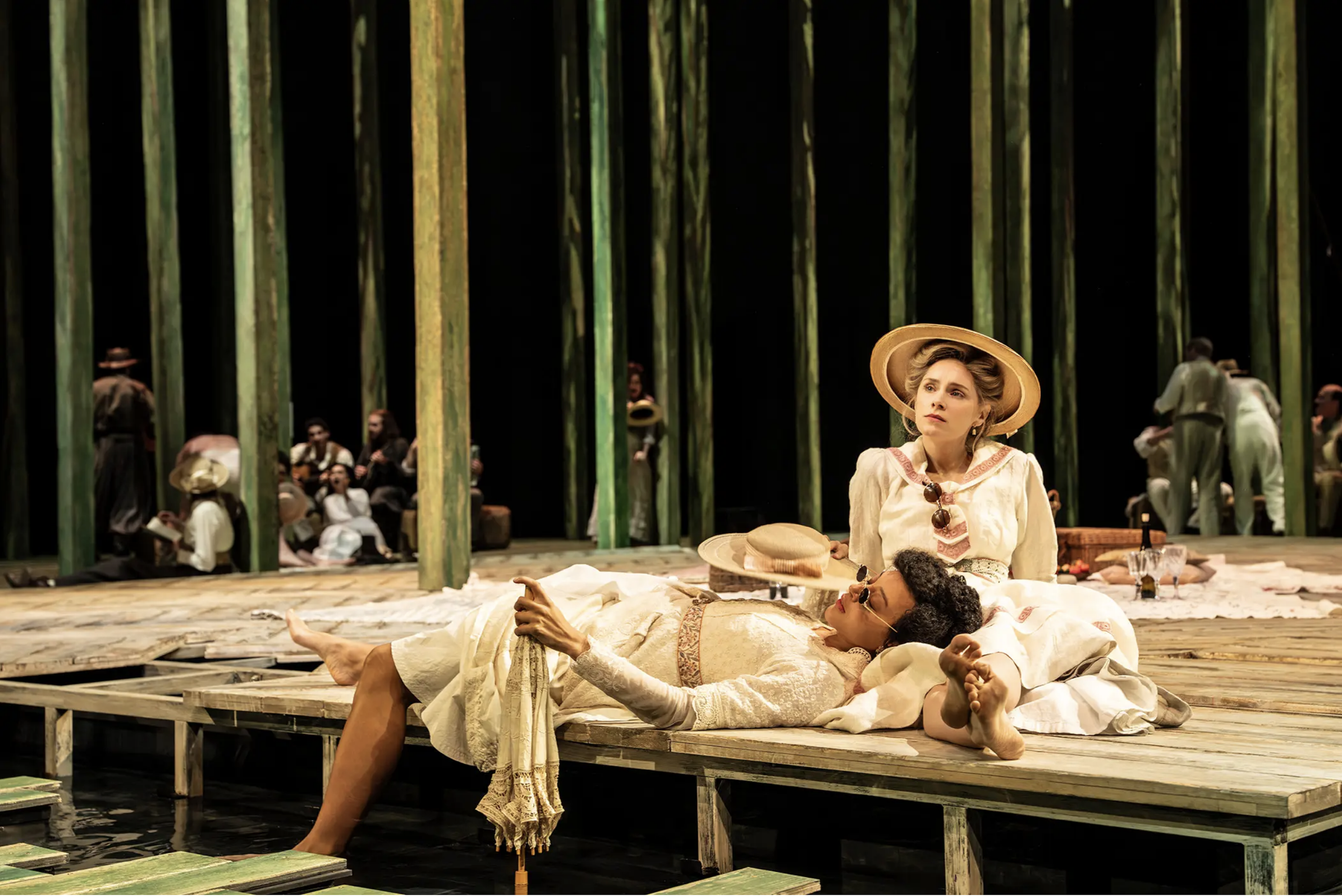
I very much enjoyed a production of Maxim Gorky’s 1904 play ‘Summerfolk’ at the National Theatre, London. (A new version by Nina and Moses Raine. Until 29 April.)
Nikolai: Sonya and Zimin think that the purpose of life is solving various social, moral and other problems, and I’m telling them that life is the art of looking at life.
We spend a long hot summer with an assortment of nouveaux riches Russians holidaying in their woodland dachas.
Varvara: We’re just the…summerfolk of this country – just dropping by from somewhere else, and we never do anything except talk and talk and talk.
The group comprises a couple of doctors, a lawyer, an engineer, a retired businessman, a successful writer and a frustrated poet, along with assorted friends and family.
Bassov: I think you’re reading too much. It’s not healthy, reading. It’s like a drug. Makes you neurotic…. It’s especially bad to read before you go to bed…. All that print makes your brain fizzy.
They picnic, swim and stroll by the river, fish and mess about in boats. They put on amateur dramatics, try local cheeses, take tea and tinkle on the piano. They flirt, gamble, drink and play chess.
Yulia: Little tip. When your voice reaches a certain volume, people just stop listening.
And all the time, they bicker and gossip. They complain about their kids and their partners; about their terminal boredom; about missed opportunities, tarnished ideals and growing old.
Dvoyetochiye: Why did you marry him?
Yulia: He pretended to be interesting.
In ‘Summerfolk’ Gorky critiques the bourgeoisie. Many of its characters have come from humble backgrounds, and yet they have no sense of responsibility to the wider community.
Maria: We should be different, all of us! We’re the children of washerwomen, cooks, working people, in dirt and darkness their whole lives! They sent us on ahead of them to get a better life – but we left them behind, we drew up the drawbridge, we lost our way, created our own punishment, empty, anxious bustle on the outside, lonely fragmentation on the inside. We deserve our tragedy.
Despite their modest roots, these summerfolk are rather dismissive of the lower orders.
Suslov: She’s always banging on about the working classes, the left-behind. Well, I’m from the working class and I left them behind as soon as I could.
Indeed, the dacha residents are consistently curt with their staff. They drive beggars away, don’t lift a finger to help find a missing local child, and thoughtlessly leave a mess behind them at the end of the day.
Suslov: It’s basic human nature and you cannot change it. Why should we give a kopek about the oppressed? I can’t heal the world, it’s not my problem. You can call us cowards or lazy or whatever you want, not one of us is going to rush off and do good works.
At the heart of the drama are brother and sister Vlass and Varvara. Both find themselves at sea - disappointed with their lot, frustrated by the company they keep, seeking some meaning and purpose in their lives.
Varvara: You know how sometimes, somehow,… not thinking of anything in particular…suddenly you feel trapped?...I’ve got this sense of doom. Looming doom.
Vlass: My life’s pointless too, remember. Somehow it makes me feel ashamed. Awkward, you know, like being at a party where you’re not actually invited, like a plus-one in my own life.
Varvara - beautiful, distant, always watching - is repeatedly fending off proposals from useless men.
Ryumin: But, can I, just, say –
Varvara: No. Don’t say. Please.
Realising that her friends are spiteful and self-satisfied, and that her marriage is unfulfilling (‘The honour of being your wife is not as amazing as you think.’), Varvara is anxious and alone.
Varvara: I feel fake. Like I’m in some strange foreign country, full of strange people…I don’t understand this privilege – it feels flimsy, like it’s going to come crashing down any minute.
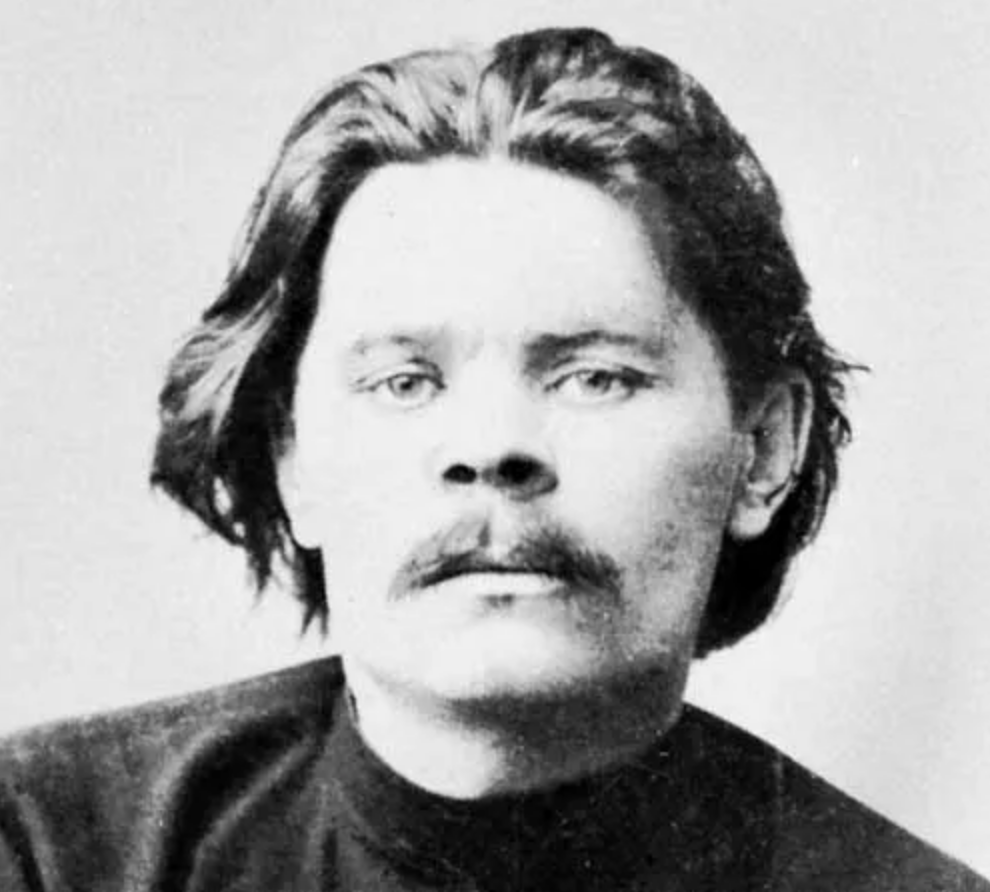
Maxim Gorky
Gorky was born Alexey Peshkov, into a modest Volga background. Orphaned at 11, he travelled on foot across the Russian Empire for five years, taking menial jobs, working as a journalist for provincial newspapers. In his late 20s he adopted the pseudonym Gorky. It means bitter. Writing about the hardships and humiliations of the common man, he became the protégé of Anton Chekhov. The older playwright, sensing the upheaval that was about to engulf Russia, liked to mock the ineffectual intelligentsia, but still felt some affection for them. Gorky was less forgiving.
Vlass: It all seems pointless to me. All these people floating around here…what’s the point of them? I don’t love them, don’t respect them, they’re mosquitoes. I can’t talk to them. They’re so affected, all you can do is take the piss out of them – and then actually they don’t even notice you’re taking the piss.
Written in the year Chekhov died, ‘Summerfolk’ is in a sense a sequel to ‘The Cherry Orchard.’ The orchard has been sold and the land cleared for country cottages. The gentry have been replaced by the affluent middle classes.
Olga: Oh, Kirill, why get upset? You should be used to it by now. It’s all trivial in the grand scheme of things.
Dudfakov: Oh, trivial, is it? But what if the grand scheme turns out to be trivial? All there is?
One can’t help watching ‘Summerfolk’ without thinking of the inertia that can grip the world of work. Sometimes, confronted with hard choices in a changing commercial landscape, we are paralysed by indecision. We talk and theorise; we prevaricate and postpone. The metabolism becomes sluggish. The pace slows.
Dudakov: None of us seem to have the time…do we? And yet we never actually get anything done.
We should learn to seize the moment, to take decisive action now rather than leave the future to circumstance. We must take control of our own destiny. Or someone else will.
Suslov: He who philosophises, loses.
A sense of foreboding runs through ‘Summerfolk.’ Periodically, we hear the ominous sound of the watchmen whistling in the woods. Towards the end, a despairing Varvara predicts that the listlessness of her kin and class will precipitate their demise.
Varvara: I feel like, soon, the day after tomorrow, a stronger, bolder lot of people are going to come along, and sweep us off the face of the earth like - rubbish, whether we like it or not.
'Seven minutes to midnight and I’m crawling out my shell.
Seven minutes to midnight and it’s hell.
Seven minutes to analyse, my instinct must be quick.
Seven minutes to midnight, I feel sick.
You can’t justify it, not a word.
I don’t believe a thing I’ve heard.
You can’t justify it with your twisted facts,
Only the coming of the axe.’
Wah! Heat, 'Seven Minutes to Midnight’ (P Wylie, C Washington, Jonie, King Bluff)
No. 564