The Unwelcome Feedback: Do You Want an Opinion or Affirmation?
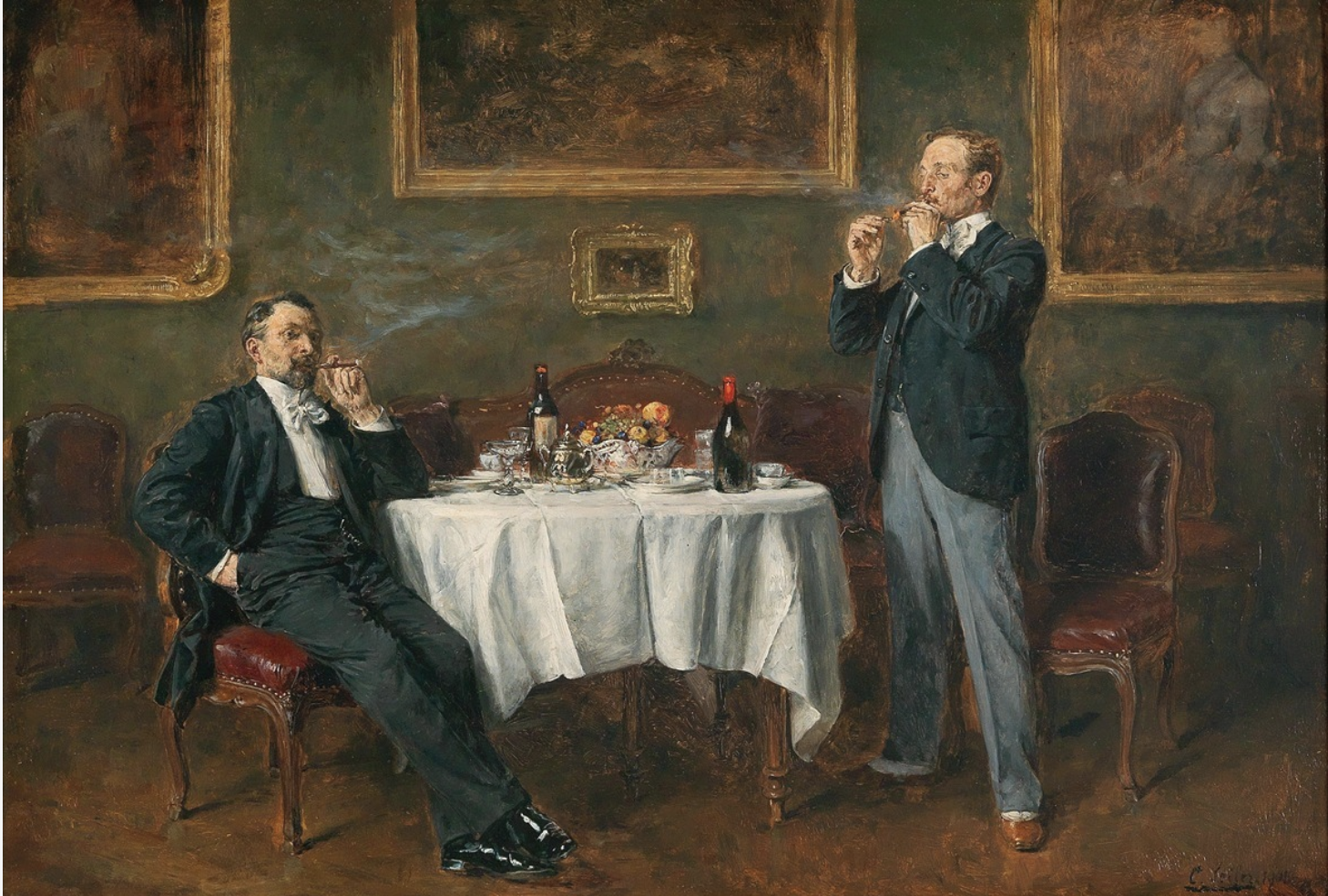
Carl Wilhelm Anton Seiler (1846–1921) - Cigars After Dinner (1901)
We’d been dining at a smart Islington restaurant. Perhaps a little too smart for my taste – somewhat formal, with reverential food presentation and only hushed conversation.
It was the end of the evening, and the chef-proprietor was circling the tables, exchanging a few pleasantries. Eventually he arrived before us, with a fixed smile and a satisfied demeanour.
‘Good evening, Monsieur, Madame. How did you find your meal?’
My wife was very happy to offer her point of view.
‘Well, the service was excellent and we enjoyed our dinner for the most part. Thank you. But I have to say, our vegetables were overcooked.’
Taken aback, the chef-proprietor adopted a rather hurt expression. He was not expecting this kind of response. My wife added:
‘And I think your kitchen is using too much salt.’
We may all recognise this uncomfortable exchange. Not just from restaurants. But from broader work and social settings. Feedback, though often invited, is not always welcome.
Sometimes people asking for an opinion, are really just seeking affirmation.
I confess that, when I was younger, I regarded criticism as a personal affront. I was defensive, sensitive, easily hurt. But I gradually discovered, from observation of colleagues and the worlds of sport and culture, that ‘feedback is a gift.’ We can only improve our own performance if we embrace other people’s perspectives.
And, of course, feedback is just as hard to give as to receive.
I was taught to deliver constructive criticism by cushioning it between two positive statements. The ‘feedback sandwich,’ as it was inelegantly termed, involved praising a behaviour, raising an area for focus, and then reinforcing the key message with encouragement. Inevitably these sandwiches could still be hard to digest.
Next time you’re about to invite feedback, pause for a moment. Do I genuinely want to hear a perspective on my work? Am I prepared to reflect on what I hear, and if necessary act on it? Or am I really just looking for endorsement?
And if you’re volunteering an opinion on someone else’s contribution, remember: ‘tread softly because you tread on my dreams.’
We left the restaurant soon after our awkward encounter with the chef-proprietor. Never to return. To be fair, I doubt if he moderated his salt policy either.
'Say it ain't so, Joe.
Please say it ain't so.
That's not what I wanna hear, Joe, and I've got the right to know.
Say it ain't so, Joe.
Please say it ain't so.
I'm sure they're telling us lies ,Joe,
Please tell us it ain't so.
They told us that our hero has played his trump card.
He doesn't know how to go on.
We're clinging to his charm and determined smile,
But the good old days are gone.
Say it ain't so, Joe.
Please say it ain't so.’
Murray Head, 'Say It Ain't So, Joe'
No. 560