Konrad Magi: Sometimes Sad People See Beauty Differently
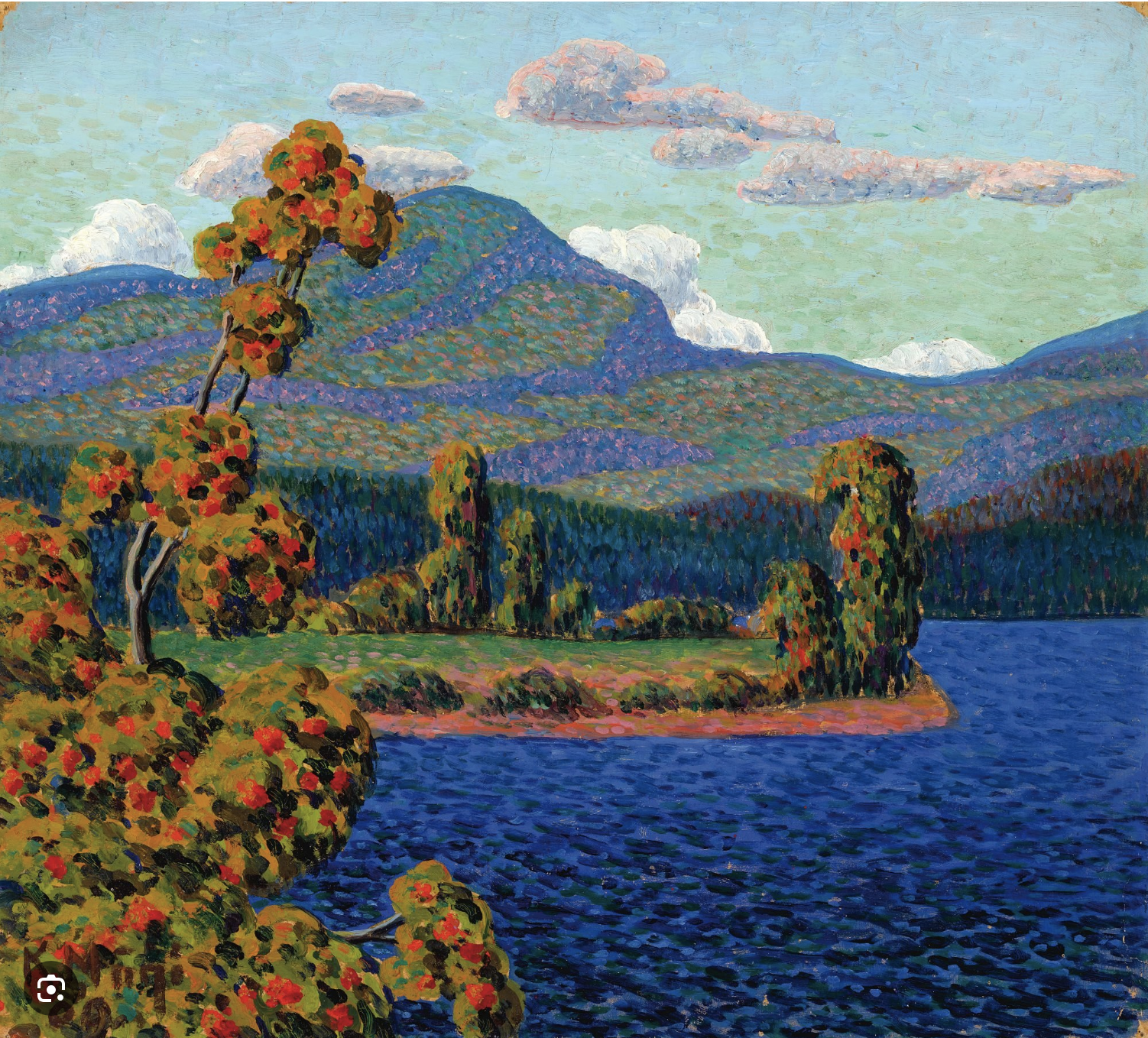
Konrad Magi - Norwegian Landscape
I recently enjoyed a trip down to Dulwich to see an exhibition of the work of Estonian artist Konrad Magi. (Dulwich Picture Gallery until 12 July)
Born in 1878 in rural southern Estonia, Magi spent his early adulthood working as a carver in a furniture factory. Argumentative, with left wing and anarchist sympathies, he suffered from poor mental health. Developing an interest in painting in his mid-twenties, he took some classes, but was largely self-taught. He travelled to Saint Petersburg, Finland and Paris, often in poverty and despair, complaining of the cold.
The Parisian art scene didn’t impress Magi much. In 1907, on visiting a large show of contemporary work, he wrote:
‘I expected a lot, but got very little out of it, because not everything that is so much talked about and praised is good…It was boring to walk through those halls and look at all the hideousness and repulsiveness.’
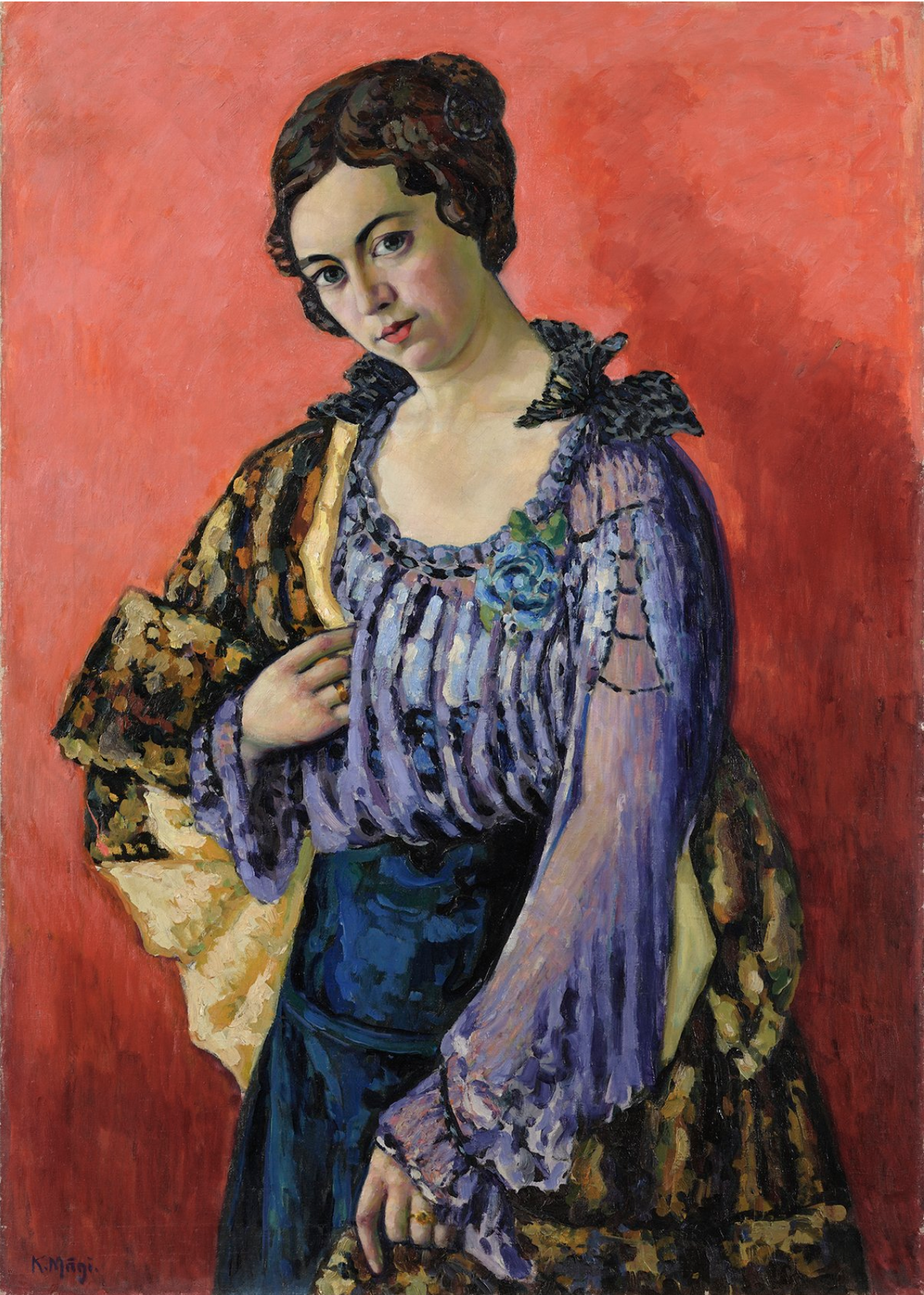
Konrad Mägi - Portrait of a Lady (Klaara Holst), 1916, Oil on canvas, Art Museum of Estonia.
Magi found his artistic footing on a two-year stay in Norway. Inspired by the drama of the landscapes, he painted forest fringes, lakes and low mountains; watermills, distant towns and quiet hamlets - always using rich, vivid colours.
‘I am a son of the north, and everything that I am is but a fraction of its population and wilderness.’
Still desperately short of cash, Magi survived in Norway on blueberries foraged from the forest. His fortunes improved somewhat when he settled in Tartu in eastern Estonia, and took portrait commissions.
Magi’s smartly dressed subjects seem gracefully sad, their skin pallid with shades of green and yellow, their large eyes staring mournfully down or into the distance. Perhaps the artist was endeavouring to convey his sitters’ inner feelings through their outward appearance. But these images also suggest his own enduring depression.
‘There is a dark melancholy inside me which I cannot seem to shake…I feel this endless discontent.’
In the summers of 1913 and ‘14, Magi visited the Estonian islands of Saaremaa and Vilsandi, still troubled by anxiety, and seeking out the mud baths to soothe his aching joints.
‘The air and mud have a divine effect on the nerves.’
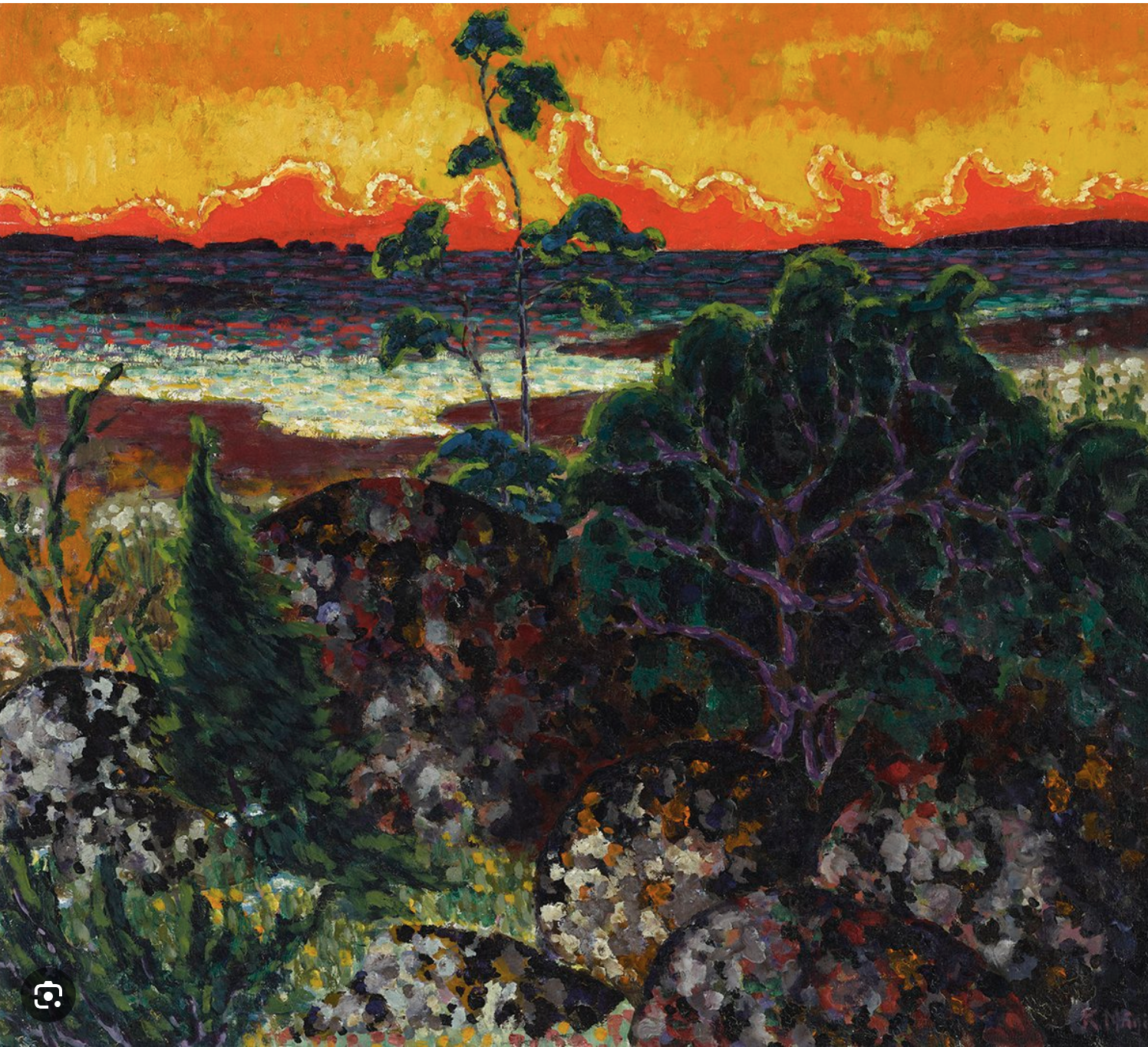
Konrad Mägi - Landscape with a Red Cloud
It was here that Magi painted the landscapes for which he is best known. Experimenting in many modernist styles, he often applied dabs of paint in a kind of unruly pointillism.
Remote tracks wind through quilted fields and across undulating hills. Pines swoon on the edge of azure lakes under restless skies. A lighthouse looms on the horizon. In the foreground rocky crags, unpeopled shingle beaches, wind-stunted trees. We see sinuous, organic, otherworldly forms; intense electric blues, deep emerald greens, brooding bright oranges.
‘Art is the only way out. At the moment when the soul is filled with life’s eternal suffering, art provides us with that which life cannot offer.’
Magi’s pictures suggest silent stillness, pastoral peace. One can’t escape the irony that a man cursed with such inner turmoil, found calm and tranquillity in the natural world around him, and conveyed it with such sensitivity. Sometimes sad people see beauty differently.
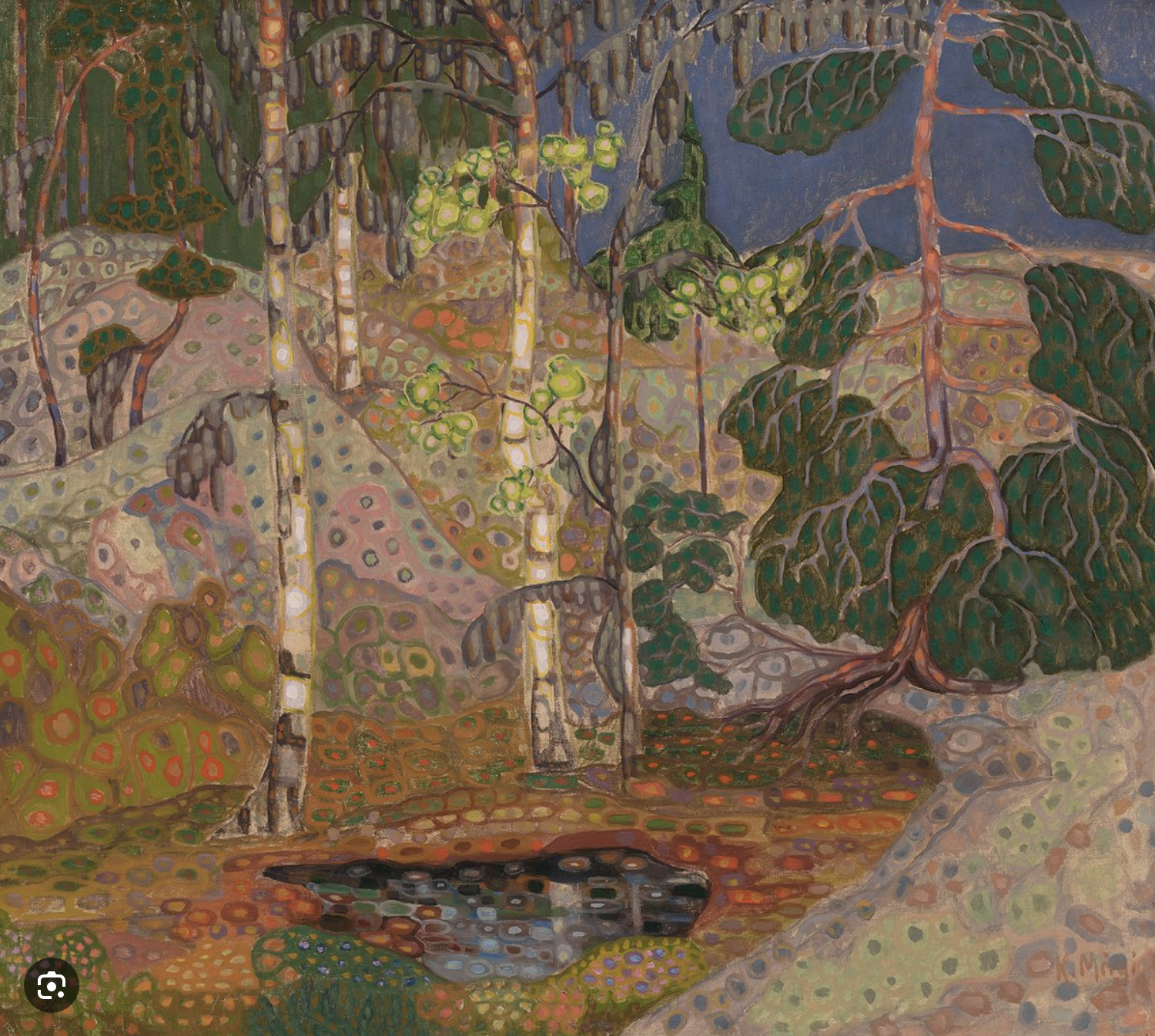
Konrad Mägi - Norwegian Landscape - Bog Landscape
In the sphere of commercial creativity, we set great store by optimism and positivity. But the truth is that many gifted practitioners are sombre souls, given to bleak perspectives and despondent observations. In my experience, some of the funniest lines were written by gloomy copywriters; some of the most elegant layouts were drawn by unkempt art directors; some of the most uplifting ideas were conceived by downbeat pessimists.
The challenge for anyone overseeing a creative business is to nurture a coherent, vigorous, confident culture, whilst also accommodating individuality, diversity and eccentricity; supporting cynics and sceptics, mavericks and melancholics.
Magi returned to Tartu, making occasional trips to Italy and summering in south Estonia. Gaining public recognition for his landscapes, he taught painting and founded an art school. However, with deteriorating health and growing depression, in 1924 he was treated at a sanatorium in Germany. Back in Tartu the following year, he began destroying his work. Some of his students intervened, taking him to a psychiatric hospital, where his condition declined irreversibly. He died aged 46 in 1925.
'Time has told me
You're a rare, rare find.
A troubled cure
For a troubled mind.
And time has told me
Not to ask for more.
Someday our ocean
Will find its shore.’
Nick Drake, ’Time Has Told Me'
No. 570