Ferdinand Waldmüller: Truth Hurts
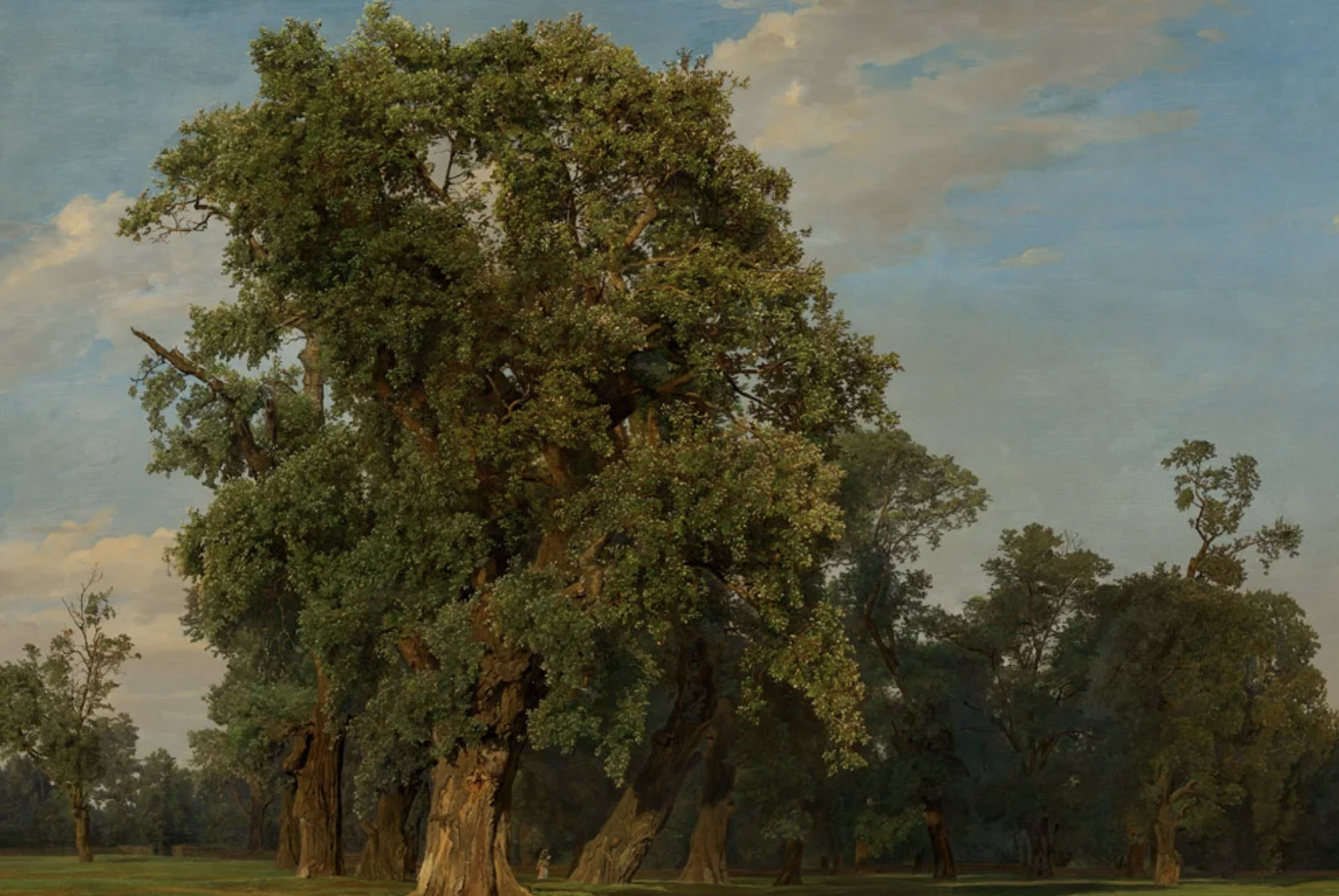
Ferdinand Waldmüller - Large Prater Landscape
I recently enjoyed a small, one-room exhibition of landscape paintings by Ferdinand Waldmüller. (The National Gallery, London until 20 September. Free to enter.)
‘It is the nature that surrounds us, our time, and our customs that we need to express in our artistic creations.’
Ferdinand Waldmüller
Born in Vienna in 1793 and educated at the city’s Academy of Fine Arts, Waldmüller worked in the Biedermeier period following the Napoleonic Wars, when a flourishing middle class was setting the cultural agenda.
Waldmüller specialised in portraits of the Austrian elite, the creative community and the bourgeoisie; in genre pictures of everyday domestic activity; and in still lifes of flowers and fruit. He taught himself landscape painting by copying Dutch 17th-century artists, but soon abandoned this approach to studying directly from nature.
‘The only true way, the eternal inexhaustible wellspring of all art had been revealed to me: observing, perceiving and understanding nature.’
Working mostly on modestly-sized panels prepared with a white ground, Waldmüller applied thin paint in small, fluid, precise brushstrokes, picking out every leaf, twig and flower with bright, intense colours.
A waterfall cascades down the rocks towards the valley floor. In the deep shadows cast by the elm trees of Prater Park, a woman collects wood. A group of countryfolk rest on the hills overlooking limpid Lake Hallstatt. Under a majestic sky, the soft green of an Alpine valley gives way to the blue-grey of the distant, snow-capped mountains. Some children gather violets on a path through the Vienna Woods. A rugged track leads up to the ruins of Liechtenstein Castle.
These are delicate, sensitive pictures of peace and tranquillity.
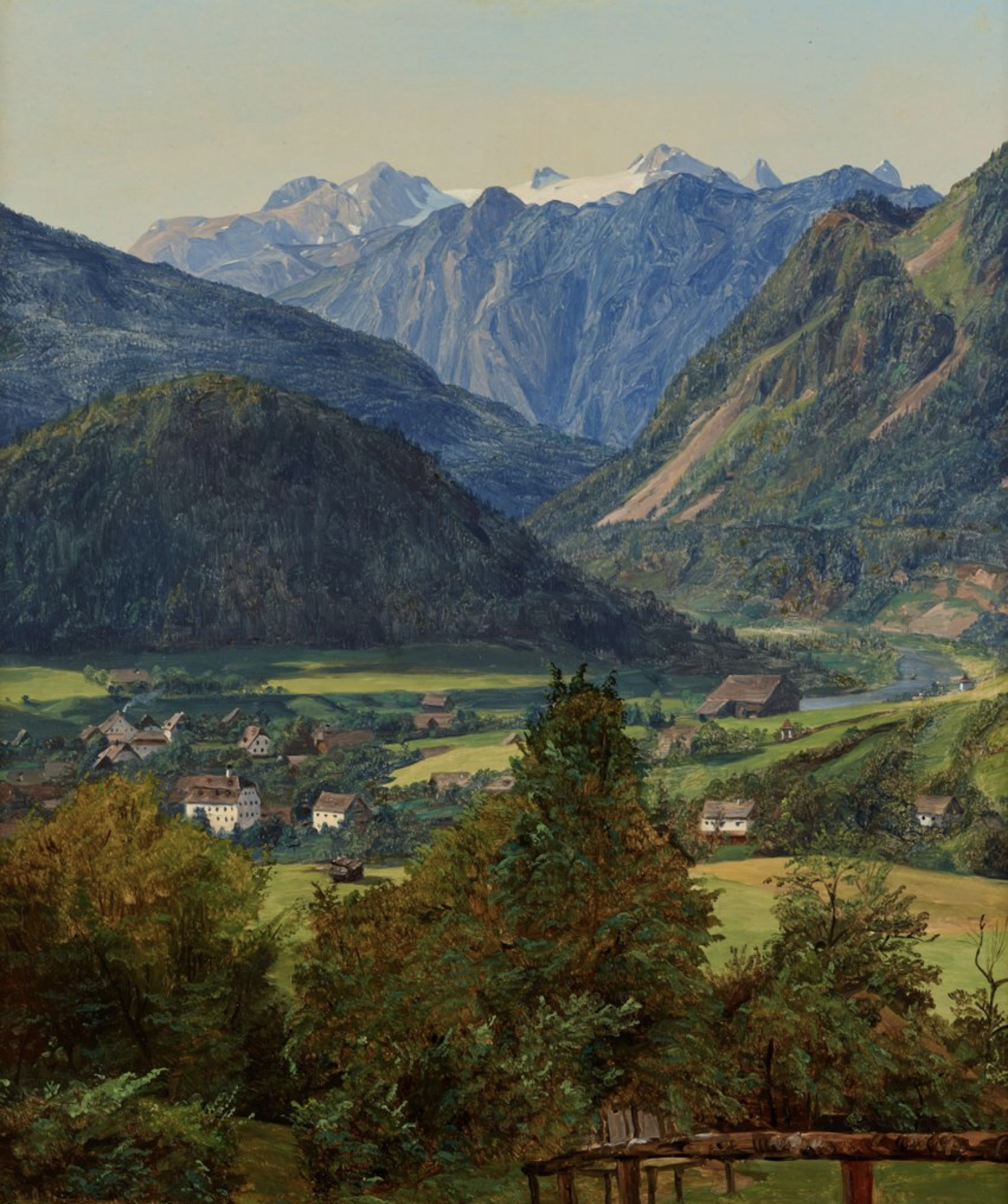
'Ferdinand Waldmüller - View of the Dachstein from the Sophien-Doppelblick near Ischl’
Waldmüller travelled widely, and took a number of trips to Sicily. We inspect the golden ruins of the ancient Greek theatre at Taormina. In the heat and dust, we visit a quiet hill town. We walk amongst the silvery blue olive trees on the slopes beneath the Temple of Juno.
Waldmüller’s work is meticulously executed and minutely detailed. He had a particular talent for trees - tangled roots, twisted trunks, dappled foliage - and he was happy to include dead and dying branches. Concerned more with accuracy and integrity, he broke with the convention of idealising nature.
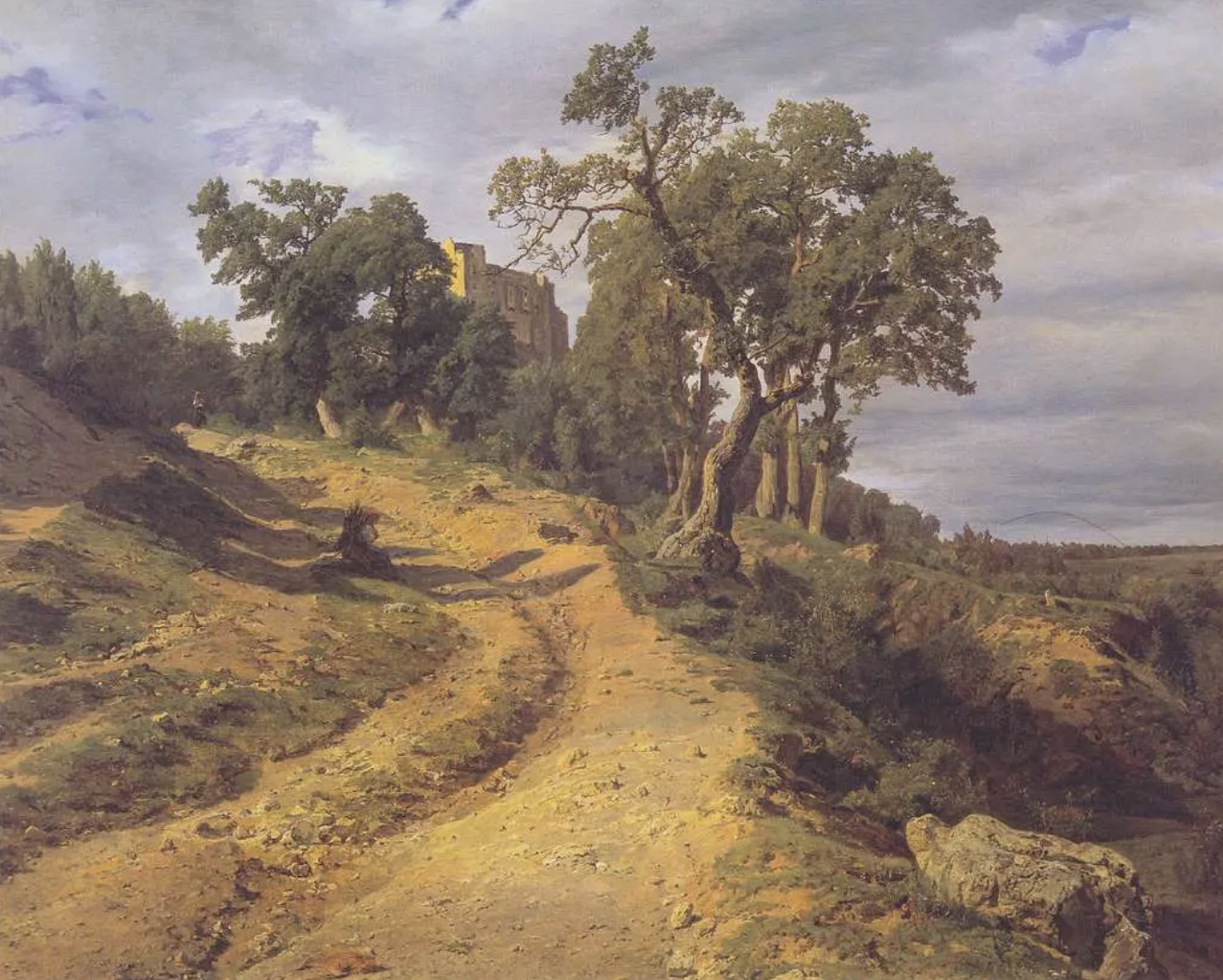
'Ferdinand Waldmüller - Ruins of Liechtenstein Castle, near Modling
In 1829 Waldmüller was appointed curator of the Academy’s collection. An outspoken teacher, he argued for Realism over Romanticism, tried to put nature at the centre of art education, and endeavoured to reform the Academy, even calling for its closure.
‘It is my firm belief that the complete abolition of all academies is the first and most necessary step to improve the state of art in the fatherland.’
As a result, Waldmüller was forced to retire on half-salary. A commitment to unflinching honesty; to facts and veracity; to telling it like it is, can be costly in the workplace. Truth hurts.
'So true, funny how it seems,
Always in time, but never in line for dreams.
Head over heels when toe to toem
This is the sound of my soul.
This is the sound.
I bought a ticket to the world,
But now I've come back again,
Why do I find it hard to write the next line?
Oh, I want the truth to be said.’
Spandau Ballet,’True’ (G Kemp)
No. 582