William Eggleston: ‘I am at War with the Obvious’
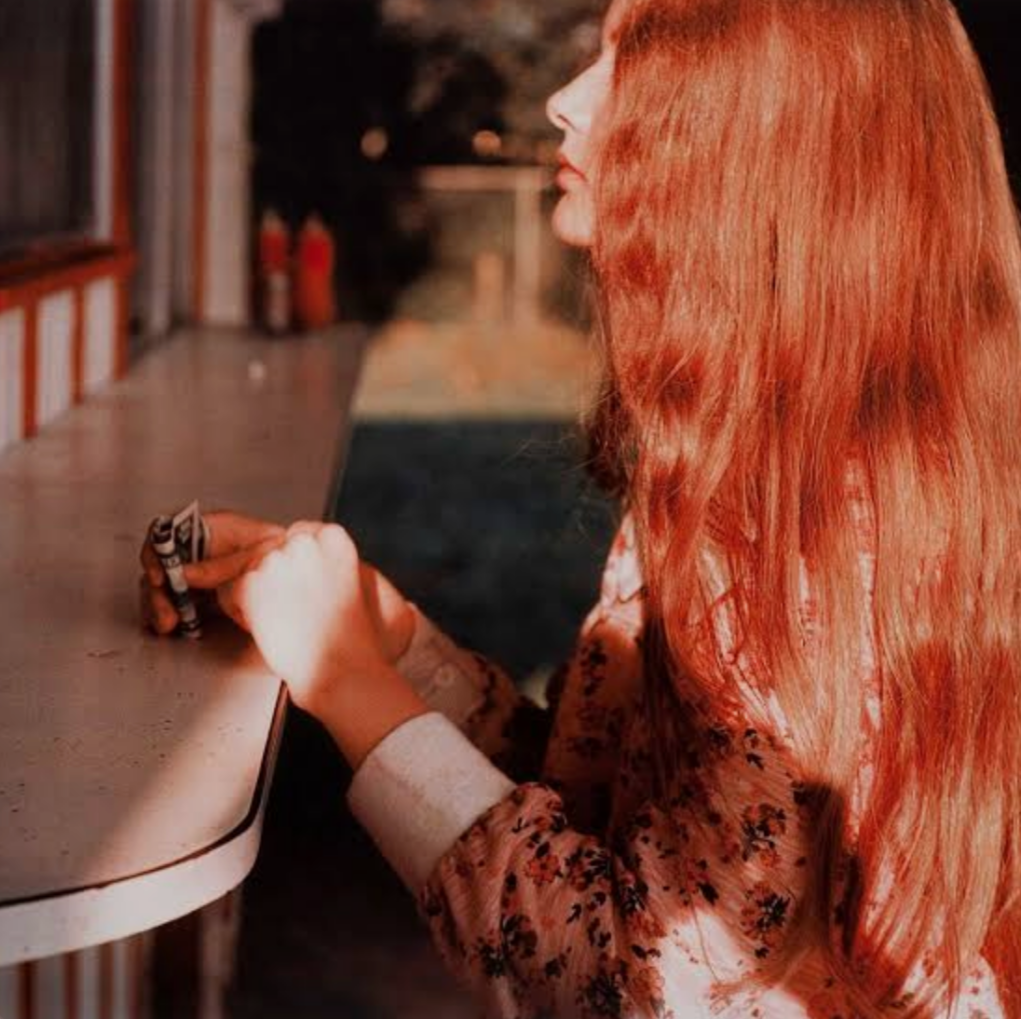
William Eggleston - Untitled', Biloxi, Mississippi, 1974
'I never had the feeling that I didn't fit in... But probably I didn’t.'
William Eggleston
During the 1960s, colour photography was associated with advertising, magazines and amateur snaps. Black-and-white was regarded as the vehicle for serious artistic expression. William Eggleston changed all that with an influential 1976 exhibition of his work at the Museum of Modern Art in New York. (‘All That Goes Unnoticed’, a show at the Photographers’ Gallery, London, commemorates that event. It runs until 21 February.)
'The way I have always looked at it is the world is in color. And there’s nothing we can do about that.’
Born in Memphis, Tennessee in 1939, and raised in Sumner, Mississippi, Eggleston began his photographic career shooting in black-and-white. However, in the mid-1960s he experimented with colour, and became particularly interested in a time-consuming printing process originally developed for commercial image-making. Dye transfer produced rich, saturated tones - intense reds, greens and blues.
`
'You can take a good picture of anything. A bad one, too.’
Eggleston photographed everyday life in the American South. Domestic interiors, suburban streets and ordinary objects; isolated gas stations and empty highways; Cadillacs, car parks and Coca-Cola. There are motel rooms, TV sets, light fittings and neon signs. There’s a blood-stained axe by the barbecue.
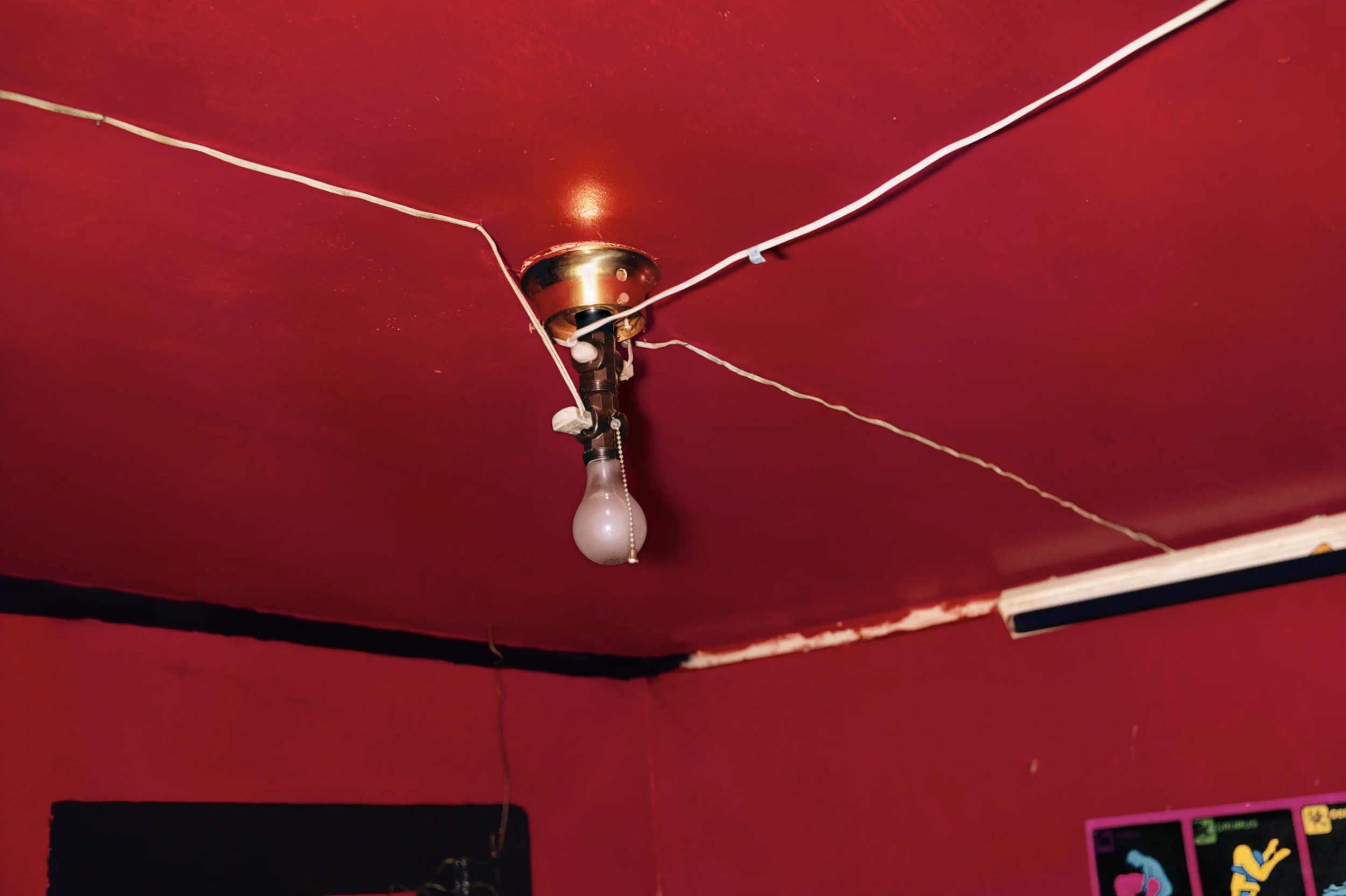
William Eggleston - Untitled, Greenwood, Mississippi, 1973
Eggleston’s radiant colours seem entirely appropriate to a world where advertising and commercial packaging are integral to the day-to-day visual experience; to an era when fashion textiles and interiors are vividly artificial.
’I don’t really look at other people’s photographs at all. It takes enough time to look at my own.'
Eggleston’s viewpoints are unexpected, his compositions unusual. He plays with perspective and scale. Placing his camera on the ground, a car wheel becomes gigantic. (The photographer is visible in the polished chrome.) A child’s tricycle looks monumental. A ceiling fills the frame.
'I had this notion of what I called a democratic way of looking around, that nothing was more or less important.’
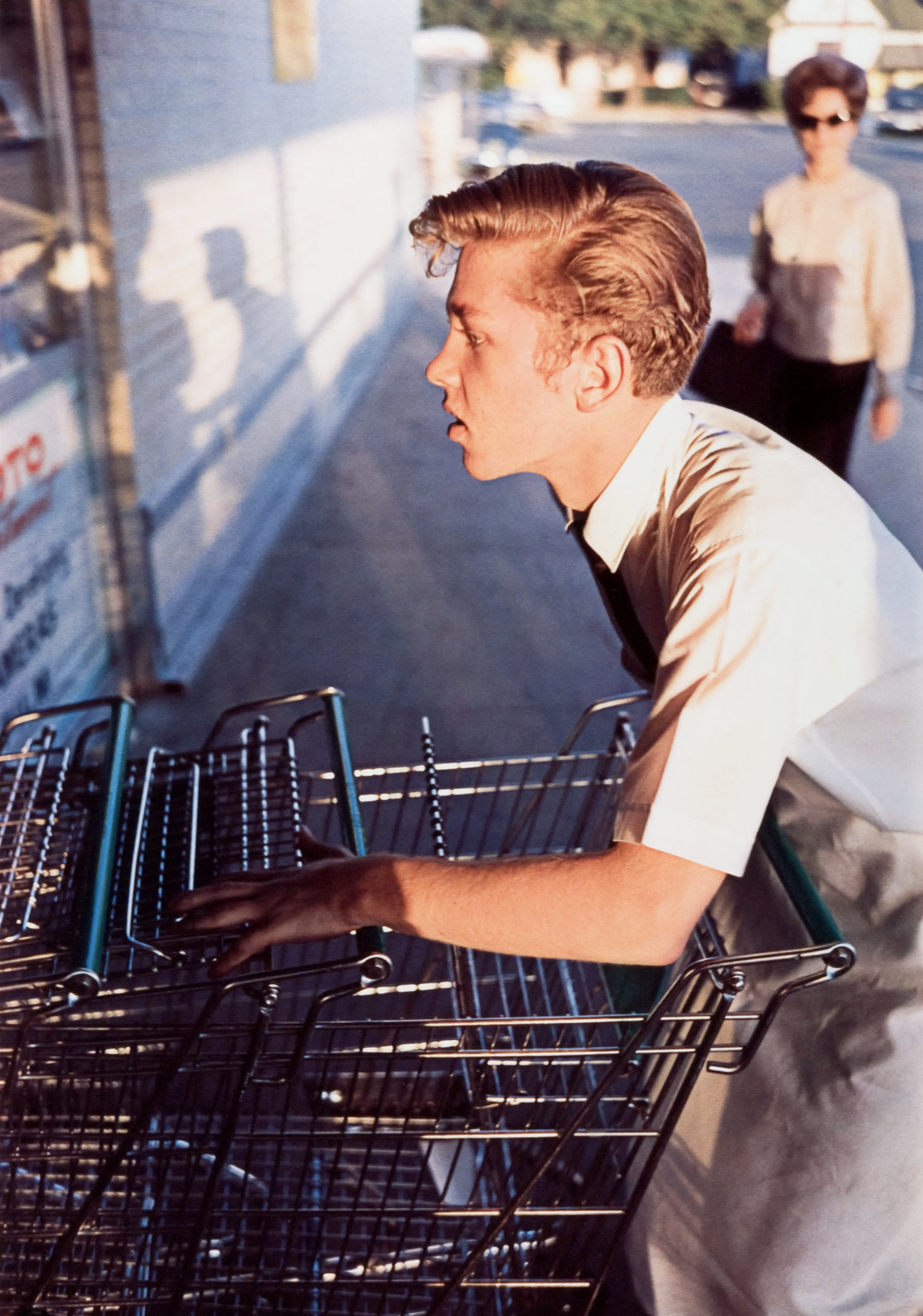
William Eggleston - Untitled, Memphis 1965
Eggleston’s imagery is peopled by detached figures, absorbed in their own activities, caught in moments of stillness. At a diner we see the back of a smoking lady’s head, her hair carefully coiffed and pinned. A young woman in a floral dress lies sprawled on the grass with her eyes shut. Children line up behind a wire fence, like animals at the zoo. A blond supermarket worker leans nonchalantly on a shopping trolley. An elderly bespectacled chap sits in silence on the side of his bed, with a revolver in one hand.
The effect is unsettling, disorientating. Eggleston rarely explains the meaning of his shots, and most are untitled or labelled with just a location.
'Words and pictures, they’re like two different animals. They don’t particularly like each other.'
Wandering around the exhibition, we appreciate that Eggleston has contributed a good deal to the visual language of modern Americana. The rugged individualism; the dominion of the car and the ubiquity of commercial messaging; the isolation and loneliness; the strange beauty.
Eggleston encourages us to celebrate the banal; to see the uncanny in the everyday; to question our assumptions.
'I am at war with the obvious.'
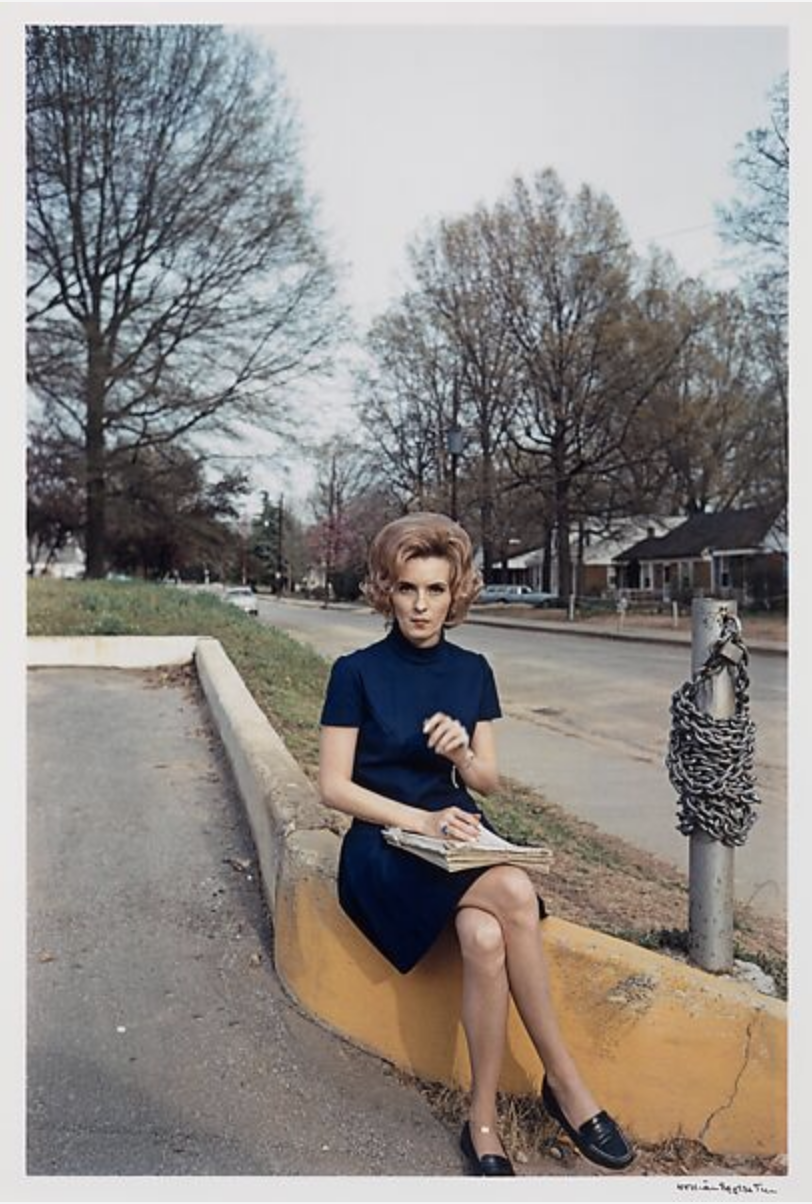
William Eggleston - Untitled, Memphis 1971
'There's a man who walks beside me.
He is who I used to be.
And I wonder if she sees him,
And confuses him with me.
And I wonder who she's pining for,
On nights I'm not around.
Could it be the man who did the things I'm living down?’
Jason Isbell, 'Live Oak’ (M Isbell)
No. 594