The Four Pillars of Senior Conversation: Journeys, Parking, Ailments and Bins
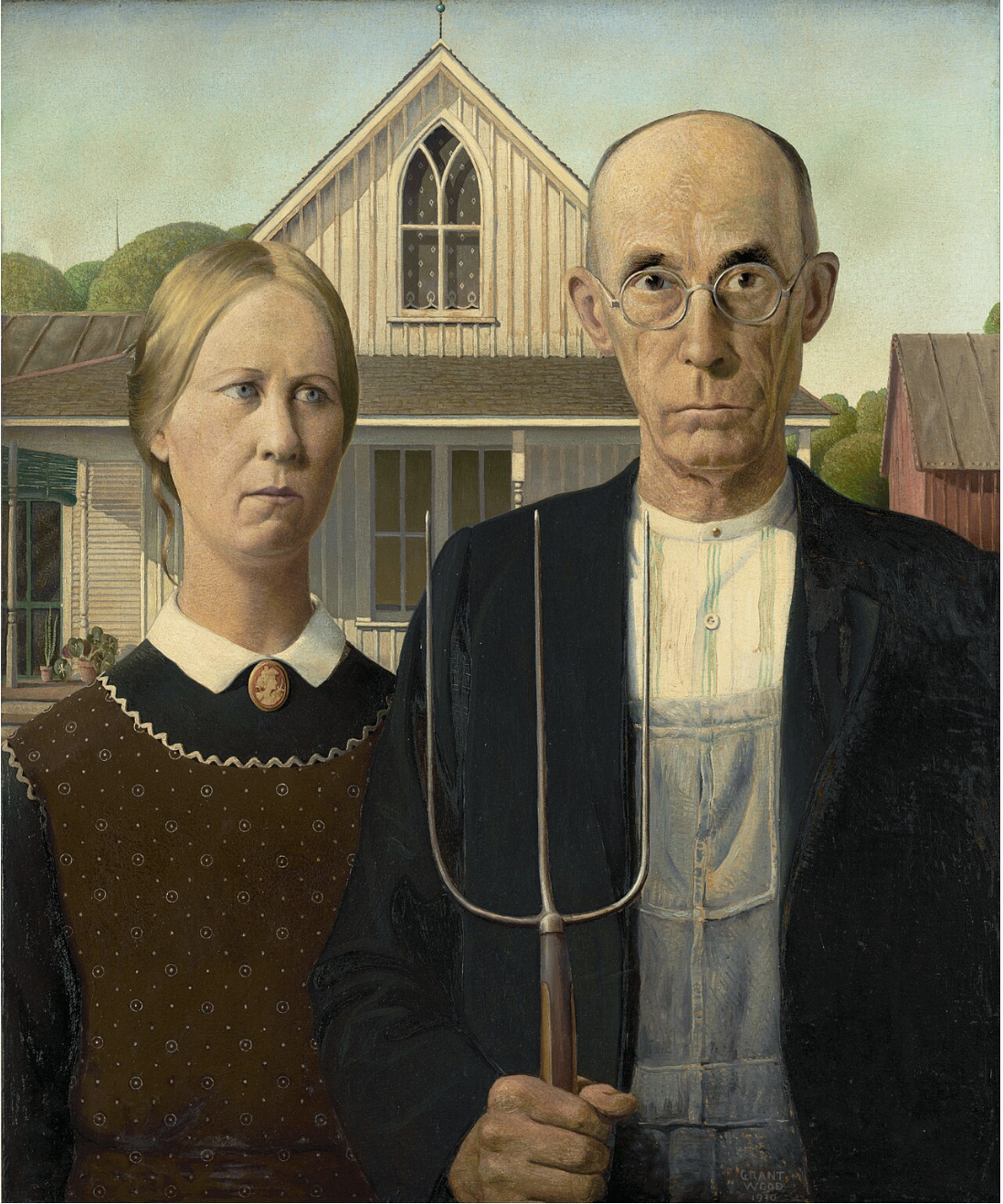
Grant Wood (1891–1942) - American Gothic. 1930. Oil on beaverboard
‘Great to see you. How was your journey down?’
‘Well, we set off early. We took the M25 route to the M1, which was fine, and then we slipped onto the A1 at Hendon. All was good, but we made the mistake of going through Highgate instead of taking the Archway Road. It was chock-a-block, as there’s quite a lot of work going on. Upper Street was busy too. Which is why we’re 15 minutes late.’
As I’ve grown older, I’ve found myself talking more about journeys.
It seems natural, polite even, when you greet a friend or family member, to ask them how they got here. The trouble is that, though itineraries and routes can be quite diverting – revealing of personal preferences and eccentricities - they can also be quite boring. And they tend to lead to other commonplace themes: sharing reflections on the paucity of parking bays perhaps, or restrictions and permits. (I notice that many people nowadays feel the spot outside their home is exclusively theirs.) Or Lime bikes. And inevitably the discussion shifts to an extended update on our various medical conditions. The creaking back, the arthritic knee, the hip operation. Before too long, we’re considering bins - tactics at bank holidays, poor neighbour behaviour, different councils’ recycling rules. I’m pretty sure I didn’t think about rubbish collection so much when I was younger. Indeed, my former refuse irresponsibility is a source of some concern to me. We characterise youth as carefree, but I worry that I was careless.
In my experience, these are the Four Pillars of Senior Conversation: journeys, parking, ailments and bins. There’s no avoiding them. They’re just the staples of ordinary life when you reach a certain age. Peppered with updates on holidays, family and friends, with perhaps the odd digression into podcasts and wifi coverage, they sustain us through many an afternoon tea or Sunday lunch.
The truth is that, with every passing year, we drift towards patterns of thought and action, that calcify into narrow interests and fixed opinions. A kind of conversational inertia sets in.
I suspect the same ossification of behaviour and beliefs also occurs in the world of work. As we progress through the ranks, our philosophies become secure, our approaches settled. In every new challenge, we hear echoes of previous problems. In every new colleague or client, we see similarities to their predecessors. We find ourselves reminiscing about the golden age, retelling old anecdotes, condemning new techniques, frowning at the younger generation.
Breaking free from the forces of inertia takes conscious effort, imagination and discipline. It requires us to disrupt our instinctive inclination to nostalgia; to expose ourselves to new thoughts and fresh ideas; to take an active interest in youth.
Hard to say this. But we may even need to set limits to our discourses on journeys, parking, ailments and bins.
'What's the sense in sharing
This one and only life?
Ending up just another lost and lonely wife.
You'll count up the years,
And they will be filled with tears.
Love only breaks up, to start over again.
You'll get the babies, but you won't have your man.
While he is busy loving every woman that he can.
Say, "I'm gonna leave" a hundred times a day.
It's easier said than done,
When you just can't break away.
Oh, young hearts run free.
Never be hung up,
Hung up like my man and me.
My man and me
Oh, young hearts, to yourself be true.
Don't be no fool when love really don't love you.’
Candi Staton, 'Young Hearts Run Free’ (D B Crawford)
No. 563