Glengarry Glen Ross: ‘Always Be Closing’
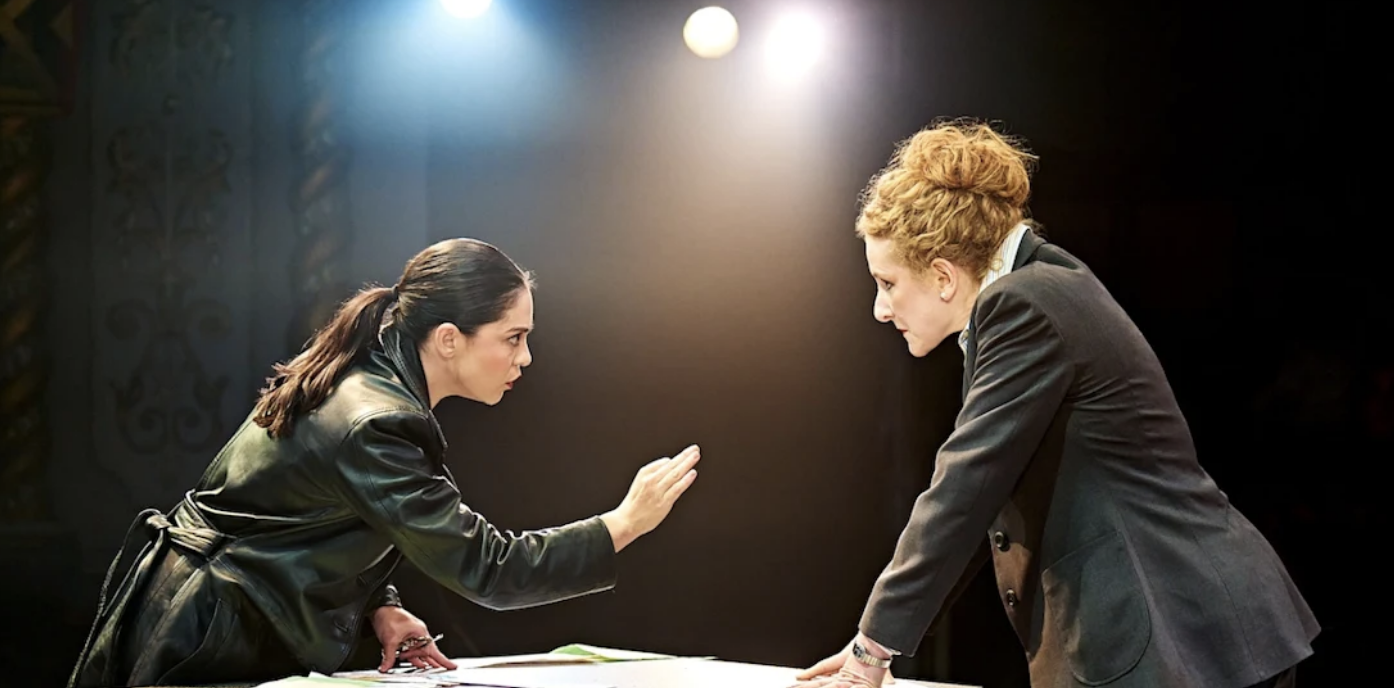
Rosa Salazar and Dorothea Myer-Bennett in The Old Vic production of Glengarry Glen Ross.
I enjoyed a recent production of David Mamet’s ‘Glengarry Glen Ross.’ (The Old Vic, London, until 18 July)
Levene: I need the leads. I need them now. Or I’m gone, and you’re going to miss me, John, I swear to you.
Written in the faltering, fragmented metre of everyday diction (Mamet dedicated the work to Harold Pinter), this 1983 play considers the ruthlessness at the heart of contemporary capitalism, the toxic nature of competition.
Levene: That’s cold calling. Walk up to the door. I don’t even know their name. I’m selling something they don’t even want. You talk about soft sell… before we had a name for it…before we called it anything, we did it.
The drama centres around a Chicago real estate office where four agents, vying against one another in a sales contest, have a few more days to establish their position on the performance board. The top man wins a Cadillac, the second wins a set of steak knives, the bottom two get fired.
Richard ‘Ricky’ Roma, the most successful agent, is confident, manipulative, loquacious.
Roma: Bad people go to hell? I don’t think so. If you think that, act that way. A hell exists on earth? Yes. I won’t live in it. That’s me.
Shelly ‘The Machine’ Levene is past his prime. He has not closed a big deal in a long time and is getting desperate.
Levene: Put a closer on the job…Put a proven man out…and you watch your dollar volumes…You start closing them for fifty ‘stead of twenty-five.
Meanwhile, Dave Moss is jealous of his colleagues, and resentful of the unseen agency owners. And George Aaronow lacks self-esteem and is fading fast.
The four salespeople are dependent on leads supplied by John Williamson, the despised office manager.
Roma: Williamson: listen to me: when the leads come in… listen to me: when the leads come in, I want my top two off the list. For me. My usual two.
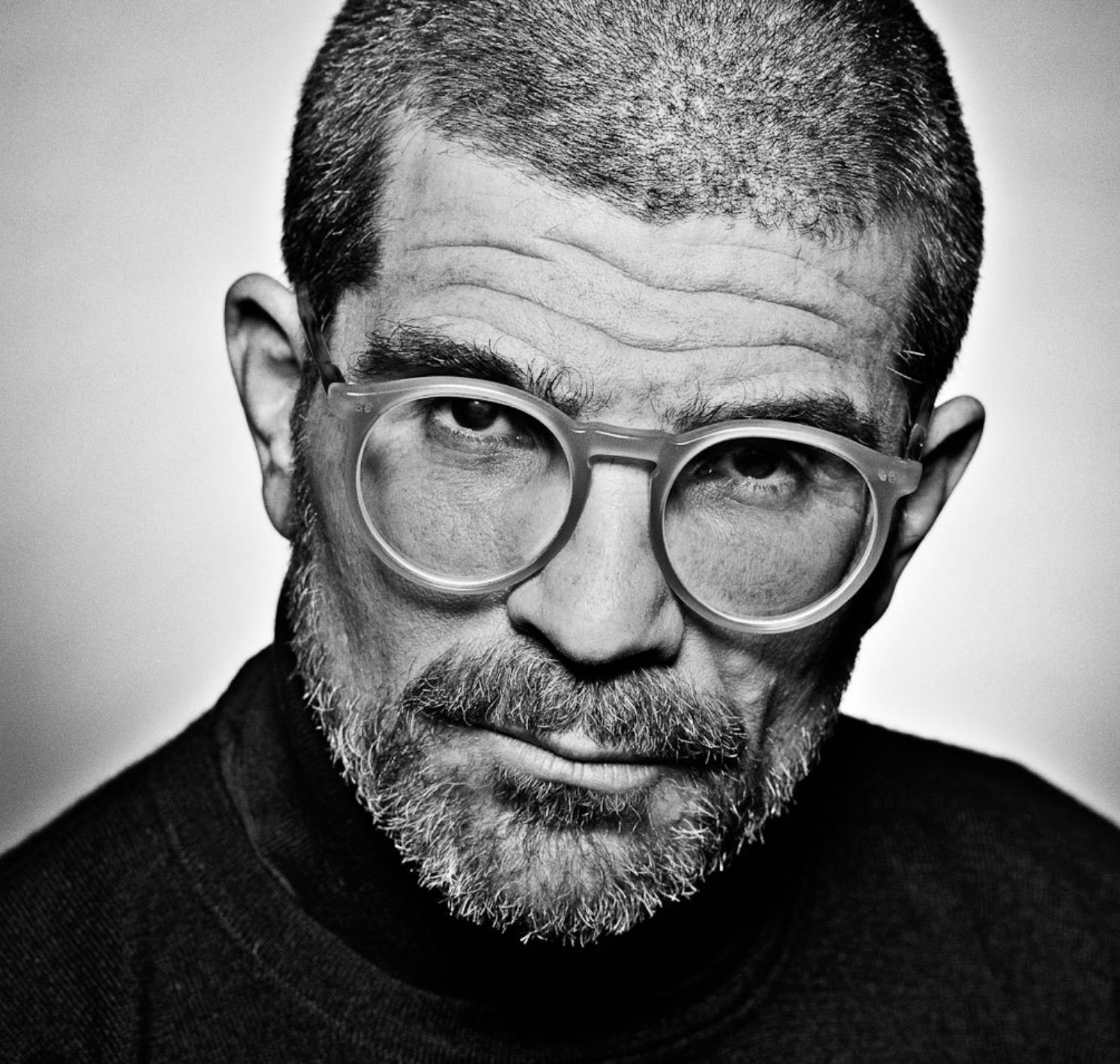
David Mamet. 1999. Photo by © Robin Holland
As the story unfolds, we witness the key characters plot and conspire, insult and disparage each other. They are aggressive, abrasive, argumentative. They’ll do anything, to anyone, to survive and succeed.
Levene persuades Williamson to give him some of the prime ‘Glengarry leads’, but only in return for fifty bucks a prospect, in advance, and twenty per cent commission.
Levene: Do I want charity? Do I want pity? I want sits. I want leads don’t come right out of a phonebook. Give me a lead hotter than that, I’ll go in and close it. Give me a chance. That’s all I want.
Moss hatches a plan to break into the office, steal all the prime leads and sell them to another real estate agency. And Roma seduces a nervous, reluctant client to sign on the dotted line.
At length, even the struggling Levene cuts a deal, drawing on all his experience, and inspired by the old sales maxim: ‘always be closing.’
Levene: This is it, Harriett. I don’t want to f**k around with you. I don’t want to go round this, and pussyfoot around the thing, you have to look back on this. I do, too. I came here to do good for you and me. For both of us. Why take an interim position? The only arrangement I’ll accept is full investment. Period. The whole eight units. I know that you’re saying ‘be safe’, I know what you’re saying. I know if I left you to yourselfs, you’d say ‘come back tomorrow’ and when I walked out that door, you’d make a cup of coffee… you’d sit down…and you’d think ‘let’s be safe…’ and not to disappoint me you’d go one unit or maybe two, because you’d become scared because you’d met possibility. But this won’t do and that’s not the subject. That’s not the subject of our evening together.
In the sphere of modern commerce, we all subscribe to the positive power of competition. We believe that salesmanship drives success; that rivalries are healthy; that struggle fortifies; that conflict produces progress.
‘Glengarry Glen Ross’ reminds us that, unbridled and unfettered, competition can get out of hand. It can be cut-throat, cancerous, corrosive, breeding paranoia, lies and betrayal. It can turn colleagues against each other and destroy customer relationships.
In order to function optimally, capitalism needs moderation and management, curbs and constraints. Interdependence demands teamwork and collaboration.
Because, without such safeguards, we’ll be left in a world of Ricky Romas.
Roma: It’s not a world of men… It’s a world of clock watchers, bureaucrats, office holders… What it is, it’s a f**ked up world… there’s no adventure to it… Dying breed. Yes it is. We are the members of a dying breed.
'Someone will call, something will fall,
And smash on the floor.
Without reading the text, know what comes next.
Seen it before and it's painful.
Things must change,
We must rearrange them.
Or we'll have to estrange them.
All that I'm saying,
A game's not worth playing,
Over and over again.’
Depeche Mode, 'The Sun and the Rainfall’ (M Gore)
No. 576