Hurvin Anderson: Identity and Belonging, Memory as Mood, Landscapes Haunted by History
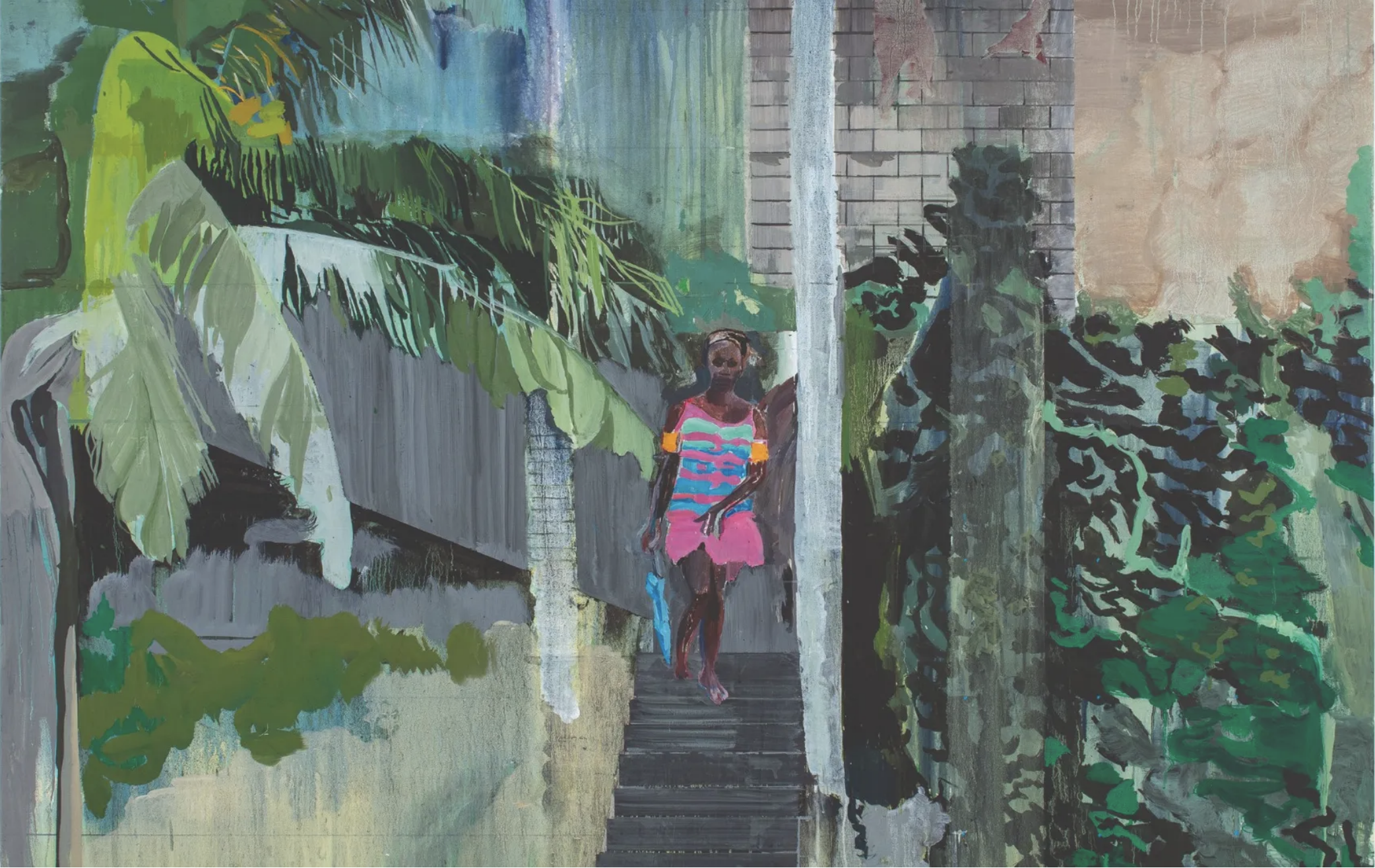
Hurvin Anderson - Grace Jones (2020): an air of fading memories
(Image credit: Hurvin Anderson / The Thomas Dane Gallery / Richard Ivey)
I very much enjoyed an exhibition of the work of Hurvin Anderson. (Tate Britain, London until 23 August)
‘In order to observe, for me at least, I have to sit slightly outside of things. Perhaps this is my natural position.’
Hurvin Anderson
Anderson was born in 1965, to Jamaican parents, in Handsworth, Birmingham. In the early 1990s, he moved to London, studying at Wimbledon School of Art and the Royal College of Art.
‘I am the youngest of eight siblings. All my elder siblings were born in Jamaica, while I was born in the UK. For me, this has always created a tension and raised lots of questions.’
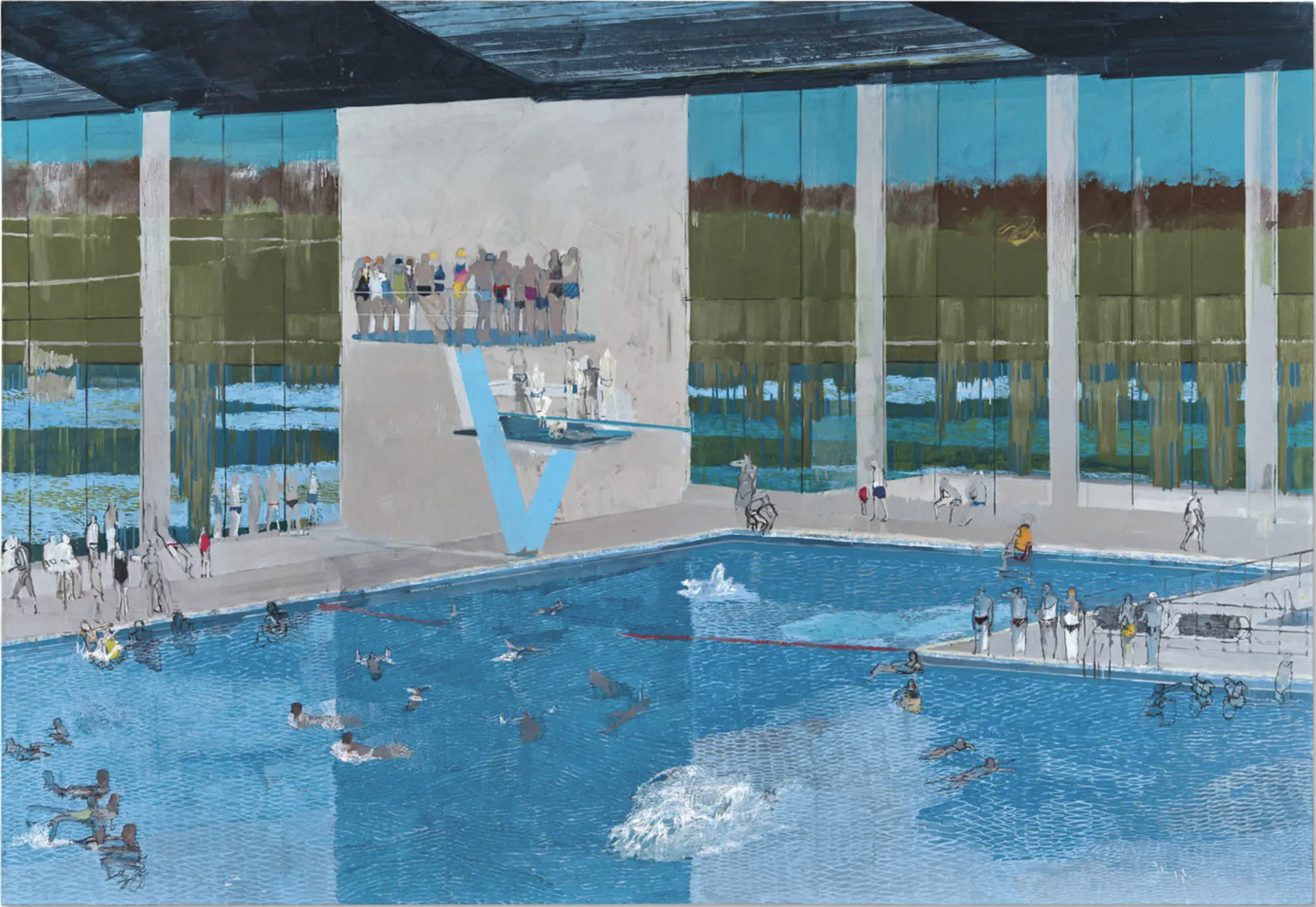
Hurvin Anderson - Audition
© Hurvin Anderson
Anderson began painting from found photos of family and friends. We see him as a child standing outside a pub with his father. We see his mates looking forlorn as their football is lost in the lake. Here are the trees that he climbed; the Banqueting Palace that he passed on his walk home from school. Here are the municipal swimming baths; the homes with patterned wallpaper and display cabinets for picture frames and china.
‘What I do, it's about questioning my history, my place.’
Anderson returns repeatedly to the same images, each time making subtle adjustments: Mrs Keita in her floral dress and patent leather boots, a hand resting gently on the television set; the reassuring intimacy of the barbershop, its counters cluttered with assorted brushes, clippers and cologne, its walls pinned with pictures of heroes from the Civil Rights struggle.
‘Fade. Flat top. High top. Side part. Trim shave. Skiffle.’
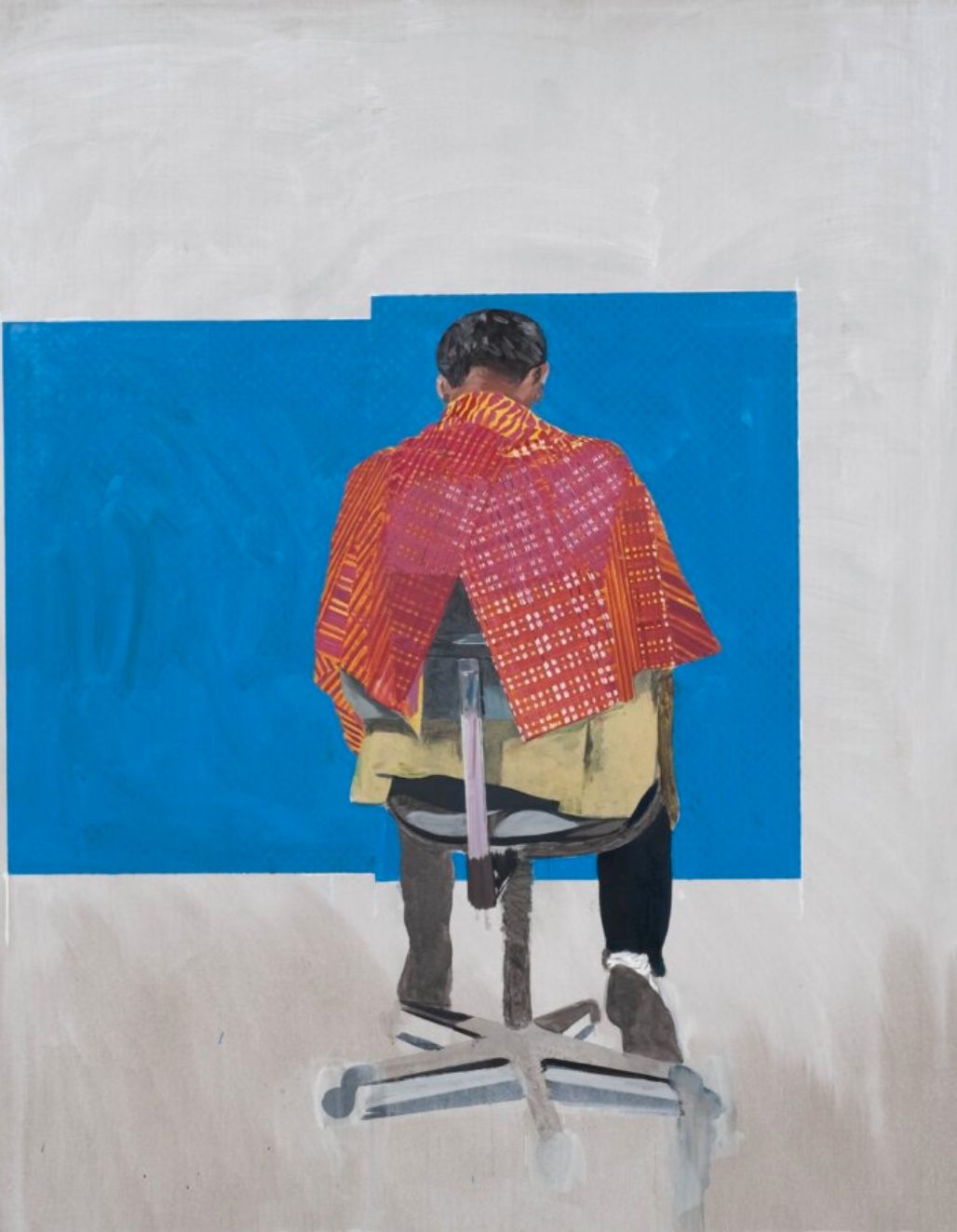
Hurvin Anderson - Peter's Sitters II, 2009.
Image courtesy © Hurvin Anderson and Thomas Dane Gallery. Photo: Catharine Wharf
Some of Anderson’s characters are painted in black and white, reflecting their source photographs. The faces tend to be blurred, implying the fuzzy indistinctness of recollection. And the artist mixes remembrance with imagination. Time dissolves, distance disintegrates. His sister Bev sits alongside her younger self. His brother picks apples in an English orchard, but in the background we observe the shadows of a mango tree – he is torn between two cultures.
Visiting the Caribbean, Anderson grapples with his own identity: his sense of being at once an insider and an outsider.
‘My struggle with Jamaica: I don’t know it and I know it. I have this romantic vision of it and a lot of my painting is fighting that romance.’
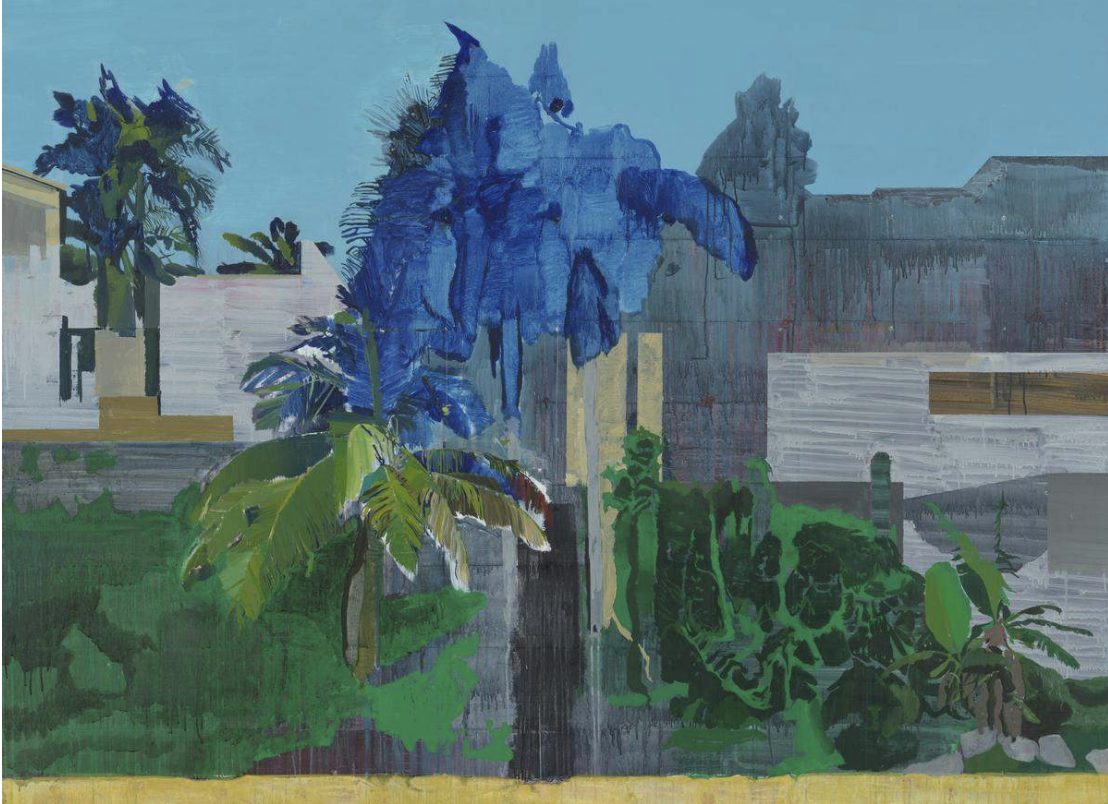
Hurvin Anderson - Hawksbill Bay, 2020.
Tate Lent by Tate Americas Foundation, courtesy of Mala Gaonkar 2023. © Hurvin Anderson. Courtesy the artist and VeneKlasen.
With precise brushwork, Anderson depicts dense, green-black foliage dropping dramatically towards the ocean. Figures gather on the citrus-yellow sand as a white wave breaks. A girl descends the hotel steps, in a pink dress that is striped blue, green and orange. We are bathed in colour and light.
But behind the languorous landscapes lies a history of colonial oppression. The atmosphere can be dark and ominous. The ravishing scarlet flowers at the roadside are from the shrub Ashanti Blood, recalling a brutally suppressed slave rebellion. And still today beautiful beaches are shut away behind wrought iron fences, luxurious apartments protected by exclusive security grilles.
‘Painting, like most things, is a contradiction.’
Anderson teaches creative people to reflect on their identity - who am I? who are we?; to think of memory as mood - emotional, imprecise and unreliable, layered and dreamlike; to consider landscapes as haunted by history, veiled in the past.
In a number of Anderson’s Caribbean works, we see half-built and ruined buildings overcome by lush, towering vegetation. All the while, nature is quietly reclaiming the land; covering up the memories; erasing the pain.
'Your love is a life for I.
Realized that so much,
When I first met you.
That was some time ago,
From then until this.
Resist, no, no, no, close to you, see.
Oh, yes, right from the start,
Oh, no, no, no, could never part.
Oh, I hear from that thought,
I wanna live in your house.
I wanna live in your house.’
Steel Pulse, ‘Your House’ (G Ballard, A Morissette)
No. 571