The Cherry Orchard: Imaginative Memory, Toxic Nostalgia
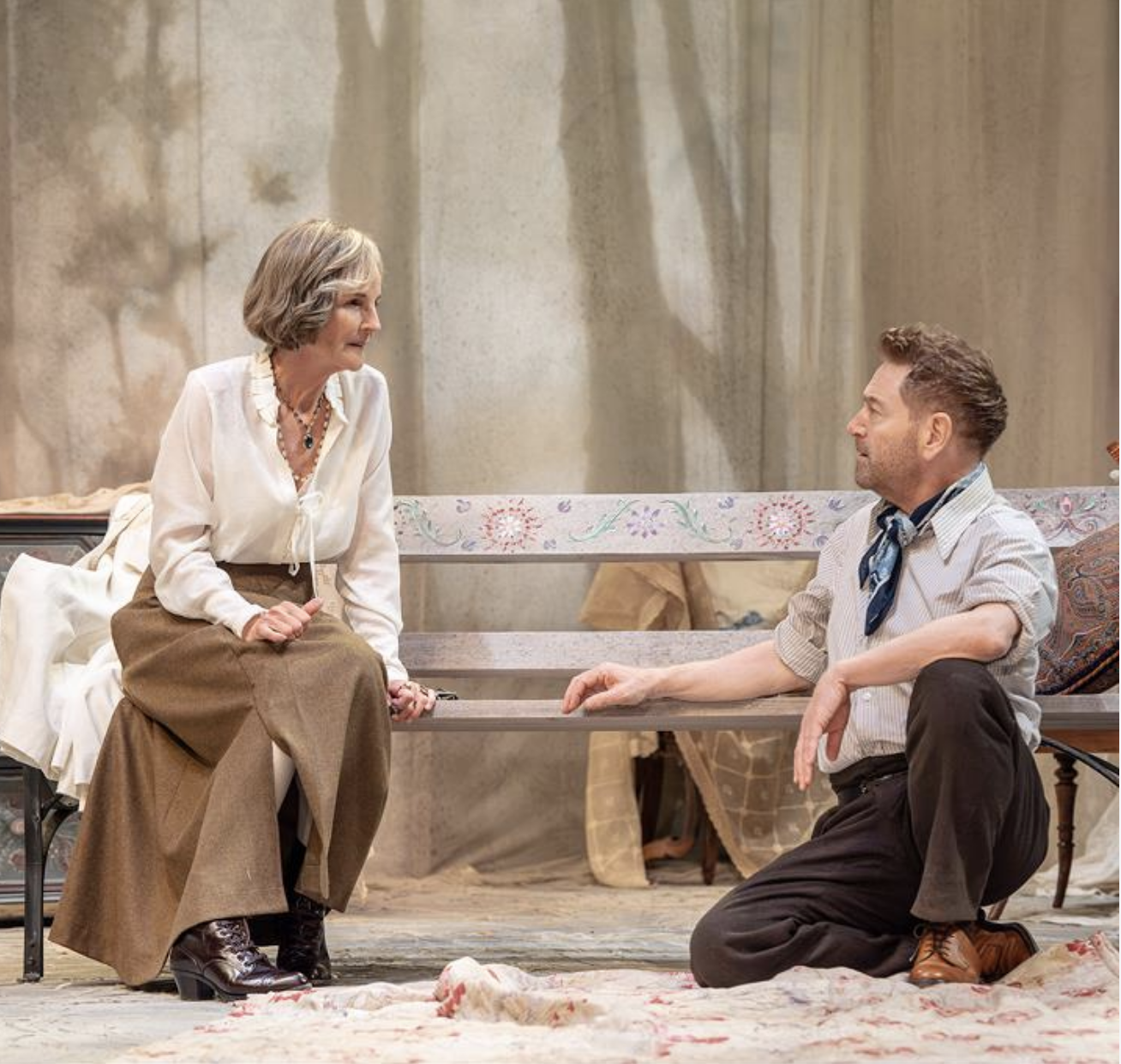
‘The Cherry Orchard’ was Anton Chekhov’s last play. Written in 1903, it relates the story of a group of charming, listless, impractical aristocrats and their dependents, as they struggle to come to terms with the social and economic upheaval in Russia at the turn of the 20th century.
Lopakhin: If we can’t think of anything and don’t make up our minds on anything, then on August 22, both the cherry orchard and the whole estate will be up for auction. Make up your mind! I swear there’s no other way out.
At the heart of the drama is Lyubov Andreievna Ranevskaya, an indebted landowner returning to her family estate after five years in Paris. The property, which includes a beloved cherry orchard, is due to be auctioned to pay the mortgage. She is prompted to recall happier times.
Lyubov: Oh, my childhood, my innocent childhood! This is the nursery where I slept and I used to look out at the orchard from here! Look, Mother's walking in the orchard. In a white dress.
Lyubov and her brother Gayev are visited by Lopakhin, a wealthy local merchant from humble stock, who proposes a remedy to their predicament.
Lopakhin: You needn’t be alarmed, dear madam, you may sleep in peace; there’s a way out. Here’s my plan. Please attend carefully! Your estate is only thirteen miles from the town, the railway runs by, and if the cherry orchard and the land by the river are broken up into building lots, and are then leased off for villas, you’ll get at least twenty-five thousand roubles a year profit out of it.
Lyubov and Gayev are unconvinced.
Gayev: How utterly absurd!
Lyubov: I don’t understand you at all, Ermolai Alexeyevitch.
But Lopakhin persists.
Lopakhin: If you advertise now, I’m willing to bet that you won’t have a vacant plot left by the autumn; they’ll all go. In a word, you’re saved. I congratulate you. Only, of course, you’ll have to put things straight, and clean up.... For instance, you’ll have to pull down all the old buildings, this house, which isn’t any use to anybody now, and cut down the old cherry orchard….
Lyubov is particularly sensitive about any plan that threatens her treasured cherry orchard.
Lyubov: Cut it down? My dear man, you must excuse me, but you don’t understand anything at all. If there’s anything interesting or remarkable in the whole province, it’s this cherry orchard of ours.
Lopakhin tries to reason with Lyubov and Gayev, pointing out that the orchard only bears fruit every other year, and that then it produces more cherries than they can sell.
Resolute, Lyubov and Gayev instead consider the unlikely prospect of inheriting some money, borrowing from a wealthy but hostile aunt, marrying off Lyubov’s daughter to a rich aristocrat, taking out another loan… Anything but lose the cherry orchard.
Gayev: This orchard is mentioned in the ‘Encyclopaedic Dictionary.’
The central debate in ‘The Cherry Orchard’ reminds me of dilemmas played out in the world of contemporary commerce. We become attached to certain approaches and ways of working that have served us well in the past. We are sentimental about historic glories. And this nostalgia deters us from taking timely, realistic action. Sometimes we resist necessary change even when the solution to our problems is staring us in the face.
Lopakhin: You must excuse my saying so, but I’ve never met such frivolous people as you before, or anybody so unbusinesslike and peculiar. Here I am telling you in plain language that your estate will be sold, and you don’t seem to understand.
Lyubov: What are we to do? Tell us, what?
Lopakhin: I tell you every day. I say the same thing every day.
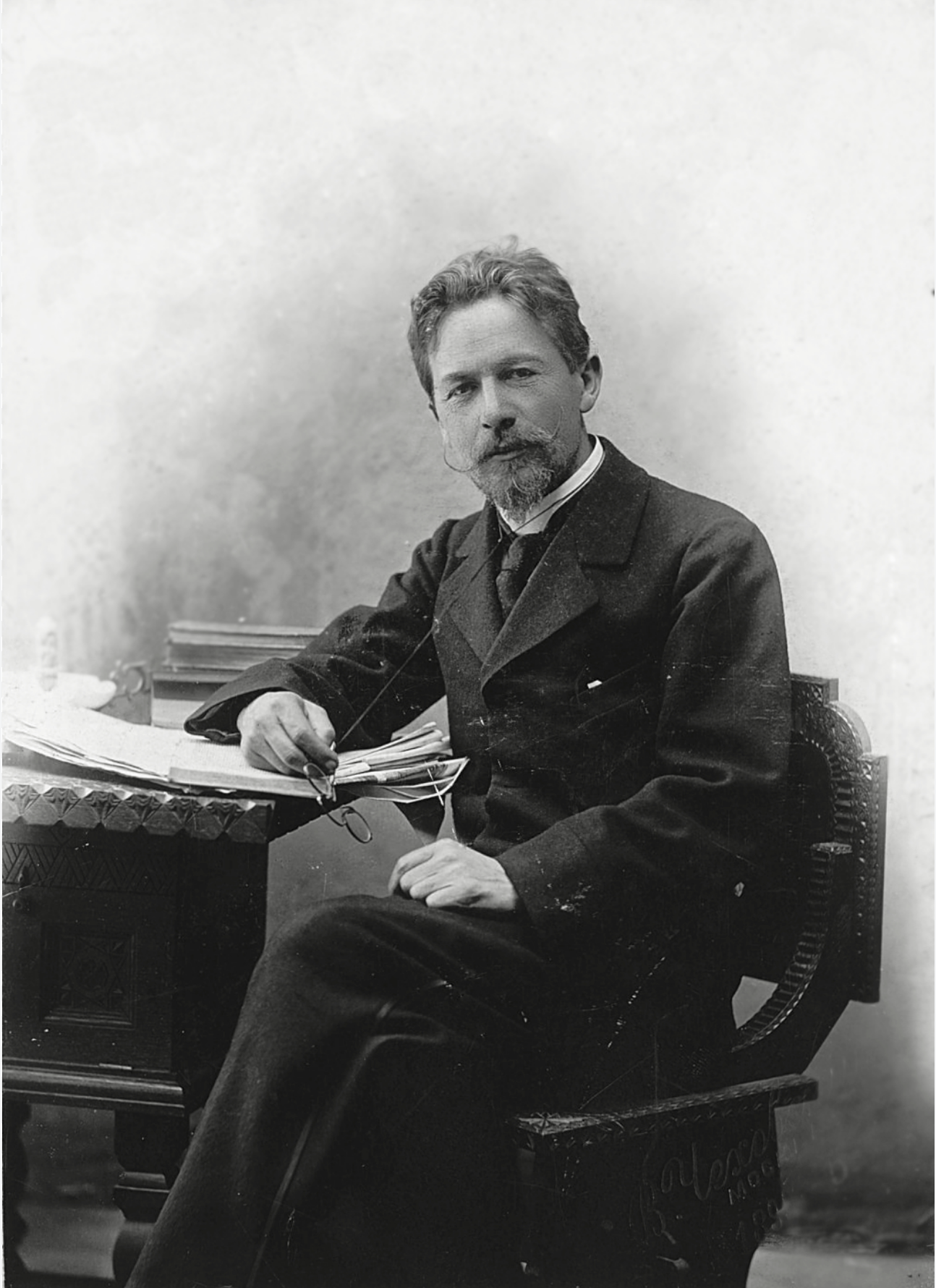
Chekhov in 1889
I saw a very good production of ‘The Cherry Orchard’ recently in Stratford-upon-Avon, and came across a compelling essay in the programme, written by Dr Charan Ranganath, Professor of Psychology and Neuroscience at the University of California at Davis.
Lopakhin: Just one word! [Imploringly] Give me an answer!
Gayev: [Yawns] To what?
Ranganath observes that Lyubov’s memories of the estate are rose tinted and selective. She happily recalls her innocent childhood, the nursery and her mother walking in the cherry orchard, but she chooses to ignore the fact that the house was also the location of her husband’s death and the drowning of her young son, and it is the source of her current financial hardship.
‘Memories are not mere recordings of past experiences. We do not replay the past so much as we pull up a few fragments of detail and context and use them to imagine how the past might have been.’
Dr Charan Ranganath
Ranganath goes on to explain that ‘the brain networks supporting imagination and episodic memory are enmeshed to such a degree that we often struggle to distinguish events we actually experienced from those we have merely imagined.’
We edit and curate our personal histories to meet our own agendas and sense of self, and this can lead to a kind of ‘paralysing stasis…a toxic nostalgia’: an unhealthy romanticisation of the past that prevents us from embracing the future. We would do well to direct our emotional energies towards more practical, productive outputs.
Trofimov: If the energy which you, in the course of your life, have spent in looking for money to pay interest had been used for something else, then, I believe, after all, you’d be able to turn everything upside down.
Chekhov described ‘The Cherry Orchard’ as a comedy. But when it opened at the Moscow Art Theatre in 1904, the director Konstantin Stanislavski treated it as a tragedy. It’s easy to see why.
Firs (the elderly manservant): In the old days, forty or fifty years back, they dried the cherries, soaked them and pickled them, and made jam of them… And then we’d send the dried cherries off in carts to Moscow and Kharkov. And money! And the dried cherries were soft, juicy, sweet, and nicely scented.... They knew the way....
Lyubov: What was the way?
Firs: They’ve forgotten. Nobody remembers.
(The Stratford-upon-Avon production of ‘The Cherry Orchard’ closes on 29 August. There’s another version of this classic play planned for the Harold Pinter Theatre, London from 3 October to 9 January.)
'Remember those who win the game,
Lose the love they sought to gain,
In debentures of quality
And dubious integrity.
Their small town eyes will gape at you,
In dull surprise when payment due
Exceeds accounts received,
At seventeen.
To those of us who knew the pain
Of valentines that never came,
And those whose names were never called
When choosing sides for basketball.
It was long ago and far away
The world was younger than today,
When dreams were all they gave for free,
To ugly duckling girls like me.’
Janis Ian, 'At Seventeen'
No. 583