Michaelina Wautier: ‘She Designed It and She Made It’
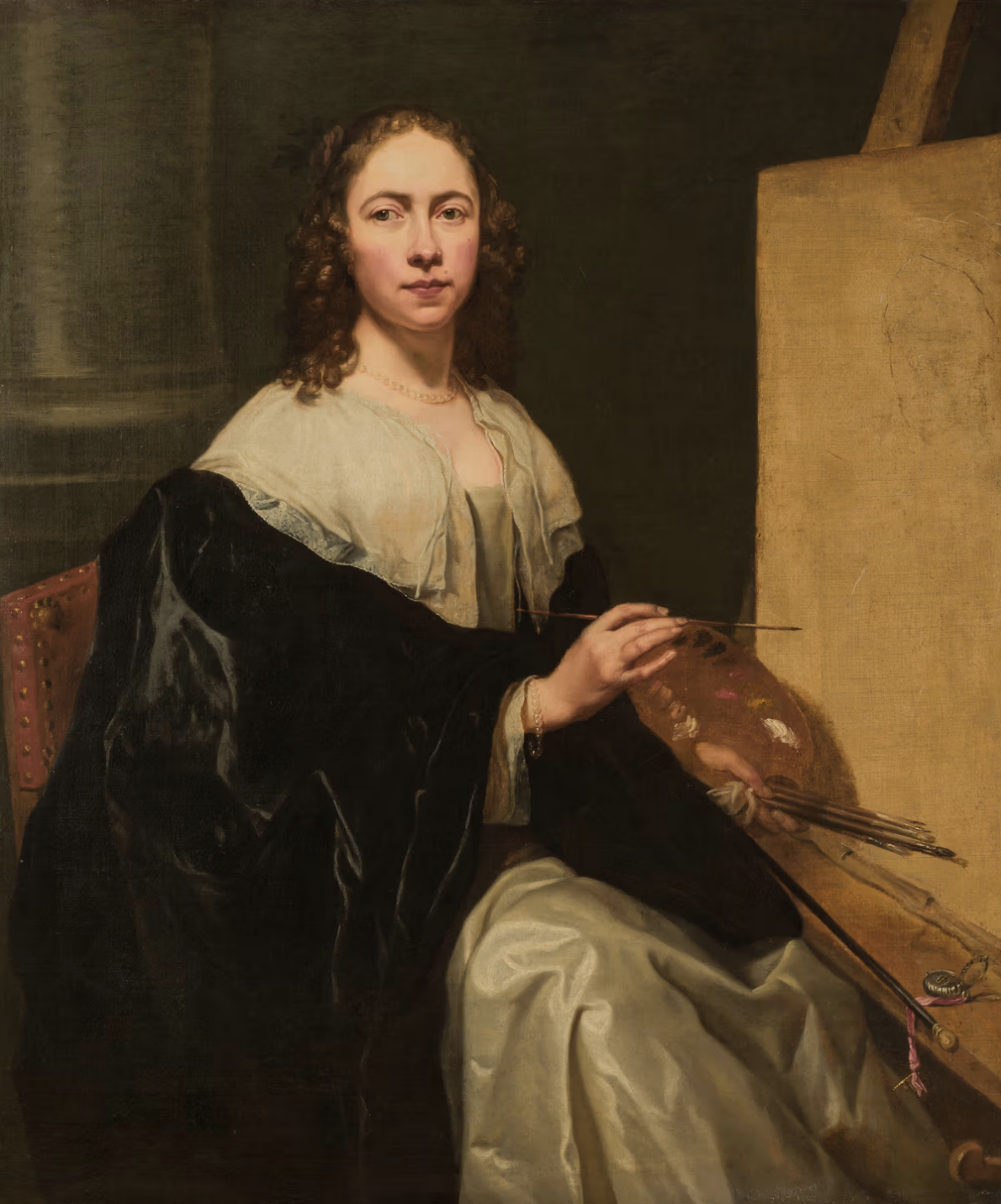
Michaelina Wautier - Self Portrait
I recently enjoyed an exhibition of the work of seventeenth century painter Michaelina Wautier (The Royal Academy, London until 21 June). Poorly documented, and, for nearly three centuries, largely forgotten, her achievements are finally being recognised.
Wautier was born around 1614 in the city of Mons in the Spanish Netherlands (present-day Belgium). With no access to training, it was very difficult at that time for women to become artists. Wautier at least had an older brother, Charles, who was a painter, and the fact that she never married afforded her a certain amount of freedom. She and Charles lived and worked together in Brussels, near the royal court.
Employing a restricted colour palette, a mark of artistic confidence, Wautier painted penetrating portraits of local noblemen and Spanish officers. With dramatically lit faces, the sitters sometimes turn towards the viewer, lending the images immediacy and informality. She displayed a particular sensitivity in her depiction of children. A well-dressed youth sits intently blowing soap bubbles – a reflection on life’s fragility.
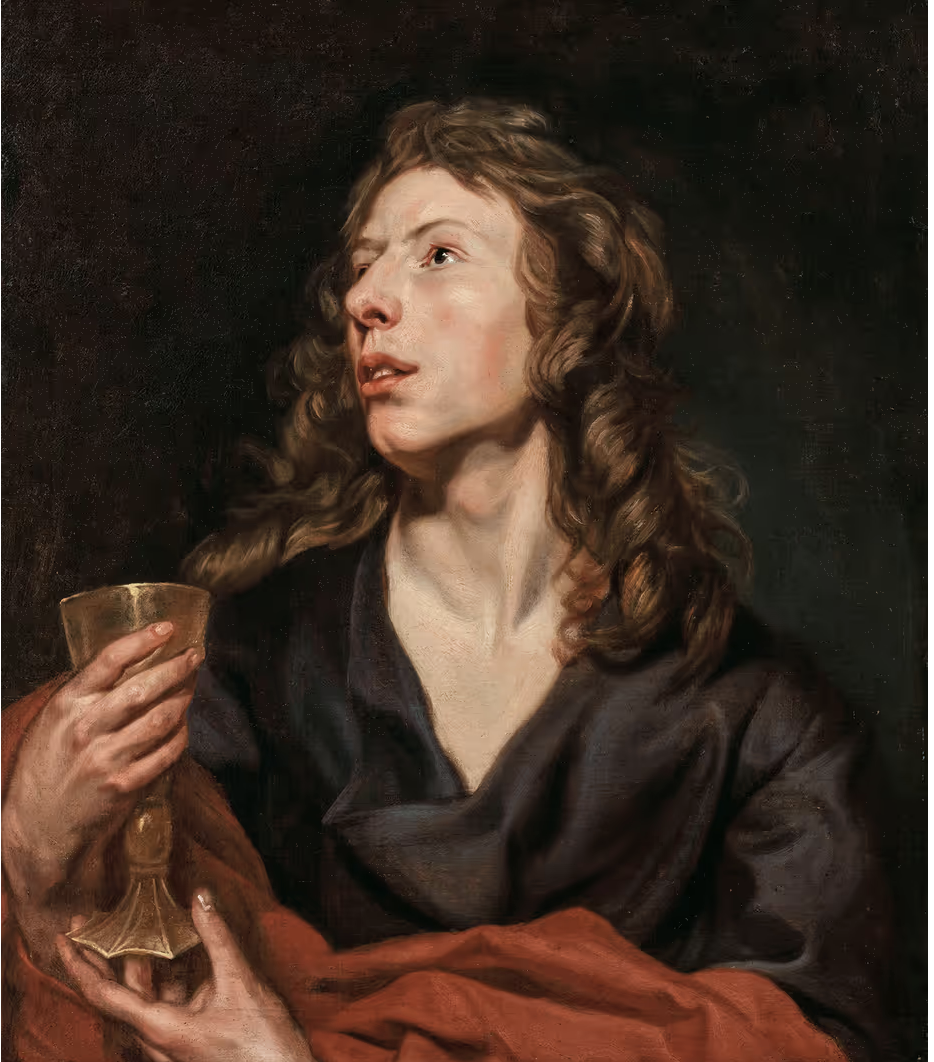
Michaelina Wautier - Saint John the Evangelist, c. 1656–59. Oil on canvas. 69 x 60.5 cm
Women artists were the first to paint themselves at work. (Men worried that the tools of their trade suggested a lowly technician status.) Wautier presents herself wearing pearls, a white silk dress and a black velvet mantle, sitting at an easel, brushes and palette in hand. The paint colours she has on the palette are the ones she uses in the portrait itself. The unpainted canvas on the easel is simply the woven surface left bare. She looks directly out at us.
Wautier’s ready wit is evident in the recently rediscovered series of the Five Senses. A young boy holds a pair of glasses to his eyes, staring intently at his palm. Another plays the recorder. A third scratches his head while looking down at his cut left index finger. A fourth takes a tentative bite on a piece of bread. And, finally, a lad in a felt hat holds his nose, recoiling from the stench of a rotten egg.
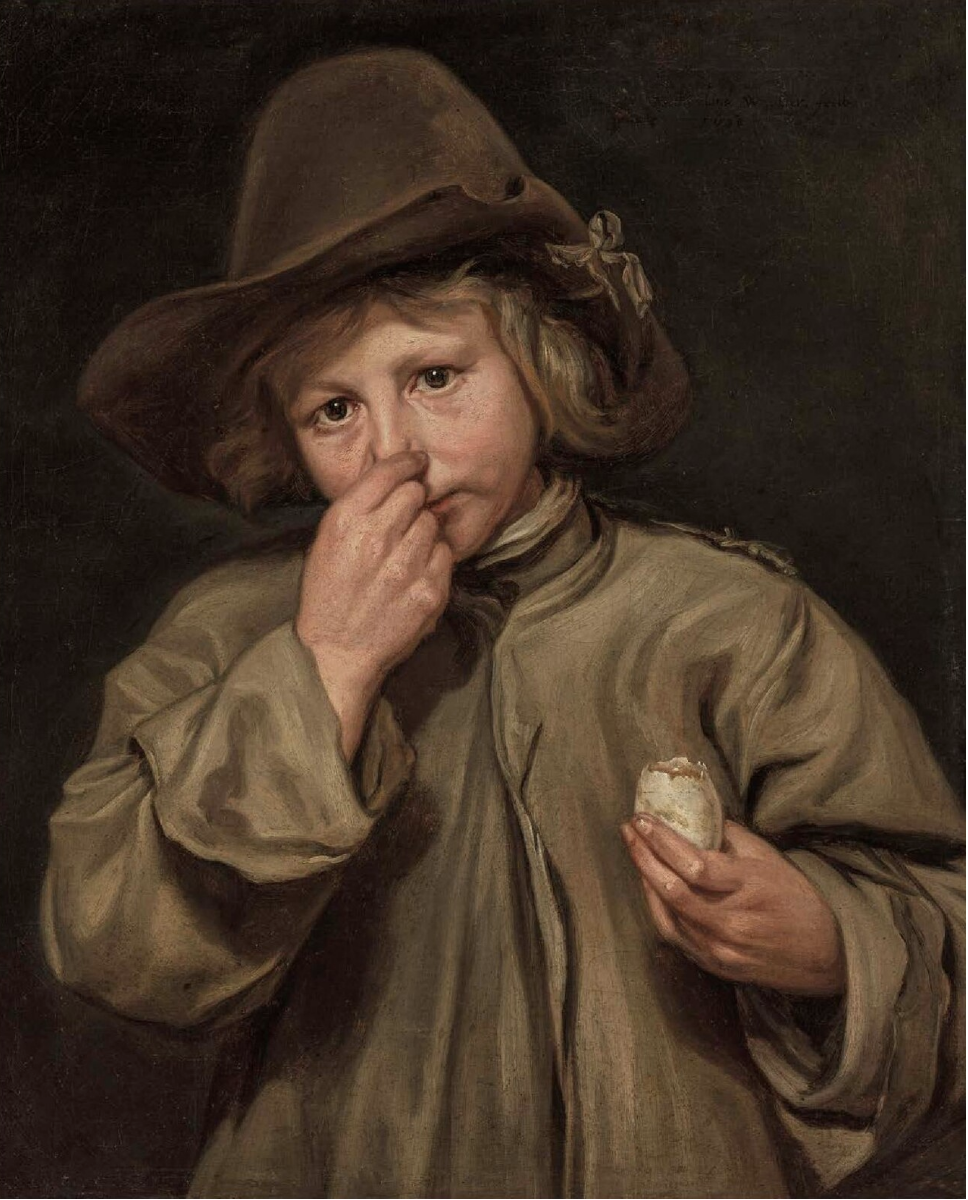
Michaelina Wautier - Smell
Whereas the convention at the time was for women artists to restrict themselves to portraiture and flower painting, Wautier ventured into mythological and biblical themes: a youthful Mary learns to read in the company of her parents; the angel Gabriel informs Mary of her destiny; Saint Catherine sits at the foot of the Madonna and Child.
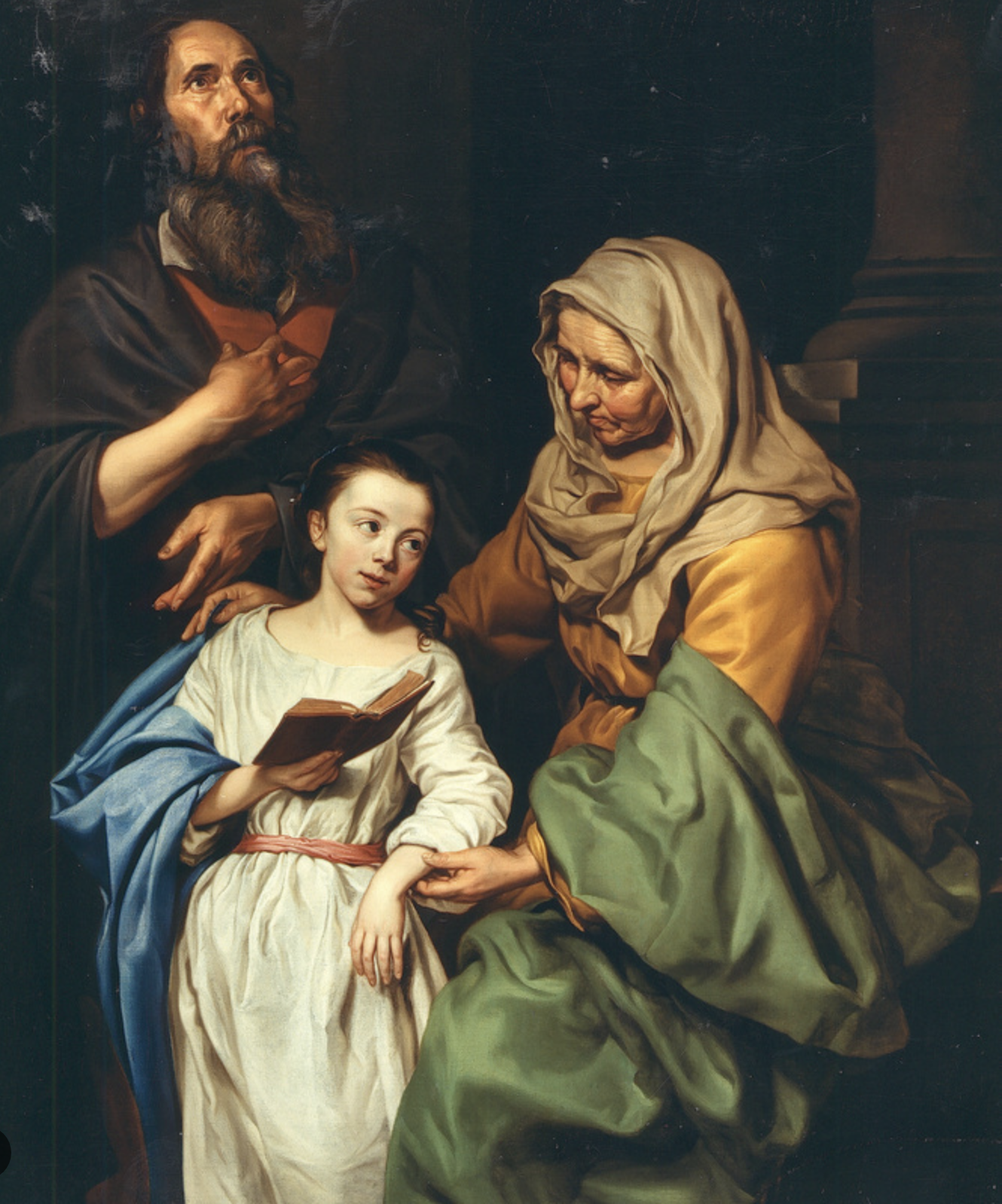
Michaelina Wautier - The Education of the Virgin
Perhaps mindful that religious art was thought to require masculine originality and intellect, Wautier signed two of her canvases with her name and the words ‘invenit et fecit’:
‘Michaelina Wautier designed and made this.’
In making her assured claim to imagination and craft, Wautier presented us with an elegant summary of the core creative skills. But she had another talent, one equally vital to success. She was determined.
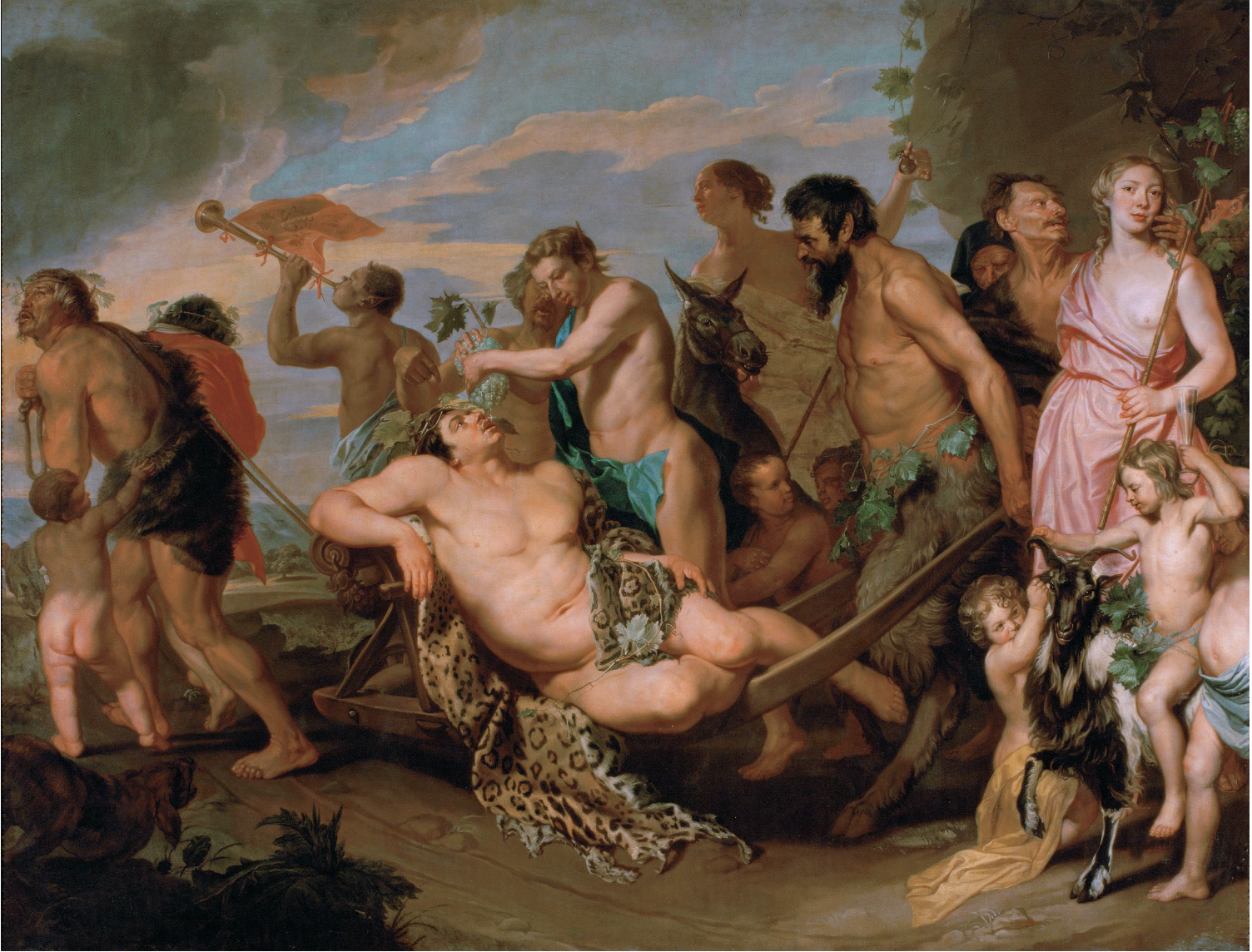
Michaelina Wautier - Triumph of Bacchus
The monumental ‘Triumph of Bacchus’ shows a group of revellers accompanying the god of wine, as he, somewhat the worse for wear, relaxes in a wheelbarrow. For centuries, Wautier’s authorship went unrecognised, and the picture was described by one critic as too bold to have been painted by a female. However, on the right of the procession, a woman has stopped to gaze out at the viewer. Wearing a long pink robe and carrying a staff, she bares a breast, and sports a confident, composed air. It is Wautier. It was the only signature she needed.
'So I like what I see when I'm looking at me,
When I'm walking past the mirror.
Don't stress through the night, at a time in my life,
Ain't worried about if you feel it.
Got my head on straight, I got my vibe right,
I ain't gonna let you kill it.
You see I wouldn't change my life, my life's just…
Fine, fine, fine, fine, fine, fine.’
Mary J Blige, ‘Just Fine' (M J Blige / C Stewart / T Nash / P Alexander)
No. 567