Lucian Freud: Getting as Near to It as I Can
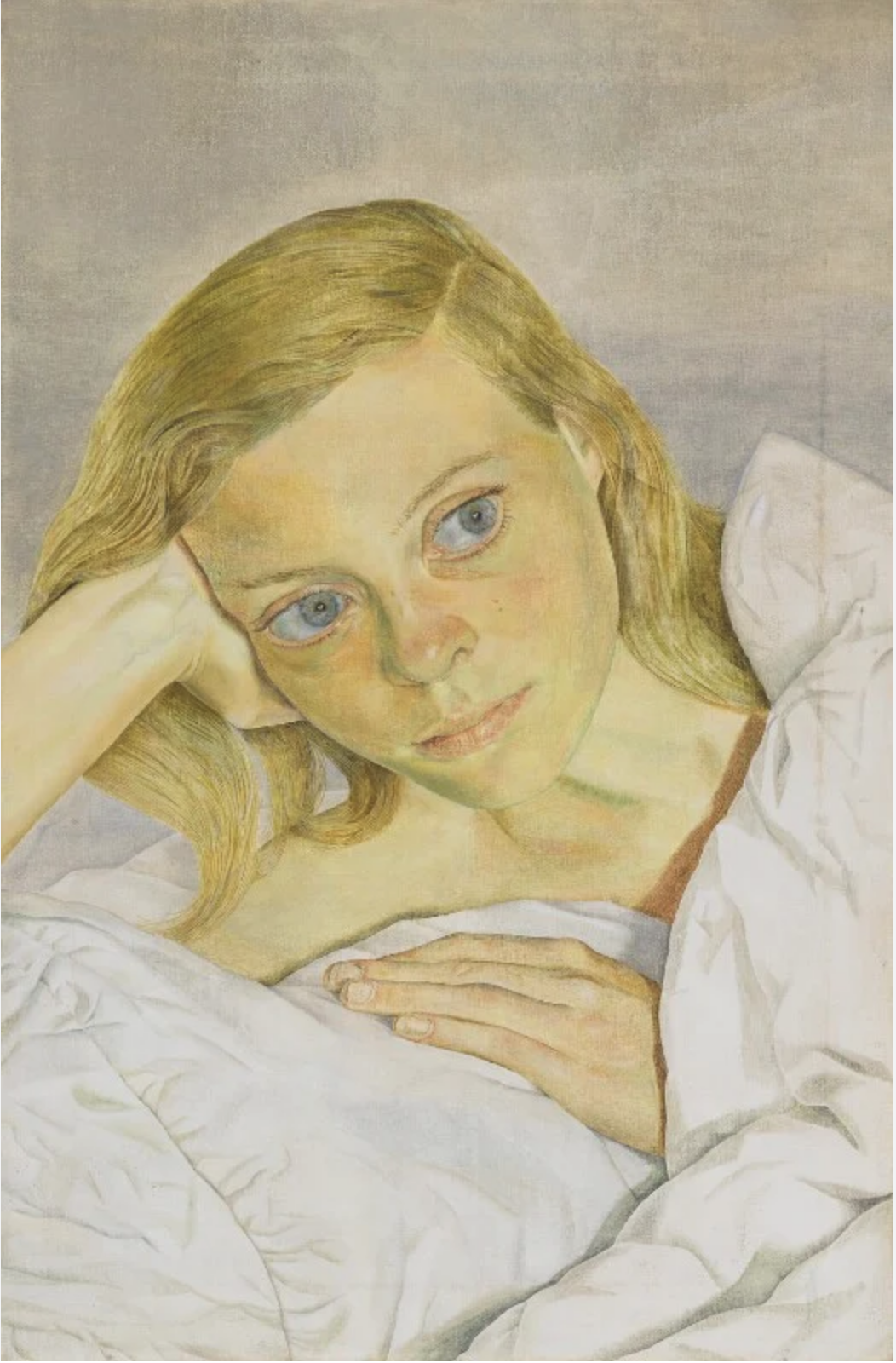
Lucian Freud - Girl in Bed. Photo: © National Portrait Gallery, London. Lent by a private collection
I recently enjoyed an exhibition of the art of Lucian Freud, which focused particularly on his drawings. (The National Portrait Gallery, London until 4 May)
Freud is renowned for his raw and intensely observed portraits and nude studies. This show, including works in pencil, pen and ink, charcoal and etching - as well as some key paintings - shines a light on the artist’s practices, processes and techniques.
‘I have always wanted to create drama in my pictures, which is why I paint people. It’s people who have brought drama to pictures from the beginning. The simplest human gestures tell stories.’
Lucian Freud
Early in his career, Freud often depicted animals, living and dead - a skinned hen, an oil-bound puffin, a stuffed zebra’s head. Critics, prompted by his curious compositions and juxtapositions, suggested that he was a surrealist. But he rejected the notion.
‘What is more surreal than a nose between two eyes?’
When Freud subsequently turned to human portraiture, he painted people as animals, regarding them with the same clinical, ‘pitiless’ eye.
‘I am inclined to think of (humans)…if they’re dressed, as animals dressed up.’
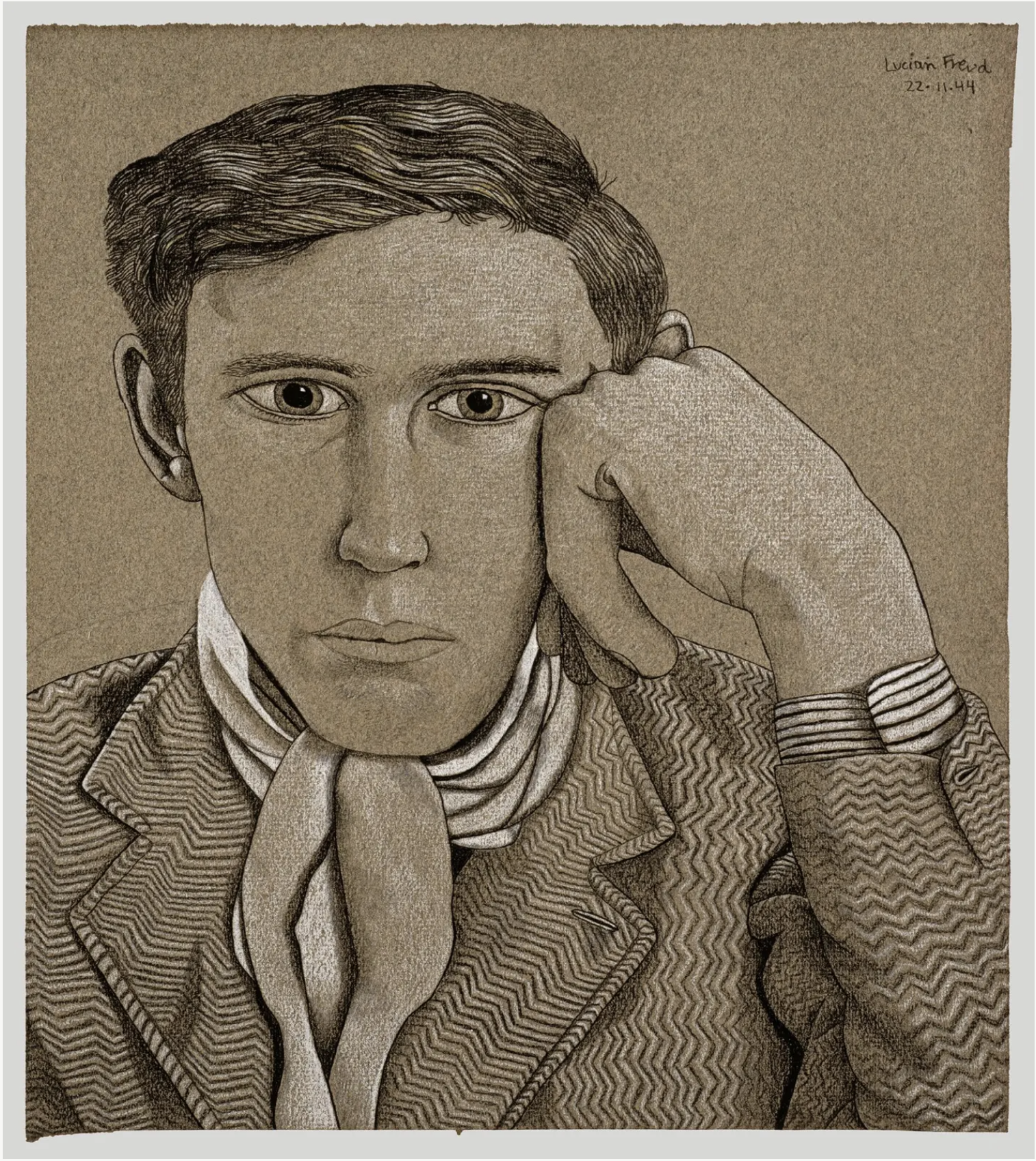
Lucian Freud - Portrait of a Young Man, 1944 (black crayon & white chalk on paper) © The Lucian Freud Archive.
All Rights Reserved 2025 / Bridgeman Images. Private Collection.
In the creation of his early portraits, Freud located himself right up close to his subjects. Rigorous and disciplined, he scrutinised them like a hawk. His first wife Kitty Garman said that sitting for him was ‘like being arranged.’
‘One of the most exciting things is seeing through the skin, to the blood and veins and markings.’
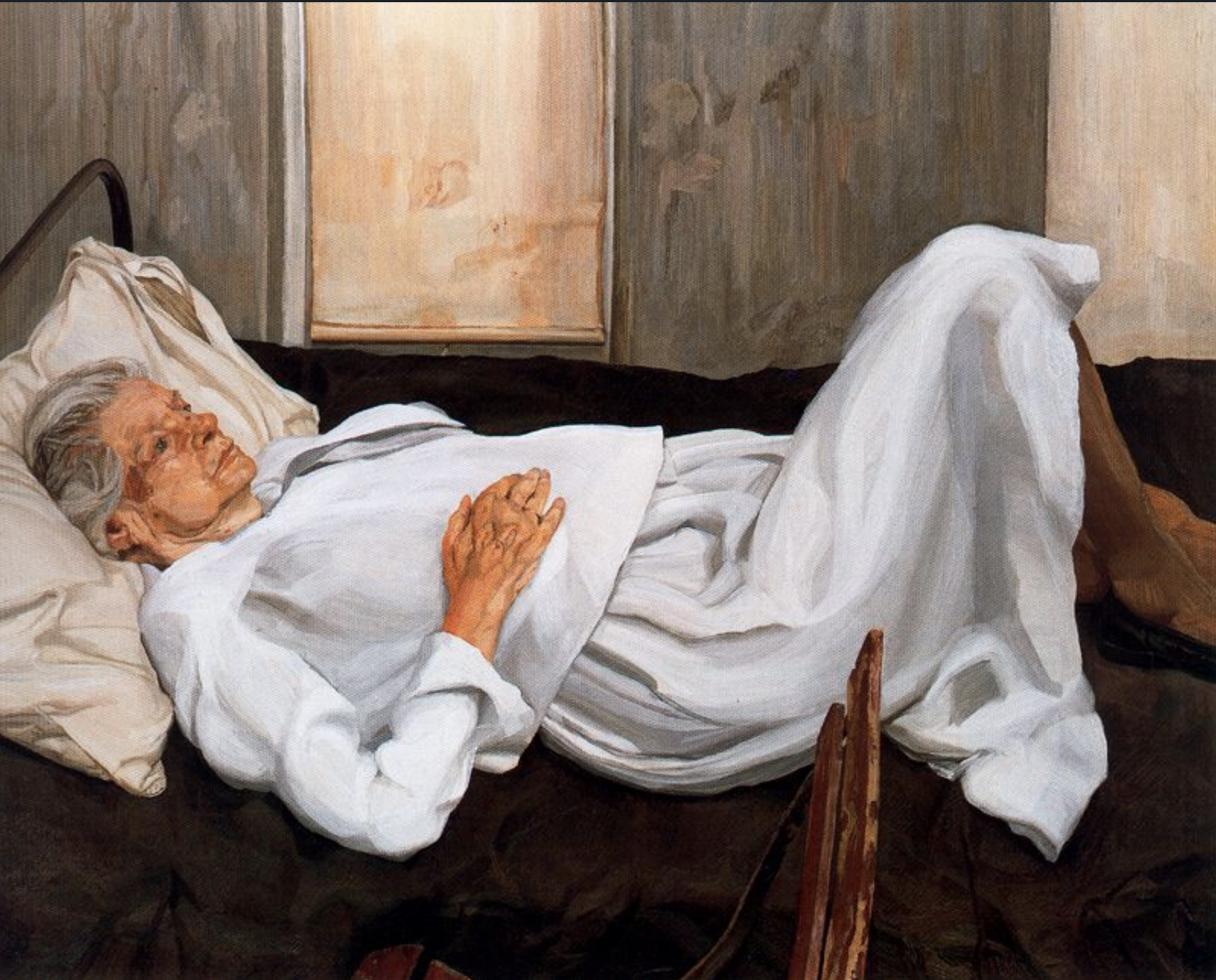
Lucian Freud - The Painter's Mother. Oil on Canvas 1982 - 1984
Sometimes Freud’s intense examination, his unsparing vision, led to what he called ‘involuntary magnification’ of his sitters’ features. And many were rendered with wide, watchful, haunted eyes.
‘I was trying for accuracy of a sort. I didn’t think of it as detail. It was simply, through my concentration, a question of focus.’
Freud sought to treat heads and bodies with equal attention. In some notes he remarked:
‘Turn heads into naked people
bodies, body’s whole complete
living naked women
avoid facial expression
make bodies expressive of feeling’
At the exhibition you can see some of Freud’s meticulous portraits of wives, family, friends and lovers; of fellow-artists, aristocrats and celebrities. Painted in natural light during the daytime, and in artificial light at night, these brutally honest pictures record blemishes, bruises, wrinkles and flab. They are distillations of raw physical presence.
Freud was equally unsparing in his self-portraits.
‘You’ve got to try and paint yourself as another person.’
Freud’s images convey both tenderness and discomfort; strength and vulnerability. They can be at the same time clinical and sensual. Perhaps most touching are his portraits of his mother, Lucie Freud – sensitive studies of fragility, depression and grief.
‘I started painting her because she’d lost interest in everything, including me.’
Freud sometimes took paintings from history as his subject. I was taken with his response when asked why he had chosen to study Chardin’s ‘The Young Schoolmistress’:
‘I don’t want to copy the Chardin. I simply want to get as near to it as I can. It’s a labour of love.’
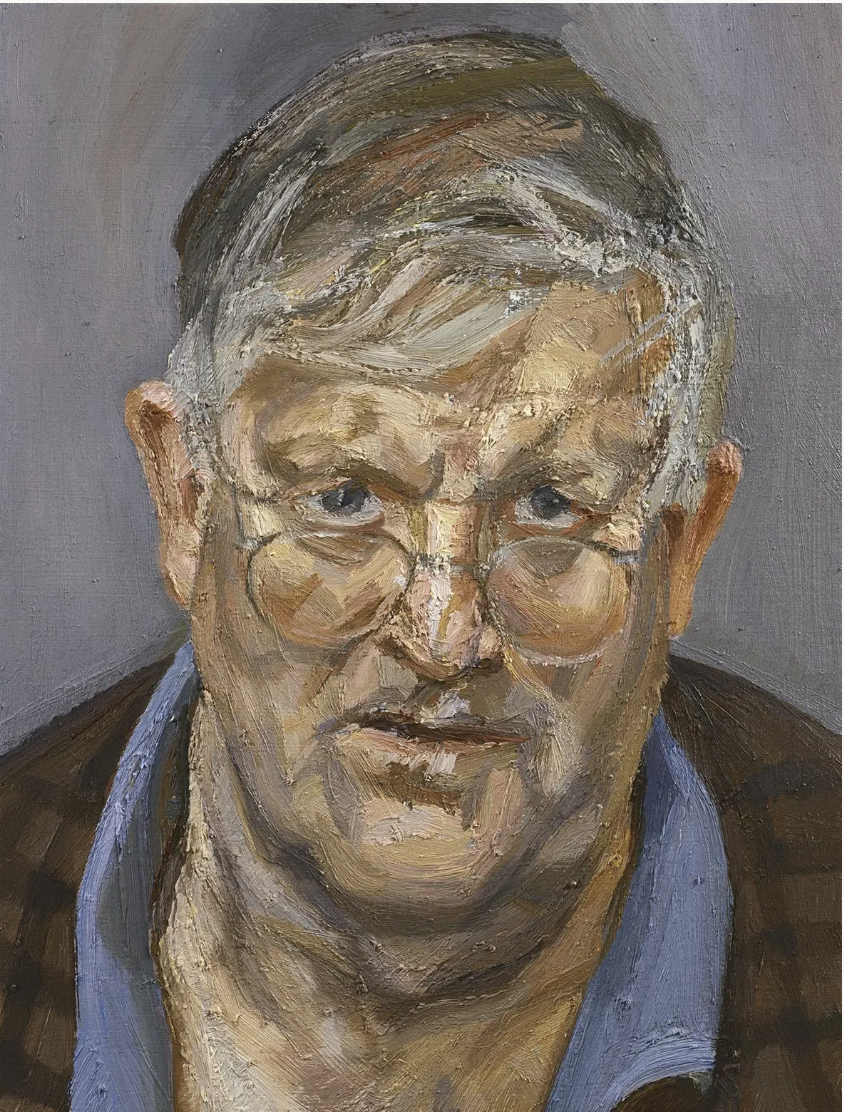
Lucian Freud - David Hockney, 2002 (oil on canvas) © The Lucian Freud Archive. Private Collection.
Freud painted the world as he found it, without flattery. He teaches us to get as near as we can to our subjects; to look and look again; to scrutinise and examine; to strip away meaning and assumption; to see what is truly in front of us.
‘Nothing ever stands in for anything. Nobody is representing anything. Everything is autobiographical and everything is a portrait, even if it’s a chair.’
'Look at me, look at you.
Look at you look at me.
See my eyes, see your eyes.
Watching me watching you.
And reaching,
And reaching,
And reaching right into your mind.’
Marlena Shaw, 'Look at Me, Look at You’ (W E Tragesser)
No. 562