Enid Marx’s Moquette: Overcoming the Challenges of ‘Dazzle, Dirt and Scale’
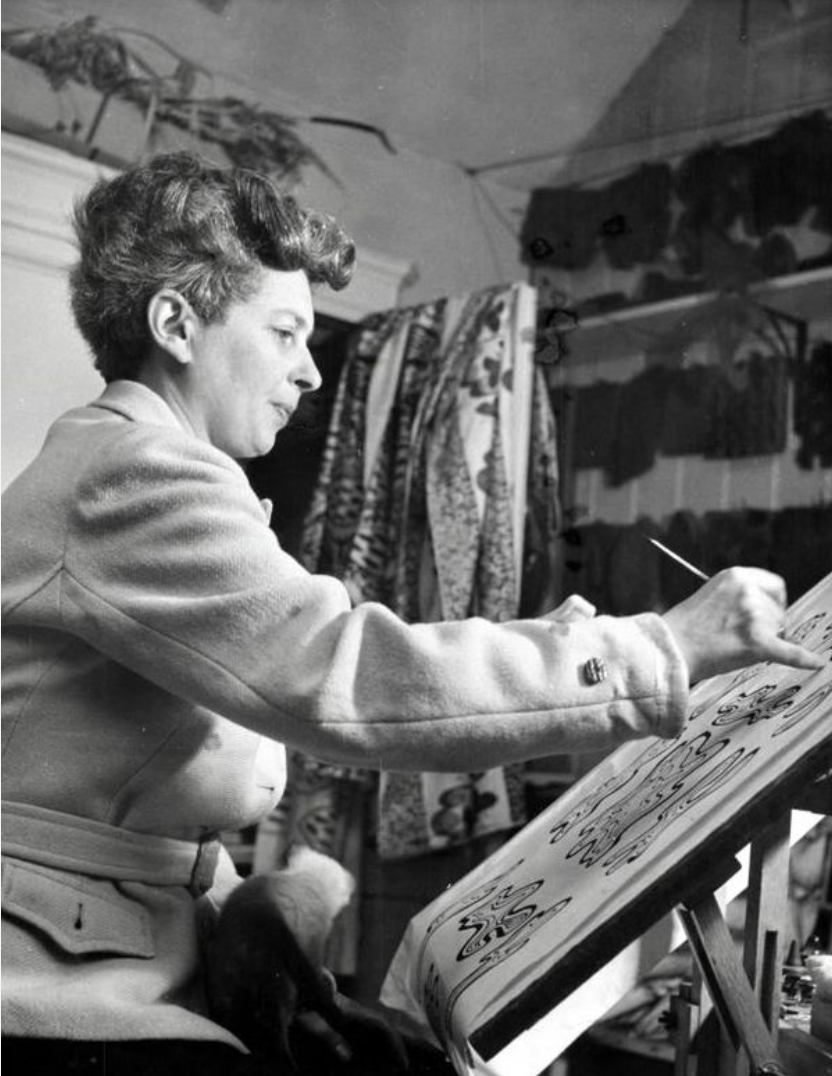
Enid Marx at work in studio, at easel. Photographer unknown
Enid Marx was an artist, printmaker and industrial designer, best known for the geometric-patterned moquette seat fabrics she created for London Transport. (An exhibition of her work, ‘The Pattern of Life’, runs at Compton Verney, Warwickshire, until 3 January.)
Born in London in 1902, Marx attended Roedean School, the Central School of Arts and Crafts, and the Royal College of Art. Opening her own studio, she sought to liberate textile design from the refined, nature-derived motifs of William Morris. Drawing inspiration instead from European cubism, from British and African folk art, she made her name with hand-block prints that featured bold patterns in restrained colours; rhythmically repeating abstract shapes; tightly interlocking grids, checks and stripes, cones, spots and stars. Unlike Morris she embraced mass manufacture.
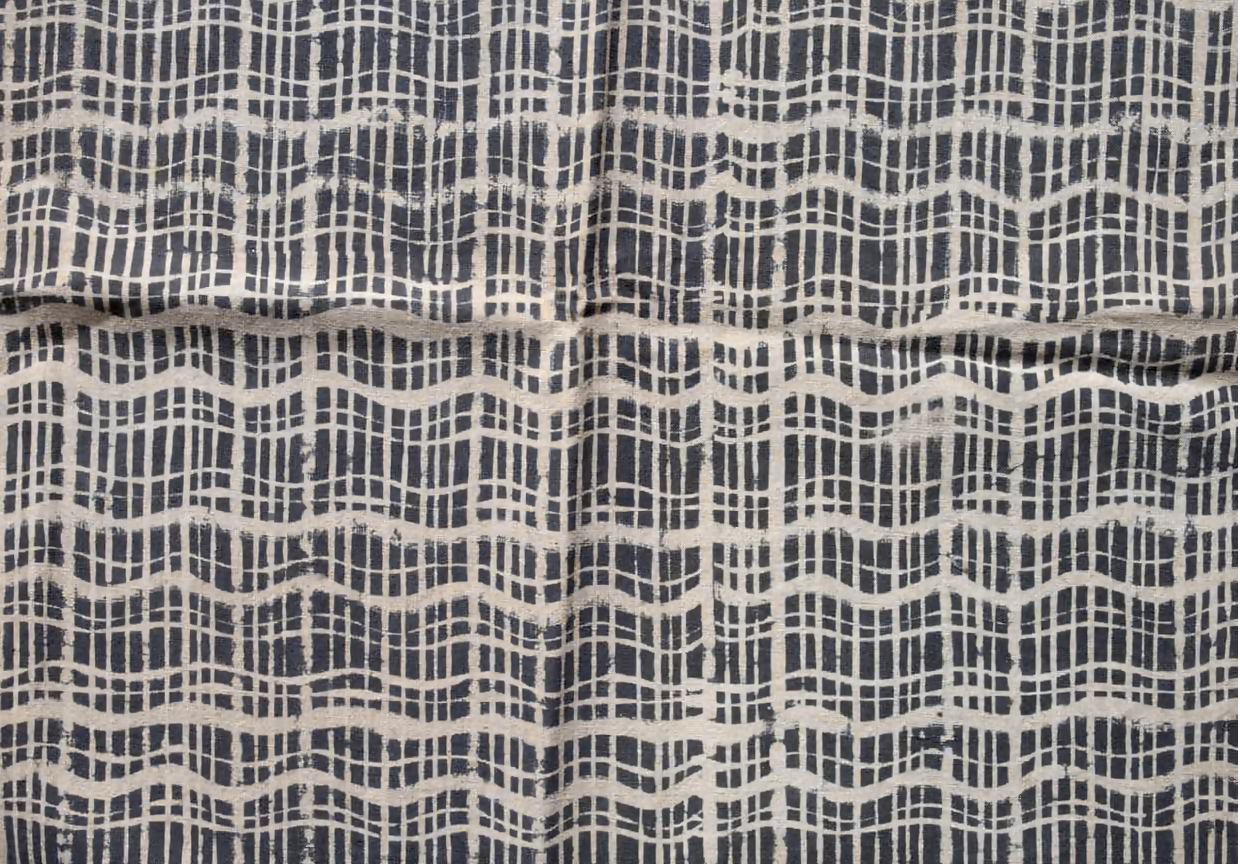
Enid Marx - handblocked textile design Curly Check Photograph: © The Estate of Enid Marx
In 1937 Marx was invited to produce designs for the plush, carpet-like, moquette material used to cover seats on the London Underground and bus networks.
‘Moquette, as a pile fabric, has the capacity to have areas of cut (‘velvet’) and uncut (looped or ‘towelling’) threads which, when used in combination, disguise the long-term effects of body-pressure on seating, and it had already proved to be the most durable for transport needs.’
Enid Marx
Hitherto, London Underground’s moquette patterns had been developed in-house by the factories that produced the fabric – with a dreary colour palette of browns and greys to blend in with commuters’ grime.
On taking the brief, Marx encountered some odd assumptions about carriage illumination.
[Engineers] ‘thought the lighting on the underground trains should be pink so that the ladies looked their best. It didn’t really occur to them that the dustman, the builder, the city accountant, the lady going to Ascot and the char, would all be sitting in the same carriage.’
Marx was tasked with creating moquette that addressed the challenges of ‘dazzle, dirt and scale.’ Advised that restless patterns might induce motion sickness (by ‘dazzling’ passengers), and conscious of the requirement to conceal city grime, her initial concepts employed subtle, earthy tones.
‘We all thought at first that the best way of disguising dirt was to use colours which would more or less tone in with the dirt.’
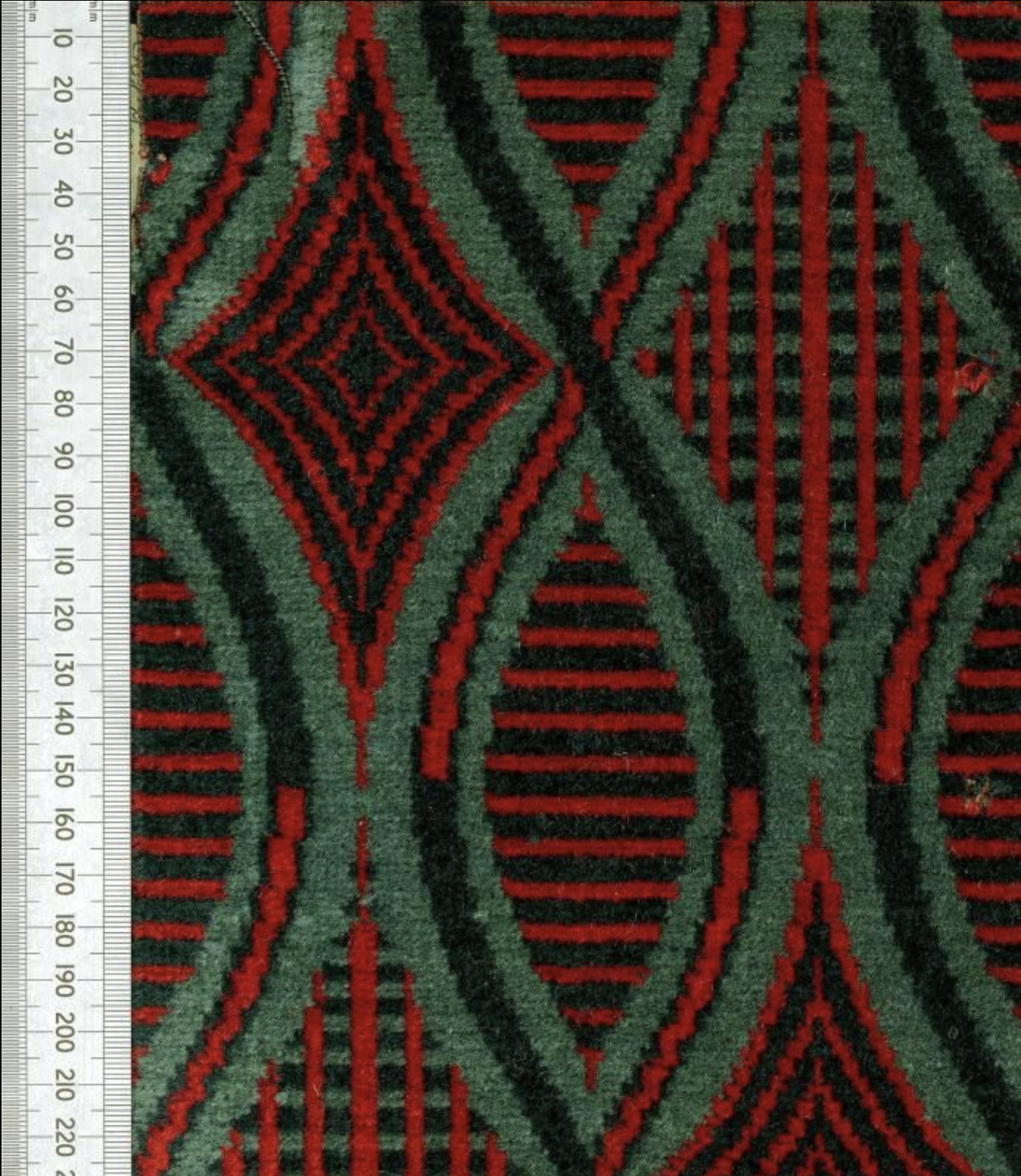
Enid Marx - ‘Sheild’. This moquette was widely used on the refurbishment of the 1938 Tube stock from 1949. It was used with green leather armrests on cars for the Bakerloo, Northern and District lines.
However, with further experimentation, Marx realised that sharp colour contrast actually hid wear better. And so, she shifted to vibrant combinations of red, green, and black.
‘The best method of ensuring the seats would look clean after a period of use was to use strongly contrasting tones and rather brilliant colour.'
Marx had to be stubborn to ensure that her recommendations were properly implemented. She wrote to Frank Pick, Chief Executive of London Transport,
‘I fear my insistence on preserving the character of my design may appear unduly meticulous. But I feel very strongly that, if the works draughtsmen are to make free translations of the designs, the full possibilities of the material will never be developed.'
Eventually Marx’s designs were adopted across the tube and bus networks, and were used extensively until the 1960s. Her cheerful, high-contrast patterns - like the iconic Shield, with its interlocking diamonds and lozenges – didn’t dazzle passengers. In fact, they elevated the whole travel experience.
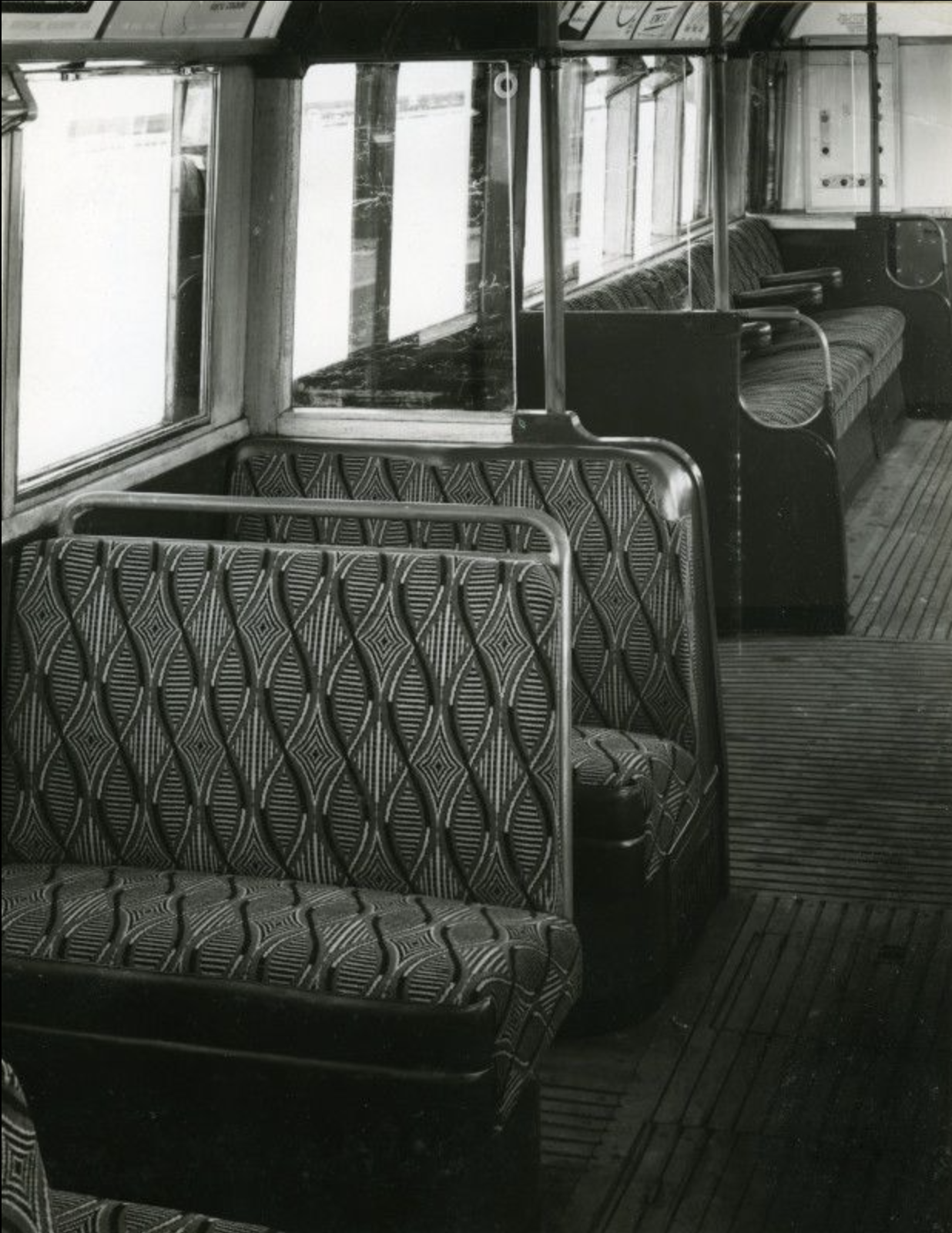
Enid Marx - 1938 . Seats upholstered in moquette with 'Shield' pattern in red and green.
The moquette, officially known as Messrs Holdworths design No.11581. Photographer: John Somerset Murray
During World War 2, employed by the Board of Trade Utility scheme, Marx designed affordable, hard-wearing furnishing fabrics under strict rationing rules. Her later work included book covers and illustrations for children’s publications. With her life partner, historian Margaret Lambert, she also amassed a celebrated collection of British folk art, and wrote several texts on the subject. She died in London in 1998, at the age of 95.
Marx demonstrates how a creative mind navigates a tough, budget-constrained, brief; that lateral thinking challenges and disrupts assumptions; that standards need to be maintained right through to execution; that there is always a place for beauty in everyday life.
'My life has been a tapestry,
Of rich and royal hue.
An everlasting vision,
Of the ever-changing view.
A wond'rous woven magic,
In bits of blue and gold.
A tapestry to feel and see,
Impossible to hold.’
Carole King, ‘Tapestry'
No. 596